
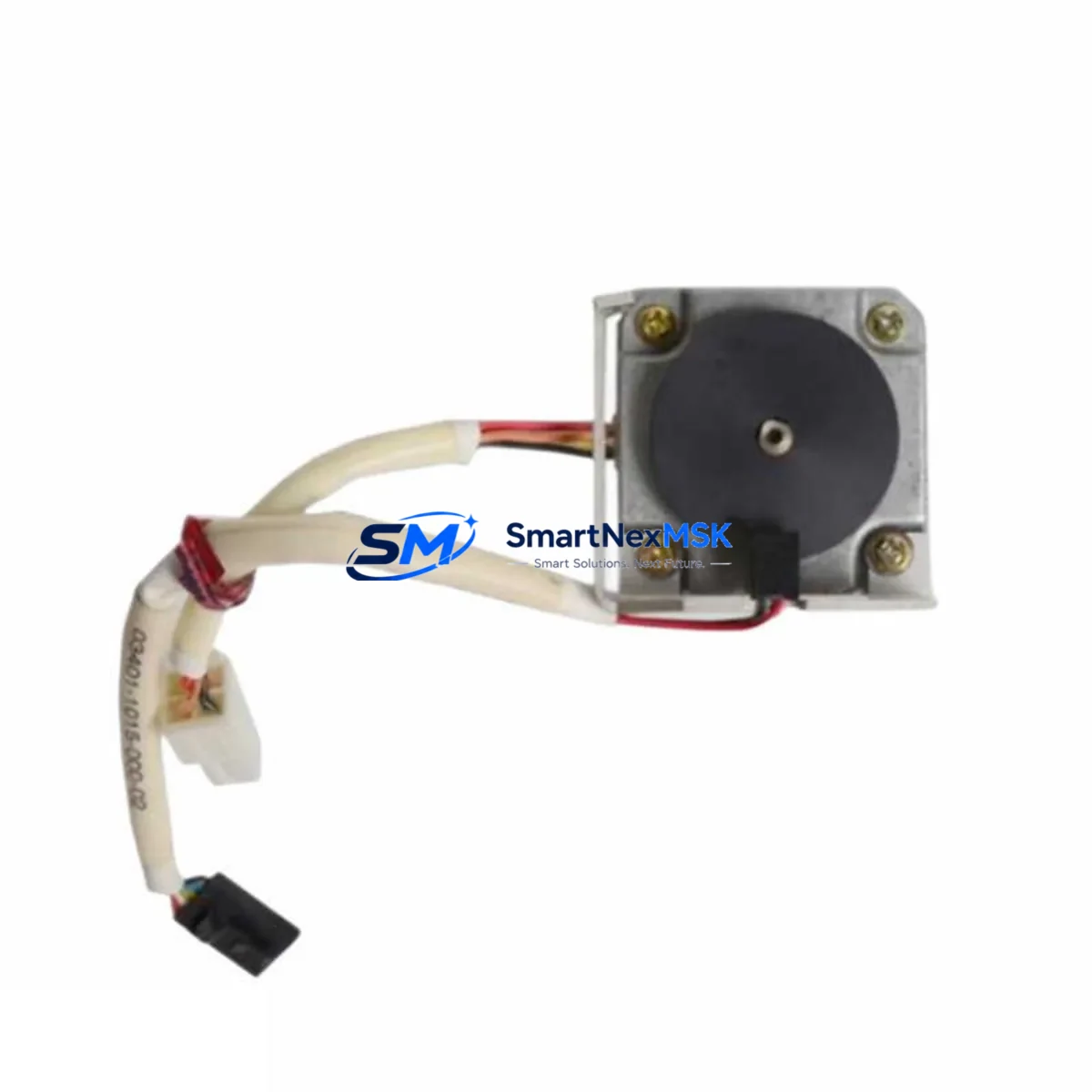
2H17SH-KS02 Maintenance-Ready Spare for NEMA17 Automation: Spare Parts Replacement and Industrial Downtime Risk Control
The 2H17SH-KS02 is a 2-phase hybrid stepper motor in the NEMA17 frame standard, widely deployed in precision motion control systems across CNC machinery, packaging lines, textile automation, and light industrial robotics. When this motor reaches end-of-life or fails unexpectedly, rapid replacement with a verified original-spec spare is critical to restoring production continuity. SMARTNEXMSK stocks the 2H17SH-KS02 as a maintenance-ready spare, pre-tested and shipped with a 12-month warranty, ensuring your maintenance team can execute a same-day swap without extended procurement delays.
For maintenance engineers managing aging automation systems, the 2H17SH-KS02 represents a high-reliability motion component that must be treated as a priority spare. Its compact NEMA17 footprint and standardized 4-wire bipolar winding configuration make it compatible with a broad range of stepper drivers and motion controllers. Whether you are performing scheduled preventive maintenance, responding to an unplanned motor fault, or building a strategic spare parts buffer for a multi-axis system, sourcing a certified replacement unit in advance is the most effective way to minimize mean time to repair (MTTR).
Spare Maintenance Table
| Parameter | Specification |
|---|---|
| Part Number / SKU | 2H17SH-KS02 |
| Motor Type | 2-Phase Hybrid Stepper Motor |
| Frame Size | NEMA17 (42 mm) |
| Step Angle | 1.8° (200 steps/rev) |
| Winding Configuration | Bipolar, 4-wire |
| Rated Current (per phase) | Approx. 1.5–2.0 A (verify with driver datasheet) |
| Holding Torque | Approx. 40–65 N·cm (series-dependent) |
| Insulation Class | Class B (130°C) |
| Operating Temperature | -20°C to +50°C ambient |
| IP Rating | IP40 (standard enclosure) |
| Shaft Diameter | 5 mm (standard NEMA17) |
| Compatibility | NEMA17-standard stepper drivers, motion controllers, PLC pulse-output modules |
| Origin | China (CN) |
| Warranty | 12 Months — covers manufacturing defects and electrical failure under normal operating conditions |
| Pre-shipment Testing | Winding resistance, insulation, step accuracy, and no-load run test |
| Shipping | Secure anti-static packaging; express and standard freight available |
Maintenance Planning for Continuous Operation
Replacing the 2H17SH-KS02 in a live production environment is rarely an isolated task. Experienced maintenance engineers know that a stepper motor fault is often a symptom of broader electrical stress in the motion control loop. Before returning the axis to service, a thorough inspection of the surrounding components is strongly recommended.
Start with the stepper driver module — the driver paired with the 2H17SH-KS02 should be checked for overcurrent protection trips, heat damage, or degraded output stage performance. Common driver models in NEMA17 systems include DM542, DM556, or equivalent 2-phase microstepping drivers. If the motor failed due to a winding short or overcurrent event, the driver may have sustained damage and should be replaced simultaneously to prevent repeat failure.
Next, inspect the 24VDC or 48VDC power supply feeding the driver. Voltage ripple, insufficient current capacity, or a failing capacitor bank in the PSU can cause erratic motor behavior, missed steps, or thermal shutdown. A replacement switching power supply with adequate current headroom should be kept as a companion spare alongside the 2H17SH-KS02.
Check the pulse-direction signal wiring from the PLC or motion controller to the driver. Loose terminal connections, damaged shielded cable, or signal interference can cause positioning errors that are misdiagnosed as motor faults. Inspect the terminal blocks and cable connectors at both the controller and driver ends. For systems using differential signal transmission, verify the integrity of the signal isolator or optocoupler interface board between the PLC output and the driver input.
If the 2H17SH-KS02 is part of a multi-axis system, review the I/O module on the PLC responsible for axis enable, fault reset, and limit switch inputs. A failed digital output channel can prevent the replacement motor from being enabled even after a successful mechanical swap. Similarly, inspect any relay or solid-state relay (SSR) used for motor power switching or emergency stop circuits — these components are frequently overlooked during motor replacement procedures.
For systems with an HMI (Human-Machine Interface) panel, verify that the axis status display correctly reflects the new motor’s operational state after replacement. Residual fault codes or incorrect parameter settings in the HMI or PLC program may require a manual reset or parameter re-initialization. If the system uses a communication module (e.g., RS-485, CANopen, or EtherCAT) to coordinate multi-axis motion, confirm that the axis address and communication parameters are correctly configured after the swap.
Finally, check the fuse or circuit breaker protecting the motor driver circuit. A blown fuse is a clear indicator of an overcurrent event and should prompt a root-cause investigation before re-energizing the replacement motor. Keeping a set of correctly rated fuses as part of your control cabinet spare parts kit is a low-cost, high-value practice that prevents extended downtime during emergency repairs.
Site Replacement Workflow
Step 1 — Isolate and de-energize: Follow your site LOTO (Lockout/Tagout) procedure. Disconnect the motor power leads and signal cables. Label all connections before removal to ensure correct re-wiring of the 4-wire bipolar winding (A+, A−, B+, B−).
Step 2 — Mechanical removal: Remove the motor from its mounting bracket. Note the shaft coupling type (flexible jaw coupling, rigid coupling, or direct drive) and inspect for wear or misalignment that may have contributed to the original failure.
Step 3 — Compatibility verification: Confirm that the replacement 2H17SH-KS02 matches the original unit’s winding resistance, rated current, and physical dimensions. Use a multimeter to verify winding continuity and resistance balance between phases before installation.
Step 4 — Installation and wiring: Mount the replacement motor, reconnect the winding leads in the correct phase order, and secure all terminal connections. Verify that the driver’s current setting matches the motor’s rated phase current to prevent thermal overload.
Step 5 — Functional test: Re-energize the system and perform a low-speed jog test before returning the axis to full production speed. Monitor motor temperature during the first 30 minutes of operation. Confirm that positioning accuracy and torque output meet system requirements.
Step 6 — Documentation: Record the replacement date, unit serial number, and any observations in your maintenance log. Update your spare parts inventory to trigger a replenishment order for the consumed 2H17SH-KS02 unit.
Spare Parts Support FAQ
Q1: Is the 2H17SH-KS02 a direct drop-in replacement for other NEMA17 stepper motors?
In most cases, yes — the NEMA17 frame standard ensures mechanical interchangeability. However, you must verify that the replacement motor’s rated phase current and winding inductance are compatible with your existing stepper driver settings. Mismatched current ratings can cause overheating or reduced torque. Always confirm winding resistance with a multimeter before installation.
Q2: What is included in the 12-month warranty?
The 12-month warranty covers manufacturing defects, winding failures, and electrical faults arising under normal operating conditions. It does not cover damage caused by incorrect wiring, driver misconfiguration, mechanical overload, or environmental exposure beyond the motor’s rated IP rating. Warranty claims are supported by SMARTNEXMSK’s technical team at [email protected].
Q3: How do you verify the motor before shipment?
Every 2H17SH-KS02 unit undergoes a pre-shipment inspection that includes winding resistance measurement, insulation resistance testing, step accuracy verification, and a no-load run test. Test results are available upon request. Units are packaged in anti-static foam with secure outer carton protection to prevent transit damage.
Q4: Can SMARTNEXMSK support long-term supply for legacy systems?
Yes. SMARTNEXMSK maintains ongoing stock of the 2H17SH-KS02 and related NEMA17-series stepper components to support customers managing legacy automation systems where OEM supply has been discontinued or lead times are unacceptably long. We recommend establishing a standing spare parts agreement for critical motion axes to ensure availability when unplanned failures occur. Contact our team to discuss volume pricing and reserved stock arrangements.
© 2026 SMARTNEXMSK. All rights reserved.
Original Source: https://smartnexmsk.com
Contact: [email protected] | +86 18259474341