
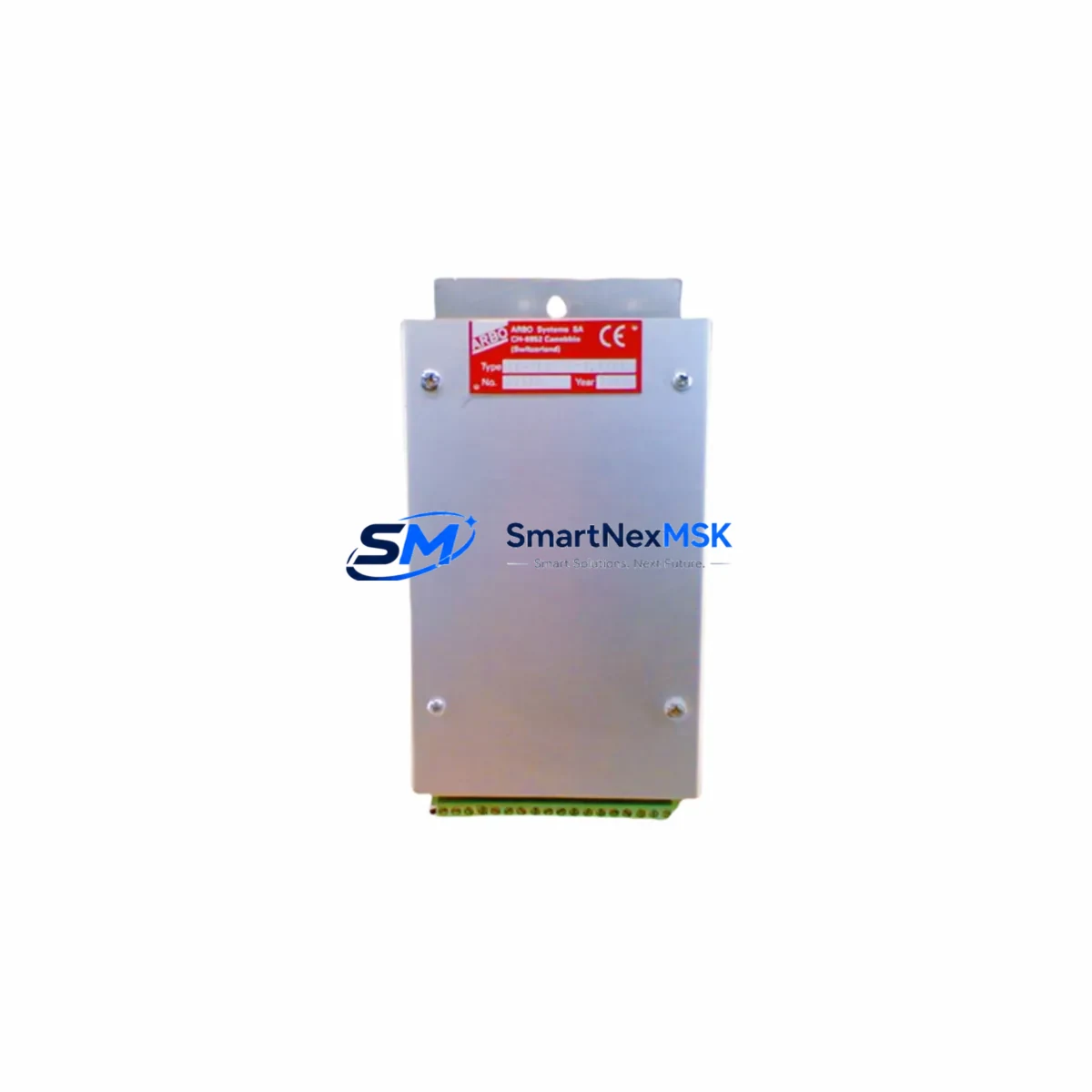
ARBO SE-WLS220-2.1/05 Retrofit-Ready Vibratory Bowl Feeder Controller: Seamless Compatibility for Legacy System Upgrades
The ARBO SE-WLS220-2.1/05 is a retrofit-ready vibratory bowl feeder controller engineered for direct replacement and smooth integration into existing SE-WLS Series automation lines. Whether you are managing a planned upgrade, responding to an end-of-life component failure, or modernizing a legacy feeding system, this unit delivers the electrical compatibility, control precision, and supply reliability that industrial maintenance teams demand.
Designed as a drop-in successor to discontinued SE-WLS Series controllers, the SE-WLS220-2.1/05 maintains backward-compatible terminal layouts and amplitude control logic, minimizing rewiring effort and reducing the risk of commissioning errors during changeover. The unit operates on a 220V AC input with a 2.1A output rating and a frequency range suited to standard vibratory bowl feeder coil assemblies, making it directly interchangeable with earlier SE-WLS220 variants in most installation configurations.
Before committing to a retrofit, engineers should verify several critical parameters: confirm that the existing power supply capacity supports the 220V/2.1A draw without derating; inspect terminal block pitch and wire gauge compatibility against the original wiring harness; validate that the backplane or DIN rail mounting footprint matches the replacement unit; and confirm that any upstream PLC output card — such as a digital output module interfacing via relay or transistor — is rated for the controller’s trigger signal requirements. If the feeding system is integrated with a vision inspection unit or a parts-sorting HMI panel, screen refresh logic tied to feeder speed signals should be re-validated after swap.
In systems where the SE-WLS220-2.1/05 operates alongside a programmable logic controller, technicians should review the existing ladder logic or function block program to confirm that feeder enable/disable rungs, speed reference outputs, and fault interlock routines remain compatible with the replacement unit’s I/O signal levels. No firmware changes are required on the controller itself, but any analog speed reference signal — typically 0–10V DC — should be re-calibrated at commissioning to match the new unit’s amplitude response curve.
Upgrade Compatibility Table
| Parameter | SE-WLS220-2.1/05 (This Unit) | Typical Legacy SE-WLS220 Variants |
|---|---|---|
| Input Voltage | 220V AC, 50/60Hz | 220V AC, 50Hz |
| Output Current | 2.1A | 2.0–2.2A (model dependent) |
| Mounting | DIN Rail / Panel Mount | DIN Rail / Panel Mount |
| Terminal Compatibility | Standard pitch; verify wire gauge | Standard pitch |
| Speed Reference Input | 0–10V DC analog or potentiometer | 0–10V DC analog or potentiometer |
| Communication Interface | None (standalone analog control) | None (standalone analog control) |
| Replacement Recommendation | Direct drop-in for SE-WLS220 series | — |
| Commissioning Focus | Amplitude re-calibration, interlock check | — |
| Warranty | 12 Months | — |
Retrofit Planning for Existing Automation Systems
A successful retrofit of the SE-WLS220-2.1/05 into a running production line requires a structured approach that accounts for the full control architecture surrounding the feeder. In most installations, the vibratory bowl feeder controller sits within a control cabinet alongside a power distribution block, a 24V DC auxiliary power supply for logic circuits, and a terminal strip connecting field wiring from the bowl coil assembly. Technicians should document all existing terminal assignments before disconnecting the old unit.
Where the feeder is part of a larger automated assembly cell, the SE-WLS220-2.1/05 will typically receive its enable signal from a PLC digital output module — in many legacy lines, this is a relay output card or a transistor output card rated at 24V DC. Confirm that the new controller’s enable input impedance is compatible with the existing output card’s drive capability. If the cell uses a distributed I/O rack with remote terminal units, verify that the feeder enable rung in the PLC program addresses the correct I/O point after any rack reconfiguration.
In lines where the bowl feeder speed is coordinated with a downstream conveyor or an indexing rotary table, the analog speed reference signal — often sourced from an analog output module on the PLC — must be re-verified at the new controller’s input terminals. If the system includes a parts-presence sensor feeding back to the PLC to modulate feeder speed dynamically, the closed-loop tuning parameters in the PLC program may need minor adjustment after the controller swap to account for any difference in amplitude response between the old and new units.
For installations that include an operator HMI panel — whether a standalone touch panel or an HMI integrated into a larger SCADA system — any feeder speed display tags or alarm screens referencing the controller’s status should be reviewed. If the HMI communicates feeder status via a discrete input from the controller’s fault output relay, verify that the new unit’s fault relay contact rating matches the HMI input card’s requirements.
Technicians upgrading older lines may also encounter situations where the control cabinet houses a legacy programmable relay or a compact PLC from an earlier generation. In these cases, the SE-WLS220-2.1/05’s straightforward analog interface makes integration straightforward, as no protocol conversion or gateway device is required. The controller’s potentiometer-based speed adjustment can serve as a manual fallback during commissioning, allowing the line to resume partial production while PLC program verification is completed.
Common components encountered in the same retrofit scope include DIN rail terminal blocks for rewiring, a replacement 24V DC power supply module if the existing auxiliary supply is aged, a spare bowl coil assembly if the original coil shows signs of insulation degradation, and a programming cable if the upstream PLC requires program backup before the changeover begins. In some installations, a replacement backplane or sub-rack may also be required if the original mounting hardware is corroded or mechanically damaged.
Downtime Control During System Migration
Minimizing unplanned downtime during a vibratory feeder controller replacement requires preparation before the maintenance window begins. The most effective approach is to pre-stage the SE-WLS220-2.1/05 alongside a printed copy of the existing terminal wiring diagram, a verified backup of the PLC program, and a calibrated multimeter for signal verification at each terminal before power-up.
Where production schedules permit only a short maintenance window, technicians should pre-wire the replacement controller on a temporary DIN rail section outside the cabinet, verify continuity and insulation resistance on all field cables, and then perform a rapid swap by transferring the pre-wired assembly into the cabinet in a single operation. This approach reduces in-cabinet wiring time to a minimum and allows the bulk of the commissioning verification — terminal labeling, signal level checks, and amplitude calibration — to be completed before the production line is taken offline.
After installation, a structured power-up sequence should be followed: energize the auxiliary 24V DC supply first, confirm the controller’s status indicators, then apply the 220V AC main supply to the feeder output stage. Run the bowl feeder at reduced speed (approximately 30–40% of rated amplitude) for a short trial period before returning to full production speed. This staged approach protects the bowl coil assembly from mechanical shock and allows the operator to confirm that the feeder’s parts-flow rate matches the downstream process requirements before full-rate production resumes.
Throughout the migration, the original PLC program logic should remain unchanged. The SE-WLS220-2.1/05’s compatibility with standard analog and discrete I/O interfaces means that no program modifications are required in the vast majority of retrofit applications, preserving the integrity of the existing control logic and eliminating the risk of introducing software errors during a hardware maintenance event.
Retrofit Support FAQ
Q: Is the SE-WLS220-2.1/05 a direct replacement for my existing SE-WLS220 controller?
A: In most SE-WLS Series installations, yes. The SE-WLS220-2.1/05 maintains the same input voltage rating, output current class, and analog speed reference interface as earlier SE-WLS220 variants. We recommend verifying terminal pitch and mounting dimensions against your existing unit before ordering. Our technical team can assist with compatibility confirmation based on your nameplate data.
Q: What commissioning steps are required after installation?
A: After mechanical installation and terminal wiring, perform a continuity check on all field connections, verify the 0–10V DC speed reference signal at the controller input terminals, and calibrate the amplitude output to match your bowl feeder’s rated operating point. Confirm that the PLC enable signal correctly starts and stops the feeder before returning the line to production.
Q: Does the unit ship pre-tested?
A: Yes. Every SE-WLS220-2.1/05 unit undergoes functional output testing prior to shipment. A test record is included with each unit. The 12-month warranty covers manufacturing defects and component failures under normal operating conditions from the date of delivery.
Q: What is covered under the 12-month warranty?
A: The warranty covers all manufacturing defects, component failures, and functional faults arising under normal operating conditions. It does not cover damage resulting from incorrect wiring, overvoltage events, or installation outside the unit’s rated specifications. Warranty claims are processed with a target response time of 3 business days from receipt of the returned unit.
© 2026 SMARTNEXMSK. All rights reserved.
Original Source: https://smartnexmsk.com
Contact: [email protected] | +86 18259474341