
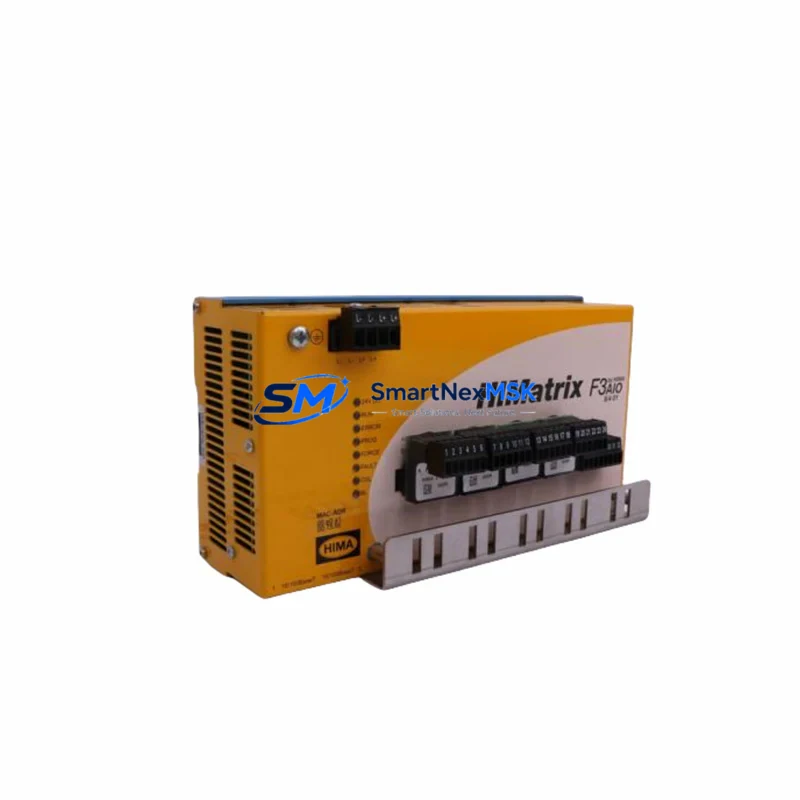
JEIL TRANS EN61558-1:1998-METH Retrofit-Ready Safety Isolation Transformer: Compatible Upgrade for Legacy Control Systems
The JEIL TRANS EN61558-1:1998-METH is a retrofit-ready safety isolation transformer engineered to serve as a direct replacement for discontinued or aging transformer units in industrial control panels, automation cabinets, and legacy machine tool systems. Compliant with the EN61558-1:1998 standard (METH test method), this unit delivers reliable galvanic isolation between primary and secondary circuits, protecting sensitive PLC I/O modules, HMI panels, and field instrumentation from transient voltages and ground faults.
For facilities managing aging production lines, this transformer is a proven solution for panel modernization without requiring full system redesign. Its compact footprint and standard terminal block interface allow direct mounting into existing DIN-rail enclosures and control cabinets, minimizing retrofit labor and downtime.
Upgrade Compatibility Table
| Parameter | Details |
|---|---|
| Standard Compliance | EN61558-1:1998 (METH test method) |
| Manufacturer | JEIL TRANS (South Korea) |
| Product Type | Safety Isolation Transformer |
| Mounting | DIN-rail / panel mount (verify existing bracket dimensions) |
| Terminal Interface | Screw-type terminal block; confirm pitch compatibility with existing wiring harness |
| Primary Voltage | Confirm from original nameplate (typically 220V / 380V AC) |
| Secondary Voltage | Confirm from original nameplate (typically 24V / 110V AC) |
| Communication Compatibility | Passive isolation; compatible with all downstream PLC and HMI power rails |
| Replacement Suitability | Direct drop-in for same-series JEIL TRANS units; verify VA rating match |
| Commissioning Notes | Verify polarity, earth bonding, and secondary load before energizing |
| Warranty | 12 Months from date of shipment |
Retrofit Planning for Existing Automation Systems
When integrating the EN61558-1:1998-METH into an existing automation system, a structured retrofit plan is essential to ensure compatibility across all connected components. Begin by auditing the control cabinet layout: identify the existing transformer’s VA rating, primary/secondary voltage configuration, and terminal pitch. In many legacy systems, the safety isolation transformer supplies 24V AC or 110V AC to the control circuit, powering components such as relay coils, indicator lamps, and the 24V DC SMPS that feeds the PLC CPU and I/O modules.
In systems built around Siemens SIMATIC S7-300 or S7-400 series controllers, the transformer typically feeds a PS 307 or PS 405 power supply module mounted on the S7 backplane rack. When replacing the transformer, confirm that the new unit’s secondary VA rating meets or exceeds the combined load of the power supply module, any ET 200M distributed I/O stations, and the IM 153 interface module used for PROFIBUS DP communication. Similarly, in Mitsubishi MELSEC Q-series or iQ-R series installations, the transformer powers the Q61P or R61P power supply module; verify that inrush current tolerance is adequate during cold-start conditions.
For Allen-Bradley ControlLogix or CompactLogix systems, the transformer may supply the 1756-PA72 or 1769-PA4 power supply. Confirm that the secondary winding voltage and current capacity align with the published power budget for the chassis. If the system includes a 1756-EN2T EtherNet/IP communication module or a 1756-DNB DeviceNet bridge, these modules draw additional current from the chassis backplane — factor this into the VA calculation before finalizing the replacement unit.
In older systems using GE Fanuc Series 90-30 or 90-70 PLCs, the transformer often feeds the IC693PWR321 or IC697PWR724 power supply. When retrofitting, also inspect the IC693MDL655 discrete input module and IC693ALG392 analog output module wiring to ensure terminal block compatibility with the new transformer’s secondary terminals. Address any differences in terminal pitch or wire gauge rating before re-terminating.
For Schneider Electric Modicon M340 or Premium platforms, the transformer supplies the BMX CPS 2000 or TSX PSY 2600M power supply. Confirm that the Modbus TCP or CANopen communication links remain unaffected during the transformer swap. If the system uses a TSXSCY21601 communication module for serial Modbus RTU, verify that the isolated secondary circuit does not introduce ground loop interference on the RS-485 bus.
Beyond the PLC power supply, also account for the HMI panel — whether a Siemens TP700 Comfort, Mitsubishi GOT2000, or Weintek MT8000 series — which may draw power from the same transformer secondary or from a dedicated SMPS. Confirm the HMI’s input voltage range and ensure the new transformer’s secondary regulation is within tolerance under partial load conditions.
Downtime Control During System Migration
Minimizing production downtime during a transformer replacement requires careful pre-staging and a disciplined switchover procedure. Before de-energizing the panel, perform a full backup of the PLC program using the appropriate programming software — STEP 7 or TIA Portal for Siemens, GX Works2 or GX Works3 for Mitsubishi, Studio 5000 Logix Designer for Allen-Bradley, or Unity Pro / EcoStruxure Control Expert for Schneider. Store the backup on a secure offline medium and verify the checksum before proceeding.
Next, photograph or document all terminal wiring on the existing transformer — primary L1/L2/L3 connections, secondary output terminals, earth bonding points, and any screen/shield connections. Label each wire with adhesive markers before disconnection. This documentation is critical for accurate re-termination on the replacement unit and eliminates ambiguity during the commissioning phase.
During the physical swap, inspect the mounting hardware, DIN-rail clips, and cable management channels for wear. Replace any degraded ferrules or terminal screws. After mounting the new JEIL TRANS EN61558-1:1998-METH unit, re-terminate all wires per the documented layout, torque terminal screws to the manufacturer’s specification, and verify earth continuity with a multimeter before applying power.
On initial energization, measure the secondary output voltage under no-load conditions, then under full load, to confirm regulation performance. Monitor the PLC CPU status LEDs and I/O module diagnostic indicators for any fault codes. If the system uses a PROFIBUS DP or EtherNet/IP network, verify that all slave devices and remote I/O stations re-establish communication within the expected timeout window. Once all diagnostics are clear, perform a controlled test cycle of the machine or process before returning to full production. This structured approach typically limits unplanned downtime to under two hours for a single-transformer panel retrofit.
Retrofit Support FAQ
Q1: Is the EN61558-1:1998-METH a direct drop-in replacement for my existing JEIL TRANS unit?
In most cases, yes — provided the VA rating, primary voltage, secondary voltage, and terminal pitch of the replacement unit match the original nameplate specifications. Always cross-reference the original transformer’s label before ordering. If the original unit is no longer legible, our technical team can assist with identification based on cabinet drawings or part numbers.
Q2: What commissioning checks are required after installation?
After physical installation and re-termination, verify: (1) secondary output voltage under no-load and full-load conditions; (2) earth continuity between the transformer chassis and the panel earth bar; (3) correct polarity on the secondary terminals; (4) absence of ground loops on any RS-485 or analog signal wiring connected to the secondary circuit. Restore PLC program from backup and perform a full I/O scan before resuming production.
Q3: Can this transformer be used in systems with mixed AC/DC control circuits?
Yes. The EN61558-1:1998-METH provides galvanic isolation between primary and secondary, making it suitable for supplying both AC control circuits (relay coils, contactors) and AC/DC SMPS units that power PLC and HMI equipment. Ensure the total secondary load does not exceed the transformer’s rated VA capacity, accounting for inrush current from SMPS units at startup.
Q4: What does the 12-month warranty cover?
The 12-month warranty covers manufacturing defects in materials and workmanship from the date of shipment. Each unit undergoes pre-shipment functional testing including insulation resistance measurement, turns ratio verification, and load regulation check. Warranty claims require the original invoice and a description of the fault condition. Units damaged by incorrect installation, overvoltage, or environmental factors outside the rated specification are not covered under warranty.
© 2026 SMARTNEXMSK. All rights reserved.
Original Source: https://smartnexmsk.com
Contact: [email protected] | +86 18259474341