
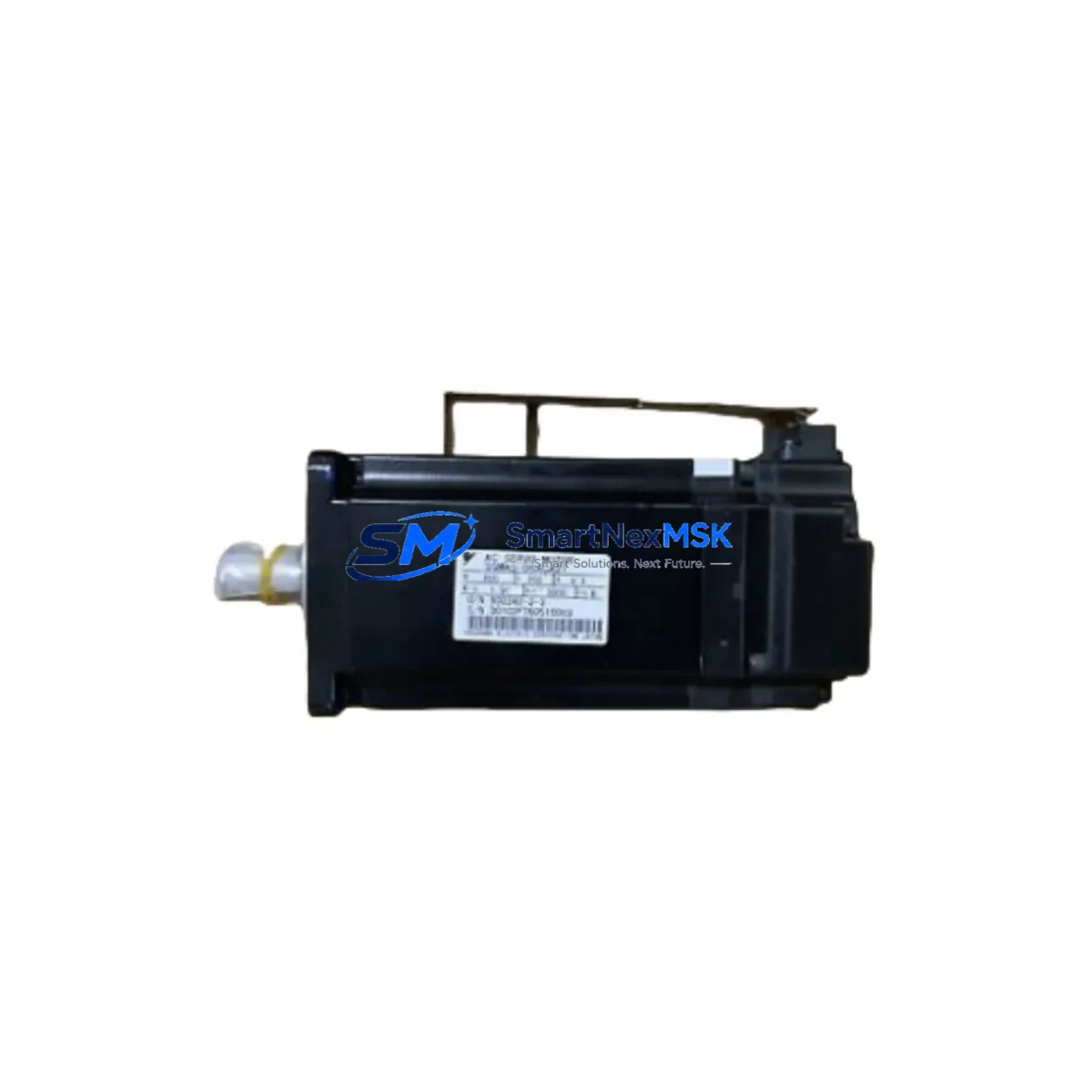
LTI Luster LSMM13-100-4N-110 Retrofit-Ready Linear Servo Motor: Compatible Modernization & Smooth Legacy System Upgrade
The LTI Luster LSMM13-100-4N-110 is a direct-drive linear servo motor engineered for precision motion control in industrial automation systems. With a rated thrust of 100N, a supply voltage of 110V AC, and a 4-pole winding configuration, this unit is purpose-built as a retrofit-ready replacement for aging LSMM13-series installations. Whether you are recovering a discontinued production line, upgrading a legacy control cabinet, or migrating from an obsolete motion platform, the LSMM13-100-4N-110 delivers the dimensional compatibility, electrical specification alignment, and performance consistency that industrial retrofit projects demand.
For facilities running older LTI Luster LSMM13 variants — including the LSMM13-060-4N-110 and LSMM13-150-4N-110 — this model provides a validated upgrade path without requiring mechanical re-engineering of the linear guide rail, forcer mounting plate, or magnet track assembly. The motor’s encoder interface is compatible with standard incremental and absolute feedback protocols, allowing integration with most modern servo drives and motion controllers without signal conditioning hardware.
Upgrade Compatibility Table
| Parameter | LSMM13-100-4N-110 (This Unit) | Retrofit Notes |
|---|---|---|
| Rated Thrust | 100 N | Verify load profile matches legacy unit; peak thrust may differ from predecessor |
| Supply Voltage | 110V AC | Confirm cabinet power rail; 220V variants require transformer or drive reconfiguration |
| Pole Configuration | 4-Pole (4N) | Must match magnet track pole pitch; verify track part number before ordering |
| Mounting Interface | LSMM13 Series Standard | Direct bolt-on replacement for LSMM13 forcer; no rail modification required |
| Encoder Compatibility | Incremental / Absolute (TTL / SIN-COS) | Confirm drive encoder input type; re-homing procedure required after swap |
| Communication Protocol | Analog ±10V / Pulse-Direction | Compatible with EtherCAT, PROFIBUS, and DeviceNet drives via standard drive interface |
| Cooling Method | Natural Convection / Forced Air | Verify cabinet airflow; high-duty-cycle applications may require supplemental cooling |
| Installation Requirement | Horizontal / Vertical (with brake option) | Vertical axis applications: confirm brake module availability for LSMM13 series |
| Commissioning Focus | Gain tuning, limit switch re-teach, encoder zero-point | Use OEM commissioning software or compatible servo drive auto-tune function |
| Warranty | 12 Months | Covers manufacturing defects; includes pre-shipment functional test report |
Retrofit Planning for Existing Automation Systems
A successful retrofit of the LSMM13-100-4N-110 into an existing production line begins well before the physical swap. Engineers should start by auditing the current control cabinet layout, identifying the servo drive model — commonly an LTI Luster SD series or a compatible third-party drive such as a Siemens SINAMICS S120 or Yaskawa Sigma-7 — and confirming that the drive’s continuous current output matches the motor’s rated phase current. If the existing drive is also end-of-life, a parallel upgrade to a current-generation servo drive with EtherCAT or PROFINET connectivity is strongly recommended to future-proof the motion axis.
Terminal wiring is a critical checkpoint. The LSMM13-100-4N-110 uses a standard UVW three-phase power connector and a multi-pin encoder connector. Before disconnecting the legacy motor, photograph and document all terminal assignments, cable routing, and shield grounding points. The power cable cross-section must be verified against the new motor’s rated current to avoid thermal derating under continuous duty cycles. If the existing cable harness uses a non-standard connector shell, a pigtail adapter or full cable replacement may be required.
Backplane and rack considerations apply when the motion axis is part of a larger coordinated system. If the LSMM13-100-4N-110 operates alongside a PLC — such as a Siemens S7-300, Mitsubishi Q-series, or Omron CJ2M — the motion function block parameters stored in the PLC program must be reviewed. Axis scaling factors, software travel limits, and homing sequences are typically stored as data block constants and will need to be updated to reflect the new motor’s encoder resolution and mechanical stroke. Failure to update these parameters is a common cause of post-retrofit positioning errors and unexpected fault trips.
For systems using a distributed I/O architecture — for example, a Beckhoff EK1100 EtherCAT coupler with EL2xxx digital output terminals or EL3xxx analog input terminals — the I/O mapping should be verified against the updated axis configuration. If the retrofit also involves replacing a legacy remote I/O module with a current-generation equivalent, ensure that the new module’s input filter times and output response delays are configured to match the original system’s timing requirements.
HMI screen updates are frequently overlooked during motor retrofits. If the facility uses a touchscreen HMI — such as a Siemens TP700 Comfort, Mitsubishi GOT2000, or Weintek cMT series — any axis status displays, position readouts, or manual jog screens that reference the legacy motor’s engineering units or travel range will need to be revised. Coordinate with the HMI programmer to update tag bindings and alarm thresholds before returning the line to production.
Communication link integrity must be validated end-to-end after the retrofit. If the motion axis communicates via PROFIBUS DP, verify that the GSD file for the new drive is correctly installed in the PLC engineering software and that the bus address matches the original configuration. For EtherCAT topologies, confirm that the ESI file is current and that the slave device order in the network scan matches the physical wiring sequence. A full network diagnostic scan — including cycle time measurement and error counter review — should be completed before the first production run.
All units are pre-shipment tested and supplied with a functional test report. Stock is maintained for immediate dispatch, supporting urgent breakdown recovery and planned maintenance windows alike.
Downtime Control During System Migration
Minimizing unplanned downtime during a linear servo motor replacement requires a structured pre-outage preparation protocol. Before the maintenance window opens, the replacement LSMM13-100-4N-110 should be on-site and bench-verified: confirm that the motor responds correctly to a low-voltage drive enable signal, that the encoder feedback is clean and free of noise, and that the mechanical dimensions match the legacy unit’s mounting footprint.
The original PLC program — including all motion function blocks, axis parameters, and safety interlock logic — must be backed up to an offline archive before any hardware is disconnected. If the control system uses a Siemens S7-400 or Allen-Bradley ControlLogix platform, use the respective engineering software (STEP 7 / TIA Portal or Studio 5000) to export a full project backup, including hardware configuration and symbol tables. This backup serves as the recovery baseline if commissioning issues arise.
During the physical swap, maintain field control continuity by keeping the PLC in a safe hold state rather than a full power-down where process conditions allow. Re-energize the new motor in a controlled sequence: apply drive enable only after confirming correct phase rotation and encoder signal integrity. Perform a slow-speed jog test across the full mechanical stroke before releasing the axis to automatic mode. Re-teach all reference points, software limits, and cam profiles before resuming production. A structured commissioning checklist — covering power-on sequence, fault reset, homing, limit switch verification, and speed ramp validation — reduces the risk of repeat faults and shortens the return-to-production timeline.
Retrofit Support FAQ
Q1: Is the LSMM13-100-4N-110 a direct drop-in replacement for other LSMM13 thrust variants?
The LSMM13-100-4N-110 shares the same forcer mounting interface and magnet track pole pitch as other LSMM13-series motors, making it mechanically compatible with the same linear guide rail and track assembly. However, the rated thrust (100N) differs from the LSMM13-060 and LSMM13-150 variants. If your application was sized for a different thrust rating, verify that 100N continuous force is sufficient for your load and duty cycle before ordering. Drive current limits may also need adjustment.
Q2: What commissioning steps are required after installation?
After mechanical installation and wiring, the following commissioning steps are required: (1) encoder zero-point calibration or absolute encoder initialization, (2) servo drive auto-tune or manual gain adjustment for the new motor’s inertia and thrust constant, (3) software travel limit re-teach, (4) homing sequence re-execution, and (5) full-stroke jog test at reduced speed before returning to production speed. If the drive supports it, run the auto-identification routine to update the motor data set automatically.
Q3: How do I verify wiring compatibility with my existing cable harness?
Compare the connector pinout of the LSMM13-100-4N-110 (available in the product datasheet) against your existing cable harness documentation. Key checkpoints are: UVW phase assignment and rotation direction, encoder connector pin mapping (A/B/Z channels, supply voltage, and shield), and brake connector wiring if applicable. If the connector shell type differs from your legacy harness, a pigtail adapter is the preferred solution to avoid full cable replacement and preserve existing cable routing.
Q4: What does the 12-month warranty cover, and is a test report included?
The 12-month warranty covers manufacturing defects in materials and workmanship under normal operating conditions. Each unit is functionally tested prior to shipment, and a pre-shipment test report confirming thrust output, encoder signal integrity, and insulation resistance is included with the delivery. Warranty claims require the unit to be returned in its original packaging with the test report and a fault description. Units showing evidence of incorrect wiring, mechanical overload, or unauthorized disassembly are excluded from warranty coverage.
© 2026 SMARTNEXMSK. All rights reserved.
Original Source: https://smartnexmsk.com
Contact: [email protected] | +86 18259474341