
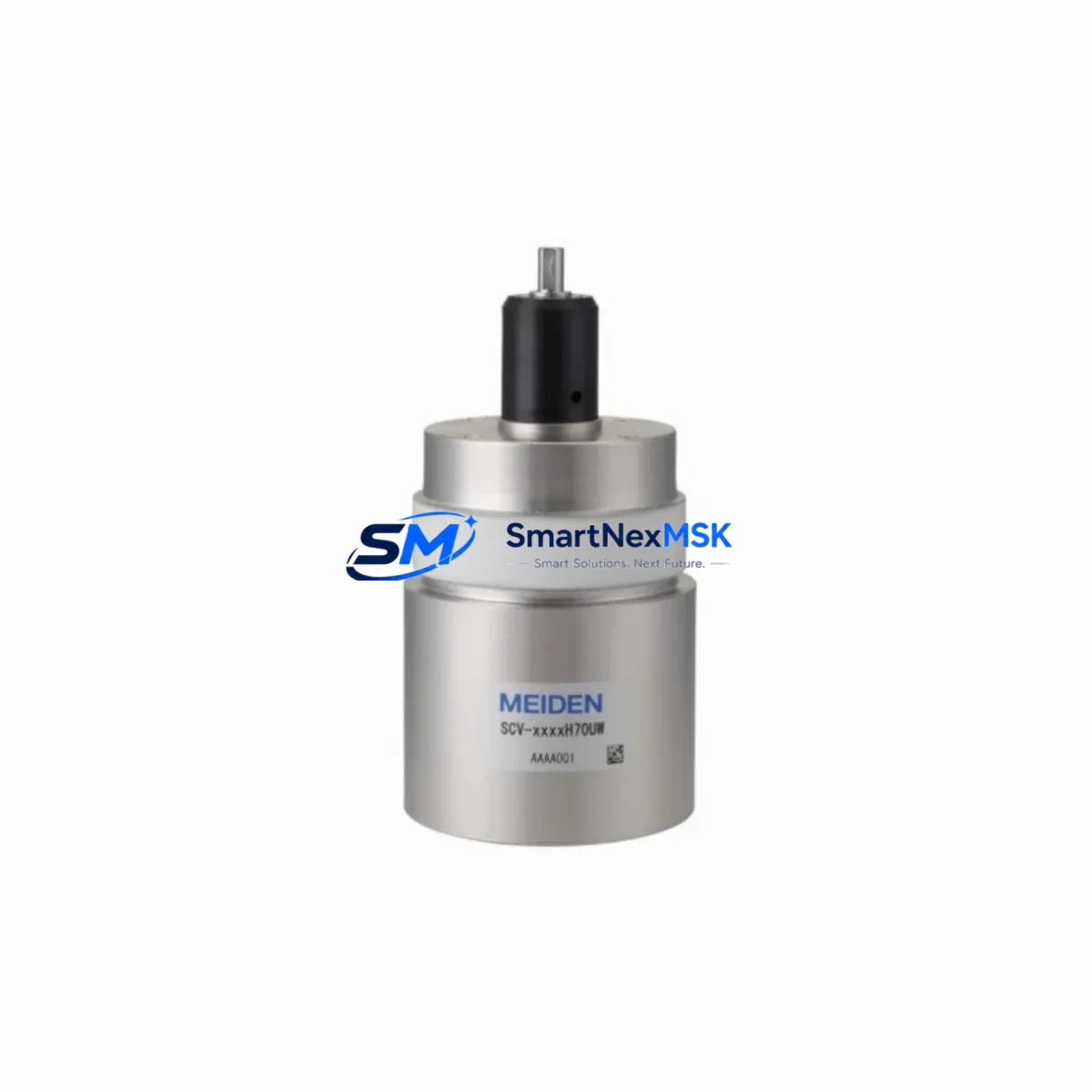
MEIVAC SCV-202D Retrofit-Ready Vacuum Capacitor for SCV Series Control Systems
The MEIVAC SCV-202D (also referenced as R037160001 / PRD2-16) is a fixed vacuum capacitor engineered for seamless integration into SCV Series RF impedance matching networks used across semiconductor etch, CVD, and plasma deposition systems. As original SCV-202 and SCV-200 series units reach end-of-life and OEM spare inventories are depleted, the SCV-202D has become the preferred retrofit-ready replacement for facilities managing legacy RF match systems without full platform migration.
This component is stocked and shipped from verified inventory with full functional testing completed prior to dispatch. Each unit carries a 12-month warranty covering manufacturing defects and performance deviation from published specifications. Lead times are confirmed at order placement, and expedited fulfillment is available for critical production environments.
Upgrade Compatibility Table
| Parameter | Detail |
|---|---|
| Replaces / Supersedes | MEIVAC SCV-202, SCV-200 Series fixed vacuum capacitors |
| Compatible Match Networks | MEIVAC SCV Series RF impedance matching networks |
| Mounting Interface | Direct drop-in; verify terminal torque spec per SCV Series service manual |
| Electrical Interface | Fixed capacitance; confirm pF rating against original BOM before installation |
| Communication / Control | Passive component — no firmware or protocol dependency |
| Installation Requirement | RF match network must be de-energized; follow lockout/tagout procedure |
| Calibration After Swap | RF match re-tune recommended after capacitor replacement |
| Warranty | 12 months from shipment date, covering defects and out-of-spec performance |
| Pre-Shipment Testing | Full functional and dielectric withstand test completed on each unit |
| Replacement Recommendation | Suitable for like-for-like swap in existing SCV Series match enclosures |
Retrofit Planning for Existing Automation Systems
Replacing the SCV-202D within an active RF process system requires careful coordination across multiple subsystems. Before scheduling the maintenance window, engineers should pull the existing SCV Series match network schematic and confirm the capacitor’s position within the L-network or π-network topology. In many installations, the SCV-202D operates alongside a MEIVAC variable vacuum capacitor (such as the SCV-301 or SCV-401 series) that handles dynamic tuning — the fixed capacitor sets the baseline impedance offset, so any deviation in capacitance value will shift the tuning range of the variable element.
The RF power delivery chain typically includes an RF generator (commonly an Advanced Energy Paramount or MKS ENI series unit), a coaxial transmission line, the match network enclosure, and the process chamber electrode. When the SCV-202D is replaced, the match network’s auto-tune algorithm — usually managed by the match network controller PCB — should be reset to factory defaults or re-characterized against the new capacitor’s actual measured value. Skipping this step can result in reflected power alarms and process instability.
Inside the match enclosure, verify the condition of the RF bus bars, terminal blocks, and high-voltage interconnects before installing the replacement unit. Corroded or loose terminals are a common root cause of premature capacitor failure and should be addressed during the same maintenance event. If the enclosure uses a vacuum interlock or pressure sensor to monitor the capacitor’s internal vacuum integrity, confirm the sensor is functional and its setpoint is correctly configured in the system PLC or safety relay.
For facilities running older process tools where the match network interfaces with a legacy PLC rack — such as an Allen-Bradley SLC 500, Siemens S5, or GE Series 90 controller — the capacitor swap itself does not require any program changes. However, if the maintenance event is being combined with a broader controls upgrade (for example, migrating from an SLC 500 to a CompactLogix L3x or from a Siemens S5 to an S7-300), the RF match network’s analog I/O signals (reflected power, forward power, tuning position feedback) must be remapped to the new I/O modules. In this scenario, an analog input module with the correct signal range (typically 0–10 V or 4–20 mA) and a compatible analog output module for the match tune command must be confirmed before commissioning.
Where the process tool uses an HMI panel (such as a Siemens TP700, Allen-Bradley PanelView, or Proface GP series), the RF match status screens should be reviewed after the capacitor replacement to confirm that reflected power and tune position displays are reading correctly. If the HMI communicates with the match controller via RS-232, RS-485, or Ethernet/IP, verify that the communication link is active and that no timeout faults are present before returning the tool to production.
Downtime Control During System Migration
Minimizing unplanned downtime during a vacuum capacitor replacement begins with pre-staging the SCV-202D unit on-site before the maintenance window opens. Confirm receipt and inspect the unit against the packing list and test certificate before the tool is taken offline. Having the replacement physically verified and ready eliminates the most common source of extended downtime — discovering a shipping discrepancy after the system is already de-energized.
During the swap, preserve the original RF match network’s tuning parameters by documenting the variable capacitor position, motor drive settings, and any stored auto-tune presets in the match controller’s non-volatile memory. Most SCV Series match controllers provide a parameter export function via a front-panel interface or a serial configuration port — use this before disconnecting power. After the SCV-202D is installed and the enclosure is reassembled, restore these parameters before energizing the RF system. This approach allows the match network to return to a known-good tuning state immediately, reducing the time required for process re-qualification.
For critical production lines where even a brief RF interruption is costly, consider maintaining a cold-spare SCV-202D in the facility’s spare parts inventory alongside other high-wear match network components. Pairing this with a documented replacement procedure — including torque values, terminal cleaning steps, and post-installation RF tune verification — ensures that any technician can execute the swap safely and efficiently without relying on institutional knowledge.
Retrofit Support FAQ
Q1: Is the SCV-202D a direct drop-in replacement for the SCV-202 and SCV-200 series capacitors?
Yes. The SCV-202D is the current production successor to the SCV-202 and is dimensionally and electrically compatible for direct installation in existing SCV Series match network enclosures. Confirm the capacitance value (pF) against your original BOM, as multiple capacitance variants exist within the SCV-200 product family.
Q2: What pre-shipment testing is performed, and what documentation is included?
Each SCV-202D unit undergoes functional testing and dielectric withstand verification before dispatch. A test certificate is included with shipment. Units are covered by a 12-month warranty from the shipment date. If your facility requires additional FAT documentation or third-party inspection, contact us at the time of order.
Q3: Do I need to recalibrate or retune the RF match network after replacing the capacitor?
Yes. Even a like-for-like replacement can introduce minor capacitance variation within the component’s tolerance band. After installation, perform an RF match re-tune using the match controller’s auto-tune function or manual tuning procedure. Verify that forward power, reflected power, and tune position are within normal operating ranges before resuming production.
Q4: Can this unit be used in a system that is being upgraded from a legacy PLC platform?
Yes. The SCV-202D is a passive RF component and has no dependency on the control platform. It is compatible with any RF match network that accepts the SCV-202 form factor, regardless of whether the broader system is running on a legacy controller or a modern platform such as a CompactLogix, S7-1200, or ControlLogix system. Ensure that the match network’s analog I/O signals are correctly mapped to the new control hardware during the migration.
© 2026 SMARTNEXMSK. All rights reserved.
Original Source: https://smartnexmsk.com
Contact: [email protected] | +86 18259474341