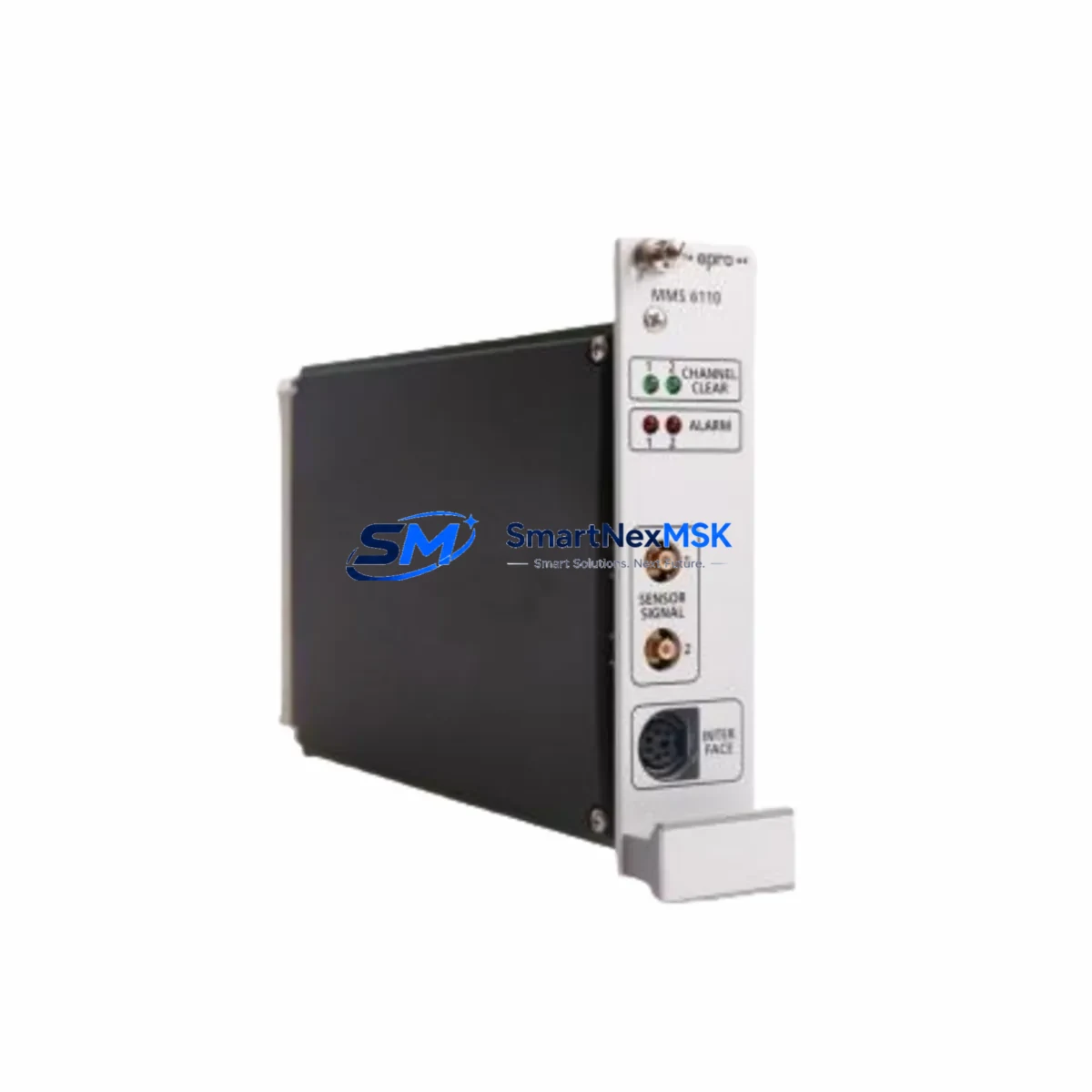
MKS 902-1112 Spare for 902 Series Automation: Spare Replacement & Industrial Downtime Risk Control
The MKS 902-1112 is a piezoelectric vacuum transducer engineered for continuous-duty industrial vacuum measurement within MKS Instruments’ 902 Series platform. In semiconductor fabrication, thin-film deposition, chemical vapor processing, and precision vacuum systems, this transducer serves as a critical feedback element — providing real-time pressure data to the process controller or PLC. When the 902-1112 fails or drifts out of calibration, the entire vacuum loop is compromised, triggering process alarms, recipe aborts, and unplanned downtime. Maintaining a verified spare on the shelf is the single most effective strategy for rapid fault recovery.
This listing supplies an original MKS 902-1112 unit — not a clone or remanufactured substitute — sourced through authorized industrial channels, individually tested prior to dispatch, and backed by a 12-month warranty. Each unit ships with full traceability documentation to support your incoming inspection and maintenance records.
Spare Maintenance Table
| Parameter | Specification |
|---|---|
| Part Number / SKU | 902-1112 |
| Brand | MKS Instruments |
| Series | 902 Series |
| Product Type | Piezoelectric Vacuum Transducer / Pressure Sensor |
| Measurement Range | Atmosphere to 1×10⁻³ Torr (typical 902 Series range) |
| Output Signal | Analog voltage (0–10 VDC typical); compatible with standard process controllers |
| Process Connection | KF-16 / NW-16 flange (confirm with system drawing) |
| Operating Temperature | 0°C to 50°C ambient; process gas temperature per system spec |
| Compatibility | MKS 902 Series vacuum systems; compatible with MKS 937A, 670, and PR4000 controllers |
| Installation | Direct flange mount; no reconfiguration required for same-series replacement |
| Application Environment | Semiconductor process chambers, CVD/PVD systems, vacuum furnaces, R&D vacuum rigs |
| Maintenance Interval | Inspect every 6–12 months; replace on drift >2% full-scale or alarm trigger |
| Origin | USA (MKS Instruments) |
| Warranty | 12 Months — covers manufacturing defects and functional failure under normal operating conditions |
| Pre-shipment Testing | Functional verification and leak check performed before dispatch |
| Lead Time | In-stock; ships within 1–3 business days |
Maintenance Planning for Continuous Operation
Replacing the MKS 902-1112 in isolation rarely resolves the root cause of a vacuum system fault. Experienced maintenance engineers treat a transducer replacement as the trigger for a broader control-loop inspection. During the same maintenance window, the following components should be evaluated:
The MKS 937A Multi-Sensor Controller or MKS PR4000 Power Supply/Readout — whichever controller interfaces with the 902-1112 — should be checked for stable excitation voltage output and clean analog input channels. A degraded controller can cause a new transducer to read incorrectly from day one. Similarly, the MKS 660 Absolute Capacitance Manometer installed in the same vacuum line provides an independent pressure reference; cross-checking its reading against the 902-1112 output is a fast way to confirm whether the fault is in the sensor or the controller.
Inspect the KF-16 centering ring and O-ring seal at the transducer port. A micro-leak at this junction will cause the 902-1112 to read higher than actual chamber pressure, mimicking a sensor fault. Replace the O-ring as a matter of course during any transducer swap. The vacuum isolation valve upstream of the transducer port should also be cycled and inspected for seat wear — a leaking valve allows backstreaming that contaminates the transducer diaphragm.
On the electrical side, verify the signal cable assembly connecting the 902-1112 to the controller. Shielding integrity and connector pin condition are common failure points in high-vibration or high-temperature environments. If the system uses a signal isolator or analog barrier between the transducer and the PLC analog input card, test the isolator’s output accuracy — a drifting isolator will corrupt the pressure reading even with a perfect sensor installed.
For systems where the vacuum pressure signal feeds a Siemens S7-300 or S7-1500 PLC analog input module (such as the SM 331 or AI 8×U/I/RTD/TC ST), confirm the input range configuration matches the 902-1112 output. A misconfigured input scaling will produce a systematic offset error that persists after sensor replacement. The PLC backplane and rack power supply should also be checked for voltage stability — ripple on the 24 VDC rail can introduce noise into low-level analog signals.
Finally, if the vacuum system is controlled via an HMI panel (such as a Siemens TP700 or TP1200 Comfort), verify that the pressure trend display and alarm setpoints are correctly configured after the replacement. Stale alarm limits from a previous calibration range can mask real process deviations or generate nuisance trips.
Site Replacement Workflow
Step 1 — Isolate and vent. Close the isolation valve upstream of the 902-1112 port and vent the local vacuum line to atmosphere through the designated vent valve. Confirm pressure at atmosphere using the independent capacitance manometer before breaking the flange connection.
Step 2 — Remove the failed unit. Disconnect the signal cable at the transducer connector. Loosen the KF clamp and remove the 902-1112. Inspect the port flange face for contamination or scoring. Clean with IPA-dampened lint-free cloth if required.
Step 3 — Install the replacement. Fit a new KF-16 O-ring and centering ring. Mount the replacement 902-1112, tighten the KF clamp to finger-tight plus one-quarter turn, and reconnect the signal cable. Verify connector locking.
Step 4 — Leak check. Pump down the isolated section and monitor pressure decay for a minimum of 5 minutes. A stable reading confirms a leak-free installation.
Step 5 — Functional verification. With the system at base pressure, compare the 902-1112 output against the reference manometer. Readings should agree within the sensor’s specified accuracy band. Log the baseline reading in the maintenance record.
Step 6 — Return to service. Open the isolation valve, restore process conditions, and confirm stable operation through at least one full process cycle before releasing the system to production.
This workflow is compatible with legacy 902 Series installations and does not require firmware changes or controller reconfiguration when replacing a like-for-like 902-1112 unit, minimizing downtime to under 60 minutes for a prepared maintenance team.
Spare Parts Support FAQ
Q1: What is the expected service life of the MKS 902-1112, and when should I plan a proactive replacement?
Under normal operating conditions in a clean vacuum environment, the 902-1112 typically delivers 3–5 years of reliable service. In aggressive process environments — corrosive gases, frequent thermal cycling, or high particulate load — annual inspection and replacement every 2–3 years is recommended. Proactive replacement during scheduled shutdowns eliminates the risk of an unplanned failure during production.
Q2: How do I confirm compatibility before installing this unit in my system?
Verify the following: (1) the controller model accepts the 902-1112 output signal type and range; (2) the process connection flange size matches (KF-16 standard); (3) the operating pressure range of your process falls within the 902 Series measurement envelope. If your system uses a non-standard signal conditioning board, contact our technical team with your controller model number before ordering.
Q3: What pre-shipment testing is performed, and what documentation is included?
Every 902-1112 unit undergoes functional output verification and a basic leak integrity check before dispatch. Shipment includes a test record, part traceability label, and packing list. A calibration certificate can be requested at the time of order for an additional lead time of 2–3 business days.
Q4: What does the 12-month warranty cover, and how is a warranty claim processed?
The 12-month warranty covers manufacturing defects and functional failure under normal operating conditions from the date of shipment. It does not cover damage from improper installation, chemical contamination, or operation outside specified parameters. To initiate a warranty claim, contact [email protected] with your order number, a description of the fault, and photographic evidence. Replacement units are dispatched within 5 business days of claim approval.
© 2026 SMARTNEXMSK. All rights reserved.
Original Source: https://smartnexmsk.com
Contact: [email protected] | +86 18259474341