
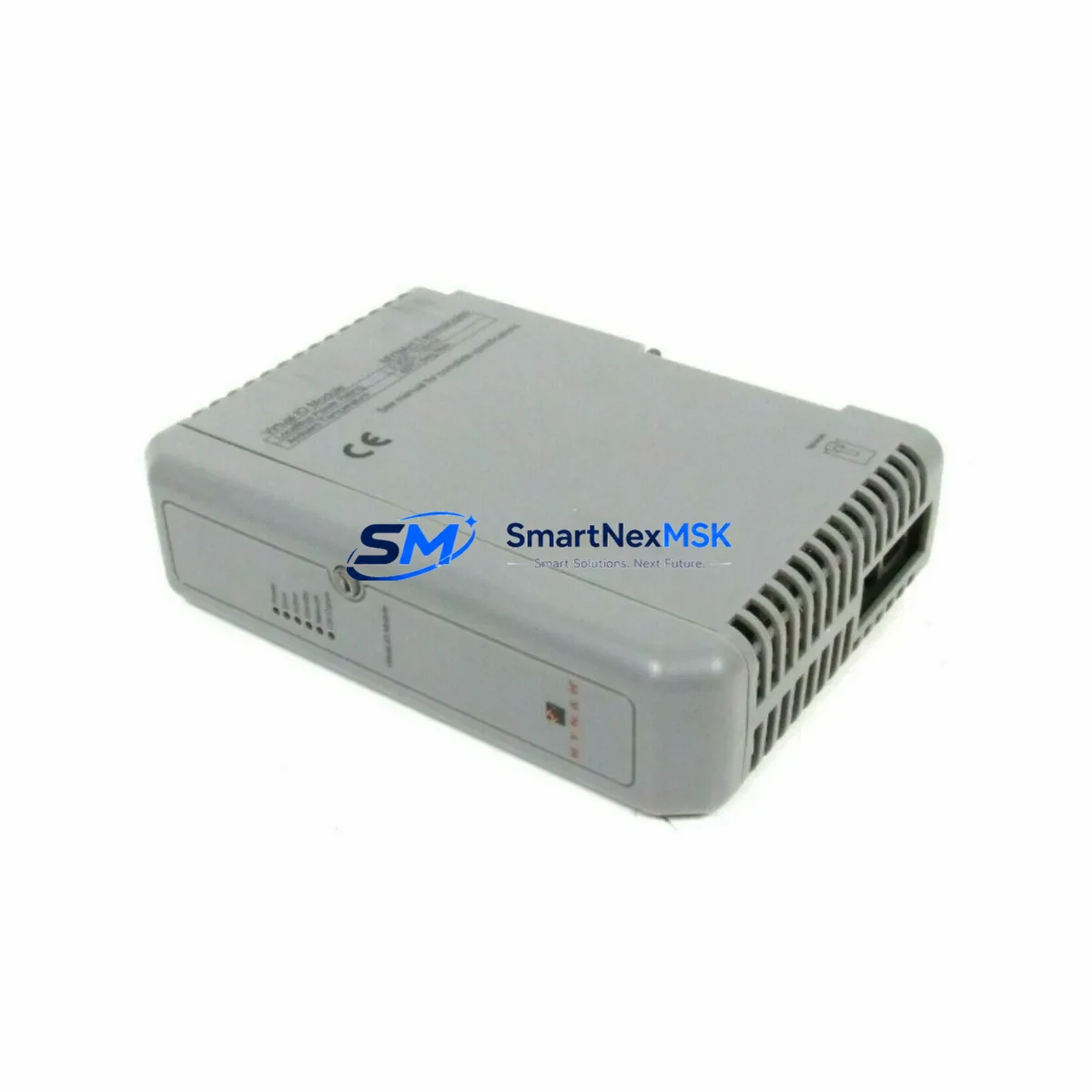
Mynah MIM-4207 Retrofit-Ready Virtual IO Module for MIM Series Control Systems
The Mynah MIM-4207 is a retrofit-ready Virtual IO Module engineered for seamless integration into legacy MIM Series distributed control and PLC architectures. As industrial facilities face increasing pressure to extend the operational life of aging automation infrastructure while maintaining production continuity, the MIM-4207 provides a verified, drop-in compatible solution for engineers managing system modernization without full platform replacement.
Designed to address the most common challenges in brownfield automation projects — including discontinued spare parts, obsolete backplane interfaces, and incompatible communication stacks — the MIM-4207 bridges the gap between legacy field wiring and modern control logic. Whether you are replacing a failed module in an active production line or executing a phased migration from an end-of-life DCS platform, this module delivers the electrical compatibility, firmware stability, and physical form factor required for a controlled, low-risk retrofit.
Upgrade Compatibility Table
| Parameter | Details |
|---|---|
| SKU / Part Number | MIM-4207 |
| Brand | Mynah Technologies |
| Series | MIM Series (Virtual IO Module Family) |
| Module Type | Virtual IO Module (Simulated I/O for DCS/PLC Integration) |
| Backplane Interface | Compatible with MIM Series rack and backplane bus |
| Communication Protocol | OPC, Modbus TCP/IP, proprietary MIM Series bus (verify firmware revision) |
| Installation Requirement | Standard DIN rail or rack-mount; confirm slot addressing before installation |
| Replacement Compatibility | Direct replacement for MIM-4207 and functionally equivalent MIM Series variants |
| Retrofit Recommendation | Verify power supply capacity (24 VDC typical); confirm terminal block wiring map against original I/O schedule |
| Commissioning Notes | Re-address module slot in controller configuration; validate tag mapping in HMI before live switchover |
| Warranty | 12 Months — covers manufacturing defects and functional failure under normal operating conditions |
| Condition | New / Refurbished (specify at order); full functional test prior to shipment |
Retrofit Planning for Existing Automation Systems
Successful integration of the MIM-4207 into an existing control system begins well before the module arrives on site. Engineers should start by auditing the current rack configuration, identifying the precise slot position of the module being replaced, and confirming that the host controller — whether a Mynah MIM Series master controller or an interfacing PLC — supports the firmware version shipped with the replacement unit.
Power budget verification is a critical first step. The MIM Series backplane distributes 24 VDC across all installed modules, and adding or replacing a Virtual IO Module requires confirming that the existing MIM Series power supply module has sufficient headroom. If the rack is already near capacity, a supplemental power supply or load redistribution across a secondary rack may be necessary before the MIM-4207 can be safely installed.
Terminal block wiring should be mapped against the original I/O schedule. In many retrofit scenarios, field wiring has been modified over years of operation and may not match the as-built drawings. Before removing the legacy module, photograph or document all terminal connections. The MIM-4207 uses a standard terminal block layout consistent with the MIM Series family, but wire gauge, shielding, and grounding practices should be verified against the module’s installation manual.
For systems that include a Mynah MIM Series communication gateway or an OPC server interface, the virtual I/O tag addresses assigned to the MIM-4207 must be re-registered in the gateway configuration after module replacement. This is particularly important in facilities where the DCS historian or SCADA system — such as a Wonderware InTouch HMI or a Rockwell FactoryTalk View application — pulls real-time data from the MIM Series OPC namespace. Failure to update tag bindings will result in stale or missing data on operator displays.
In multi-rack installations, the MIM-4207’s module address must be set correctly via hardware DIP switches or software configuration, depending on the firmware revision. Duplicate addresses on the same backplane bus will cause communication conflicts with adjacent modules, including MIM Series analog input modules, digital output modules, and any co-installed MIM Series fieldbus interface cards. Address conflicts are among the most common causes of extended commissioning delays in retrofit projects and should be resolved before powering the rack.
If the facility operates a Mynah MIM Series programming cable or USB-to-serial adapter for local configuration, ensure the cable driver is compatible with the engineering workstation’s operating system before beginning the retrofit. Configuration software version compatibility should also be confirmed — older versions of the MIM configuration utility may not recognize the MIM-4207’s extended parameter set.
For sites migrating from a legacy proprietary protocol to Modbus TCP/IP or OPC-UA, the MIM-4207 supports protocol bridging when paired with the appropriate MIM Series Ethernet communication module. This allows the virtual I/O data to be exposed to modern SCADA and MES platforms without requiring a full controller replacement, significantly reducing project scope and capital expenditure.
Downtime Control During System Migration
Minimizing unplanned downtime during a module replacement or system migration is the primary operational concern for any plant engineer. The MIM-4207 retrofit process is designed to support a controlled, planned switchover with the following approach.
Before any hardware is removed, export and archive the current controller program, including all rung logic, function block diagrams, and I/O tag assignments. Store a verified backup on an offline medium independent of the control network. This ensures that if the replacement process encounters an unexpected issue, the original program can be restored without relying on network-accessible backups that may themselves be affected by the system change.
Where process conditions allow, schedule the module swap during a planned maintenance window or production changeover. If a hot-swap is required on a running system, confirm that the MIM Series backplane supports live module insertion for the specific slot type — not all MIM Series racks support hot-swap on all slot positions, and forcing a live swap on an unsupported slot can cause a rack-wide communication fault.
After physical installation, bring the MIM-4207 online in a forced-output or simulation mode before connecting live field signals. This allows the control program to recognize the new module, assign the correct I/O addresses, and confirm that HMI tag bindings are resolving correctly — all without exposing field devices to potentially incorrect output states during the initialization sequence.
Once simulation validation is complete, transfer field wiring from the legacy module to the MIM-4207 terminal block in a documented sequence, verifying each signal against the I/O schedule before proceeding to the next. After all signals are connected, release the module from simulation mode and monitor the first scan cycle for any unexpected alarms, communication faults, or out-of-range analog values. Document the commissioning result and retain the test record as part of the site’s change management log.
Retrofit Support FAQ
Q: Is the MIM-4207 a direct drop-in replacement for the original Mynah MIM-4207?
A: Yes. The MIM-4207 is manufactured or sourced to the original Mynah Technologies specification and is intended as a direct functional replacement. Physical dimensions, backplane connector pinout, and firmware interface are consistent with the original MIM Series design. Minor firmware revision differences may exist; confirm compatibility with your controller’s firmware version before installation.
Q: What wiring changes are required when installing the MIM-4207 as a retrofit?
A: In most cases, no wiring changes are required if the replacement module occupies the same rack slot as the original. Terminal block layout is consistent with the MIM Series standard. However, always verify field wiring against the current I/O schedule, as site modifications over the equipment’s service life may have introduced undocumented changes.
Q: How is the MIM-4207 tested before shipment?
A: Each MIM-4207 unit undergoes a full functional test prior to dispatch, including power-on verification, communication bus response, and I/O channel integrity checks. A test report is available upon request. All units are covered by a 12-month warranty against manufacturing defects and functional failure under normal operating conditions.
Q: Can the MIM-4207 be used in a system that has been partially migrated to a newer control platform?
A: Yes. The MIM-4207’s support for OPC and Modbus TCP/IP makes it suitable for hybrid architectures where legacy MIM Series racks coexist with modern PLC or DCS platforms. The virtual I/O data can be bridged to the new platform via an Ethernet communication module, allowing a phased migration without requiring simultaneous replacement of all legacy hardware.
© 2026 SMARTNEXMSK. All rights reserved.
Original Source: https://smartnexmsk.com
Contact: [email protected] | +86 18259474341