
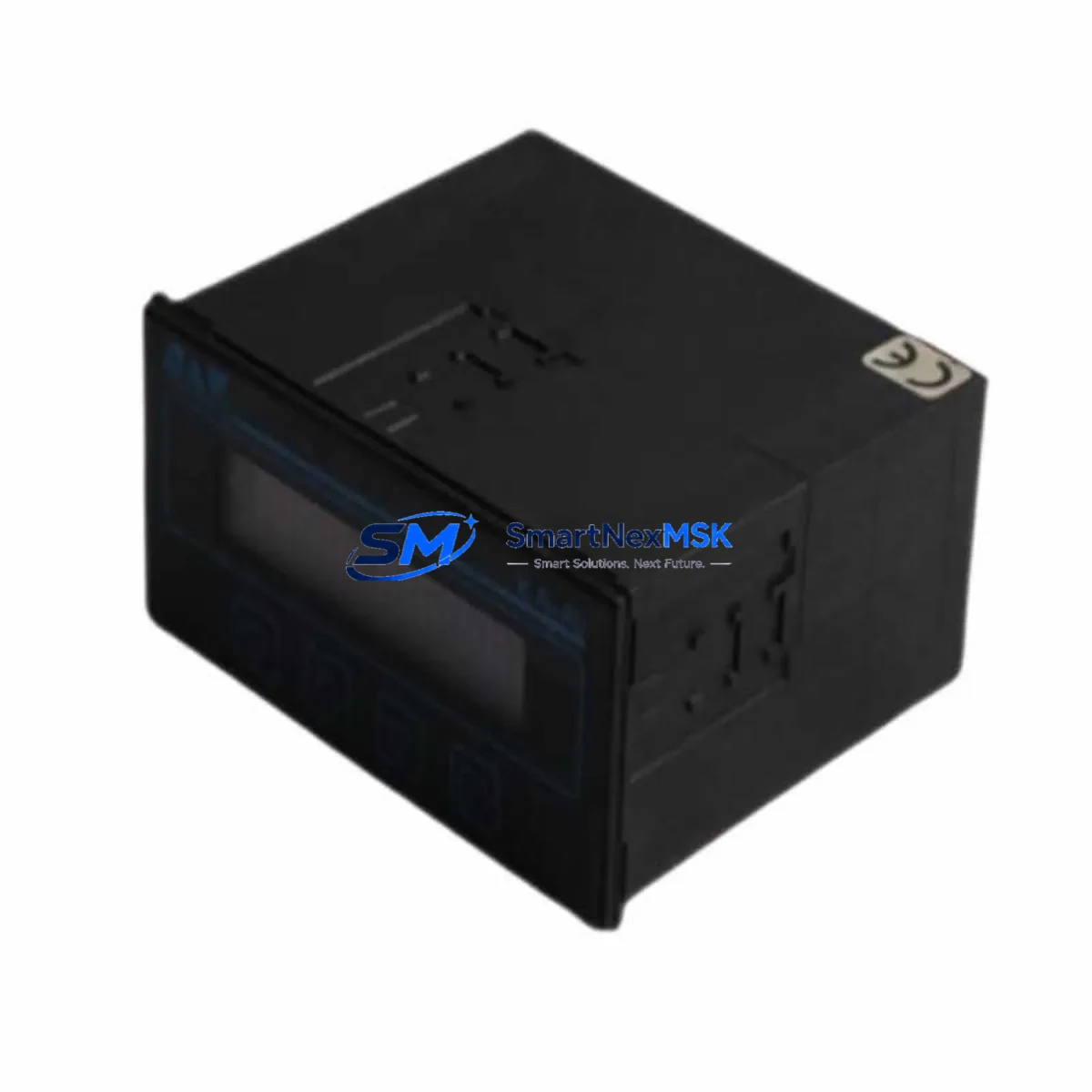
SAE KA-40-S-T Retrofit-Ready Servo Drive for KA Series Control Systems
The SAE KA-40-S-T is a high-performance servo drive amplifier engineered for seamless integration into existing KA Series automation architectures. As legacy servo systems approach end-of-life or face discontinued spare parts availability, the KA-40-S-T provides a verified, drop-in compatible retrofit solution that preserves your existing control logic, wiring topology, and HMI configurations — minimizing engineering rework and unplanned downtime.
Whether you are replacing a failed unit on an active production line, upgrading a legacy servo axis during a planned maintenance window, or modernizing a multi-axis control cabinet, the KA-40-S-T delivers the electrical and mechanical compatibility required for a smooth transition. Its design aligns with the KA Series backplane interface standard, ensuring that existing terminal wiring, feedback encoder cables, and power supply connections can be retained without modification in most retrofit scenarios.
Upgrade Compatibility Table
| Parameter | Details |
|---|---|
| Compatible Series | SAE KA Series Servo Drive Systems |
| Typical Replaced Models | KA-40-S, KA-40-T, KA Series legacy amplifier variants |
| Mounting Interface | Standard KA Series backplane slot — direct replacement |
| Power Supply Compatibility | Verify existing DC bus voltage and current capacity before installation |
| Feedback Interface | Encoder / resolver input — confirm signal type matches existing motor feedback |
| Communication Protocol | Analog command / pulse-direction; verify against existing controller output |
| Terminal Wiring | Retain existing wiring harness; verify pin-out against KA-40-S-T datasheet |
| Program Compatibility | Existing PLC motion programs compatible; re-tuning of servo parameters recommended |
| HMI Screen Adaptation | No HMI screen changes required for standard axis replacement |
| Commissioning Requirement | Servo gain re-tuning and safety interlock verification required post-installation |
| Warranty | 12-Month Warranty — covers manufacturing defects under normal operating conditions |
| Pre-Shipment Testing | Full functional test performed before dispatch |
Retrofit Planning for Existing Automation Systems
A successful KA-40-S-T retrofit begins with a thorough audit of the existing control cabinet. Before removing the legacy amplifier, engineers should document the current servo parameter set — including position loop gain, velocity loop gain, acceleration/deceleration ramps, and torque limits — as these values will serve as the baseline for re-commissioning the replacement unit.
The KA-40-S-T is typically deployed alongside a coordinating motion controller or PLC, such as a Siemens S7-300 or S7-400 series CPU, which issues position or velocity commands via analog ±10V reference or pulse-direction signals. In multi-axis systems, the drive shares a common DC bus with other KA Series amplifiers mounted on the same backplane rack. Before installation, verify that the existing power supply module — often a dedicated servo power supply unit within the KA Series rack — can sustain the combined continuous and peak current demand of all active axes, including the replacement KA-40-S-T.
Terminal block wiring for the control signals, enable inputs, fault outputs, and motor power connections should be photographed and labeled before disconnection. In many retrofit projects, the existing KA Series terminal wiring harness can be reused directly, significantly reducing rewiring time. However, if the installation involves a protocol migration — for example, transitioning from analog command to a digital fieldbus such as PROFIBUS-DP or CANopen — additional communication modules and gateway hardware will be required between the motion controller and the drive.
For systems that include an HMI panel — such as a Siemens TP700 or OP177 operator panel — the existing screen layouts and axis status displays typically require no modification when performing a like-for-like KA-40-S-T replacement. However, if the retrofit involves changes to axis numbering, drive address assignments, or communication node IDs, the HMI project file will need to be updated accordingly before going live.
In I/O-intensive applications, the KA-40-S-T may operate alongside distributed I/O modules, digital input/output expansion cards, and safety relay modules within the same control cabinet. Ensure that all safety interlock circuits — including emergency stop chains, axis enable signals, and overtravel limit switch wiring — are verified and tested before returning the machine to production.
Encoder feedback cables connecting the servo motor to the KA-40-S-T should be inspected for continuity and shielding integrity. Damaged or improperly shielded encoder cables are a common source of position feedback errors and drive faults in retrofit projects. If the existing motor uses a resolver-type feedback device rather than an incremental encoder, confirm that the KA-40-S-T feedback interface is configured for resolver input prior to commissioning.
Downtime Control During System Migration
Minimizing production downtime is the primary operational concern in any servo drive retrofit. For the KA-40-S-T replacement, the recommended approach is to pre-stage the new drive with all known servo parameters loaded and verified on a test bench before the scheduled maintenance window begins. This allows the on-site installation to proceed as a direct swap, with commissioning limited to final gain verification and safety interlock testing.
Where possible, the original PLC program and motion function blocks should be backed up to an offline programming device — such as a STEP 7 or TIA Portal project archive — before any hardware changes are made. This ensures that the control logic can be restored immediately if unexpected compatibility issues arise during the retrofit.
For multi-axis systems where only one axis is being replaced, the remaining axes can often remain powered and in a safe hold state during the swap, provided that the machine’s safety system permits partial axis isolation. This approach avoids a full system shutdown and allows production to resume on unaffected axes while the retrofit is completed.
After installation, a structured commissioning sequence should be followed: power-on self-test, encoder feedback verification, no-load jog test, loaded motion profile test, and final safety interlock confirmation. Document all commissioning results and retain them alongside the 12-month warranty certificate for future reference.
Retrofit Support FAQ
Q: Is the KA-40-S-T a direct drop-in replacement for other KA Series servo amplifiers?
A: In most cases, yes. The KA-40-S-T shares the KA Series backplane interface and terminal wiring standard. However, engineers should verify the power rating, feedback interface type, and command signal format against the specific model being replaced before installation.
Q: What commissioning steps are required after installing the KA-40-S-T?
A: After physical installation and wiring verification, perform a servo parameter upload using the appropriate configuration software, conduct a no-load jog test to confirm encoder feedback integrity, and then run a loaded motion profile test. Re-tune servo gains as needed and verify all safety interlocks before returning the axis to production.
Q: Does the KA-40-S-T support protocol migration from analog command to digital fieldbus?
A: The KA-40-S-T natively supports analog command and pulse-direction interfaces. For digital fieldbus integration — such as PROFIBUS-DP or CANopen — a compatible communication option module or external gateway device will be required. Consult the KA-40-S-T technical datasheet for available communication interface options.
Q: What does the 12-month warranty cover, and is pre-shipment testing performed?
A: Every KA-40-S-T unit undergoes a full functional test prior to dispatch. The 12-month warranty covers manufacturing defects under normal operating conditions and excludes damage caused by incorrect installation, overvoltage, or environmental factors outside the specified operating range. Warranty claims are supported directly through our technical team.
© 2026 SMARTNEXMSK. All rights reserved.
Original Source: https://smartnexmsk.com
Contact: [email protected] | +86 18259474341