
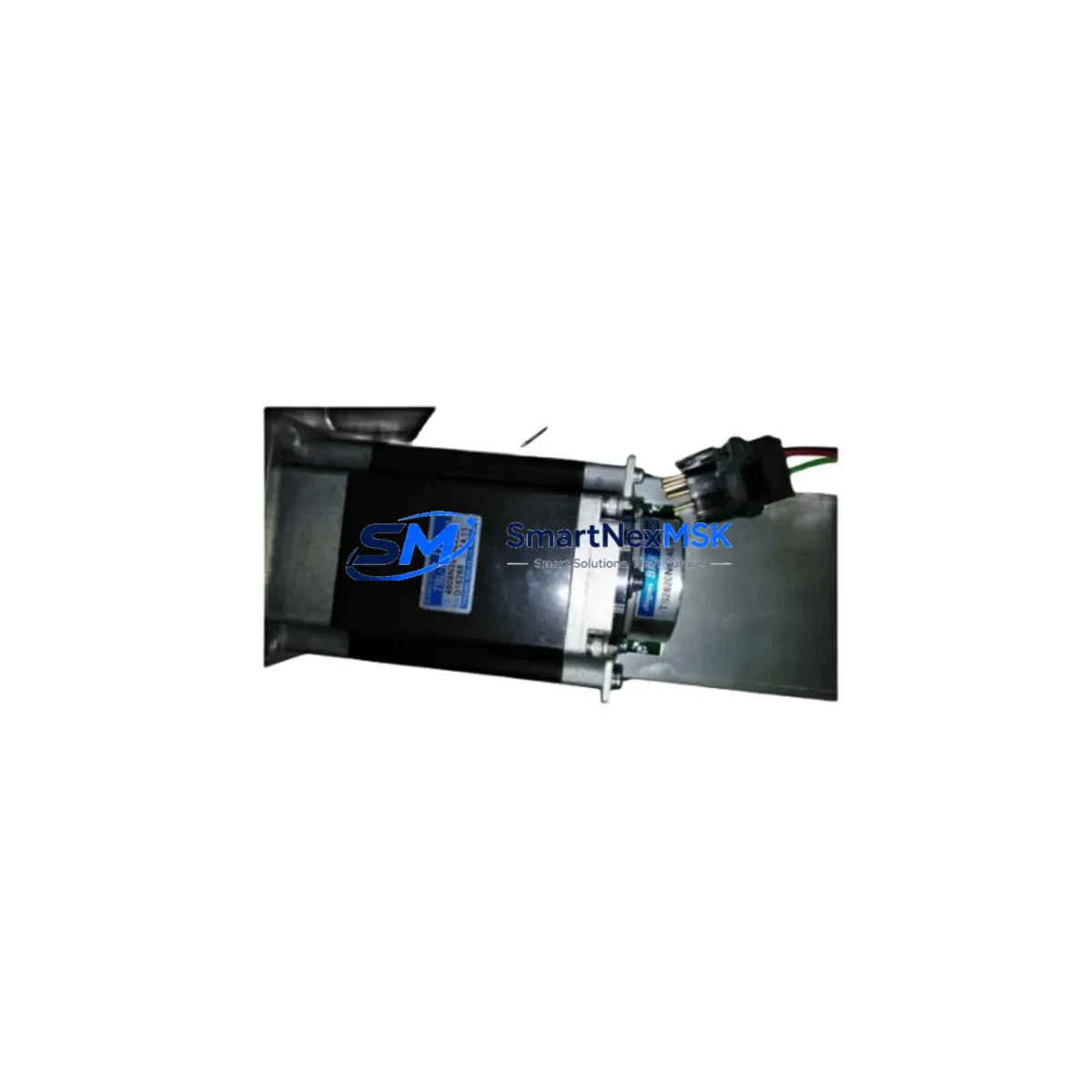
Tamagawa 4609N3362E208 Retrofit-Ready Smart-Syn Encoder for Legacy Servo Control Systems
The Tamagawa 4609N3362E208 is a Smart-Syn absolute servo encoder engineered for high-precision position feedback in demanding industrial servo drive applications. As legacy servo systems age and original encoder components reach end-of-life, the 4609N3362E208 serves as a verified retrofit-ready replacement that enables smooth migration from discontinued encoder models without requiring full servo axis redesign. Whether you are upgrading an aging CNC machining center, modernizing a robotic welding cell, or restoring a precision grinding machine, this encoder delivers the resolution, signal integrity, and mechanical compatibility required for reliable closed-loop control continuity.
Tamagawa’s Smart-Syn serial communication protocol transmits multi-turn absolute position data with high noise immunity, making the 4609N3362E208 well-suited for environments where legacy resolvers or incremental encoders have proven unreliable. When replacing an older Tamagawa TS5700N8401 or a comparable absolute encoder from a discontinued product line, engineers must verify the connector pinout, cable shield grounding, and the servo drive’s encoder interface card before commissioning. Many Tamagawa-compatible servo drives — including those from Panasonic MINAS, Mitsubishi MR-J, and Yaskawa SGDV series — support Smart-Syn protocol natively or through a dedicated encoder option card, simplifying the retrofit path considerably.
Upgrade Compatibility Table
| Parameter | Details |
|---|---|
| SKU / Part Number | 4609N3362E208 |
| Brand / Manufacturer | Tamagawa Seiki |
| Series | Smart-Syn Absolute Encoder |
| Communication Protocol | Tamagawa Smart-Syn Serial (single-turn / multi-turn absolute) |
| Connector Interface | Tamagawa standard encoder connector — verify mating connector on existing cable harness before installation |
| Mounting Compatibility | Flange and shaft dimensions consistent with Tamagawa 4609N series — confirm motor shaft diameter and key slot before ordering |
| Compatible Drive Platforms | Panasonic MINAS A5/A6, Mitsubishi MR-J3/MR-J4, Yaskawa SGDV/SGDH (with Smart-Syn option), Tamagawa-native servo controllers |
| Replacement / Retrofit Target | Discontinued Tamagawa TS-series encoders, legacy resolver-based feedback systems, incremental encoder upgrades |
| Installation Requirement | Verify encoder cable length, shield termination, and drive parameter settings (encoder type, resolution, multi-turn range) |
| Commissioning Note | Absolute position initialization required after installation; confirm battery backup circuit if multi-turn retention is needed |
| Warranty | 12-Month Warranty — covers manufacturing defects under normal operating conditions |
| Stock Status | In Stock — available for immediate dispatch |
Retrofit Planning for Existing Automation Systems
A successful retrofit using the 4609N3362E208 begins well before the encoder arrives on-site. The first step is a thorough audit of the existing servo axis: document the current encoder model, cable assembly part number, connector type, and the servo drive’s encoder interface specification. In many legacy installations, the encoder cable — often a Tamagawa-standard shielded multi-conductor assembly — can be reused if the connector pinout matches and the cable is undamaged. If the original cable is worn or the connector is non-standard, a replacement Tamagawa encoder cable should be sourced alongside the encoder to avoid delays during the maintenance window.
On the drive side, confirm that the servo amplifier’s encoder input card supports Smart-Syn protocol. For Panasonic MINAS A5 and A6 series drives, the encoder type parameter must be set to match the absolute encoder resolution. For Mitsubishi MR-J3 and MR-J4 amplifiers, the encoder option connector and the relevant servo parameters (PA01, PA13) must be reviewed. Yaskawa SGDV drives require the encoder selection parameter (Pn002) to be configured for the correct feedback type. If the existing drive does not natively support Smart-Syn, a protocol converter or encoder signal conditioner may be required — a consideration that should be factored into the retrofit budget and timeline.
Beyond the encoder and cable, a complete retrofit typically involves inspecting the servo motor’s bearing condition, shaft seal integrity, and coupling alignment. It is also advisable to review the associated power supply module — such as a 24 VDC control power supply feeding the encoder battery backup circuit — to ensure stable voltage within the encoder’s operating range. If the servo axis is part of a multi-axis control cabinet, the backplane or rack housing the motion controller, I/O expansion modules, and communication gateway should be inspected for loose connections or corrosion that could introduce noise into the feedback signal after the new encoder is installed.
For systems using a PLC-based motion controller — such as a Mitsubishi Q-series or iQ-R series CPU with a QD75 or RD77 positioning module — the encoder replacement may also require updating the axis parameters stored in the motion controller’s project file. Similarly, if the machine uses an HMI panel (such as a Mitsubishi GOT2000 or Proface GP4000 series) with position display screens, the engineering team should verify that the displayed position values remain consistent after the absolute encoder is re-initialized. Communication links between the servo drive and the upper-level controller — whether via SSCNET III/H, EtherCAT, or MECHATROLINK-III — should be tested under load after commissioning to confirm stable cyclic data exchange.
Downtime Control During System Migration
Minimizing unplanned downtime is the primary operational concern when replacing a servo encoder on a production line. The recommended approach is to schedule the encoder swap during a planned maintenance window and prepare all replacement components — including the 4609N3362E208 encoder, encoder cable, connector tools, and any required drive parameter backup files — before the machine is taken offline. Use the servo drive’s parameter backup function (or a dedicated parameter copy tool) to save the current axis configuration to a PC or USB device before disconnecting any hardware. This ensures that if a parameter is inadvertently changed during commissioning, the original settings can be restored quickly.
After installing the new encoder and reconnecting the cable, perform a low-speed jog test before enabling full automatic operation. Verify that the position feedback direction matches the motor rotation direction, and confirm that the absolute position value is stable and consistent with the mechanical home reference. If the system uses a battery-backed multi-turn counter, confirm that the battery voltage is within specification and that the multi-turn data has been correctly initialized. Document the new encoder’s absolute position offset value and store it with the machine’s maintenance records for future reference. With proper preparation, a skilled technician can typically complete an encoder swap and recommission a servo axis within two to four hours, keeping production impact to a minimum.
Retrofit Support FAQ
Q1: Is the Tamagawa 4609N3362E208 a direct drop-in replacement for my existing encoder?
The 4609N3362E208 is designed as a retrofit-compatible replacement within the Tamagawa Smart-Syn encoder family. Direct drop-in compatibility depends on the mechanical dimensions (shaft diameter, flange type, body length), connector pinout, and the servo drive’s encoder interface. We recommend confirming these parameters against your existing encoder’s datasheet or contacting our technical team with your current encoder part number before ordering.
Q2: What wiring changes are required when installing this encoder?
In most cases, the existing Tamagawa encoder cable can be reused if the connector type and pinout are compatible. Key wiring checks include: signal wire pairing (DATA+/DATA−, CLK+/CLK−), shield grounding at the drive end only, battery backup wiring for multi-turn retention, and cable routing away from high-voltage power cables to minimize EMI. A wiring diagram for the 4609N3362E208 is available upon request.
Q3: Do I need to re-tune the servo drive after replacing the encoder?
If the replacement encoder has the same resolution and protocol as the original, servo gain re-tuning is generally not required. However, you must re-initialize the absolute position reference (home position) and verify that all drive parameters related to encoder type, resolution, and feedback direction are correctly set. A test run at reduced speed is strongly recommended before returning the axis to full production speed.
Q4: What does the 12-month warranty cover, and how is it handled?
All units are tested prior to shipment and covered by a 12-month warranty against manufacturing defects under normal operating conditions. The warranty does not cover damage caused by incorrect installation, electrical overstress, or mechanical impact. In the event of a warranty claim, contact our sales team at [email protected] with the order number and a description of the fault. Replacement or repair will be arranged promptly to minimize your downtime.
© 2026 SMARTNEXMSK. All rights reserved.
Original Source: https://smartnexmsk.com
Contact: [email protected] | +86 18259474341