
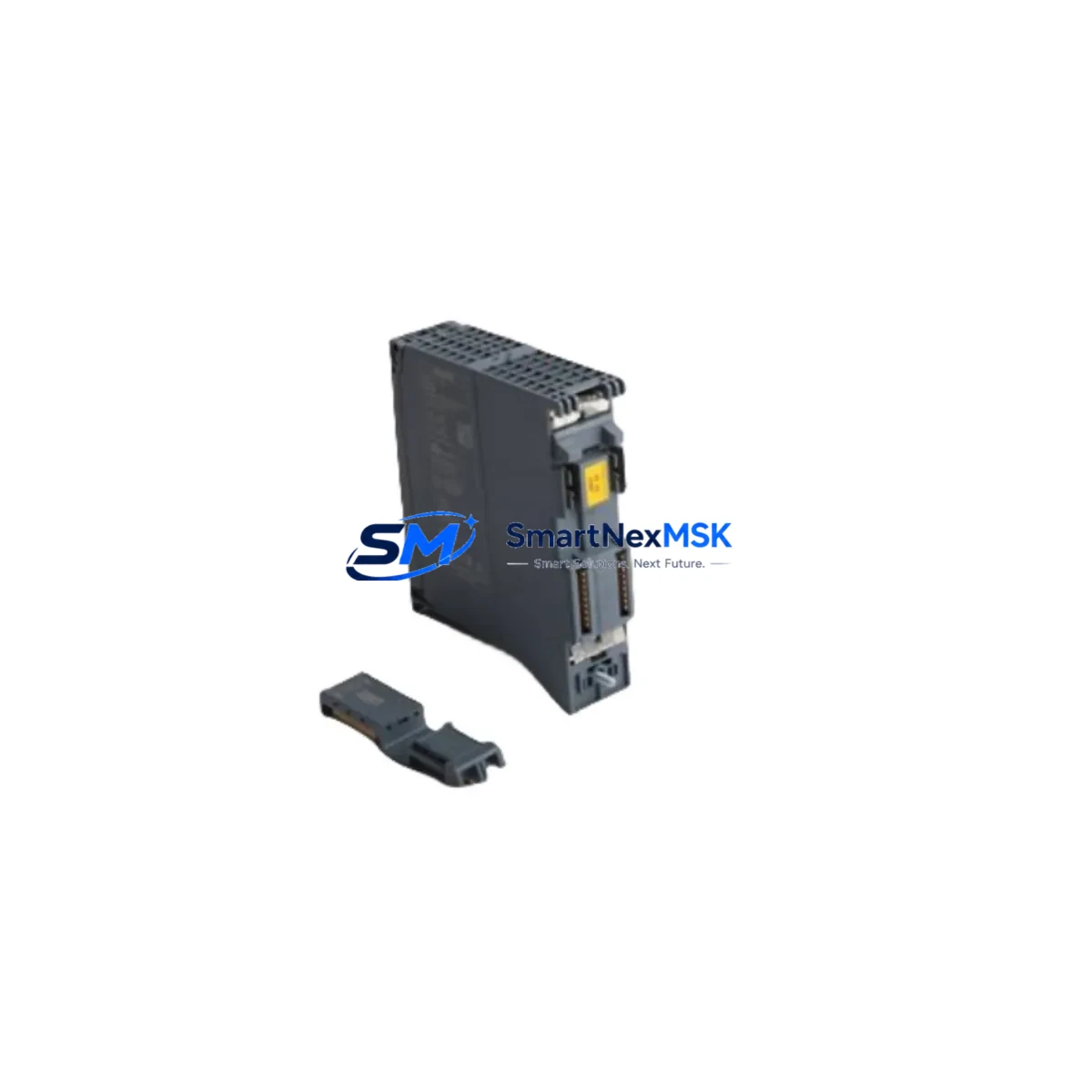
Tecnint ETN-72 Maintenance-Ready Spare for ETN Series Automation
The Tecnint ETN-72 is an original incremental rotary encoder designed for continuous-duty industrial position sensing in automation and motion control systems. As a maintenance-ready spare, it is stocked and tested to support rapid field replacement, minimizing unplanned downtime in servo drives, conveyor systems, CNC axes, and process lines where encoder feedback is critical to safe and accurate operation.
Maintenance engineers and procurement teams working with ETN Series encoders recognize that a failed or degraded ETN-72 can cascade into drive faults, positioning errors, and full line stoppages. Keeping a verified spare on the shelf — pre-tested, properly packaged, and traceable — is the most cost-effective insurance against extended downtime in encoder-dependent control loops.
Spare Maintenance Table
| Parameter | Specification / Detail |
|---|---|
| SKU | ETN-72 |
| Brand | Tecnint |
| Series | ETN Series |
| Type | Incremental Rotary Encoder |
| Housing Diameter | 72 mm |
| Origin | Italy |
| Output Type | Push-Pull / Line Driver (HTL/TTL, series-dependent) |
| Supply Voltage | 5 VDC / 10–30 VDC (model variant) |
| Resolution | Up to 5000 PPR (pulses per revolution, variant-dependent) |
| Protection Rating | IP65 (shaft side), IP67 (body, variant-dependent) |
| Operating Temperature | -20°C to +85°C |
| Shaft Type | Solid shaft with clamping flange |
| Compatibility | Direct replacement for ETN Series 72mm incremental encoders; compatible with standard servo drives, PLCs, and motion controllers accepting A/B/Z quadrature signals |
| Connector | M23 / M12 connector or cable exit (variant-dependent) |
| Warranty | 12 Months |
| Shipping | Tested before dispatch; global express available |
| Maintenance Recommendation | Inspect shaft coupling, cable shielding, and connector seating at each planned maintenance interval; replace if bearing noise, signal jitter, or PPR count errors are detected |
Maintenance Planning for Continuous Operation
When scheduling a replacement of the ETN-72 encoder in a servo or motion axis, a disciplined maintenance engineer will treat the encoder swap as an opportunity to audit the entire feedback and power chain. Signal integrity issues rarely originate from the encoder alone — cable routing, shielding continuity, and power supply stability all contribute to encoder reliability.
Begin by verifying the 24 VDC or 5 VDC encoder power supply rail with a calibrated multimeter; voltage sag or ripple above 5% can corrupt pulse counts and trigger nuisance drive faults even with a new encoder installed. Check the shielded encoder cable — typically a 4- or 8-conductor screened cable — for continuity, insulation resistance, and proper single-point grounding at the control cabinet end. A damaged cable is a frequent root cause of intermittent encoder errors that are misdiagnosed as encoder failure.
Inspect the terminal block strip (e.g., Phoenix Contact or Weidmüller DIN-rail terminals) where encoder signals land in the cabinet. Loose or corroded terminations on A, B, Z, and supply conductors introduce noise that mimics encoder degradation. If the drive uses a dedicated encoder input card or motion control module — such as a high-speed counter module or a servo drive feedback board — verify that the input impedance and signal level (HTL vs. TTL) match the ETN-72 output specification before powering up.
For systems using a PLC with high-speed counter inputs, confirm the counter module’s maximum input frequency against the ETN-72’s PPR rating at maximum shaft RPM. Exceeding the counter’s bandwidth will cause position drift without triggering a hard fault. Similarly, if the axis uses a motion controller or CNC interpolator, re-home the axis after encoder replacement and verify reference position against a known mechanical datum.
In multi-axis cabinets, take the opportunity to inspect adjacent components: servo drive DC bus capacitors for bulging, 24 VDC SMPS power supplies for output voltage stability, relay output modules for contact wear on enable and brake circuits, and I/O expansion modules for secure backplane seating. If the system includes a fieldbus communication module (PROFIBUS-DP, EtherCAT, or PROFINET), verify that the node address and baud rate settings are preserved after any cabinet power cycle during the encoder swap.
Where the ETN-72 is used in a conveyor or material handling system, also inspect the mechanical coupling — bellows couplings, jaw couplings, or rigid couplings — for wear, misalignment, or fretting corrosion on the encoder shaft. Mechanical misalignment is a leading cause of premature encoder bearing failure and should be corrected at every replacement interval.
Site Replacement Workflow
Step 1 — Isolation and Lockout: De-energize the drive and apply LOTO (Lockout/Tagout) per site safety procedure. Confirm zero voltage on the encoder supply and drive DC bus before opening the cabinet or touching the encoder cable.
Step 2 — Documentation: Photograph the existing encoder cable routing, connector orientation, and any cable tie or conduit entry points. Record the current PPR setting in the drive parameters — this will be required during commissioning of the ETN-72 replacement.
Step 3 — Mechanical Removal: Loosen the clamping flange or stator coupling bracket. Slide the encoder off the shaft carefully to avoid axial load on the bearing. Inspect the shaft for wear, corrosion, or fretting marks that could affect the fit of the replacement unit.
Step 4 — Installation: Mount the ETN-72 replacement, ensuring the clamping torque matches the manufacturer specification (typically 1.5–2.5 Nm for M4 clamping screws). Do not over-torque. Reconnect the encoder cable, verifying pin-for-pin continuity against the original wiring diagram. Confirm shield connection at the cabinet entry gland.
Step 5 — Commissioning: Restore power and verify encoder supply voltage at the connector. Jog the axis at low speed and confirm A/B pulse output on the drive’s diagnostic screen or oscilloscope. Re-home the axis and validate position accuracy against the mechanical reference. Clear any latched drive faults and return the system to normal operation.
This workflow is applicable whether the ETN-72 is replacing a like-for-like unit or substituting an older discontinued encoder model with equivalent PPR and output type. The 72mm housing and standard flange dimensions ensure mechanical compatibility with most existing mounting arrangements in the ETN Series family.
Spare Parts Support FAQ
Q1: What is the shelf life of the ETN-72 spare, and how should it be stored?
The ETN-72 encoder, when stored in its original packaging in a dry environment (10–40°C, <75% RH, non-condensing), maintains full serviceability for a minimum of 3 years. Bearings should be rotated manually every 12 months during long-term storage to prevent grease migration. Avoid storage near strong magnetic fields or vibration sources.
Q2: How is compatibility with my existing drive or motion controller verified before shipment?
Compatibility is confirmed by matching the ETN-72’s output type (HTL/TTL), PPR resolution, supply voltage, and connector type against your drive’s encoder input specification. Our technical team reviews your drive model and existing encoder datasheet before dispatch. Each unit is powered and signal-tested on a bench fixture prior to packaging.
Q3: Can the ETN-72 replace older or discontinued Tecnint encoder models in the same series?
In most cases, yes. The ETN Series 72mm platform maintains consistent mechanical dimensions and electrical interface across generations. Where PPR or output level differences exist between old and replacement units, the drive parameter (encoder resolution setting) must be updated accordingly. We provide a compatibility note with each shipment for cross-reference.
Q4: What does the 12-month warranty cover, and what is the claims process?
The 12-month warranty covers manufacturing defects, premature bearing failure under normal operating conditions, and signal output anomalies not caused by external wiring faults or mechanical overload. To initiate a warranty claim, contact our technical team with the order reference, installation date, and a description of the fault. Replacement units are dispatched after fault verification, with no requirement to return the defective unit for low-value claims.
© 2026 SMARTNEXMSK. All rights reserved.
Original Source: https://smartnexmsk.com
Contact: [email protected] | +86 18259474341