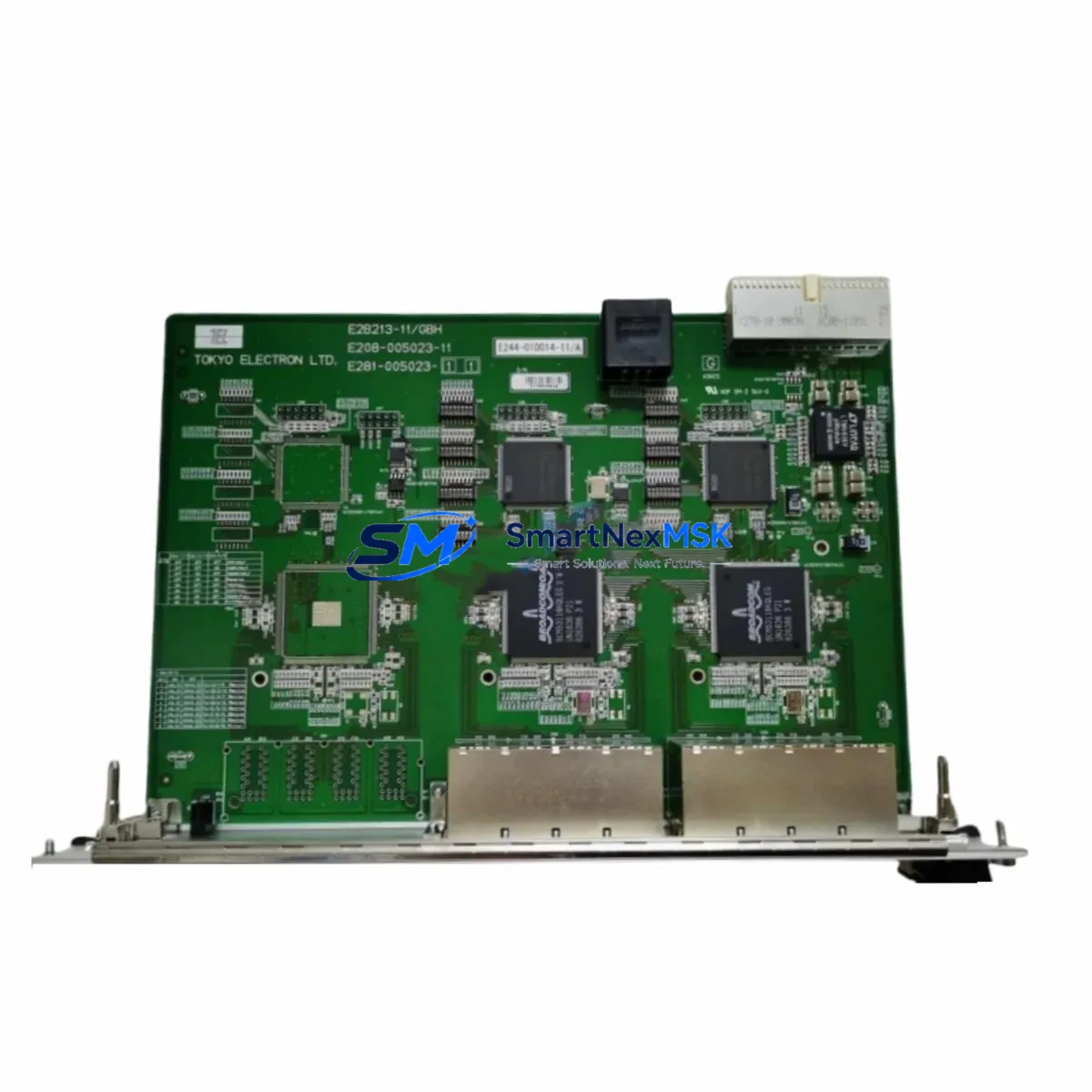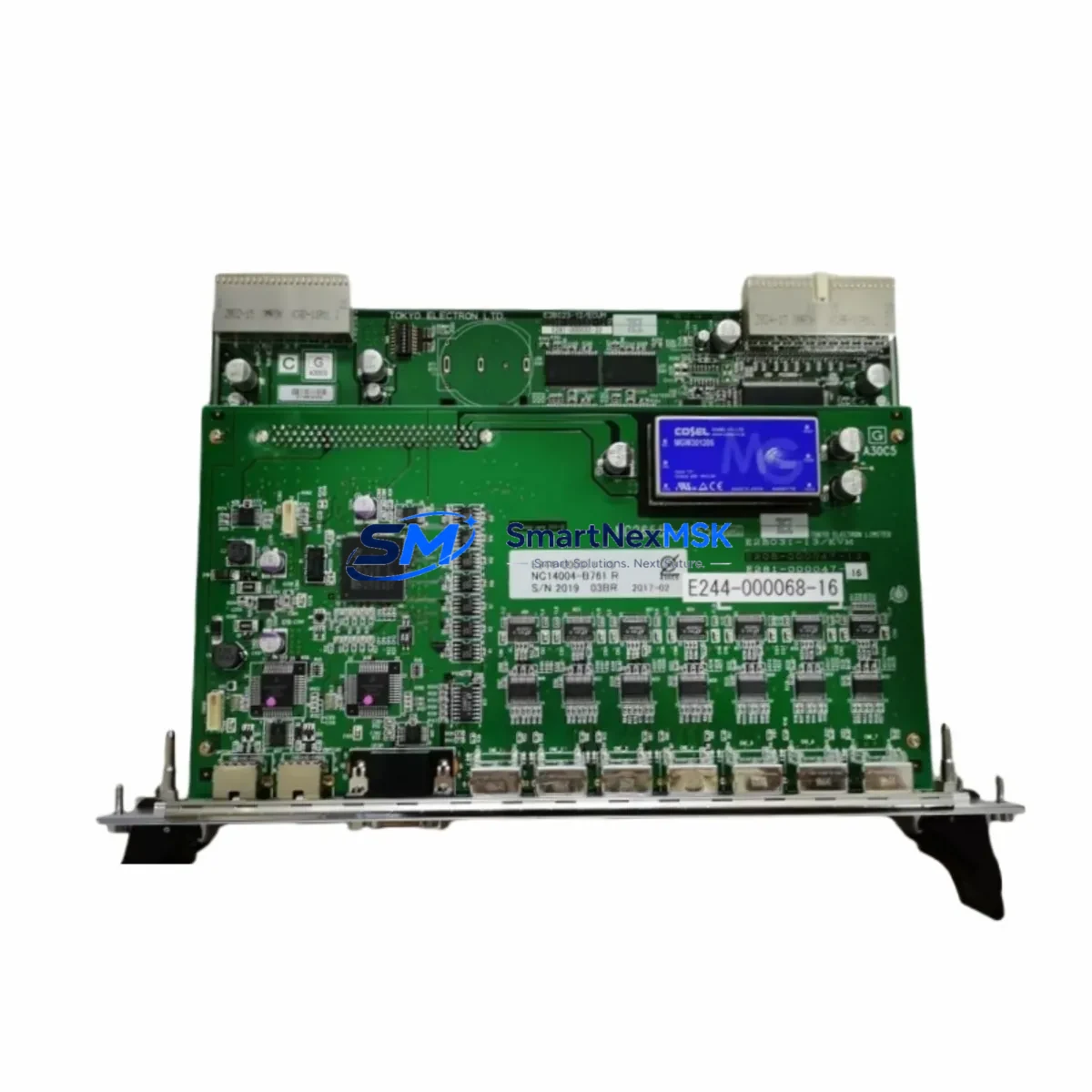
TOKYO E28023-12 Retrofit-Ready DCS Control Board for ECUM Series Control Systems
The TOKYO E28023-12 is a retrofit-ready DCS control board engineered as a direct replacement for legacy ECUM series distributed control system platforms. Cross-referenced against ECUM E244-000071-15, NC26551-B155, and E281, this board addresses the growing demand for reliable spare parts and upgrade paths in aging industrial automation environments. Whether your facility is managing a planned system migration or responding to an unplanned failure of a discontinued module, the E28023-12 provides a verified, drop-in compatible solution backed by a 12-month warranty and pre-shipment functional testing.
Industrial sites running ECUM-based DCS architectures frequently encounter obsolescence challenges as original equipment manufacturers discontinue support for legacy control boards. The E28023-12 is stocked specifically to serve these retrofit and emergency replacement scenarios, offering procurement teams a dependable source for hard-to-find components without the lead times associated with OEM channels.
Upgrade Compatibility Table
| Parameter | Details |
|---|---|
| Primary SKU | E28023-12 |
| Cross-Reference SKUs | ECUM E244-000071-15 / NC26551-B155 / E281 |
| Compatible Series | ECUM DCS Series |
| Manufacturer | TOKYO (Japan) |
| Module Type | DCS Control Board |
| Installation Type | Backplane / Rack-mount (ECUM standard rack) |
| Communication Compatibility | Compatible with ECUM-native fieldbus and serial communication links |
| Replacement Recommendation | Direct drop-in for E244-000071-15, NC26551-B155, E281 in same rack slot |
| Commissioning Notes | Verify module address configuration and I/O mapping before power-on; confirm HMI tag bindings |
| Warranty | 12 Months — covers manufacturing defects and functional failure under normal operating conditions |
| Pre-Shipment Testing | Full functional test performed on every unit prior to dispatch |
Retrofit Planning for Existing Automation Systems
A successful retrofit of the TOKYO E28023-12 into an existing ECUM DCS architecture requires systematic pre-installation planning. Before removing the failed or obsolete board, engineers should document the current module address settings — typically configured via DIP switches or jumper blocks on the board face — and record all terminal wiring assignments against the original I/O schedule. This step is critical when the control system also manages associated modules such as analog input cards, digital output modules, or dedicated communication interface boards that share the same backplane bus.
Power supply capacity is a key verification point. ECUM rack systems commonly distribute 24 VDC or 5 VDC logic power across the backplane, and the total current draw of all installed modules — including the replacement E28023-12 — must remain within the rated output of the system power supply module. If the existing power supply is already operating near capacity due to I/O expansion or the addition of communication modules, a supplementary or upgraded power supply unit should be considered before completing the retrofit.
Terminal block wiring should be verified against the original loop drawings. In many ECUM installations, field wiring connects to removable terminal assemblies or marshalling panels, which simplifies the physical swap of the control board without disturbing field cables. However, engineers should confirm that the terminal pinout of the E28023-12 matches the legacy board’s wiring convention, particularly for differential analog signal pairs and shielded cable terminations. Where the system includes a dedicated ECUM analog input module or thermocouple input card on the same rack, those modules’ wiring should be re-verified after the board swap to rule out any address or channel mapping conflicts.
For systems that include an HMI interface — whether a dedicated operator panel or a SCADA workstation connected via serial or Ethernet link — the tag database and screen bindings should be reviewed after the board replacement. If the original board held configuration data locally, a backup of the program logic and parameter tables should be extracted before removal using the appropriate programming cable or engineering workstation software. Systems that rely on a separate data highway module or remote I/O adapter for communication between the control board and field devices will require verification that the communication link is re-established correctly after the swap. In ECUM environments where a fieldbus communication card handles protocol translation between the DCS backplane and Modbus RTU or PROFIBUS field devices, the communication parameters — baud rate, station address, and parity settings — must be confirmed against the original configuration before the system is returned to service.
In multi-rack ECUM installations, the E28023-12 replacement may also interact with expansion chassis connected via inter-rack cables. Confirming that the rack address and slot assignment are correctly restored after installation prevents address conflicts that could cause unexpected I/O behavior across the entire control network. Sites that have previously expanded their systems with additional I/O racks, remote terminal units, or third-party communication gateways should pay particular attention to this step during commissioning. Where the control system interfaces with a programmable logic controller acting as a supervisory coordinator — for example, a SIEMENS S7-300 or Allen-Bradley ControlLogix managing the DCS as a subsystem — the inter-system communication link should be tested end-to-end after the E28023-12 is installed and the ECUM rack is back online.
Downtime Control During System Migration
Minimizing production downtime during a DCS control board replacement is a primary concern for plant engineers and maintenance teams. The most effective strategy is to prepare the replacement E28023-12 as a pre-configured hot-spare before the scheduled maintenance window. This involves setting the module address, verifying firmware compatibility, and confirming that all configuration parameters match the outgoing board — all completed on the bench before the system is taken offline.
Where the process allows, a phased migration approach can further reduce risk. By isolating the affected control loop or I/O group while keeping the remainder of the DCS running, the scope of the outage is limited to the specific section of the plant served by the E28023-12. This is particularly effective in ECUM architectures where individual racks or control zones can be powered down independently without affecting the broader control network. In facilities where the ECUM system operates alongside a distributed I/O network using remote I/O modules or field junction boxes, those remote nodes can typically remain powered during the control board swap, preserving field device status and reducing the risk of process upsets.
Original program logic should be backed up to the engineering workstation before any hardware change. If the ECUM system uses a dedicated programming port or a serial programming cable for configuration upload and download, this connection should be tested and confirmed functional before the replacement board is installed. After installation, a controlled power-up sequence — bringing the rack online before enabling field outputs — allows the control system to perform its internal diagnostics and confirm that the new board is recognized correctly before process control is resumed.
Post-replacement verification should include a loop check on all I/O channels served by the E28023-12, confirmation that all HMI displays are updating correctly, and a review of the system event log for any fault codes generated during the restart sequence. Where the plant uses a SCADA historian or data logging system connected to the ECUM DCS, engineers should verify that data acquisition has resumed normally and that no tag gaps exist in the historical record following the restart. Maintaining a detailed commissioning record of the replacement — including the date, the outgoing and incoming board serial numbers, and the results of the loop check — supports future maintenance planning and warranty documentation.
Retrofit Support FAQ
Q: Is the TOKYO E28023-12 a direct replacement for ECUM E244-000071-15 and NC26551-B155?
A: Yes. The E28023-12 is cross-referenced against ECUM E244-000071-15, NC26551-B155, and E281. It is designed as a drop-in replacement for these discontinued part numbers within the ECUM DCS series rack architecture. We recommend verifying the module address configuration and terminal wiring before installation to ensure a smooth transition.
Q: What commissioning steps are required after installing the E28023-12?
A: After physical installation, confirm the module address matches the original board’s settings, restore the program configuration from your engineering workstation backup, verify all I/O channel assignments, and perform a loop check on all connected field devices. Check that HMI tag bindings and communication links — including any fieldbus or serial data highway connections — are active before returning the loop to automatic control.
Q: How is the E28023-12 tested before shipment?
A: Every unit undergoes a full functional test prior to dispatch. This includes power-on verification, communication interface checks, and I/O channel validation. A test report is available upon request. All units are covered by a 12-month warranty against manufacturing defects and functional failure under normal operating conditions.
Q: What is the lead time and availability for the E28023-12?
A: The E28023-12 is held in stock for immediate dispatch. Standard international shipping from our Xiamen warehouse typically delivers within 3–7 business days depending on destination. For urgent breakdown situations, expedited shipping options are available. Contact our sales team to confirm current stock levels and shipping timelines for your location.
© 2026 SMARTNEXMSK. All rights reserved.
Original Source: https://smartnexmsk.com
Contact: [email protected] | +86 18259474341