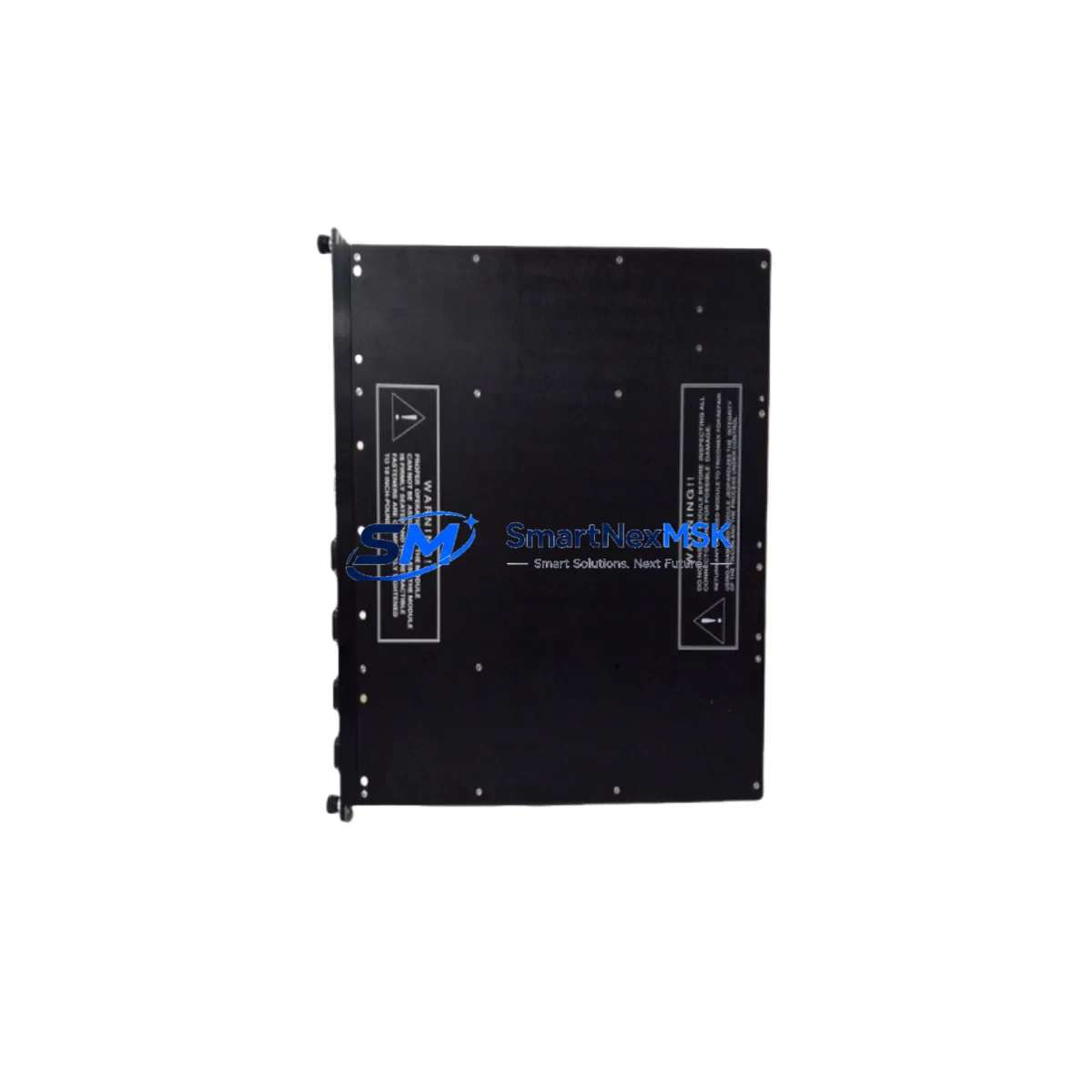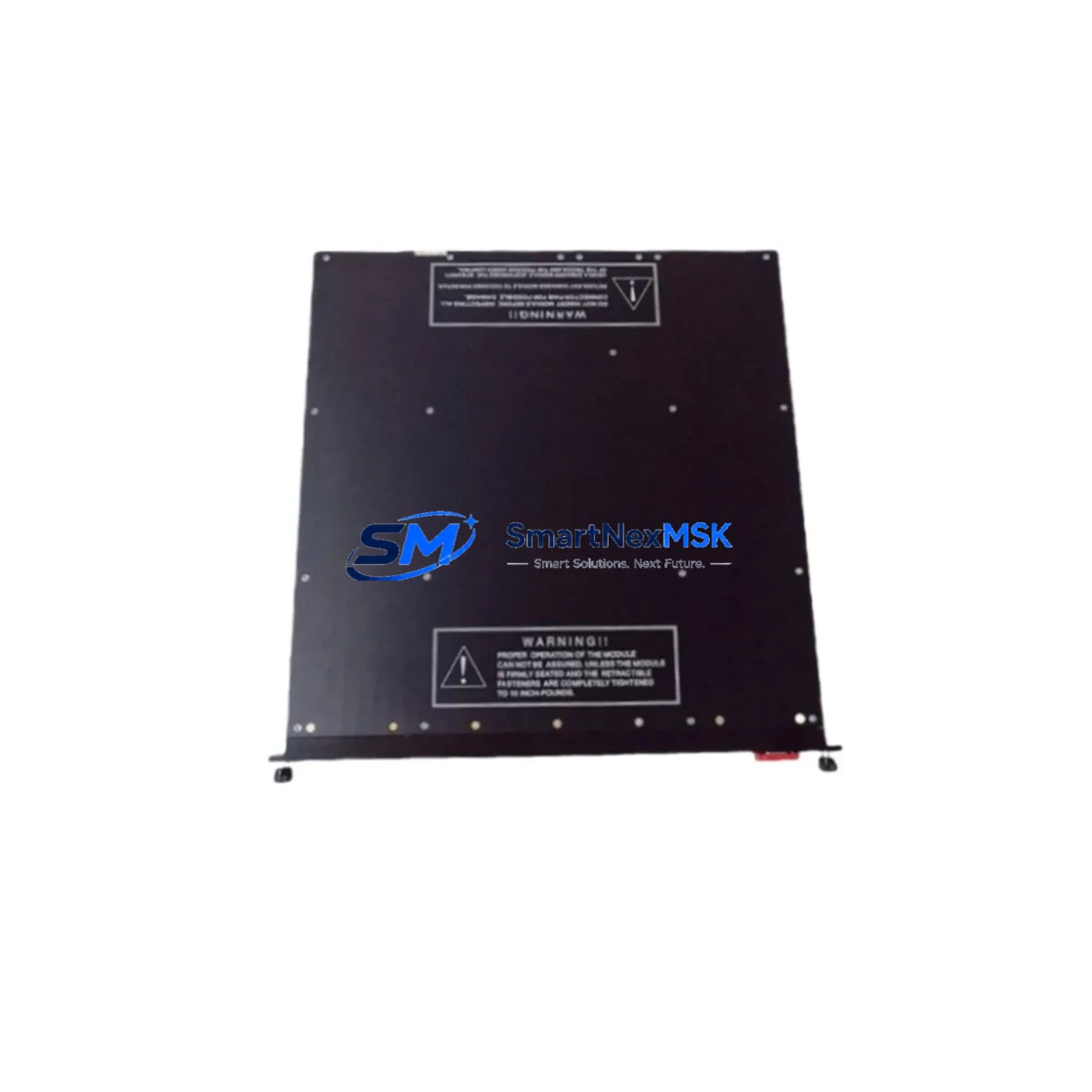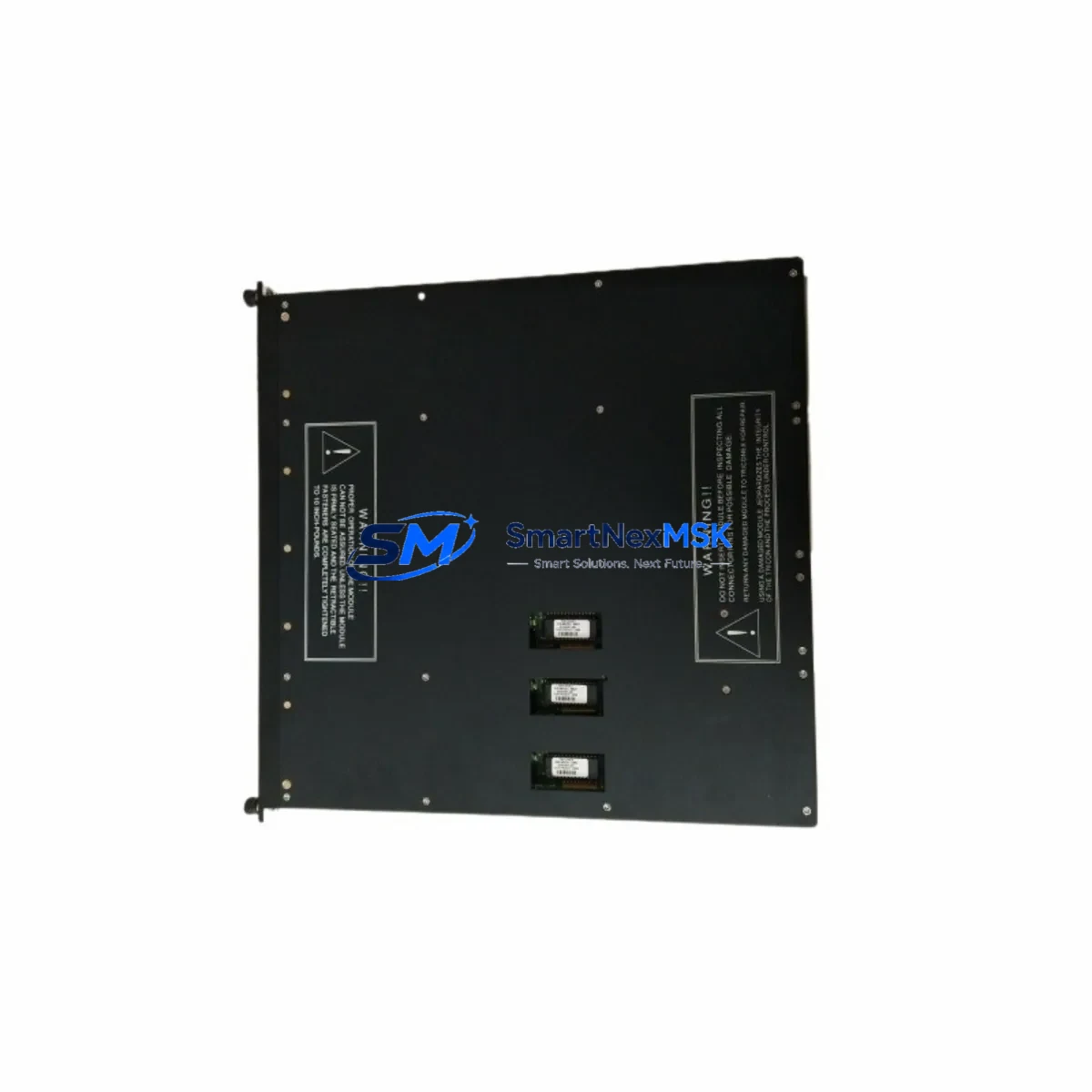
TRICONEX 3664 Retrofit-Ready I/O Module for Tricon TMR Control Systems
The TRICONEX 3664 is a high-reliability digital input/output module engineered for the Tricon Triple Modular Redundant (TMR) safety system platform — one of the most widely deployed Safety Instrumented Systems (SIS) in oil & gas, petrochemical, power generation, and chemical processing industries. As legacy Tricon installations age and original spare parts become increasingly scarce, the TRICONEX 3664 serves as a critical retrofit and replacement component for facilities seeking to extend the operational life of their existing safety architecture without undertaking a full system overhaul.
Whether you are replacing a failed module in an emergency shutdown system, upgrading a control cabinet to meet revised SIL 2 or SIL 3 certification requirements, or executing a phased migration from an older Tricon chassis to a modernized Tricon CX or TriStation 1131-based architecture, the TRICONEX 3664 provides the electrical and logical compatibility needed to maintain system continuity. This module is fully compatible with the standard Tricon main chassis and expansion chassis backplane, and integrates directly with the Tricon communication module (TCM) and the main processor module (MP) without requiring firmware re-flashing in most retrofit scenarios.
Upgrade Compatibility Table
| Parameter | Details |
|---|---|
| Module Model | TRICONEX 3664 |
| Platform Compatibility | Tricon TMR Safety System (v9.x / v10.x / v11.x) |
| Chassis / Backplane Interface | Standard Tricon Main Chassis & Expansion Chassis |
| Communication Compatibility | TriBus, Tricon Communication Module (TCM) |
| Replaces / Supersedes | TRICONEX 3603E, 3604E, 3625, 3636, 3664 legacy variants |
| Installation Requirement | Hot-swap capable; no chassis power-down required in most configurations |
| Programming Environment | TriStation 1131 v4.x and above |
| Wiring / Terminal Compatibility | Standard Tricon field termination assembly (FTA); verify FTA model before swap |
| Module Address Configuration | DIP switch or software-assigned slot address; verify against existing I/O map |
| Diagnostic Support | Full TMR diagnostic reporting via TriStation 1131 and Tricon TCM |
| Retrofit Recommendation | Verify power budget on chassis power supply module (e.g., TRICONEX 8312) before installation |
| Warranty | 12-Month Warranty — Covered against manufacturing defects and functional failure |
Retrofit Planning for Existing Automation Systems
Successful integration of the TRICONEX 3664 into an existing Tricon TMR installation requires a structured pre-installation assessment. Before removing the failed or obsolete module, engineers should document the current I/O map in TriStation 1131, confirm the slot address assignment, and verify that the field termination assembly (FTA) wiring matches the 3664’s terminal pinout. In many legacy installations, the FTA may be a shared assembly serving multiple I/O modules — any wiring modification must be coordinated with the live process control team to avoid unintended signal interruptions.
Power budget verification is a non-negotiable step. The Tricon chassis power supply module — commonly the TRICONEX 8312 or TRICONEX 8310 — must have sufficient headroom to support the 3664’s current draw alongside all other installed modules. In aging systems where the power supply module itself may be approaching end-of-life, it is advisable to inspect and potentially replace the power supply as part of the same retrofit window to avoid a secondary failure shortly after the I/O module swap.
For facilities running Tricon systems with TRICONEX TCM 4351B or TCM 4352B communication modules, the 3664 integrates seamlessly into the existing TriBus communication architecture. No changes to the communication module configuration are required in standard replacement scenarios. However, if the retrofit is part of a broader migration to Modbus TCP or OPC-UA connectivity — for example, integrating the Tricon system with a modern DCS such as a Honeywell Experion or Emerson DeltaV — the communication module and gateway configuration will need to be reviewed separately.
In control cabinets where the Tricon system coexists with other automation hardware — such as a TRICONEX 3700A analog input module, a TRICONEX 3805E digital output module, or a TRICONEX 3501 pulse input module — the 3664 replacement should be sequenced to minimize disruption to adjacent modules sharing the same chassis backplane. The main processor module (MP), typically a TRICONEX 3008 or TRICONEX 3006, will automatically detect the newly installed 3664 upon chassis scan and re-establish TMR voting logic without requiring a full system restart in hot-swap-capable configurations.
For sites executing a phased migration from Tricon v9 to Tricon CX, the 3664 can serve as an interim I/O module during the transition period, maintaining field signal integrity while the new chassis backplane and TRICONEX 3721 or TRICONEX 3722 modules are staged for installation. This approach allows engineering teams to validate the new I/O configuration in TriStation 1131 offline before committing to the final cutover, significantly reducing the risk of logic errors during live migration.
Downtime Control During System Migration
Minimizing unplanned downtime is the primary operational concern when replacing I/O modules in a live safety system. The TRICONEX 3664 supports hot-swap replacement in most Tricon TMR chassis configurations, meaning the module can be physically removed and reinserted while the chassis remains energized and the TMR voting logic continues to operate on the remaining two legs. This capability is fundamental to the Tricon platform’s design philosophy and is one of the key reasons Tricon systems remain the preferred SIS platform for continuous-process industries where a full shutdown is operationally or economically prohibitive.
Prior to initiating the hot-swap procedure, the TriStation 1131 engineering workstation should be connected to the system via the TRICONEX programming cable (model 4000043-510 or equivalent) to monitor real-time diagnostic status. The system’s TMR health indicators should confirm that all three legs are in a healthy voting state before the swap begins. If one leg is already degraded — for example, due to a prior module fault — the hot-swap should be deferred until the system is in a planned maintenance window to avoid operating in a 1oo2 voting configuration during the replacement procedure.
After the new TRICONEX 3664 is seated in the chassis slot, TriStation 1131 will perform an automatic module recognition sequence. The engineer should verify that the module’s I/O map, channel assignments, and engineering unit scaling match the pre-swap configuration. HMI screens — whether running on a Wonderware InTouch, FactoryTalk View, or Ignition SCADA platform — should be monitored for any alarm state changes during the first 15 minutes of post-swap operation to confirm that all field signals are being correctly read and reported. No HMI reconfiguration is typically required for a like-for-like module replacement.
All retrofit activities should be documented in the site’s Management of Change (MOC) system, with pre- and post-swap diagnostic screenshots archived for compliance with IEC 61511 functional safety management requirements. Our team provides pre-shipment functional testing documentation for every TRICONEX 3664 unit, which can be included in the MOC package to satisfy site quality assurance requirements.
Retrofit Support FAQ
Q1: Is the TRICONEX 3664 a direct drop-in replacement for older Tricon I/O modules such as the 3603E or 3625?
In most cases, yes. The 3664 is designed to be backward-compatible with the standard Tricon chassis backplane and field termination assembly wiring used by earlier-generation Tricon I/O modules. However, engineers should verify the FTA model number and terminal pinout against the 3664 datasheet before installation, as some early-generation FTAs may require a wiring adapter or terminal block modification. Our technical team can assist with compatibility verification prior to shipment.
Q2: What commissioning steps are required after installing the TRICONEX 3664?
After physical installation, connect TriStation 1131 to the system and confirm that the module is recognized in the correct chassis slot. Verify the I/O channel map, check that all field signals are reading within expected engineering unit ranges, and review the TMR diagnostic panel for any fault flags. If the system is running a custom function block or cause-and-effect matrix that references the replaced module’s channel addresses, confirm that the logic references remain intact. A full I/O loop check is recommended for critical shutdown circuits before returning the system to normal operation.
Q3: Does the 12-month warranty cover field installation failures or only manufacturing defects?
The 12-month warranty covers manufacturing defects and functional failures under normal operating conditions consistent with the module’s published specifications. Failures resulting from incorrect installation, overvoltage conditions, or physical damage are not covered. We recommend reviewing the installation checklist provided with each unit and retaining the pre-shipment test report as part of your warranty documentation. For warranty claims, contact our technical support team with the module serial number and a description of the failure mode.
Q4: Can you supply the TRICONEX 3664 with a pre-shipment functional test report?
Yes. Every TRICONEX 3664 unit shipped from our inventory undergoes a pre-shipment functional test that verifies module power-up, channel continuity, and communication handshake with a reference Tricon chassis. A test report is included with each shipment and can be provided in advance in PDF format upon request. This documentation is suitable for inclusion in IEC 61511 MOC packages and site quality assurance records.
© 2026 SMARTNEXMSK. All rights reserved.
Original Source: https://smartnexmsk.com
Contact: [email protected] | +86 18259474341