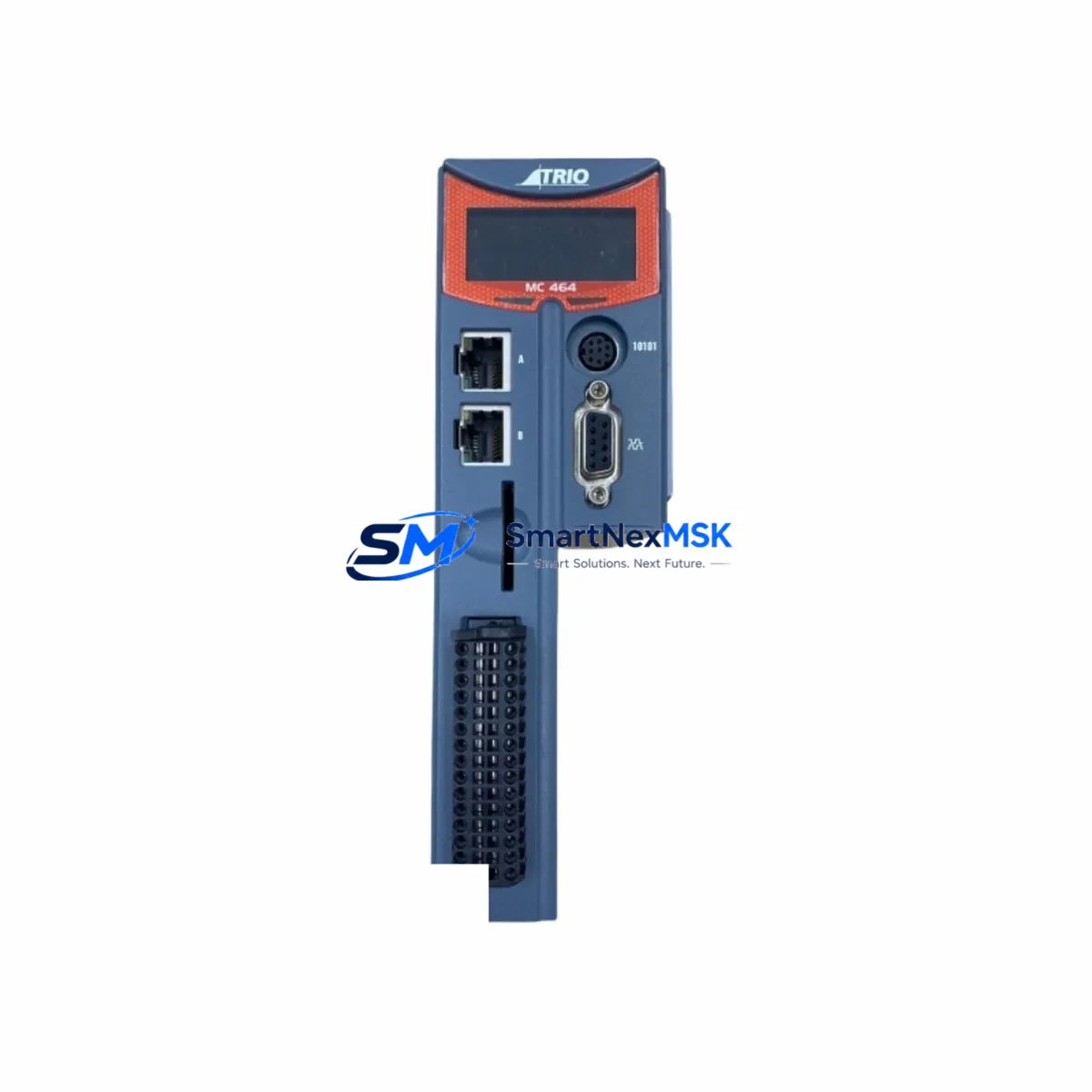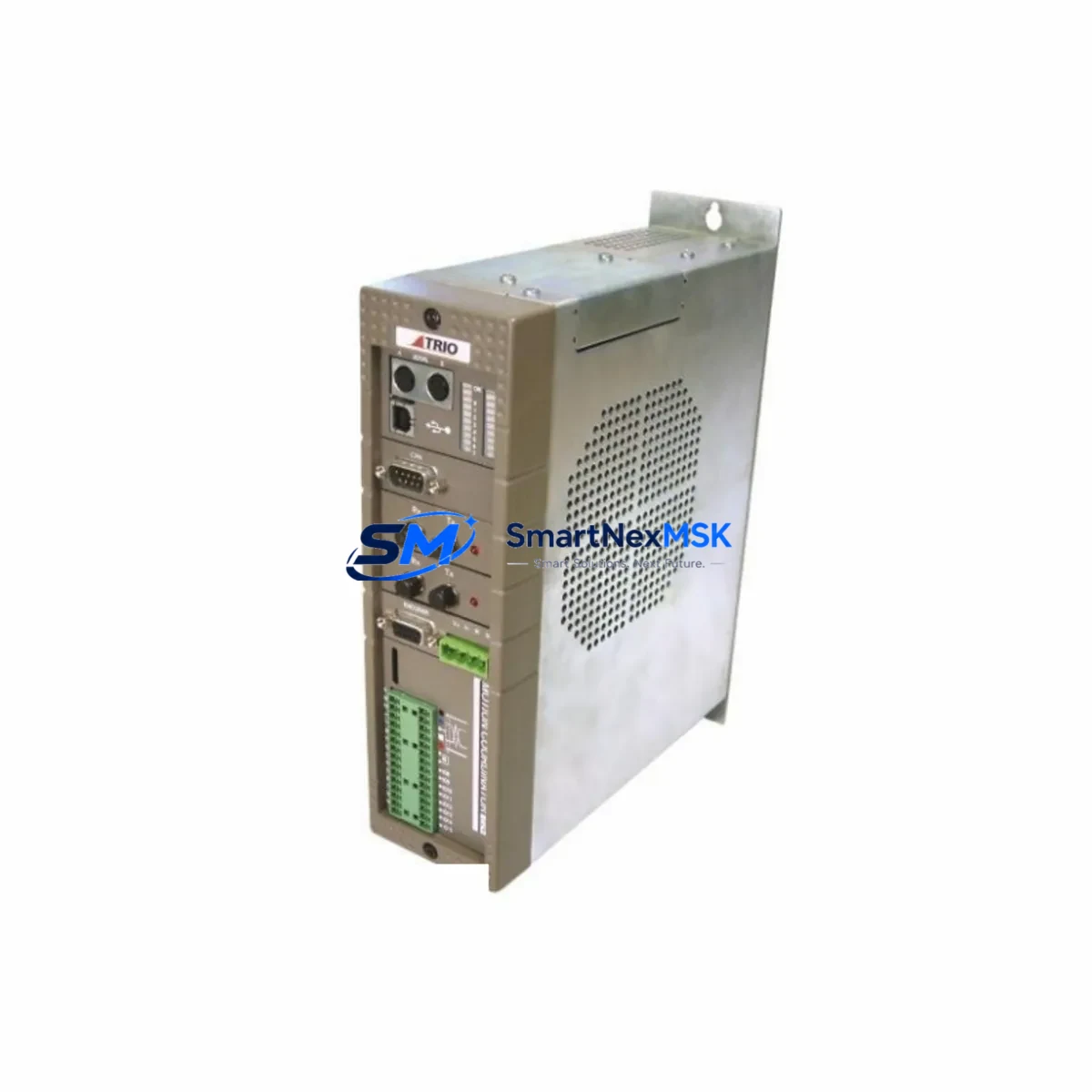
Trio MC2/216 Retrofit-Ready Motion Controller for MC2 Series: Compatible Upgrade for Legacy Automation Systems
The Trio Motion Technology MC2/216 is a high-performance multi-axis motion controller designed for seamless integration into existing MC2 Series control architectures. As production lines age and original equipment manufacturers discontinue legacy modules, the MC2/216 stands out as a proven retrofit-ready replacement that preserves your existing program logic, minimizes downtime, and delivers a smooth migration path from obsolete motion control hardware to a modern, supportable platform.
Whether you are managing a controlled shutdown for a planned upgrade or responding to an unplanned failure of a discontinued motion controller, the MC2/216 provides the compatibility, I/O flexibility, and communication protocol support required to restore full machine operation with minimal engineering intervention. Its architecture is fully compatible with the Trio MC2 Series backplane and rack system, allowing engineers to slot the MC2/216 directly into an existing control cabinet without structural modification.
Upgrade Compatibility Table
| Parameter | Details |
|---|---|
| Compatible Series | Trio MC2 Series |
| Axes Supported | Up to 16 axes (expandable via I/O modules) |
| Backplane Interface | MC2 Series standard backplane — direct slot replacement |
| Communication Protocols | EtherCAT, Ethernet/IP, Modbus TCP, RS-232/RS-485 |
| Power Supply Requirement | 24 VDC nominal; verify existing PSU capacity before installation |
| Programming Environment | Trio BASIC / Motion Perfect 4 — existing programs transferable |
| HMI Compatibility | Compatible with existing MC2 Series HMI configurations via Ethernet |
| Replacement Recommendation | Direct replacement for discontinued MC2 Series controllers |
| Commissioning Notes | Verify axis address mapping and I/O module offsets post-installation |
| Warranty | 12 Months — covers hardware defects and functional failures |
Retrofit Planning for Existing Automation Systems
Successful retrofit of the MC2/216 into a legacy control system begins with a thorough audit of the existing cabinet architecture. Engineers should document the current power supply module output capacity — typically a Trio PSU-24V or equivalent — to confirm it can support the MC2/216’s inrush and steady-state current draw alongside any co-installed I/O expansion modules such as the Trio Flex-6 or MC2 I/O Slice modules.
Terminal wiring compatibility is a critical checkpoint. The MC2/216 uses the same terminal block pinout as its MC2 Series predecessors, but engineers should verify field wiring labels against the original schematic before powering up. Where the original system used RS-232 serial communication to a legacy HMI panel, migration to an Ethernet-based HMI — such as a Trio Touch HMI or a third-party panel running Modbus TCP — is strongly recommended to future-proof the communication link.
For systems that previously relied on a Trio MC2/202 or MC2/208 as the primary motion controller, the MC2/216 offers a direct upgrade path with expanded axis count. The additional axes can be mapped to new servo drives or left unassigned, with no impact on existing axis configurations. If the control cabinet includes a Trio Ethernet Motion Card (EMC) for network connectivity, this card remains fully compatible and does not require replacement during the MC2/216 retrofit.
Where the original system used a Trio programming cable (USB-to-serial or USB-to-Ethernet) for on-site commissioning, the same cable and Motion Perfect 4 software environment can be used to upload, verify, and test the existing TrioBASIC program on the MC2/216. Engineers should perform a full I/O scan and axis homing sequence before returning the machine to production. If the system includes a Trio MC2 Expansion Rack connected via the MC2 backplane bus, confirm that the rack address DIP switches are set correctly to avoid address conflicts with the new controller.
Downtime Control During System Migration
Minimizing production downtime during a motion controller migration requires a structured pre-swap preparation process. Before removing the legacy controller, engineers should use Motion Perfect 4 to create a full backup of the existing TrioBASIC program, axis parameter tables, and I/O configuration files. This backup should be stored on both a local engineering laptop and a network-accessible location to prevent data loss during the physical swap.
The MC2/216 can be pre-configured on a bench test rig — using a Trio MC2 Series demo rack or a spare backplane — before it is installed in the live cabinet. This allows engineers to verify program upload, axis parameter restoration, and communication link establishment without occupying the production machine. Once bench validation is complete, the live swap can typically be completed within a single planned maintenance window, often under two hours for a standard MC2 Series cabinet.
After installation, the commissioning sequence should follow a structured order: power-on self-test, communication link verification (Ethernet/IP or EtherCAT as applicable), I/O module recognition, axis enable and homing, and finally a dry-run of the production program at reduced speed before full-speed production restart. This sequence protects both the machine and the product being manufactured, and ensures that any residual configuration differences between the old and new controller are identified and corrected before the system is returned to full operation.
Retrofit Support FAQ
Q: Is the MC2/216 a direct drop-in replacement for other MC2 Series controllers such as the MC2/202 or MC2/208?
A: Yes. The MC2/216 is physically and electrically compatible with the MC2 Series backplane and rack system. It can be installed in the same slot as a MC2/202 or MC2/208 without cabinet modification. Axis count and I/O mapping should be verified in Motion Perfect 4 after installation.
Q: Can I reuse my existing TrioBASIC program without modification?
A: In most cases, yes. Programs written for MC2 Series controllers are compatible with the MC2/216. Minor adjustments may be required if the original program references hardware-specific axis counts or I/O addresses that differ between the old and new module. A full program review and bench test is recommended before live commissioning.
Q: What pre-shipment testing is performed on the MC2/216?
A: Each MC2/216 unit undergoes functional power-on testing, communication port verification, and axis enable testing prior to shipment. Units are shipped with a test report confirming operational status. The 12-month warranty covers all hardware defects and functional failures identified after installation.
Q: How do I verify wiring compatibility between my existing cabinet and the MC2/216?
A: Compare your existing cabinet wiring schematic against the MC2/216 terminal block pinout diagram. The MC2 Series uses a standardized terminal layout, so field wiring is typically compatible without modification. Pay particular attention to the 24 VDC power input terminals and any analog I/O connections, which may require shielded cable verification for noise-sensitive applications.
© 2026 SMARTNEXMSK. All rights reserved.
Original Source: https://smartnexmsk.com
Contact: [email protected] | +86 18259474341