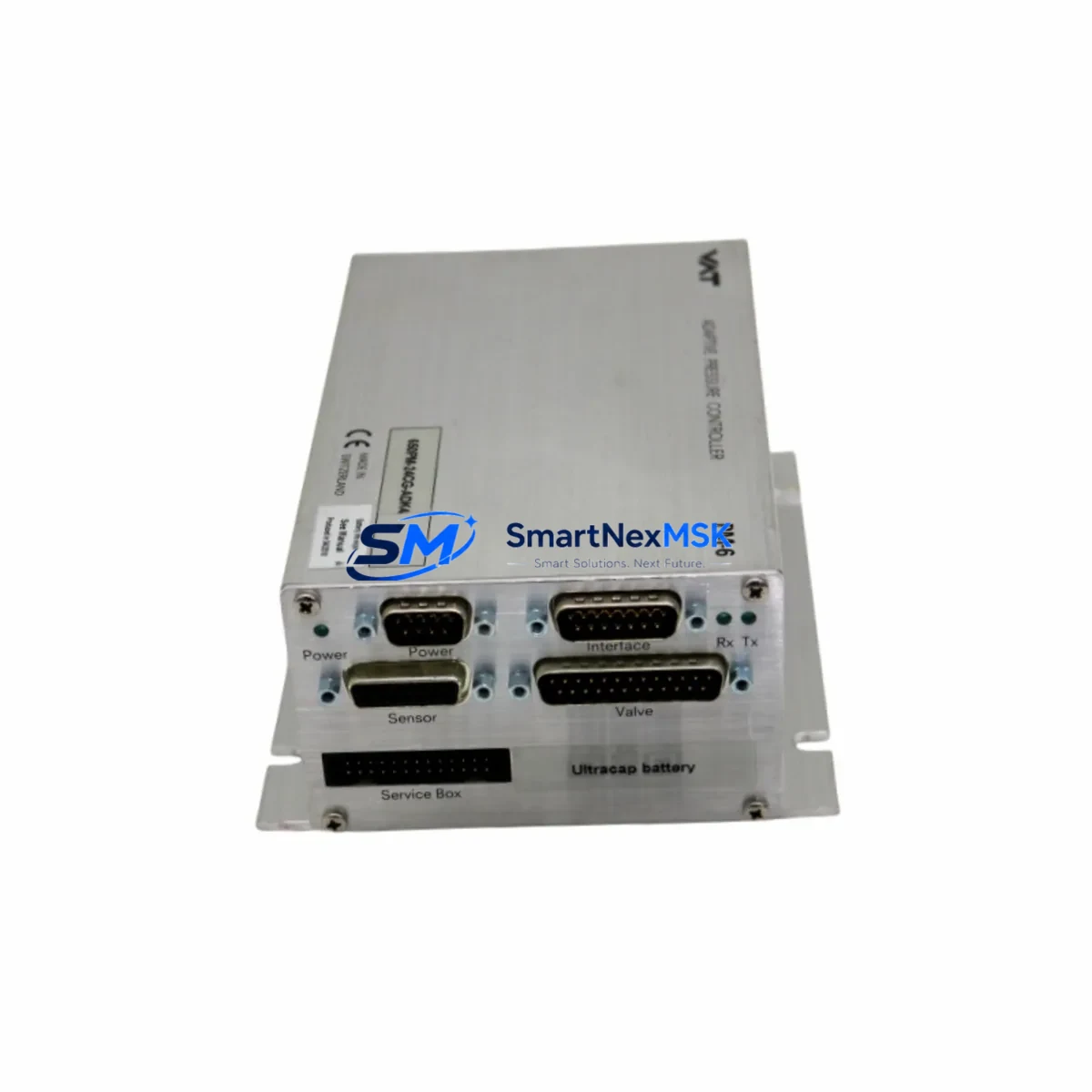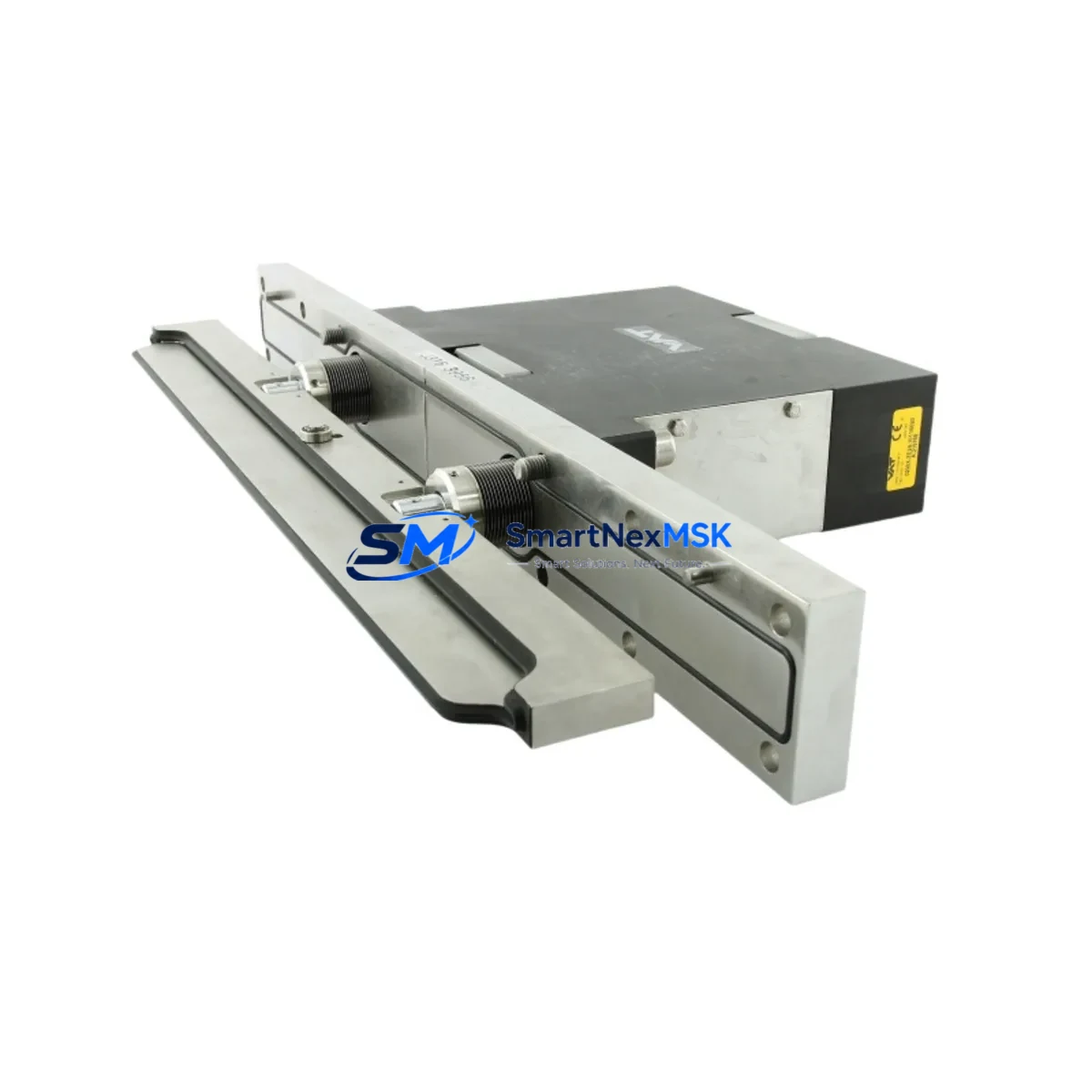
VAT 0200X-ZE24-1011 Retrofit-Ready Vacuum Gate Valve for Series 02 Control Systems
The VAT 0200X-ZE24-1011 is a precision-engineered vacuum gate valve designed as a retrofit-ready replacement for aging Series 02 vacuum isolation systems. Whether you are managing a scheduled upgrade, responding to an unplanned failure, or executing a phased modernization of your process chamber infrastructure, this valve delivers verified dimensional compatibility, equivalent pneumatic actuation performance, and a direct interface match to the original Series 02 mounting flange and actuator envelope. The companion cross-reference SKU 0190-18154 ABX-X302 722A11TGA3FC confirms validated interchangeability across multiple legacy platform configurations.
Sourced directly from VAT’s Swiss manufacturing facility, each unit undergoes helium leak testing, seat integrity verification, and full-stroke cycle testing prior to shipment. In-stock units are available for same-week dispatch, supporting your downtime control objectives with a confirmed 12-month warranty covering materials, actuation mechanism, and sealing performance.
Upgrade Compatibility Table
| Parameter | Legacy / OEM Reference | VAT 0200X-ZE24-1011 |
|---|---|---|
| Series Platform | VAT Series 02 (original) | Series 02 retrofit-compatible |
| Valve Type | Vacuum Gate Valve | Vacuum Gate Valve (pneumatic) |
| Actuation Interface | Pneumatic, 24 VDC solenoid (ZE24) | Identical — ZE24 solenoid retained |
| Flange / Port Interface | Series 02 standard flange | Direct bolt-on, no adapter required |
| Seal Material | Elastomer (Viton / EPDM) | Viton standard; EPDM on request |
| Leak Rate | ≤ 1×10⁻⁸ mbar·l/s (He) | ≤ 1×10⁻⁸ mbar·l/s (He) — factory tested |
| Control Signal | 24 VDC digital I/O | 24 VDC — compatible with existing PLC I/O wiring |
| Installation Requirement | Standard torque sequence | Identical torque spec; no new tooling required |
| Communication Compatibility | Hardwired I/O / DeviceNet (site-dependent) | Hardwired I/O; DeviceNet adapter available |
| Replacement Cross-Reference | 0190-18154 ABX-X302 722A11TGA3FC | Confirmed interchangeable |
| Warranty | — | 12 months from shipment date |
| Retrofit Recommendation | — | Direct drop-in; verify solenoid wiring polarity |
Retrofit Planning for Existing Automation Systems
A successful retrofit of the VAT 0200X-ZE24-1011 into an existing vacuum process line requires systematic pre-installation planning across several interdependent subsystems. Begin by auditing the existing control cabinet layout: confirm that the 24 VDC solenoid supply rail — typically sourced from a dedicated valve driver card or a discrete output module on your PLC rack — can sustain the inrush current of the ZE24 actuator without tripping the branch circuit breaker or causing voltage sag on adjacent I/O channels.
Terminal wiring should be verified against the original Series 02 wiring diagram. The solenoid connector on the 0200X-ZE24-1011 uses the same M12 or flying-lead configuration as the predecessor model, meaning existing cable assemblies can typically be reused without re-termination. However, if the installation site has previously migrated from a legacy relay-based interlock panel to a modern safety PLC — such as a Pilz PNOZ or a Siemens ET 200SP fail-safe CPU — confirm that the output channel’s short-circuit protection rating is compatible with the solenoid’s coil resistance.
For systems where the vacuum gate valve is interlocked with a turbomolecular pump controller, a dry pump, or a process gas mass flow controller (MFC), the PLC program logic governing the valve open/close sequence must be reviewed before hot-swapping the valve body. In many Series 02 installations, the valve position feedback — provided by a reed switch or proximity sensor mounted on the actuator body — feeds directly into the process interlock chain. Confirm that the feedback signal from the replacement valve is correctly mapped to the same PLC input address to avoid nuisance faults or unintended pump isolation events.
Backplane and rack considerations are minimal for this valve since it is a field-mounted device rather than a rack-mounted module. However, if your control architecture uses a distributed I/O node — such as a Beckhoff EtherCAT terminal block, a Phoenix Contact Axioline module, or a Wago 750-series fieldbus coupler — mounted in the local junction box near the process chamber, verify that the node’s output current budget accommodates the solenoid load alongside any co-located proportional valve drivers or pressure transducer signal conditioners.
Where the process line includes an HMI panel — whether a Siemens TP700 Comfort, a Weintek cMT series, or a legacy Proface GP series — the valve status faceplate graphic is typically driven by the same PLC tag that controls the physical output. No HMI screen modification is required if the PLC tag address is preserved during the swap. If the site is simultaneously upgrading the PLC platform — for example, migrating from a GE Fanuc Series 90-30 to a Mitsubishi MELSEC iQ-R, or from an Allen-Bradley SLC 500 to a CompactLogix 5380 — the HMI project will require a full tag remap and screen re-validation as part of the broader migration scope.
Communication protocol migration is a separate workstream. If the existing system uses a DeviceNet or Profibus DP network for valve status reporting, and the upgrade path targets EtherNet/IP or PROFINET, a protocol gateway or a new fieldbus-capable solenoid valve island may be required in parallel with the mechanical valve replacement. The 0200X-ZE24-1011 itself is agnostic to the fieldbus layer — its interface is hardwired 24 VDC — so the communication migration can be staged independently without blocking the mechanical retrofit.
Downtime Control During System Migration
Minimizing unplanned downtime during a vacuum gate valve replacement requires a structured pre-shutdown checklist and a clear restoration sequence. Before venting the process chamber, confirm that the replacement VAT 0200X-ZE24-1011 has been bench-tested: apply 24 VDC to the ZE24 solenoid, verify full open and full close stroke, and confirm that the position feedback switches actuate correctly at both end positions. This pre-installation functional test — which takes less than five minutes — eliminates the risk of discovering a transit-damaged unit after the chamber has already been vented and the process interrupted.
During the mechanical swap, preserve the original PLC program in its current state. Do not modify any rung logic, timer presets, or interlock conditions until the replacement valve has been confirmed operational in the field. If the site uses a Siemens S7-300 or S7-400 with Step 7 software, or a Rockwell Studio 5000 project, create a timestamped backup of the current program to a local engineering workstation before beginning any electrical work. This backup serves as the recovery baseline if the commissioning sequence reveals unexpected behavior.
Once the valve is mechanically installed and the solenoid wiring reconnected, perform a controlled pump-down sequence in manual mode before returning the system to automatic operation. Monitor the chamber pressure decay curve and compare it against the pre-maintenance baseline. Any deviation — slower pump-down rate, elevated base pressure, or erratic valve cycling — indicates either a seat leak requiring re-torquing of the flange bolts or a wiring fault in the solenoid circuit. Address these findings before re-engaging the automatic process recipe to protect both the process and the downstream turbomolecular pump from operating against a partially open or leaking isolation valve.
For multi-chamber tools where only one chamber is being serviced, coordinate the valve replacement during a scheduled wafer transfer idle period to avoid impacting adjacent chambers sharing the same foreline or roughing pump. This approach limits the production impact to a single chamber and preserves throughput on the remaining process modules throughout the maintenance window.
Retrofit Support FAQ
Q1: Is the VAT 0200X-ZE24-1011 a direct drop-in replacement for the 0190-18154 ABX-X302 722A11TGA3FC?
Yes. The cross-reference SKU 0190-18154 ABX-X302 722A11TGA3FC is a confirmed interchangeable reference. The mounting flange dimensions, actuator envelope, solenoid connector type, and 24 VDC control interface are identical, allowing direct substitution without mechanical modification to the process chamber port or the control cabinet wiring.
Q2: What commissioning steps are required after installation?
After mechanical installation and solenoid reconnection, perform a bench-level functional test (open/close stroke verification), followed by a controlled pump-down in manual mode. Confirm position feedback signal integrity at the PLC input, verify leak rate against your process baseline, and document the commissioning result before returning the chamber to automatic recipe control. Full commissioning typically requires 30–90 minutes depending on chamber size and pump-down speed.
Q3: Can the existing solenoid wiring and cable assembly be reused?
In most Series 02 installations, yes. The ZE24 solenoid connector format is retained on the 0200X-ZE24-1011. Verify wiring polarity and confirm that the cable insulation and connector body are in serviceable condition before reuse. If the existing cable shows signs of heat damage, abrasion, or connector corrosion, replacement with a new M12 or flying-lead assembly is recommended to ensure reliable long-term operation.
Q4: What does the 12-month warranty cover?
The 12-month warranty covers manufacturing defects in materials and workmanship, including the valve body, gate mechanism, seal assembly, actuator, and ZE24 solenoid. Each unit is shipped with a factory test certificate confirming helium leak rate, full-stroke actuation, and solenoid function. Warranty claims are supported by SMARTNEXMSK with direct coordination with the VAT service network. The warranty period begins from the confirmed shipment date.
© 2026 SMARTNEXMSK. All rights reserved.
Original Source: https://smartnexmsk.com
Contact: [email protected] | +86 18259474341