
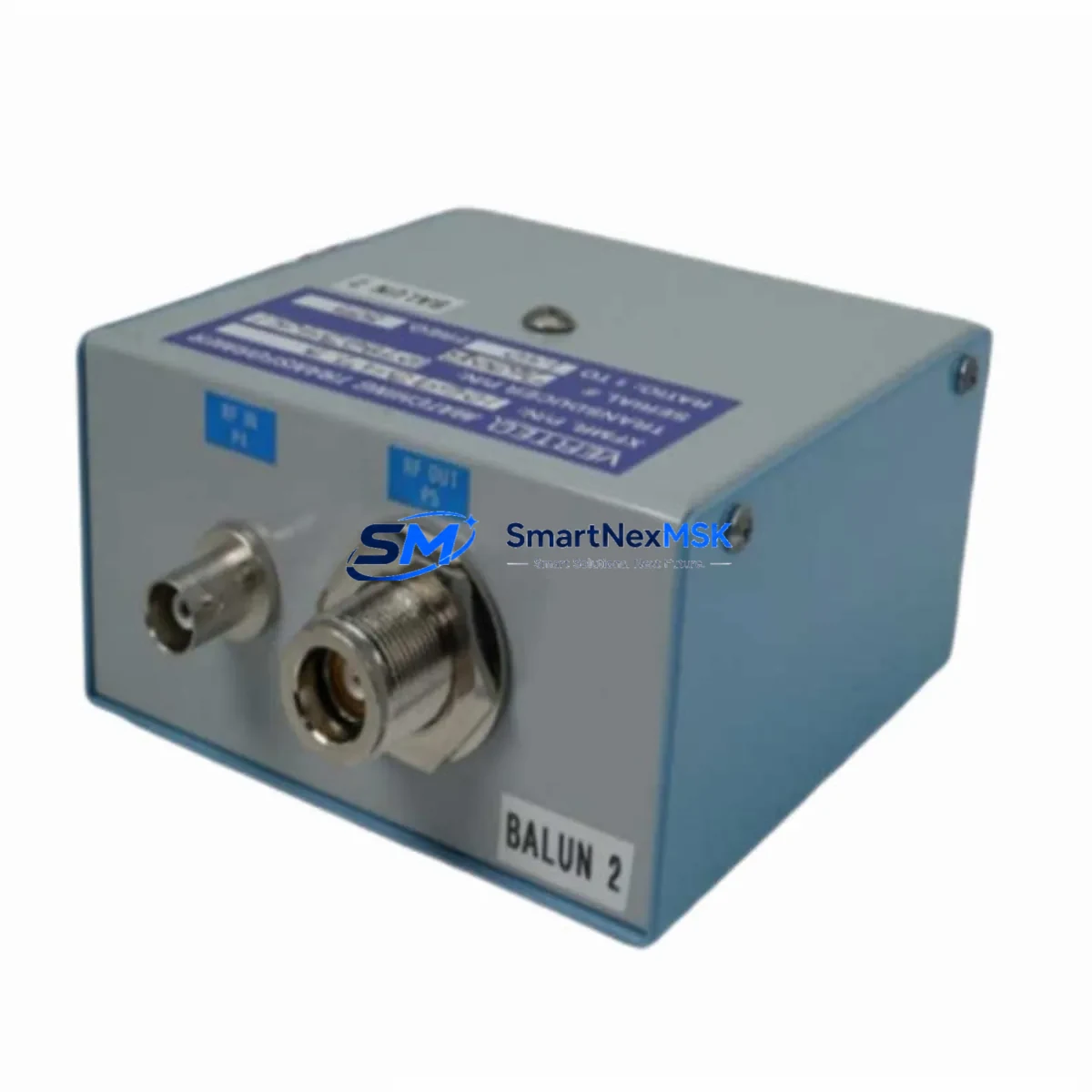
VERTEQ 1078234.5.1 Retrofit-Ready RF Matching Transformer for Megasonic Control Systems
The VERTEQ 1078234.5.1 RF Matching Transformer (cross-reference: 1069347.3) is a precision retrofit component engineered for seamless integration into VERTEQ Megasonic wafer cleaning and surface treatment systems. As legacy VERTEQ platforms approach end-of-life and OEM support windows close, facilities engineering teams and process equipment engineers increasingly rely on verified replacement units to sustain uptime, protect validated process recipes, and avoid costly tool requalification. This unit is stocked, tested, and shipped with a 12-month warranty to support your retrofit and upgrade programs.
Upgrade Compatibility Table
| Parameter | Details |
|---|---|
| Primary SKU | VERTEQ 1078234.5.1 |
| Cross-Reference SKU | 1069347.3 |
| Compatible Platform | VERTEQ Megasonic Wafer Cleaning Systems (ST250, ST400 series and derivatives) |
| Function | RF impedance matching between generator output and transducer load |
| Mounting Interface | Direct chassis mount; compatible with original VERTEQ backplane connector layout |
| RF Frequency Range | Matched to VERTEQ Megasonic transducer operating frequency (typically 0.8–1.0 MHz) |
| Power Handling | Rated for standard VERTEQ RF generator output levels; verify with system power supply spec sheet |
| Communication Compatibility | Passive component — no firmware or protocol dependency; integrates with existing VERTEQ control board |
| Installation Requirement | Torque connectors to OEM spec; verify RF cable shielding continuity post-installation |
| Replacement Recommendation | Direct drop-in for 1078234.5.1 and 1069347.3; no mechanical modification required |
| Commissioning Focus | Post-swap impedance verification, RF power delivery confirmation, process recipe validation |
| Warranty | 12 months from date of shipment |
Retrofit Planning for Existing Automation Systems
Replacing the VERTEQ 1078234.5.1 in an operational Megasonic tool requires a structured approach that accounts for the interdependencies within the RF delivery chain and the broader process control architecture. Before initiating the swap, engineers should document the current RF generator output power level, confirm the impedance matching network’s tuning state, and photograph all RF cable routing and connector orientations.
The RF matching transformer sits between the VERTEQ RF power generator and the Megasonic transducer array. In many installations, the generator is a dedicated VERTEQ RF Generator module — often referenced alongside the transformer in the same control cabinet. Confirm that the generator’s output impedance specification (typically 50 Ω) aligns with the replacement transformer’s input impedance rating before energizing the system.
On the transducer side, the VERTEQ Megasonic transducer assembly must be inspected for signs of delamination or impedance drift, as a degraded transducer can cause premature failure of a newly installed matching transformer. If the transducer assembly shows anomalous impedance readings during pre-swap testing, address the transducer before completing the transformer replacement.
The VERTEQ control board (main process controller PCB) interfaces with the RF subsystem through analog power setpoint signals and interlock feedback lines. During the retrofit, verify that all interlock connections — including the RF-on enable signal and the over-temperature shutdown line — are correctly re-seated after the transformer is installed. Loose interlock wiring is a common cause of post-retrofit RF enable faults.
For facilities running multiple VERTEQ tools on a shared DI water loop, the VERTEQ process tank assembly and associated fluid control valves should be isolated during the RF subsystem swap to prevent unintended process exposure. Coordinate with the facilities team to confirm DI water flow is suspended to the affected tank before opening the RF enclosure.
If your site uses a VERTEQ system controller PC or a third-party SCADA interface for recipe management, confirm that the RF power setpoint stored in the active recipe is within the rated range of the replacement transformer. Recipes migrated from older tool configurations may contain legacy power values that exceed the safe operating envelope of updated components.
In multi-tool fab environments, the VERTEQ power distribution unit (PDU) feeding the RF generator should be load-tested after the swap to confirm that inrush current during RF generator startup does not trip branch circuit protection. This is particularly relevant in older facilities where branch circuit ratings were sized for original OEM equipment configurations.
Finally, the VERTEQ RF cable harness connecting the transformer to both the generator and the transducer should be inspected for insulation integrity and connector pin condition. Degraded RF cables are frequently overlooked during transformer replacements and can introduce impedance mismatches that reduce cleaning efficiency and accelerate wear on the new transformer. Replace any cables showing cracked insulation, corroded pins, or mechanical damage before completing the retrofit.
Downtime Control During System Migration
Minimizing unplanned downtime during a VERTEQ RF matching transformer replacement requires pre-staging the replacement unit, all required tools, and the relevant sections of the VERTEQ service manual before the maintenance window opens. A well-prepared swap on a VERTEQ Megasonic tool can typically be completed within a two-to-four-hour scheduled maintenance window, provided that no secondary faults are discovered during the process.
To protect the original process recipe logic, export and archive all active recipes from the VERTEQ system controller before beginning any hardware work. If the controller uses a proprietary recipe format, confirm that the backup is readable on a secondary workstation before proceeding. This ensures that even if the controller requires a reboot or configuration reset during the retrofit, the validated process parameters can be restored without re-qualification.
During the RF subsystem swap, maintain control continuity on adjacent tools sharing the same fab bay by confirming that the RF interlock network does not propagate a fault condition to neighboring equipment. In some VERTEQ multi-tool configurations, a single RF fault on one tool can trigger a system-wide interlock that halts processing on all connected units. Isolate the affected tool’s interlock chain from the shared network before beginning the swap to prevent cascading downtime.
After installing the VERTEQ 1078234.5.1 replacement, perform a cold-start RF power ramp — beginning at 10–20% of rated power and stepping up incrementally — to verify stable impedance matching across the operating power range before returning the tool to full production load. Document the RF power delivery readings at each step and compare against the pre-fault baseline to confirm that the replacement transformer is performing within specification.
Retrofit Support FAQ
Q1: Is the VERTEQ 1078234.5.1 a direct drop-in replacement for the 1069347.3?
Yes. The 1078234.5.1 and 1069347.3 are cross-referenced replacement units for the same RF matching transformer position in VERTEQ Megasonic systems. No mechanical modification or wiring adaptation is required for a standard swap. Confirm connector orientation against your specific tool’s wiring diagram before installation.
Q2: What commissioning steps are required after installation?
After mechanical installation, verify RF cable continuity and connector torque, confirm interlock signal integrity, and perform a stepped RF power ramp from minimum to rated output. Measure impedance at the transducer input to confirm matching network performance. Run a test cycle with a non-production wafer before returning the tool to production.
Q3: Can this unit be used in VERTEQ tools that have been upgraded with third-party RF generators?
Compatibility with third-party RF generators depends on the generator’s output impedance and frequency characteristics. The 1078234.5.1 is designed for the VERTEQ OEM RF generator specification. If your tool has been retrofitted with a non-VERTEQ generator, verify the generator’s output impedance and frequency against the transformer’s rated input parameters before installation. Contact our technical team with your generator model for a compatibility assessment.
Q4: What does the 12-month warranty cover?
The 12-month warranty covers manufacturing defects and component failures under normal operating conditions consistent with the VERTEQ OEM specification. The warranty period begins on the date of shipment. Each unit undergoes pre-shipment functional testing. Warranty claims are supported by our technical team via email and phone. Units showing damage from installation errors, overvoltage events, or operation outside rated parameters are not covered under the standard warranty.
© 2026 SMARTNEXMSK. All rights reserved.
Original Source: https://smartnexmsk.com
Contact: [email protected] | +86 18259474341