
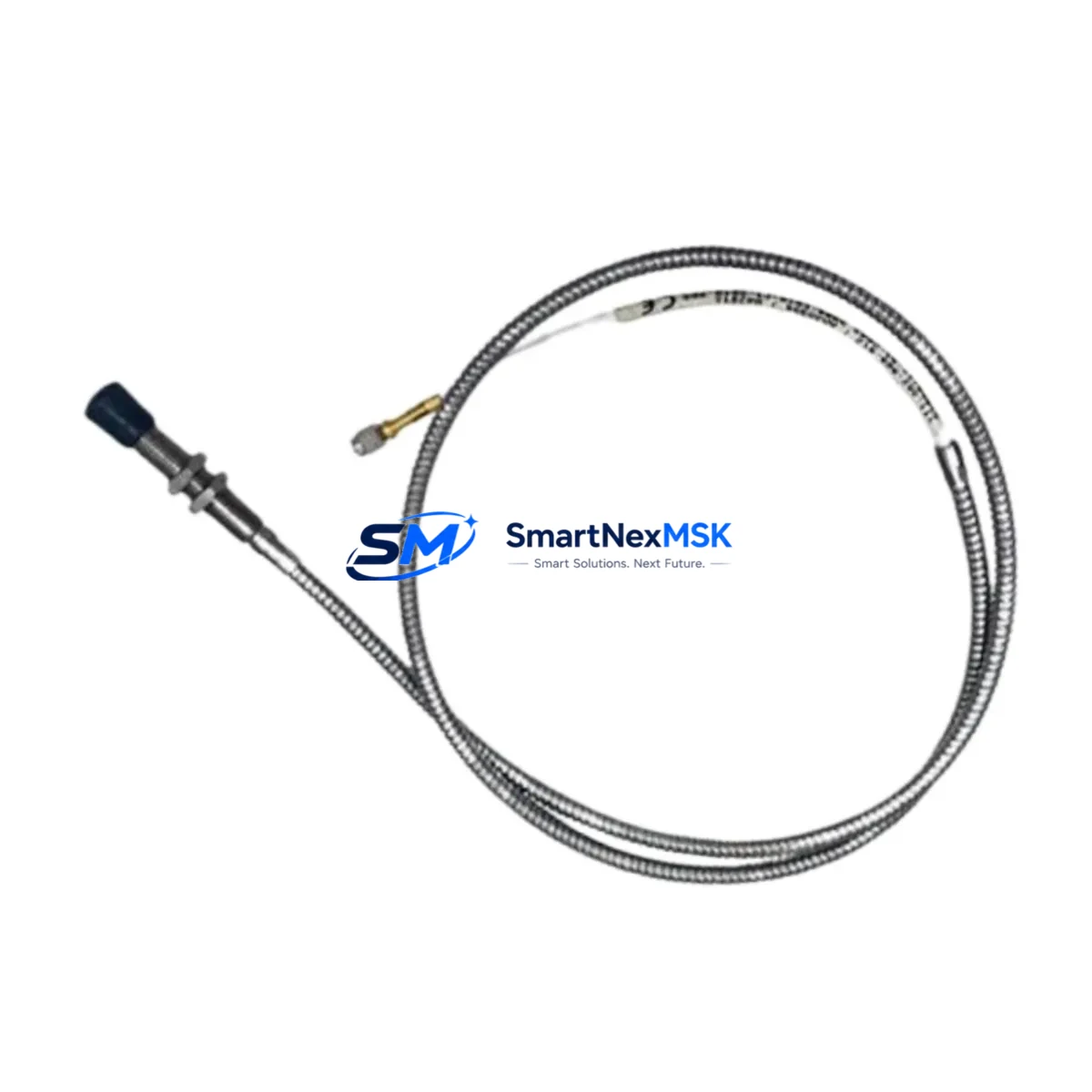
Vibro-Meter TQ402-111-402-000-013 Spare TQ Series Automation: Precision Torque Sensor for Industrial Downtime Recovery
The Vibro-Meter TQ402-111-402-000-013 is a Swiss-engineered, non-contact shaft torque transducer from the TQ Series, designed for continuous measurement in demanding industrial drive train and rotating machinery applications. As a maintenance-ready original spare, this unit is sourced, inspected, and dispatched to support rapid replacement workflows — minimizing unplanned downtime in turbine test rigs, compressor trains, pump drive systems, and precision manufacturing lines where torque monitoring is safety-critical.
Maintenance engineers and procurement teams operating legacy or active Vibro-Meter TQ Series installations rely on verified original components to preserve measurement accuracy, system calibration integrity, and compliance with OEM specifications. The TQ402-111-402-000-013 is a direct fit for existing TQ Series mounting arrangements, eliminating the need for mechanical adaptation or signal chain reconfiguration during emergency replacement scenarios.
Every unit is tested prior to shipment and backed by a 12-month warranty, providing confidence for both planned overhaul schedules and emergency spare stock programs.
Spare Maintenance Table
| Parameter | Specification / Detail |
|---|---|
| Part Number / SKU | TQ402-111-402-000-013 |
| Brand | Vibro-Meter (Meggitt Group) |
| Series | TQ Series — Non-Contact Shaft Torque |
| Measurement Principle | Non-contact magnetoelastic / inductive torque measurement |
| Product Type | Torque Transducer / Sensor |
| Origin | Switzerland (CH) |
| Compatibility | TQ Series drive train monitoring systems; compatible with Vibro-Meter CM Series signal conditioners and VM600 rack-based monitoring platforms |
| Typical Installation | Shaft-mounted, non-contact gap sensing; requires alignment to OEM gap specification |
| Application Environment | Industrial drive trains, turbine test benches, compressor trains, pump systems, precision manufacturing |
| Output Signal | Analog voltage / frequency output (conditioner-dependent; verify with CM-series signal conditioner pairing) |
| Maintenance Recommendation | Inspect sensor gap, cable integrity, and connector seating at each planned shutdown; replace signal conditioner output fuses if signal loss is detected |
| Warranty | 12 Months from date of shipment |
| Pre-Shipment Testing | Yes — functional and continuity tested before dispatch |
| Lead Time | Subject to stock availability; contact sales for current lead time |
Maintenance Planning for Continuous Operation
When replacing the TQ402-111-402-000-013 in a live installation, a thorough site inspection of the surrounding measurement and control chain is essential to prevent repeat failures and ensure restored system accuracy. Maintenance engineers should treat this replacement as an opportunity to audit the full torque monitoring loop.
Begin with the Vibro-Meter CM Series signal conditioner paired to this sensor — verify output calibration, zero offset, and span settings before reconnecting the replacement transducer. If the conditioner has accumulated operating hours beyond its recommended service interval, schedule a parallel replacement to avoid a second unplanned outage. Check the shielded sensor cable assembly (typically a Vibro-Meter OEM cable matched to the TQ402 connector type) for insulation breakdown, connector corrosion, and shield continuity — cable degradation is a leading cause of torque signal drift and false alarms.
Inspect the VM600 rack or equivalent monitoring chassis for card seating, backplane connector integrity, and power rail voltage stability. A loose I/O card or degraded backplane contact can produce measurement errors that are incorrectly attributed to the sensor itself. While the rack is accessible, verify the power supply module output voltages against specification — under-voltage conditions accelerate sensor electronics aging and can corrupt torque readings.
On the field wiring side, check terminal blocks and DIN rail connectors in the junction box for oxidation and torque-to-spec tightness. Loose terminals in the signal circuit introduce noise that degrades torque measurement resolution. If the installation includes a signal isolator or galvanic isolation barrier between the sensor conditioner and the control system input card, verify isolation resistance and confirm the isolator’s frequency response is adequate for the torque signal bandwidth.
For installations feeding torque data into a PLC or DCS analog input module, confirm the input card’s range configuration matches the conditioner output scaling. A misconfigured analog input range will produce systematic torque measurement error even with a correctly functioning replacement sensor. If the system uses relay output modules for torque overload protection trips, test the relay contact resistance and trip threshold calibration as part of the commissioning check after sensor replacement.
Finally, if the drive train is monitored by an HMI or SCADA display, verify that the torque trend historian resumes correctly after the replacement and that alarm setpoints remain valid for the restored sensor’s calibration. Document the replacement event, gap setting measurement, and post-installation zero check in the site maintenance log to support future planned maintenance intervals and spare parts lifecycle planning.
Site Replacement Workflow
Step 1 — Isolate and de-energize: Follow site LOTO (Lockout/Tagout) procedure for the drive train. Confirm shaft is stationary and all energy sources are isolated before approaching the sensor mounting location.
Step 2 — Record pre-removal data: Note the existing sensor gap measurement, cable routing, and connector orientation. Photograph the installation for reference during reassembly.
Step 3 — Remove the legacy TQ402 unit: Disconnect the sensor cable at the nearest junction point. Remove the sensor from its mounting bracket, taking care not to disturb the shaft surface or mounting face.
Step 4 — Inspect mounting surfaces: Clean the mounting bracket and shaft target area. Check for corrosion, mechanical damage, or dimensional changes that could affect the replacement sensor’s gap setting.
Step 5 — Install TQ402-111-402-000-013: Mount the replacement sensor and set the air gap to the OEM-specified value using a feeler gauge. Torque mounting fasteners to specification. Route and secure the cable to avoid vibration-induced fatigue.
Step 6 — Reconnect and verify signal: Reconnect the cable to the CM Series signal conditioner. Power up the monitoring system and verify the torque signal output is within the expected zero-load range before returning the drive train to service.
Step 7 — Commission and document: Perform a loaded torque verification check if operationally feasible. Record the replacement in the site maintenance management system (CMMS) and update the spare parts inventory accordingly.
This workflow supports compatibility with existing TQ Series installations without requiring mechanical or electrical system modifications, preserving OEM system integrity and minimizing total replacement time.
Spare Parts Support FAQ
Q1: Is the TQ402-111-402-000-013 a direct replacement for older TQ Series variants?
The TQ402-111-402-000-013 is designed for TQ Series installations. Compatibility with specific legacy sub-variants depends on the mounting configuration and signal conditioner pairing. We recommend confirming the existing conditioner model and cable connector type before ordering. Our technical team can assist with compatibility verification based on your site documentation.
Q2: What does the 12-month warranty cover?
The 12-month warranty covers manufacturing defects and functional failures under normal operating conditions from the date of shipment. Each unit is tested prior to dispatch. Warranty claims require the original invoice and a description of the failure mode. Physical damage, incorrect installation, or operation outside specified parameters are excluded.
Q3: How should this spare be stored if not immediately installed?
Store the TQ402-111-402-000-013 in its original packaging in a dry, temperature-controlled environment away from strong magnetic fields and mechanical vibration. Avoid exposing the sensor connector to moisture or contamination. Inspect the unit and re-verify function before installation if stored for more than 12 months.
Q4: Can you supply multiple units for a spare parts buffer stock program?
Yes. We support planned spare parts programs with multi-unit orders for critical rotating machinery applications. Contact our sales team to discuss quantity pricing, lead times, and consignment stock arrangements for long-term supply continuity.
© 2026 SMARTNEXMSK. All rights reserved.
Original Source: https://smartnexmsk.com
Contact: [email protected] | +86 18259474341