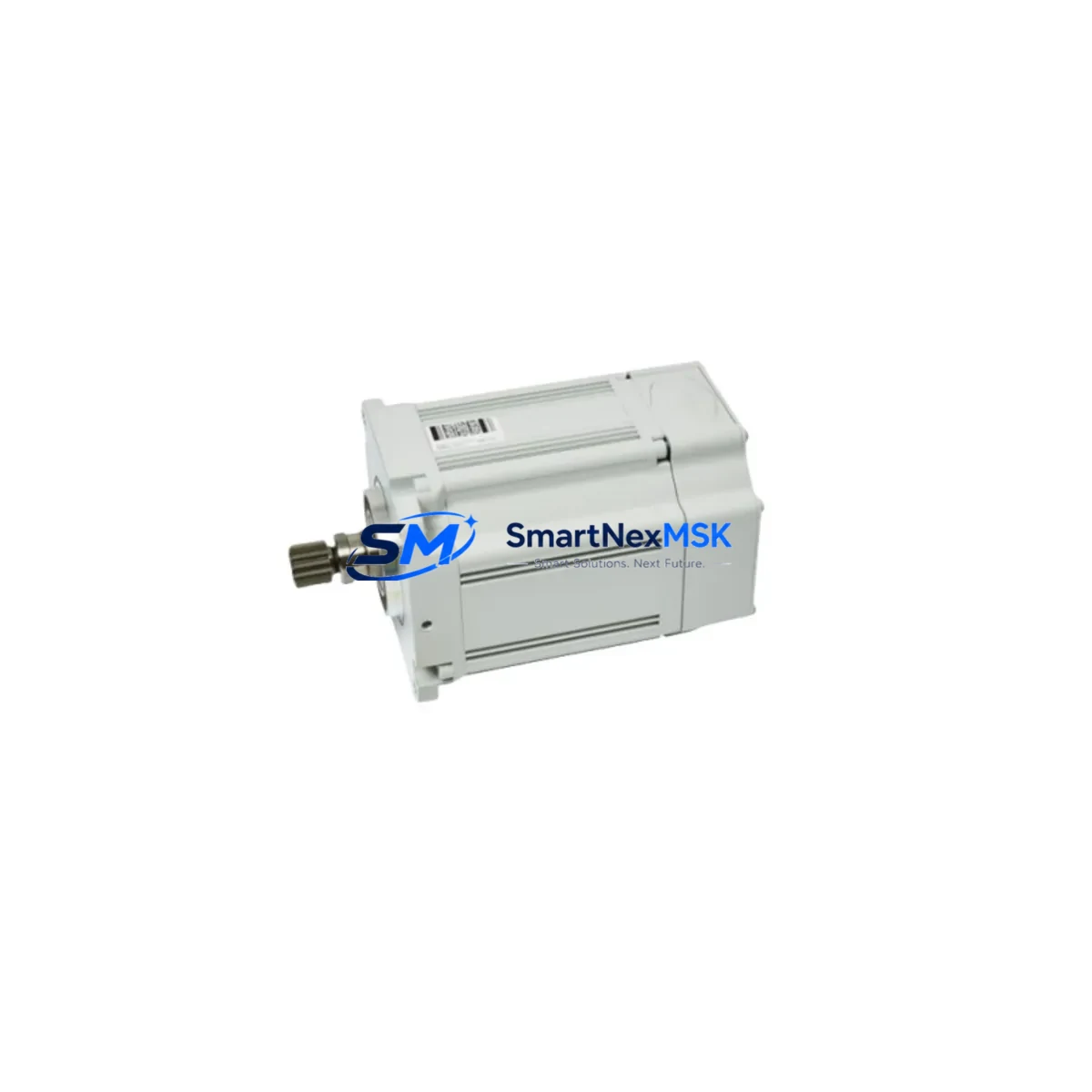
ABB 3HAC057432-001 Retrofit-Ready Servo Motor for IRB Control Systems: Compatible Upgrade for Legacy Robot Automation
The ABB 3HAC057432-001 is a precision servo motor engineered for deployment within ABB’s IRB industrial robot series, including the IRB 1600, IRB 2400, IRB 4400, and IRB 6600 platforms. As legacy ABB robot installations approach end-of-service milestones, the 3HAC057432-001 has become a critical retrofit component for maintenance engineers and system integrators tasked with extending the operational life of existing robot cells without full platform replacement. This unit is a direct-fit, drop-in replacement for discontinued or worn servo axes, enabling smooth modernization of robot joint drives while preserving the original mechanical envelope, wiring harness routing, and motion control logic.
Whether you are managing a planned upgrade cycle or responding to an unplanned axis failure, the 3HAC057432-001 provides a verified compatibility path that minimizes engineering risk and reduces total downtime. The motor is designed to interface directly with ABB’s DSQC series drive modules and the IRC5 controller cabinet, maintaining full compatibility with the RobotWare motion execution environment. Engineers replacing a failed axis motor can retain the existing RAPID program structure, tool data, and work object definitions without reprogramming, provided the replacement unit is correctly calibrated and the resolver offset is updated through the FlexPendant calibration routine.
Upgrade Compatibility Table
| Parameter | Details |
|---|---|
| Compatible Robot Models | IRB 1600, IRB 2400, IRB 4400, IRB 6600 (axis-dependent — confirm axis number before ordering) |
| Controller Compatibility | IRC5 Single Cabinet, IRC5 Compact, IRC5 Panel Mounted Controller |
| Drive Interface | DSQC 661 / DSQC 663 drive modules; standard ABB resolver feedback connector |
| Communication Protocol | Resolver-based feedback; compatible with ABB SafeMove and standard motion supervision |
| Mounting & Mechanical Fit | Direct bolt-on replacement; original flange dimensions retained; no adapter plate required |
| Wiring Compatibility | OEM connector pinout preserved; existing motor cable and resolver cable reusable |
| Calibration Requirement | Fine calibration via FlexPendant required after installation; revolution counter update mandatory |
| Replacement Scope | Replaces discontinued 3HAC057432-001 and functionally equivalent legacy part numbers |
| Warranty | 12-Month Warranty — covers manufacturing defects and functional failure under normal operating conditions |
| Origin | Germany (DE) |
Retrofit Planning for Existing Automation Systems
A successful retrofit of the 3HAC057432-001 begins well before the motor arrives on-site. System integrators should start by auditing the existing robot cell documentation, including the axis configuration file, the RAPID module library, and the current RobotWare version installed on the IRC5 controller. Confirming the RobotWare release is essential because motion parameter sets and axis calibration data formats differ between major versions, and an incompatible parameter file can prevent the robot from completing its startup sequence after motor replacement.
Power supply capacity is the next critical checkpoint. The IRC5 cabinet’s internal power distribution — fed through the DSQC 608 power supply unit — must be verified to confirm it can sustain the inrush current demand of the replacement motor during axis homing and high-acceleration moves. In older installations where the DSQC 608 has accumulated significant operating hours, it is advisable to inspect the capacitor bank condition and measure output voltage stability under load before committing to the motor swap. A marginal power supply that was adequate for the original motor may exhibit voltage droop with a new unit, triggering drive fault codes on the DSQC 661 or DSQC 663 axis drive board.
Terminal block wiring at the motor junction box and at the cabinet’s X1 and X2 connector panels should be photographed and documented before disconnection. The resolver cable — typically a shielded, twisted-pair assembly routed through the robot’s dress package — must be inspected for insulation damage, particularly at flex points near the wrist and base rotation joints. If the resolver cable shows signs of wear, replacing it concurrently with the 3HAC057432-001 motor eliminates a common source of post-retrofit resolver signal faults. The SMB (Serial Measurement Board), often the DSQC 233 or its successor, stores revolution counter data and must be handled carefully during the swap to avoid data loss that would require a full mechanical calibration cycle.
For robot cells integrated with an ABB CP600 or PP865 operator panel, or those using a third-party HMI connected via DeviceNet or PROFIBUS-DP, the retrofit window should be coordinated with the HMI team to ensure that any axis-status signals mapped to the HMI display are temporarily suppressed or placed in maintenance mode. This prevents nuisance alarms from propagating to the SCADA layer during the calibration phase. Once the motor is installed and the revolution counter is updated, a slow-speed test cycle through the full axis range — typically executed via the FlexPendant jog function at 10% speed — should be completed before restoring automatic program execution.
Sites running coordinated multi-robot cells with an ABB IRC5 MultiMove configuration should plan the retrofit during a scheduled maintenance window that accounts for the full cell being taken offline, as the motion coordination logic cannot safely execute with one robot in manual calibration mode. The RAPID program’s module structure should be backed up to a USB drive or the RobotStudio offline library before any hardware change is initiated.
Downtime Control During System Migration
Minimizing unplanned downtime during a servo motor replacement on an IRB robot requires a structured pre-staging approach. Before the maintenance window opens, the replacement 3HAC057432-001 unit should be bench-tested for resolver signal integrity using a compatible drive module in a test rig, confirming that the feedback signal is clean and within the expected amplitude range. This pre-shipment functional test, which is part of our standard outgoing quality inspection, is documented and shipped with each unit.
The original RAPID program and system parameters should be exported from the IRC5 controller and stored on an external medium at least 24 hours before the maintenance window. This backup preserves the tool center point (TCP) data, load data, work object frames, and all motion instructions, ensuring that if the calibration process encounters an unexpected fault, the system can be restored to its last known good state without loss of production data.
During the physical swap, the axis brake should be engaged and the robot mechanically supported before the motor mounting bolts are removed, preventing uncontrolled joint movement under gravity. After installation, the revolution counter update procedure on the FlexPendant must be completed for the affected axis before the controller is switched to automatic mode. Skipping this step will result in a persistent axis calibration error that prevents program execution.
For facilities with strict OEE (Overall Equipment Effectiveness) targets, maintaining a spare 3HAC057432-001 unit in the local storeroom — alongside a spare DSQC 661 drive board and a set of pre-terminated resolver cables — provides the fastest possible recovery path for an unplanned axis failure. Our 12-month warranty covers the replacement unit from the date of shipment, and our technical team is available to support remote commissioning guidance during the calibration phase.
Retrofit Support FAQ
Q1: Is the 3HAC057432-001 a direct drop-in replacement for the original ABB part, and will it work with my existing motor cable?
Yes. The 3HAC057432-001 maintains the original OEM mechanical dimensions, flange bolt pattern, and connector pinout. Your existing motor power cable and resolver cable can be reused without modification, provided they are in serviceable condition. We recommend inspecting the resolver cable for insulation wear before reuse.
Q2: Do I need to reprogram my RAPID modules after replacing the servo motor?
No RAPID reprogramming is required. The replacement motor uses the same resolver feedback interface as the original unit. After installation, you only need to perform the standard revolution counter update via the FlexPendant and run a fine calibration routine. All existing RAPID modules, TCP data, and work object definitions remain valid.
Q3: What commissioning steps are required after installation, and how long does calibration typically take?
The standard commissioning sequence includes: (1) revolution counter update on the FlexPendant, (2) fine calibration using the calibration pendulum or reference marks, (3) slow-speed jog test through the full axis range, and (4) a supervised automatic cycle at reduced speed before returning to full production speed. For a single-axis replacement on a standard IRB robot, experienced technicians typically complete this sequence within 2–4 hours.
Q4: What does the 12-month warranty cover, and what is the process if a warranty claim is needed?
The 12-month warranty covers manufacturing defects and functional failure under normal operating conditions from the date of shipment. It does not cover damage resulting from incorrect installation, electrical overstress, or mechanical impact. To initiate a warranty claim, contact our technical team with the order reference, installation date, and a description of the fault symptom. We will arrange inspection and, where applicable, a replacement unit dispatch.
© 2026 SMARTNEXMSK. All rights reserved.
Original Source: https://smartnexmsk.com
Contact: [email protected] | +86 18259474341