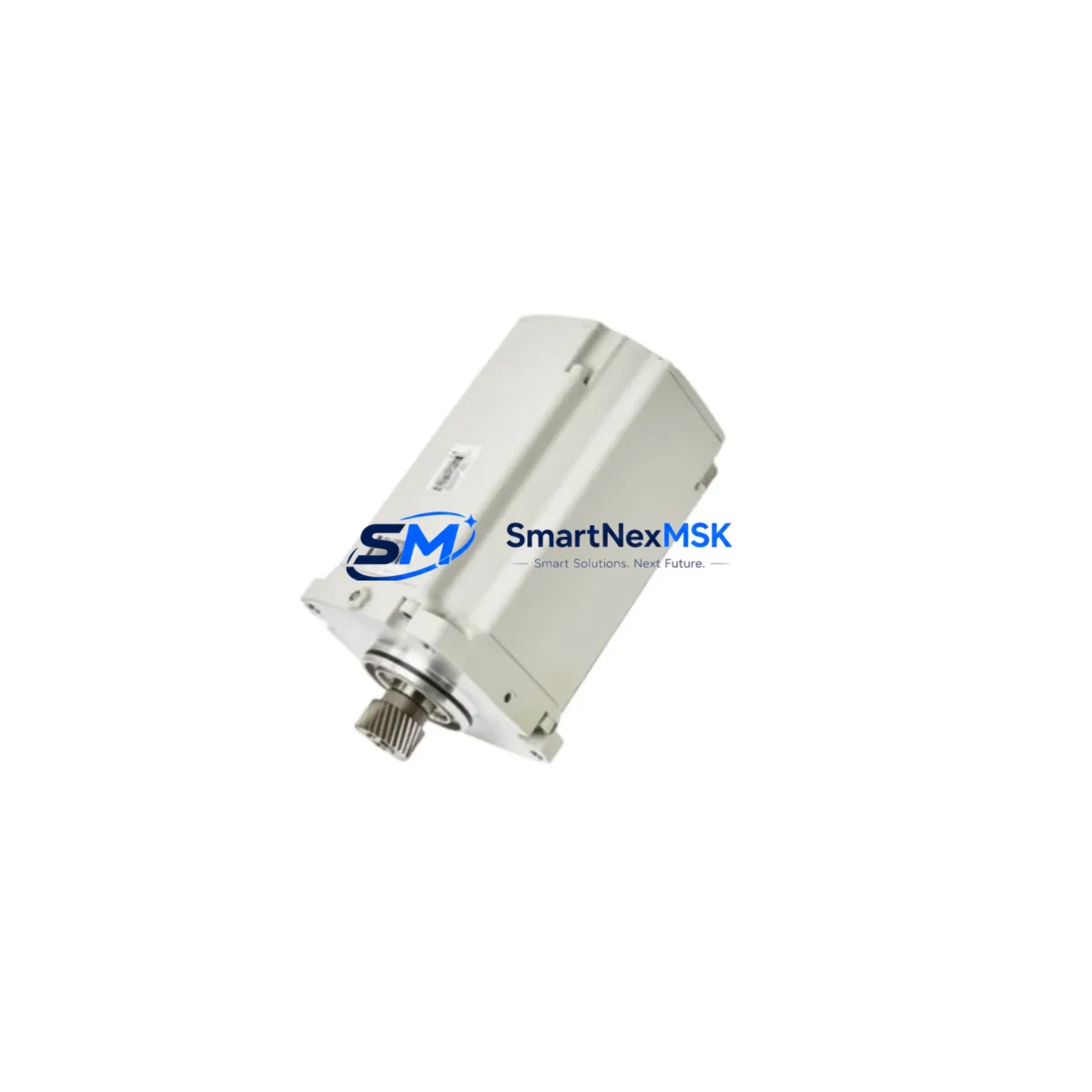
ABB 3HAC14940-1 Retrofit-Ready Servo Motor for IRB7600 Control Systems
The ABB 3HAC14940-1 is an AC servo motor with integrated pinion, purpose-built for the IRB7600 series industrial robot platform. As legacy IRB7600 units approach end-of-service milestones and OEM spare part availability tightens, the 3HAC14940-1 has become a critical retrofit component for maintenance engineers and system integrators managing long-cycle production lines in automotive, heavy fabrication, foundry, and material handling environments. This unit is sourced from verified supply channels, pre-tested prior to shipment, and backed by a 12-month warranty covering manufacturing defects and functional performance.
Whether you are replacing a failed axis motor on an active robot cell, upgrading a refurbished IRB7600 for redeployment, or building a spare-parts buffer for a multi-robot line, the 3HAC14940-1 provides a direct, wiring-compatible drop-in solution that minimizes engineering rework and reduces unplanned downtime exposure.
Upgrade Compatibility Table
| Parameter | Details |
|---|---|
| Compatible Platform | ABB IRB7600 Series (all variants: IRB7600-150/3.5, IRB7600-325/3.1, IRB7600-500/2.55, IRB7600-340/2.8) |
| Replaces OEM Part | 3HAC14940-1 (direct OEM equivalent) |
| Motor Type | AC Servo Motor with Pinion |
| Mounting Interface | Compatible with IRB7600 axis gearbox backplate; standard ABB bolt pattern |
| Connector / Wiring | Drop-in compatible with existing IRB7600 motor cable harness; no re-pinning required |
| Feedback Device | Resolver-based position feedback; compatible with ABB IRC5 drive module resolver input |
| Controller Compatibility | ABB IRC5 Controller (M2004 and later); compatible with DSQC series drive units |
| Communication Protocol | Analog resolver signal; no fieldbus configuration required at motor level |
| Installation Requirement | Axis calibration required post-replacement; fine calibration via ABB RobotStudio or teach pendant |
| Commissioning Note | SMB (Serial Measurement Board) battery backup recommended before swap to preserve revolution counter data |
| Warranty | 12 Months — covers manufacturing defects and functional performance from date of shipment |
| Pre-Shipment Testing | Functional run-in test and insulation resistance check performed on each unit |
| Lead Time | In stock — typically ships within 1–3 business days |
Retrofit Planning for Existing Automation Systems
A successful IRB7600 servo motor retrofit begins well before the replacement unit arrives on site. Engineers should start by pulling the robot’s current axis configuration from the IRC5 controller backup, confirming which axis the 3HAC14940-1 serves, and verifying that the existing DSQC 661 or DSQC 662 drive module is functioning correctly — a failed drive unit can mimic motor failure symptoms and should be ruled out before ordering. The SMB (Serial Measurement Board), typically a DSQC 633 or equivalent, stores revolution counter data for all axes; its battery should be checked and replaced if necessary before the motor swap to avoid losing calibration reference points.
On the mechanical side, confirm that the axis gearbox output flange and pinion engagement surface show no abnormal wear. If the gearbox — often an ABB-specified Nabtesco or equivalent precision cycloidal unit — shows backlash beyond tolerance, a motor replacement alone will not restore full positional accuracy, and a gearbox inspection or replacement should be scheduled concurrently. The motor cable harness connecting to the 3HAC14940-1 should be inspected for chafing, connector corrosion, and continuity before reinstallation.
For sites running multiple IRB7600 units on a shared IRC5 MultiMove controller, the replacement sequence should be coordinated so that only one axis is taken offline at a time. The remaining axes can continue operating in a reduced-capacity mode while the swap is completed, provided the safety zone configuration in the FlexPendant is updated to reflect the temporary single-robot operating envelope. After mechanical installation, the axis must be re-calibrated using the calibration pendulum method or via RobotStudio’s calibration wizard, with the updated calibration data written back to the SMB.
Sites that also operate ABB IRB6600 or IRB6650 robots on the same production floor should note that while some servo motor part numbers overlap across platforms, the 3HAC14940-1 is specific to the IRB7600 mechanical structure and should not be cross-fitted without engineering verification. Similarly, the DSQC 400 I/O module and DSQC 328A digital I/O units connected to the IRC5 cabinet should be confirmed operational, as I/O faults can generate axis error codes that are incorrectly attributed to motor hardware. The 3HAC17326-1 motor cable and 3HAC031683-001 connector kit are commonly required consumables during this type of retrofit and should be included in the maintenance order.
Downtime Control During System Migration
Minimizing production downtime during an IRB7600 servo motor replacement requires a structured pre-shutdown checklist and a clearly defined recovery sequence. Before taking the robot offline, create a full system backup from the IRC5 FlexPendant — this captures the RAPID program, I/O configuration, tool data, work object definitions, and axis calibration parameters. Store this backup on both the controller’s internal memory and an external USB drive. If the robot is part of a coordinated multi-robot cell managed by a PLC — such as a Siemens S7-300, S7-400, or S7-1500 series controller — notify the PLC operator to place the relevant program block in manual hold mode to prevent automatic restart commands from reaching the robot during the swap.
The physical motor replacement on an IRB7600 axis typically takes 2–4 hours for an experienced field engineer, including torque verification of all fasteners to ABB-specified values. The most time-sensitive step is the post-installation calibration: if the SMB battery was healthy and revolution counter data was preserved, fine calibration can be completed in under 30 minutes using the teach pendant’s calibration routine. If counter data was lost, a full calibration using the calibration tool and reference marks will be required, adding 1–2 hours to the recovery timeline.
Once calibration is confirmed, run the robot through its full programmed path at reduced speed (10–25%) before returning to production speed. Verify that all tool center point (TCP) positions remain within tolerance and that the HMI operator panel — whether a local FlexPendant or a SCADA screen connected via Ethernet/IP or PROFINET — reflects correct axis position feedback. Log the replacement event in the site’s CMMS with the new unit’s serial number, installation date, and calibration data for future reference and warranty tracking.
Retrofit Support FAQ
Q1: Is the 3HAC14940-1 a direct OEM replacement, or will it require wiring or bracket modifications?
The 3HAC14940-1 is a direct OEM-equivalent replacement for the IRB7600 series. The motor connector, bolt pattern, and pinion interface are identical to the original specification. No wiring re-pinning, bracket fabrication, or mechanical adaptation is required. Standard installation follows the ABB IRB7600 Product Manual axis replacement procedure.
Q2: What calibration steps are mandatory after replacing this servo motor?
Axis calibration is always required after a servo motor replacement on the IRB7600. At minimum, a fine calibration using the calibration pendulum and the IRC5 FlexPendant calibration routine must be performed. If the SMB revolution counter data was lost during the swap, a full calibration from the mechanical reference marks is required. ABB RobotStudio can be used for offline verification of the calibration result before returning the robot to production.
Q3: How do I verify the replacement unit before installation to avoid a second shutdown?
Each 3HAC14940-1 unit shipped by SMARTNEXMSK undergoes a pre-shipment functional test including motor run-in and insulation resistance (IR) testing. Upon receipt, visually inspect the pinion teeth and motor shaft for transit damage, verify the resolver connector pins are undamaged, and confirm the motor rotates freely by hand with no binding. These checks take under 10 minutes and significantly reduce the risk of installing a transit-damaged unit.
Q4: What does the 12-month warranty cover, and how is a warranty claim processed?
The 12-month warranty covers manufacturing defects and functional failure under normal operating conditions from the date of shipment. It does not cover damage resulting from incorrect installation, overvoltage events, mechanical overload, or unauthorized modification. To initiate a warranty claim, contact SMARTNEXMSK with the order reference, unit serial number, and a description of the fault. Replacement units are dispatched upon fault verification, and defective units must be returned within 30 days of the replacement shipment.
© 2026 SMARTNEXMSK. All rights reserved.
Original Source: https://smartnexmsk.com
Contact: [email protected] | +86 18259474341