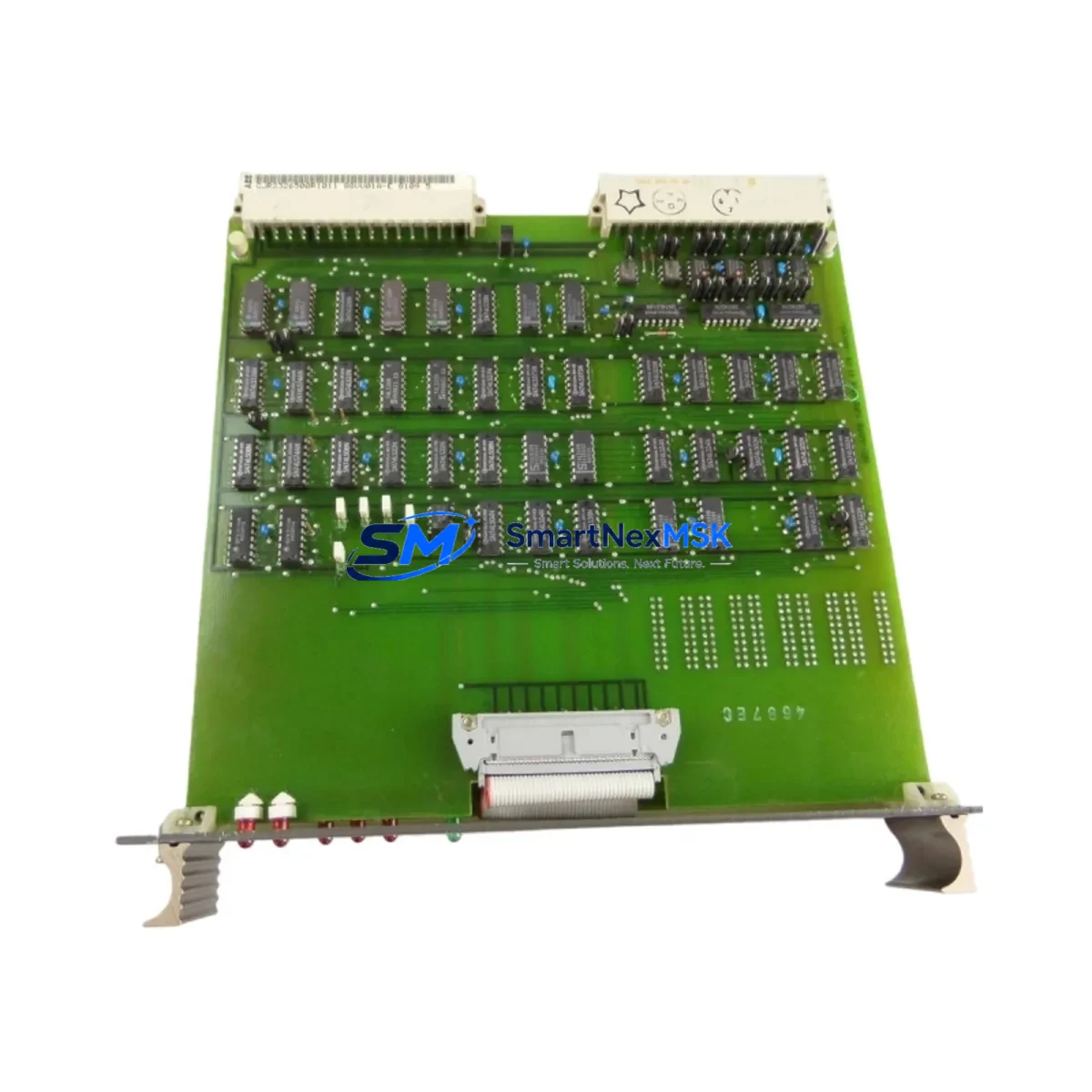
ABB GJR2326500R1011-88VU01B-E Retrofit-Ready CPU for Advant OCS AC31 Control Systems
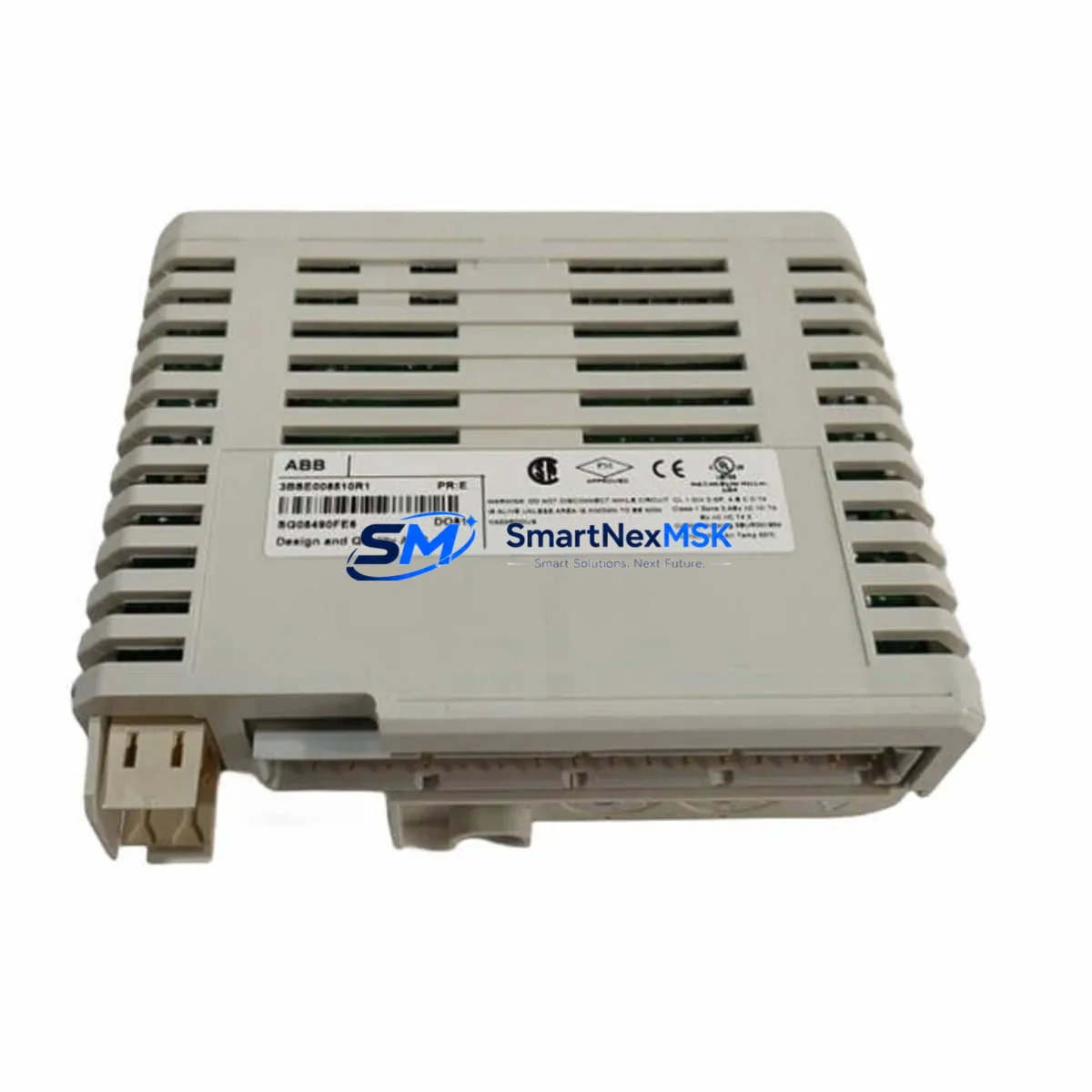
The ABB GJR2326500R1011-88VU01B-E is a CPU control board engineered for the Advant OCS AC31 series — one of ABB’s most widely deployed distributed control platforms in process automation, power distribution, and discrete manufacturing. As the AC31 product line has reached end-of-life status, many facilities operating legacy control cabinets face the critical challenge of sourcing verified replacement units that maintain full backward compatibility with existing backplane wiring, terminal assignments, and application program logic. This module addresses that need directly, offering a tested, in-stock solution for engineers managing planned upgrades or emergency replacements.
Whether you are replacing a failed unit in a running production line or executing a phased modernization of an aging control cabinet, the GJR2326500R1011-88VU01B-E provides the functional continuity required to minimize engineering rework. The module retains the original rack-mount form factor compatible with the AC31 S900 and CS31 backplane systems, allowing direct installation without mechanical modification to the control enclosure. Terminal block wiring from the original CPU — including 24 VDC power supply connections, CS31 bus interface, and digital I/O signal lines — can be transferred directly, provided the field wiring has been documented and verified against the original project drawings.
Upgrade Compatibility Table
| Parameter | Details |
|---|---|
| Compatible Series | ABB Advant OCS AC31, CS31 Bus Systems |
| Replaces / Supersedes | GJR2326500R1011 variants (88VU01A-E, 88VU01B-E) |
| Backplane Interface | AC31 S900 rack, CS31 serial bus backplane |
| Communication Protocol | CS31 (ABB proprietary), RS-232 programming port |
| Power Supply Requirement | 24 VDC ±15%, verify against existing PS module rating |
| Installation Type | Direct drop-in; no mechanical modification required |
| Programming Tool | ABB Advant Builder / 907 PC Tool (IEC 61131-3 compatible) |
| Retrofit Recommendation | Backup existing program via 907 PC Tool before swap |
| Commissioning Focus | Module address DIP switches, CS31 node ID, watchdog timer |
| Warranty | 12 Months — covers functional defects under normal operating conditions |
Retrofit Planning for Existing Automation Systems
A successful retrofit of the GJR2326500R1011-88VU01B-E begins well before the module arrives on site. Engineers should start by auditing the existing control cabinet to confirm the installed AC31 power supply module — typically a PM902F or equivalent 24 VDC rail-mount unit — can sustain the current draw of the replacement CPU alongside any co-installed I/O expansion modules. Overloaded power rails are a common root cause of intermittent CPU faults in aging AC31 systems and should be ruled out before the new module is commissioned.
Next, document the CS31 bus topology. In multi-drop CS31 networks, each slave node — including digital input modules such as the DI910 and digital output modules such as the DO910 — must retain its original node address to avoid address conflicts after the CPU is replaced. The node address is typically set via rotary switches on each slave module and should be photographed and recorded before any hardware is disturbed. Analog I/O modules in the same rack, such as the AI910 or AO910, may also require re-initialization if the CPU’s internal configuration memory is not restored from a verified backup.
For facilities that have integrated the AC31 system with an HMI panel — such as an ABB CP600 series operator panel or a third-party SCADA terminal communicating via Modbus RTU over RS-232 — the communication link parameters (baud rate, parity, station address) must be verified against the HMI project configuration before the replacement CPU is powered on. A mismatch in serial communication settings is one of the most common causes of post-replacement HMI communication failures and can be resolved quickly if the original project documentation is available.
If the control system includes a programming cable connection — typically a 9-pin RS-232 cable used with the 907 PC Tool or Advant Builder software — ensure the cable is available and the programming laptop has the correct software version installed before the maintenance window begins. Uploading the existing program from the old CPU (if it is still partially functional) or restoring from a verified backup file is the single most important step in reducing commissioning time. Systems that have been in service for more than five years may also benefit from replacing the CS31 bus termination resistors and checking the shielding continuity of the CS31 cable runs, as degraded bus signal integrity can cause sporadic communication errors that are difficult to diagnose after a CPU swap.
Downtime Control During System Migration
Minimizing unplanned downtime during a CPU replacement in an AC31-based control system requires a structured pre-outage checklist. Before the maintenance window opens, confirm that a full program backup has been extracted and verified — not just saved to the project folder, but compiled and cross-checked against the last known-good version. If the system controls a continuous process, coordinate with operations to identify a safe hold point where all outputs can be placed in a defined safe state before power is removed from the control cabinet.
During the swap, label all terminal block connections on the CPU before disconnecting any wiring. The GJR2326500R1011-88VU01B-E uses the same terminal layout as its predecessor, but field conditions — including wire stretch, insulation aging, and previous maintenance interventions — can introduce ambiguity if wiring is disturbed without prior documentation. After the new module is seated in the rack and wiring is reconnected, power the system in stages: energize the 24 VDC supply first, confirm the CPU status LED sequence, then enable the CS31 bus and verify that all slave nodes are recognized before enabling field outputs.
For systems where continuous control is critical, consider staging a parallel test rack with the replacement CPU pre-loaded with the application program. This allows functional verification — including I/O forcing, timer testing, and HMI communication checks — to be completed offline before the live system is touched, reducing the active maintenance window to a physical swap and final verification rather than a full commissioning cycle. All units supplied by SMARTNEXMSK are pre-tested for power-on functionality and shipped with a 12-month warranty, further reducing the risk of a second outage caused by a defective replacement part.
Retrofit Support FAQ
Q: Is the GJR2326500R1011-88VU01B-E a direct drop-in replacement for the original AC31 CPU?
A: Yes. The module is dimensionally and electrically compatible with the original AC31 rack and backplane. Terminal wiring, CS31 bus connections, and the 24 VDC power input can be transferred directly. DIP switch settings for module address and CS31 node ID must be configured to match the original unit before power-on.
Q: Can I reuse my existing application program without modification?
A: In most cases, yes. The GJR2326500R1011-88VU01B-E supports the same IEC 61131-3 program structure used by the original AC31 CPU. Programs backed up via the 907 PC Tool or Advant Builder can be restored directly. If the original program was compiled under an older software version, a recompile may be required — verify compatibility with your programming tool version before the maintenance window.
Q: What commissioning checks are required after installation?
A: After seating the module and restoring power, verify the CS31 bus node recognition list, confirm all I/O modules (DI910, DO910, AI910, AO910) are online, check HMI communication link status, and perform a forced I/O test on critical output channels before returning the system to automatic mode. Document the commissioning results for your maintenance records.
Q: What does the 12-month warranty cover?
A: The warranty covers functional defects under normal operating conditions, including power-on failure, CS31 bus communication faults attributable to the CPU module, and program memory errors. It does not cover damage caused by incorrect wiring, overvoltage, or physical mishandling. SMARTNEXMSK provides pre-shipment functional testing on all units; test reports are available on request.
© 2026 SMARTNEXMSK. All rights reserved.
Original Source: https://smartnexmsk.com
Contact: [email protected] | +86 18259474341