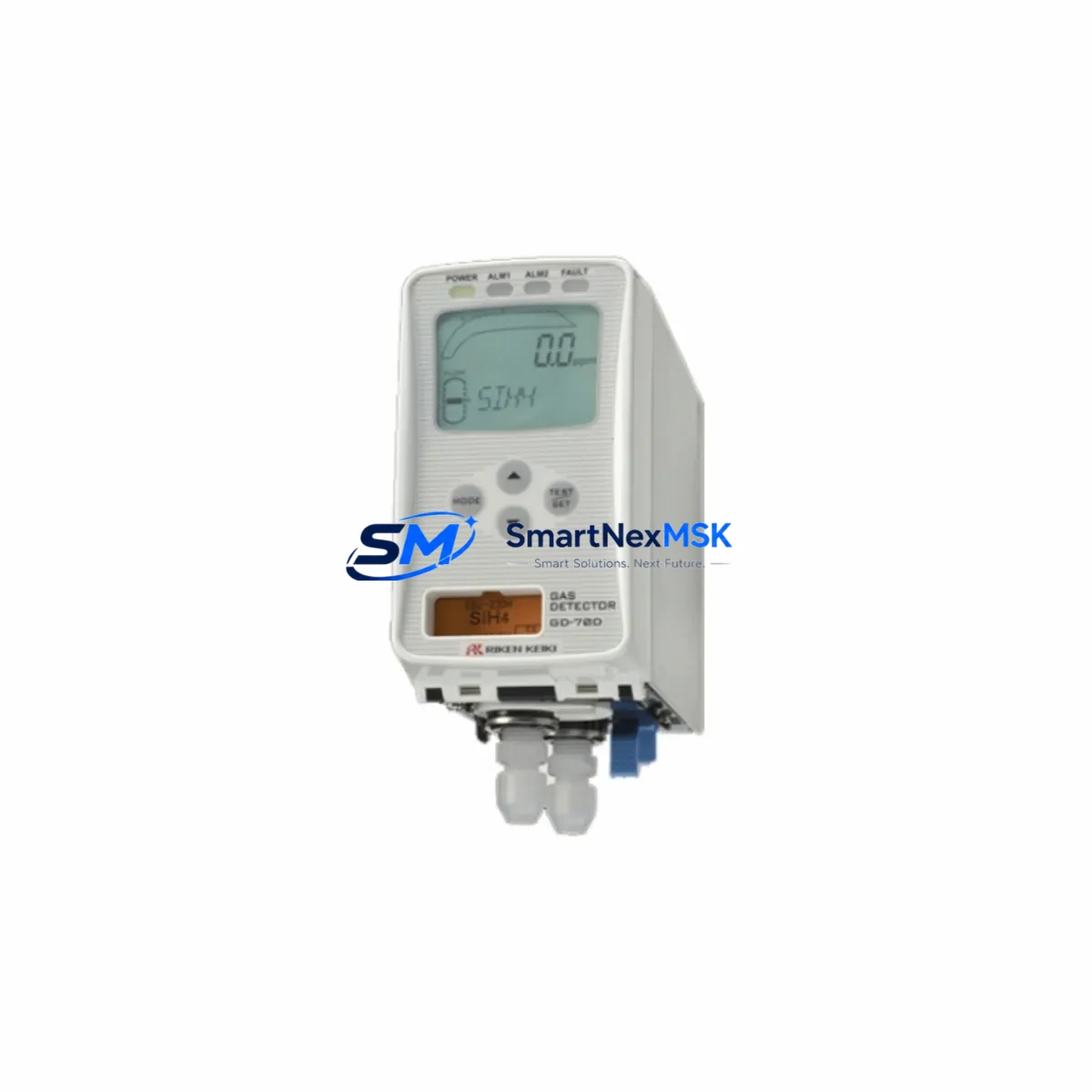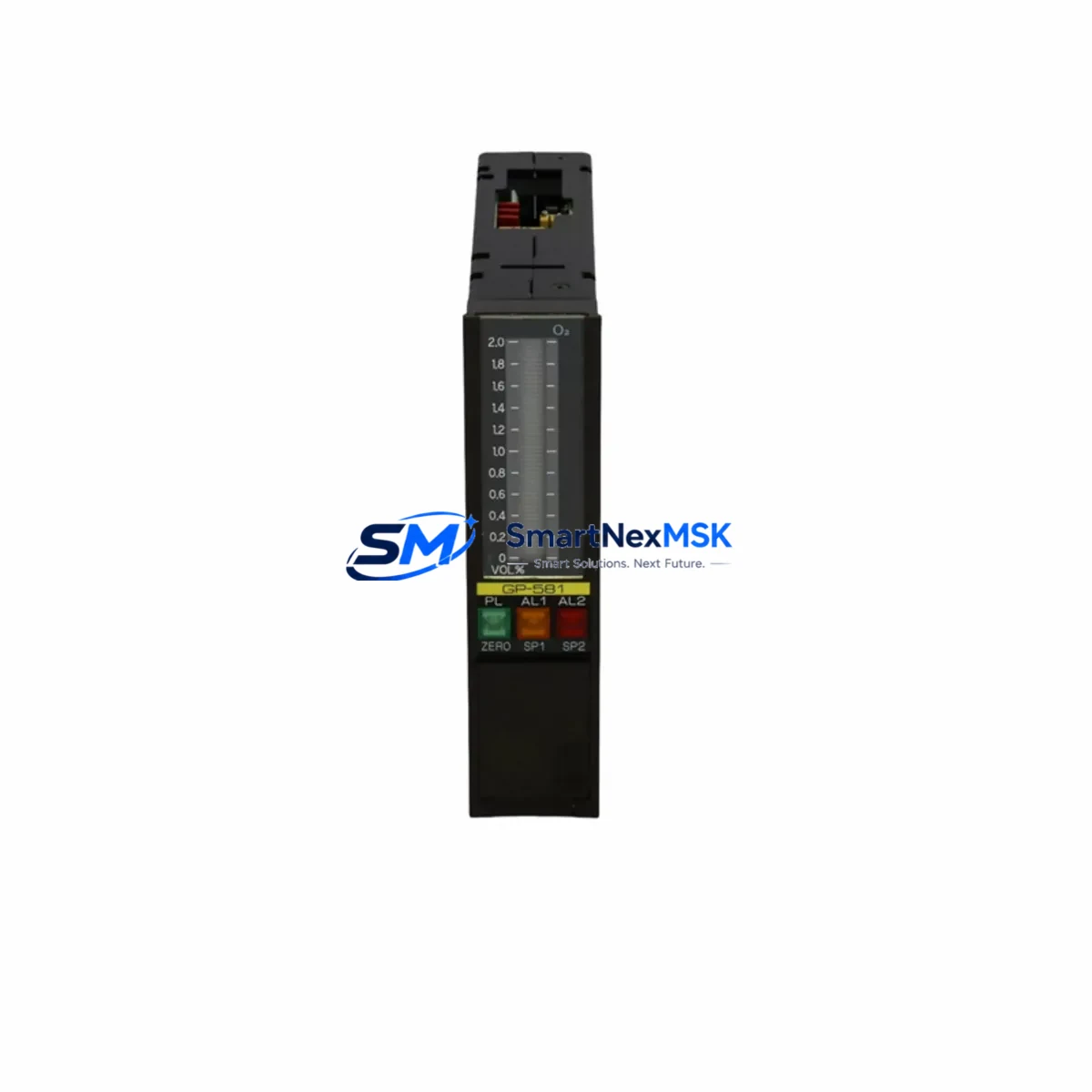
RIKEN KEIKI NP-581 Retrofit-Ready Gas Detection Module for NP Series Control Systems
The RIKEN KEIKI NP-581 is a precision electrochemical gas detection module engineered for seamless integration into NP Series fixed gas monitoring systems. As legacy NP Series installations age and original components approach end-of-life, the NP-581 serves as the verified drop-in replacement for discontinued sensor modules across a wide range of industrial environments — including petrochemical plants, wastewater treatment facilities, confined space monitoring stations, and manufacturing process lines.
Whether you are executing a planned maintenance cycle, responding to an unplanned sensor failure, or undertaking a full control cabinet upgrade, the NP-581 is designed to minimize engineering rework and reduce system downtime. Its electrochemical detection cell is factory-calibrated and pre-tested prior to shipment, ensuring that field installation can proceed directly to loop verification and functional testing without the need for extended bench calibration.
For retrofit projects involving older NP Series controllers — including installations originally built around the NP-3000 or NP-2000 main control units — the NP-581 maintains backward-compatible signal output characteristics. Engineers replacing modules in multi-zone detection panels should verify the existing terminal block wiring against the NP-581 datasheet, particularly for 4–20 mA loop connections and alarm relay assignments. In most cases, the original field wiring can be reused without modification, significantly reducing installation labor.
During retrofit planning, it is equally important to assess the condition of associated system components. The NP Series junction box and NP-700 series transmitter heads are commonly evaluated alongside sensor module replacements. If the installation includes remote display units such as the NP-3000 indicator panel, confirm that the display firmware supports the NP-581’s output range before commissioning. In systems where the gas detection network is integrated with a PLC-based safety interlock — for example, via a Yokogawa STARDOM FCN controller or a Siemens S7-300 safety CPU — the analog input card scaling parameters should be reviewed to ensure the 4–20 mA signal maps correctly to the engineering unit range configured in the PLC program.
Communication protocol migration is another key consideration in modernization projects. Older NP Series systems may rely on proprietary RS-485 polling protocols or hardwired relay outputs. If the upgrade path includes migration to Modbus RTU or integration with a HART-enabled field device manager, a protocol converter or gateway module may be required. The NP-581 itself outputs a standard analog signal, making it compatible with most modern DCS analog input modules, including those from Honeywell Experion and Emerson DeltaV I/O subsystems.
For installations where the NP Series panel feeds into a broader building management or safety system, ensure that the NP Series relay output module and any associated solenoid valve driver cards are also inspected during the retrofit. Replacing only the sensor module while leaving aging relay cards in service can introduce latent failure risks that undermine the reliability gains achieved by the sensor upgrade.
All NP-581 units supplied by SMARTNEXMSK are sourced from verified supply channels, individually inspected, and covered by a 12-month warranty from the date of shipment. Inventory is maintained in Xiamen for rapid dispatch to global destinations.
Upgrade Compatibility Table
| Parameter | Details |
|---|---|
| SKU | NP-581 (RIKEN KEIKI) |
| Compatible Series | NP Series Fixed Gas Detection Systems |
| Detection Principle | Electrochemical |
| Signal Output | 4–20 mA analog (standard) |
| Terminal Interface | Compatible with original NP Series terminal block wiring |
| Mounting / Installation | Drop-in replacement; no panel modification required in most configurations |
| Communication Compatibility | Analog loop; compatible with Modbus RTU gateways and HART adapters |
| Replacement Recommendation | Direct replacement for discontinued NP Series sensor modules |
| Commissioning Notes | Factory pre-calibrated; field zero/span verification recommended after installation |
| Warranty | 12 months from shipment date |
Retrofit Planning for Existing Automation Systems
A successful NP-581 retrofit begins with a thorough site survey of the existing NP Series installation. Document the current sensor module part numbers, terminal wiring diagrams, alarm setpoints, and any PLC or DCS integration points before ordering replacement parts. In multi-zone panels, it is common to find a mix of sensor vintages — some zones may already have been upgraded to newer transmitter heads while others still carry original modules from initial commissioning.
When planning the replacement sequence, prioritize zones with the highest safety criticality or those showing signs of sensor drift, slow response, or frequent nuisance alarms. For each zone, confirm the following before removing the existing module: power supply voltage at the sensor terminals (typically 12–24 VDC for NP Series modules), loop resistance within the 4–20 mA circuit, and the alarm relay state (energized or de-energized in normal operation) to avoid inadvertent safety system activation during the swap.
In control cabinets where the NP Series panel is co-located with other automation equipment — such as a Mitsubishi MELSEC Q Series PLC rack, an Omron CJ2M CPU module, or a Schneider Electric Modicon M340 processor — ensure adequate clearance and ventilation during module handling. If the cabinet also houses Phoenix Contact TRIO power supply units or Weidmüller terminal block assemblies, verify that the replacement work does not disturb adjacent wiring looms.
After physical installation of the NP-581, perform a full loop check: apply a known gas concentration using a certified calibration gas cylinder and verify that the panel display, alarm relays, and any connected PLC analog input all respond correctly. If the system includes an HMI screen — for example, a Proface GP4000 series touch panel or a Siemens TP700 Comfort HMI — confirm that the engineering unit display and alarm banner graphics reflect the correct gas type and concentration range for the new module.
Downtime Control During System Migration
Minimizing production downtime during a gas detection system retrofit requires careful pre-staging and a disciplined changeover procedure. Before beginning any module replacement, prepare a complete kit of replacement parts — including the NP-581 sensor module, spare terminal screws, calibration gas, and any required tools — so that the physical swap can be completed within a single planned maintenance window.
Where process safety requirements permit, consider placing the affected detection zone in a “maintenance bypass” or “inhibit” state within the safety interlock system before removing the old module. This prevents spurious shutdown signals from propagating to downstream equipment during the changeover. Coordinate with the control room operator to confirm the bypass is active and logged before proceeding.
Once the NP-581 is installed and the loop check is complete, restore the zone from bypass status and observe the system for a minimum of 15 minutes under normal operating conditions before signing off on the work order. Document the as-found and as-left calibration readings, the installation date, and the new module serial number in the site maintenance log. This record supports future warranty claims and provides traceability for regulatory compliance audits.
For large-scale retrofit projects involving multiple zones or entire panel replacements, a phased approach — replacing one zone per shift while keeping the remainder of the system active — is strongly recommended to maintain continuous area monitoring throughout the upgrade campaign.
Retrofit Support FAQ
Q1: Is the NP-581 a direct drop-in replacement for all NP Series sensor modules?
The NP-581 is designed as a compatible replacement for the primary electrochemical sensor modules in the NP Series lineup. In most standard installations, the existing terminal wiring and panel cutout dimensions are compatible without modification. However, we recommend verifying the specific module variant and wiring configuration against the NP-581 datasheet before ordering, particularly for older panel revisions.
Q2: What commissioning steps are required after installing the NP-581?
After physical installation, perform a zero calibration in clean air, followed by a span calibration using a certified calibration gas at the appropriate concentration. Verify that the 4–20 mA output corresponds correctly to the gas concentration displayed on the panel and any connected PLC or DCS. Confirm alarm relay operation at the configured setpoints before returning the zone to service.
Q3: Can the NP-581 be integrated with a PLC or DCS via Modbus RTU?
The NP-581 provides a standard 4–20 mA analog output, which can be connected directly to any analog input module on a PLC or DCS platform. For Modbus RTU integration, a signal converter or gateway device is required to translate the analog signal into a digital Modbus register. This approach is commonly used when integrating NP Series detectors with Siemens S7, Mitsubishi MELSEC, or Omron CJ Series controllers.
Q4: What does the 12-month warranty cover, and how is it claimed?
All NP-581 units supplied by SMARTNEXMSK are covered by a 12-month warranty from the date of shipment. The warranty covers manufacturing defects and premature failure under normal operating conditions. To initiate a warranty claim, contact our sales team with the order reference number, installation date, and a description of the fault. Units confirmed defective will be replaced or credited at our discretion. Warranty does not cover damage resulting from incorrect installation, exposure to gas concentrations beyond the rated measurement range, or physical mishandling.
© 2026 SMARTNEXMSK. All rights reserved.
Original Source: https://smartnexmsk.com
Contact: [email protected] | +86 18259474341