
Replacement Risk for Obsolete Automation Parts: What Buyers Should Check
A practical checklist for obsolete automation replacement risk, compatibility evidence, revision matching, and spare parts sourcing.
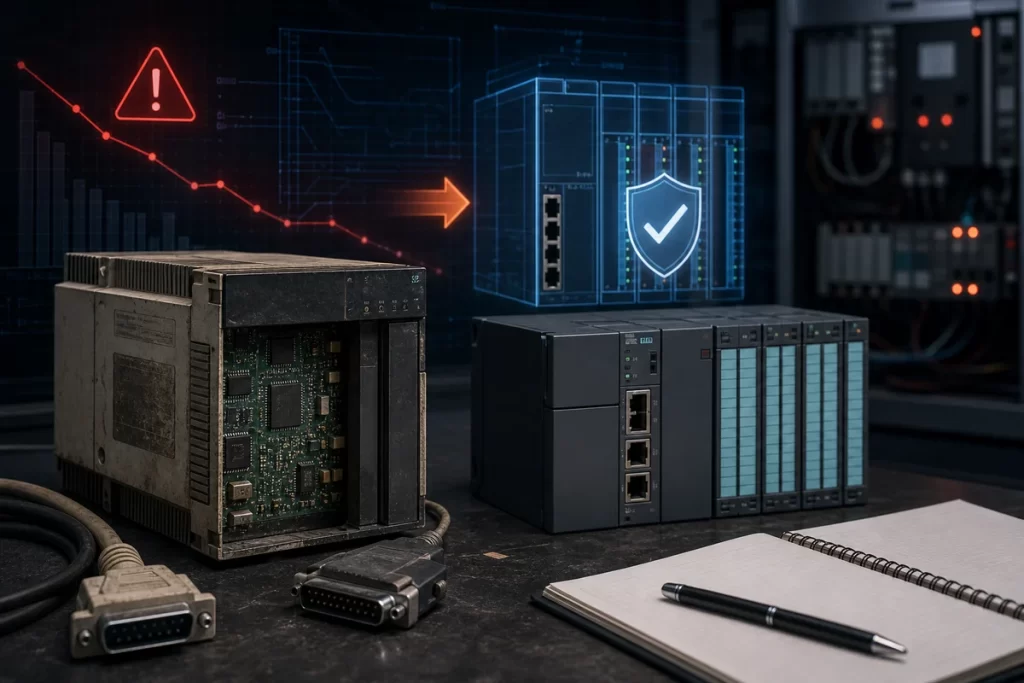
Replacement is not only a part-number question
When an old PLC module, HMI panel, servo drive, VFD, or sensor is unavailable, buyers often ask for a direct replacement. In industrial automation, replacement review needs more context than a similar-looking model. The same category may still differ in wiring, voltage, protocol, firmware, panel size, mounting, or machine-side configuration.
Before deciding whether a substitute is acceptable, compare the item against nearby models in the parts catalog and check whether the brand has a dedicated sourcing path in the brand directory.
Information that helps reduce replacement risk
- Original model number and brand.
- Photos of the label, terminal markings, and installed position.
- Machine model, control cabinet context, or application function.
- Voltage, communication protocol, and I/O requirements if known.
- Whether downtime is urgent or the request is for planned spare stock.
When to be cautious
Be careful when a product family has many similar suffixes, when firmware or communication protocol is involved, or when the module sits inside a safety-related or process-critical system. A cheaper or faster alternative is not useful if installation fails or creates a new downtime risk.
For higher-risk requests, use the quality assurance notes to clarify photo evidence, label checks, and documentation expectations before approval. If delivery timing is part of the risk, review shipping and warranty guidance before confirming the purchase path.
How SmartNexMSK routes these requests
SmartNexMSK routes obsolete or uncertain models separately from ordinary exact-model quotes. If the original model is clear, the team can first check whether the same model path exists. If not, the request can move into replacement review with technical notes attached, instead of forcing sales to guess from an incomplete message.
Keep replacement risk visible before quotation
Old models should include photos, machine context, voltage, protocol, and acceptable alternative boundaries before sourcing starts.
Related Insights
Continue with sourcing and model matching guides
 Sep 8, 2026
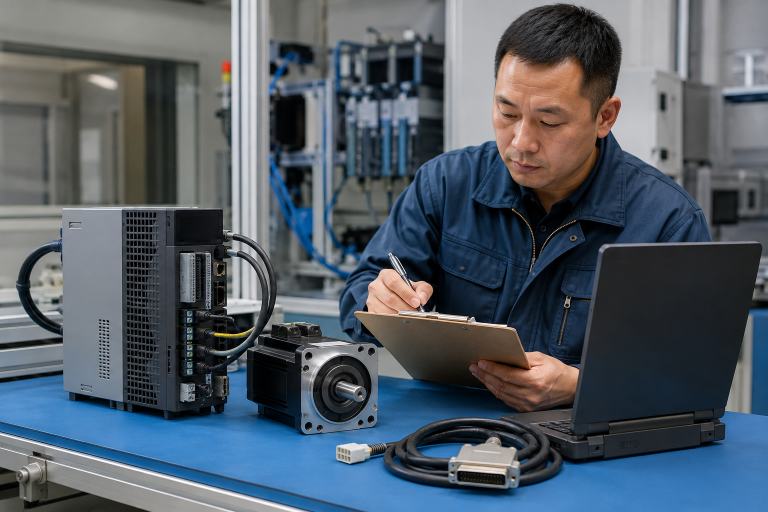
SANYO DENKI QS1E Spares: Save Parameters First
When a SANMOTION Q axis stops, the purchasing request often becomes a model number: “Please quote QS1E01AA0H4A3P1T.” That is a useful starting point, but…
Read guide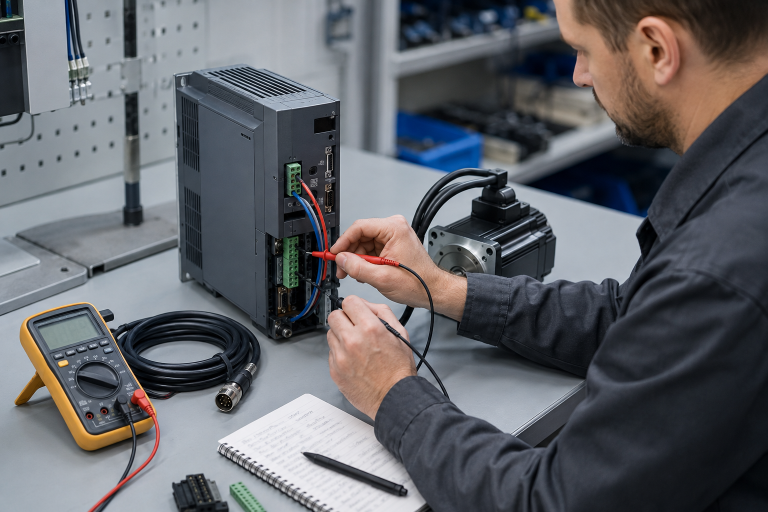 Sep 6, 2026
Yaskawa SGDH-05DE-OY Spares: Check the Servo Chain
A servo drive fault often produces a deceptively simple purchasing request: “Replace the SGDH-05DE-OY.” In a running machine, however, the amplifier is only one…
Read guide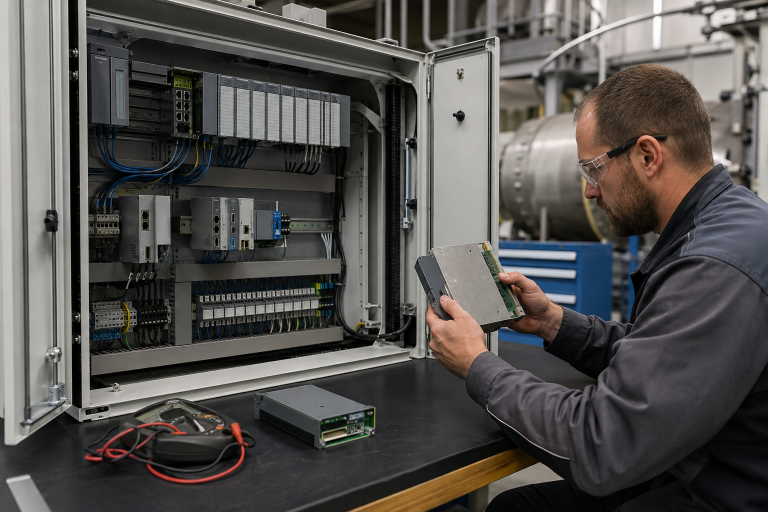 Sep 5, 2026
GE IS220PCLAH1A Spares: Check Mark VIe Fit
When a Mark VIe cabinet develops an intermittent control fault, the urgent request often becomes a single line: “Please quote IS220PCLAH1A.” That is understandable…
Read guide