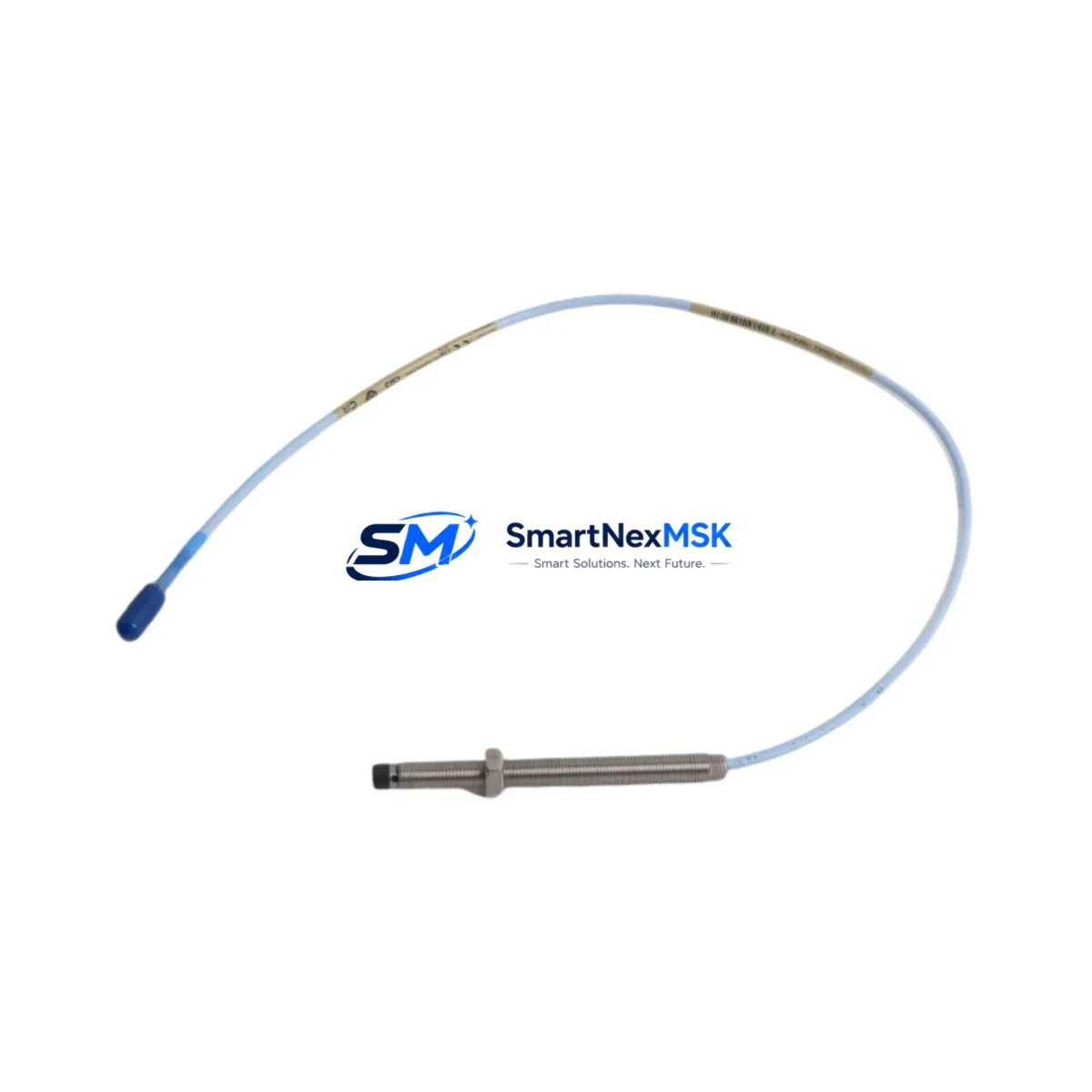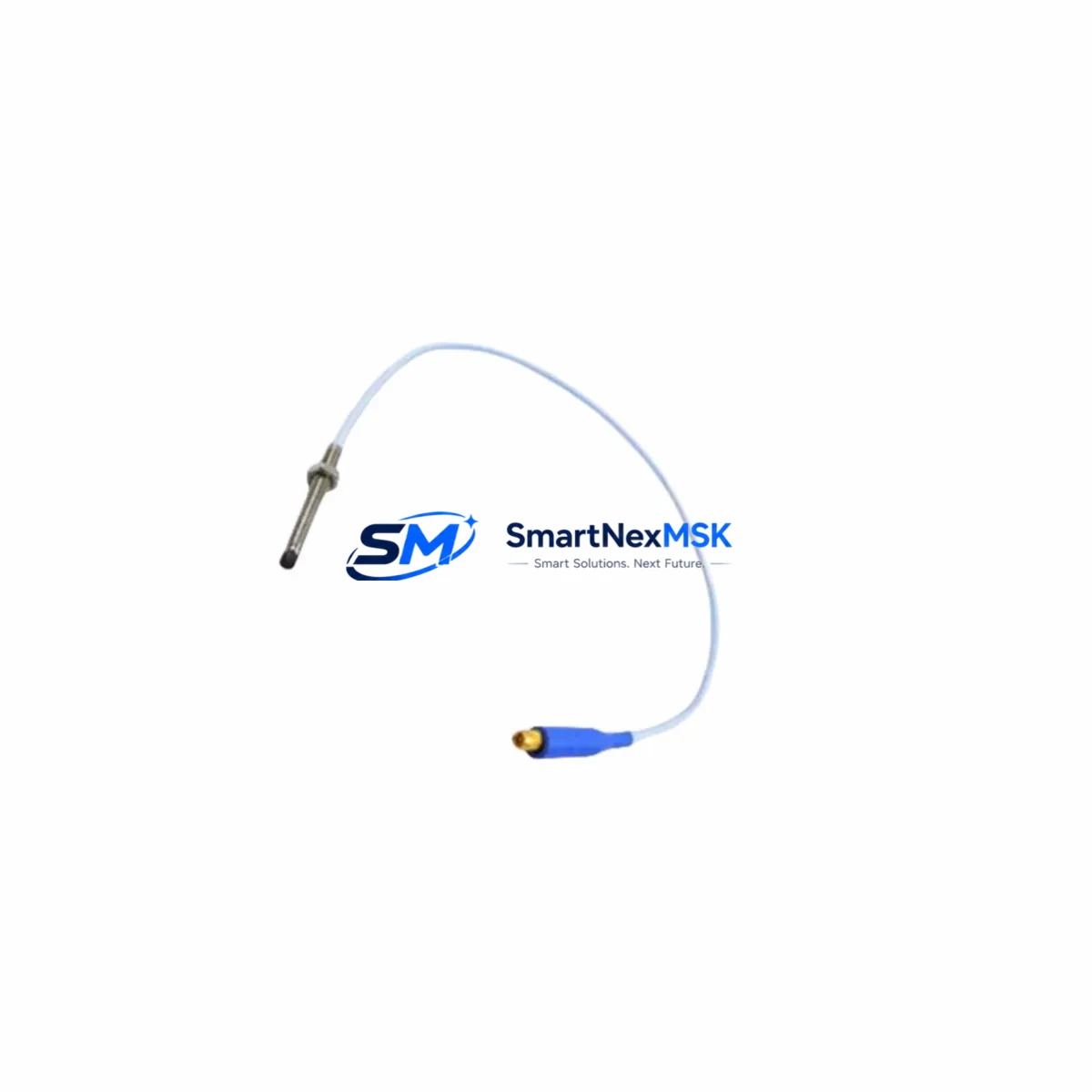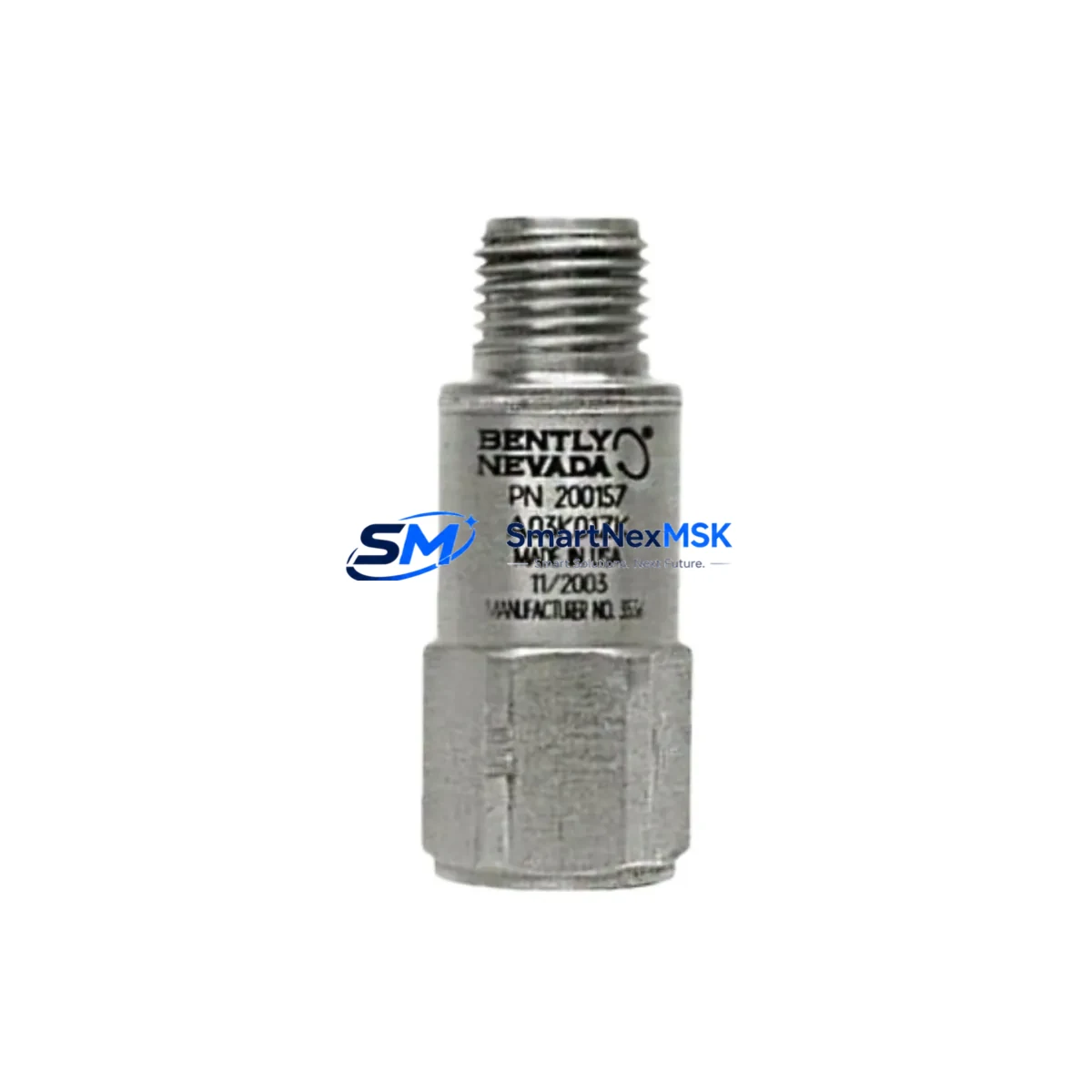
Bently Nevada 200155-09-05 Retrofit-Ready Vibration Sensor for TrendMaster Pro Control Systems
The Bently Nevada 200155-09-05 is a low-frequency accelerometer engineered for continuous machinery health monitoring in rotating equipment applications. As legacy TrendMaster Pro systems approach end-of-life and spare parts become increasingly scarce, the 200155-09-05 serves as a verified retrofit-ready replacement that preserves existing wiring infrastructure, signal conditioning architecture, and data acquisition continuity — without requiring a full platform migration or reprogramming of the host control system.
Industrial facilities operating Bently Nevada TrendMaster Pro distributed monitoring systems frequently encounter the challenge of sourcing discontinued sensor assemblies. The 200155-09-05 addresses this directly: it is compatible with TrendMaster Pro I/O modules, maintains the same 4-wire constant-current connection standard, and integrates with existing Dynamic Data Manager (DDM) software configurations. Engineers performing condition monitoring upgrades on compressors, turbines, pumps, and fans can install this unit without modifying existing cable runs or reconfiguring alarm setpoints in the monitoring system.
When planning a retrofit around the 200155-09-05, the first step is verifying power supply capacity at the TrendMaster Pro I/O rack. The sensor draws a nominal excitation current compatible with standard Bently Nevada constant-current signal conditioners. If the existing rack includes a TrendMaster Pro 3500/42M Proximitor I/O module or a 3500/40M Proximitor/Seismic Monitor, the 200155-09-05 can be mapped to the appropriate channel without firmware changes, provided the channel is configured for seismic input mode. Confirming the backplane slot address and module channel assignment in the DDM configuration file before installation prevents address conflicts and ensures the historian receives correctly tagged data.
Terminal wiring adaptation is a critical checkpoint during installation. The 200155-09-05 uses a standard MIL-C-5015 style connector, and field teams should verify that the existing junction box or marshalling cabinet terminations match the pinout before energizing the circuit. In cases where the original sensor used a different connector body — common in older TrendMaster installations from the mid-1990s — a Bently Nevada 330130 extension cable or equivalent field-wiring adapter may be required to bridge the connector interface without splicing the signal cable. Insulation resistance of the existing cable run should be confirmed with a megohmmeter prior to reconnection.
Upgrade Compatibility Table
| Parameter | Details |
|---|---|
| SKU / Part Number | 200155-09-05 |
| Brand | Bently Nevada |
| Compatible Platform | TrendMaster Pro Distributed Monitoring System |
| Replaces / Supersedes | 200155-09-01, 200155-09-03 (discontinued variants) |
| Sensor Type | Low-Frequency Accelerometer (Seismic / Vibration) |
| Signal Interface | 4-wire, constant-current excitation |
| Mounting | Stud-mount, compatible with standard machinery pads |
| Communication Compatibility | Analog signal; integrates with TrendMaster Pro DDM and 3500 Series racks |
| Installation Requirement | Verify channel configuration for seismic input mode in I/O module; confirm backplane slot address |
| Commissioning Note | Confirm sensitivity scaling in DDM software after replacement; validate HMI tag data |
| Warranty | 12-Month Warranty — covers manufacturing defects and functional failure under normal operating conditions |
Retrofit Planning for Existing Automation Systems
A successful retrofit using the 200155-09-05 requires a structured pre-installation review of the existing monitoring architecture. Begin by auditing the TrendMaster Pro rack configuration — identify which I/O slots are assigned to seismic channels and confirm that the TrendMaster Pro Seismic I/O Module firmware version supports the sensor’s sensitivity specification. In systems where the rack also hosts 3500/22M Transient Data Interface modules for transient capture, ensure that the new sensor’s frequency response aligns with the transient recording bandwidth configured in the system.
For facilities running mixed monitoring environments — where TrendMaster Pro coexists with a Bently Nevada 3500 Series rack for critical machinery — the 200155-09-05 can be cross-mapped to 3500 Series seismic channels using the appropriate I/O module configuration. This is particularly relevant during phased migrations where the TrendMaster Pro system is being decommissioned progressively while the 3500 rack assumes monitoring responsibility for high-criticality assets. In such configurations, the 3500/20 Rack Interface Module governs communication between the rack and the plant network, and its Modbus or Ethernet/IP address table must be updated to reflect any channel reassignments introduced by the sensor swap.
Backplane and rack slot assignments must be documented before removal of the original sensor. If the TrendMaster Pro system uses a TrendMaster Pro System Interface Module (SIM) for Modbus or OPC communication to a DCS or SCADA platform, verify that the channel address mapping in the SIM configuration file reflects the new sensor’s slot position. Failure to update the address map can result in the DCS receiving data from the wrong channel or triggering spurious alarms during the commissioning window. Where the plant DCS is a Honeywell Experion PKS or Emerson DeltaV, the OPC-DA tag path for the affected machine point should be validated in the DCS engineering workstation before the monitoring system is returned to normal operation.
HMI screen updates are often overlooked during sensor replacements. If the plant uses a GE iFIX, Wonderware InTouch, or similar SCADA HMI connected to the TrendMaster Pro via OPC-DA, the tag database should be reviewed to confirm that the vibration trend display for the affected machine point is still receiving valid engineering-unit data after the sensor swap. A brief functional test — running the machine at a known speed and comparing the vibration amplitude reading against historical baseline data — is the most reliable method to confirm correct installation before returning the asset to service.
Where the retrofit involves upgrading from an older Bently Nevada 9000 Series or 7200 Series proximity system to a TrendMaster Pro seismic monitoring architecture, the 200155-09-05 provides a clean entry point. The sensor’s analog output is compatible with standard signal conditioning inputs, and its robust stainless-steel housing is rated for the temperature and vibration environments typical of gas turbine enclosures, motor-driven compressor skids, and cooling tower fan drives. A Bently Nevada 3500/15 Power Supply module should be confirmed as operational and within voltage tolerance before energizing the new sensor circuit.
Downtime Control During System Migration
Minimizing unplanned downtime during a sensor replacement or monitoring system migration is a primary concern for maintenance teams. The 200155-09-05 is supplied pre-tested and calibration-verified, which eliminates the need for on-site calibration equipment during installation. The unit can be installed during a planned maintenance window — typically a 2–4 hour outage — without requiring changes to the PLC program, DCS logic, or safety instrumented system (SIS) configuration, provided the monitoring system is operating in bypass mode during the swap.
To protect original program logic during the migration, it is strongly recommended to export and archive the current TrendMaster Pro DDM configuration — including alarm setpoints, transducer sensitivity values, and channel enable/disable states — before beginning any hardware work. This configuration backup serves as the restore point if the new sensor requires sensitivity re-scaling or if a channel fault is detected during the post-installation functional test. For facilities using Bently Nevada System 1 software for machinery management, the asset configuration export should also be archived to preserve historical trend baselines and alarm history.
For facilities where continuous monitoring cannot be interrupted, a temporary portable vibration analyzer — such as a Bently Nevada SCOUT100 or equivalent handheld data collector — can be used to maintain vibration surveillance on the affected machine point while the permanent sensor is being replaced. This approach preserves condition monitoring continuity and satisfies most plant safety and insurance requirements for critical rotating equipment. The portable collector can also be used to capture a reference spectrum immediately after installation, providing a commissioning baseline for the new sensor before the permanent monitoring system is restored.
Once the 200155-09-05 is installed and the monitoring system is restored to normal operation, a 24–48 hour observation period is recommended to confirm stable readings, verify alarm threshold behavior, and ensure that the communication link between the TrendMaster Pro rack and the plant DCS or historian is transmitting clean, gap-free data. Any sensitivity offset identified during this period can be corrected in the DDM software without requiring physical access to the sensor or field wiring.
Retrofit Support FAQ
Q: Is the 200155-09-05 a direct drop-in replacement for discontinued TrendMaster Pro seismic sensors?
A: Yes, for the majority of TrendMaster Pro seismic channel configurations. The 200155-09-05 maintains the same signal interface and sensitivity class as the original factory-installed sensors, including discontinued variants 200155-09-01 and 200155-09-03. Minor sensitivity re-scaling in the DDM software may be required depending on the specific discontinued variant being replaced. Our technical team can assist with compatibility verification prior to shipment.
Q: What wiring and terminal checks are required before installation?
A: Verify the existing cable pinout at the junction box against the 200155-09-05 connector wiring diagram. Confirm cable insulation integrity using a megohmmeter before reconnecting. Check that the excitation current supplied by the TrendMaster Pro I/O module is within the sensor’s specified operating range. Document all terminal assignments before disconnecting the original sensor, and confirm that the marshalling cabinet termination block labels match the as-built drawings.
Q: How is the unit tested before shipment?
A: Every 200155-09-05 unit undergoes functional output verification, sensitivity measurement, and insulation resistance testing prior to shipment. A test report is available upon request. Units are shipped in anti-static protective packaging with individual serial number traceability, ensuring full chain-of-custody documentation from our warehouse to your facility.
Q: What does the 12-month warranty cover, and how are claims processed?
A: The 12-month warranty covers manufacturing defects, premature component failure, and functional non-conformance under normal operating conditions as specified in the product datasheet. Warranty claims are processed with priority turnaround, and replacement units are dispatched from stock to minimize asset downtime. The warranty period begins from the date of shipment. Extended warranty options are available for long-term maintenance contracts — contact our sales team for details.
© 2026 SMARTNEXMSK. All rights reserved.
Original Source: https://smartnexmsk.com
Contact: [email protected] | +86 18259474341