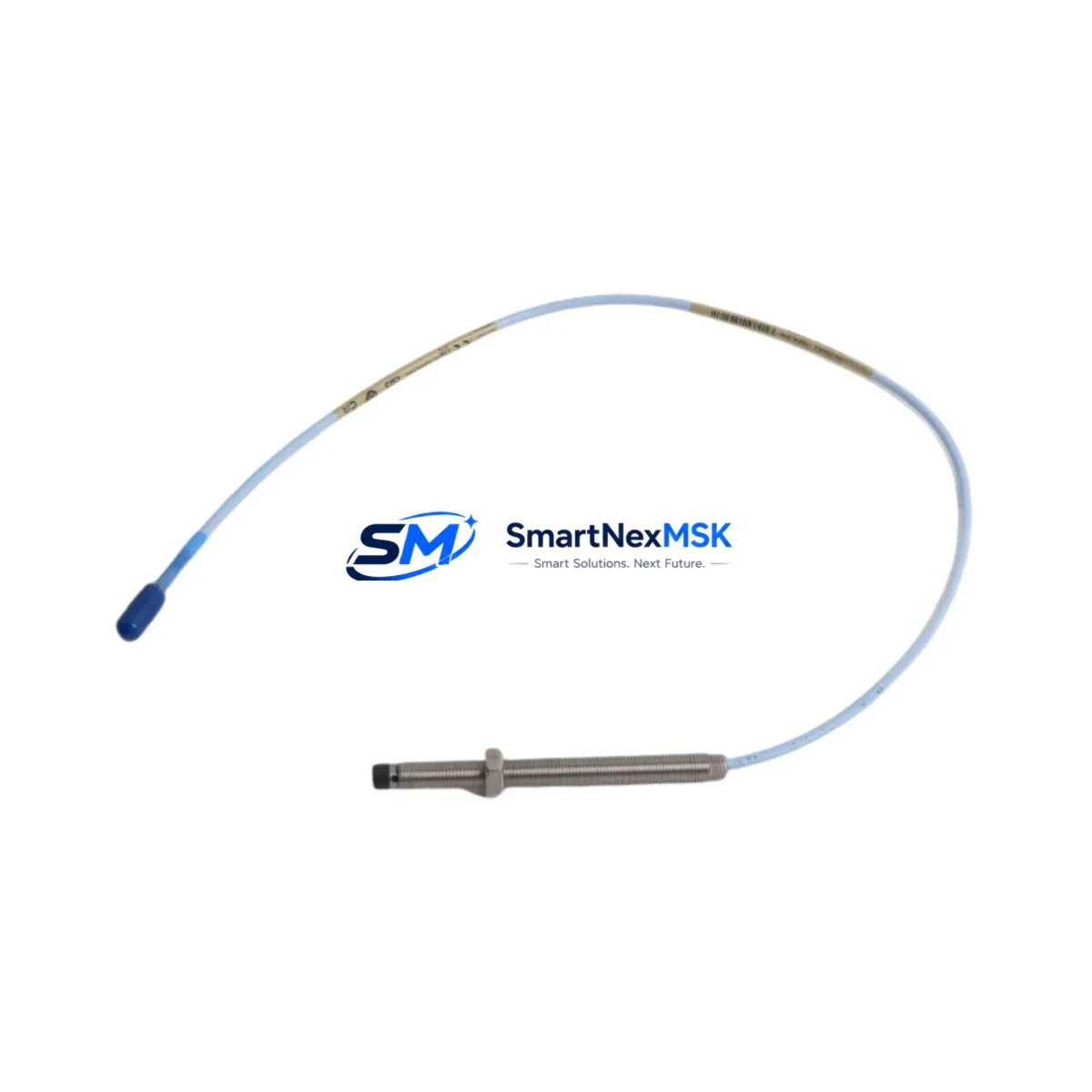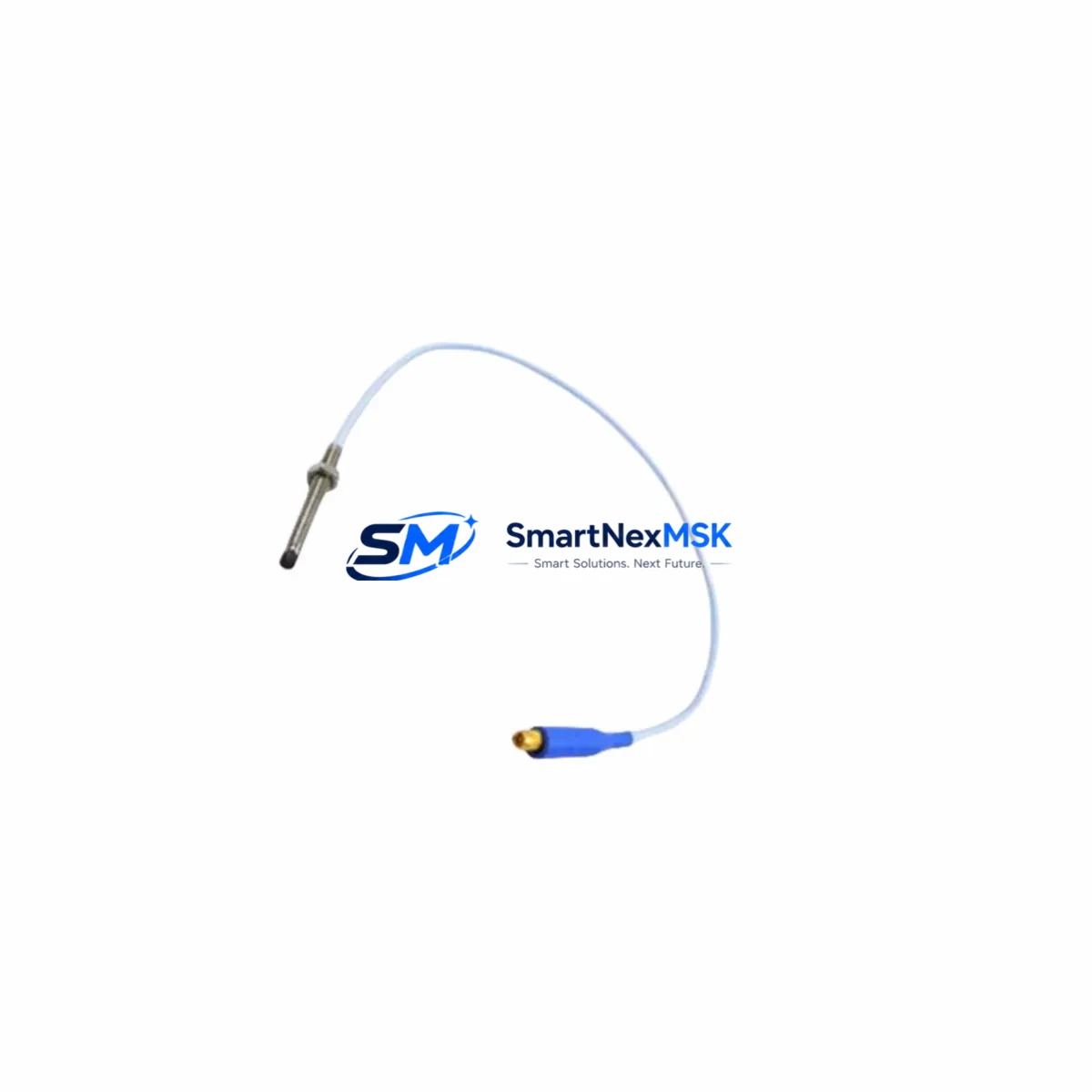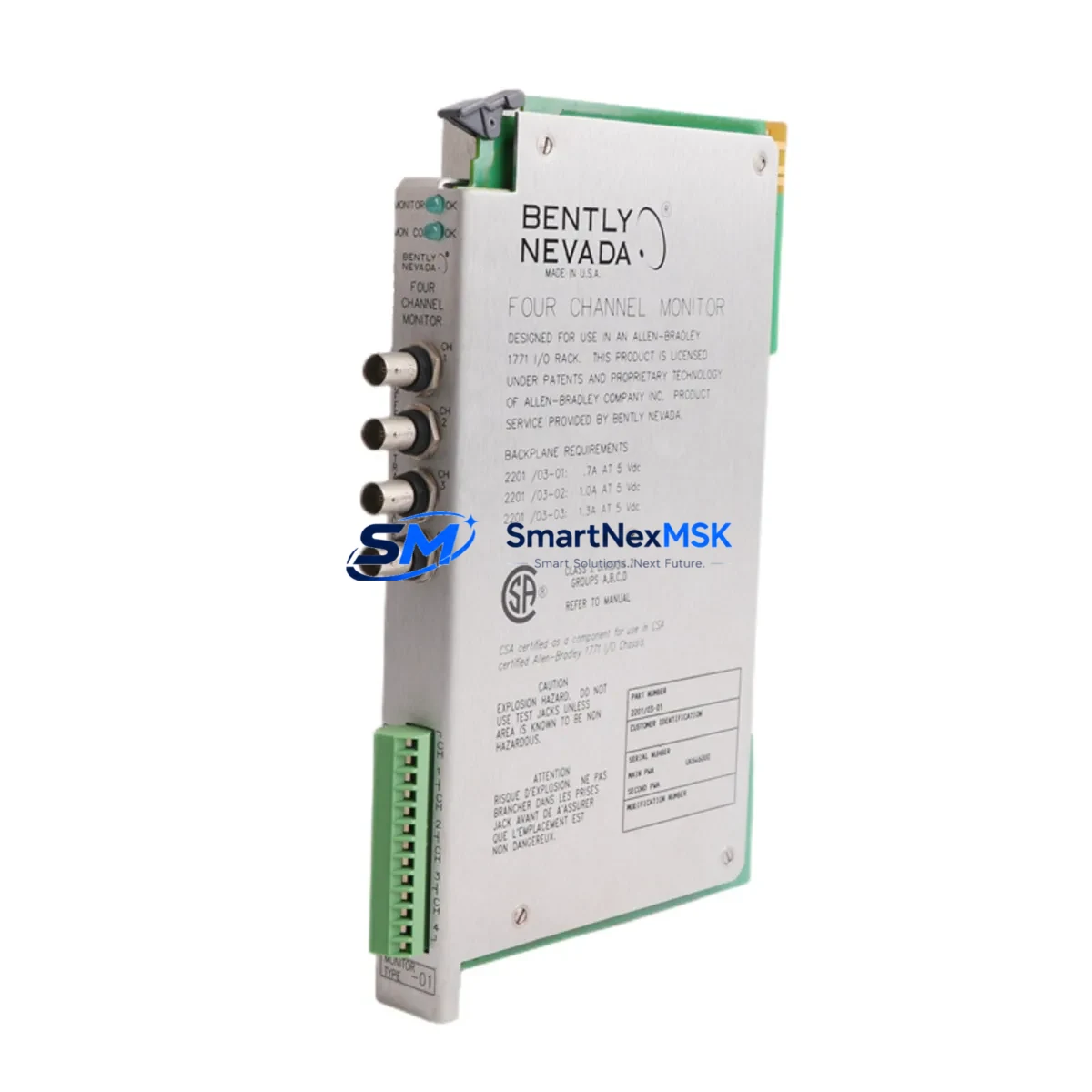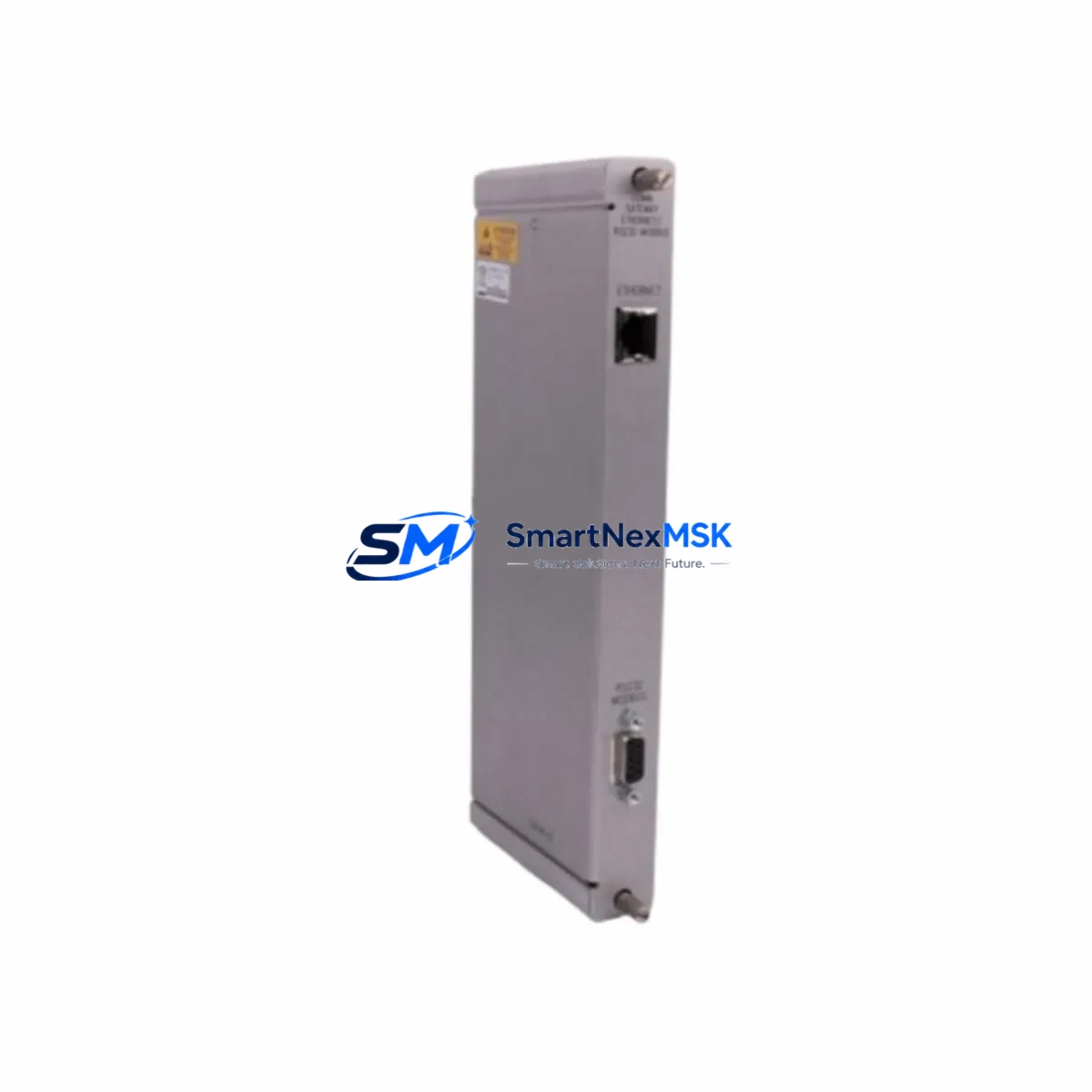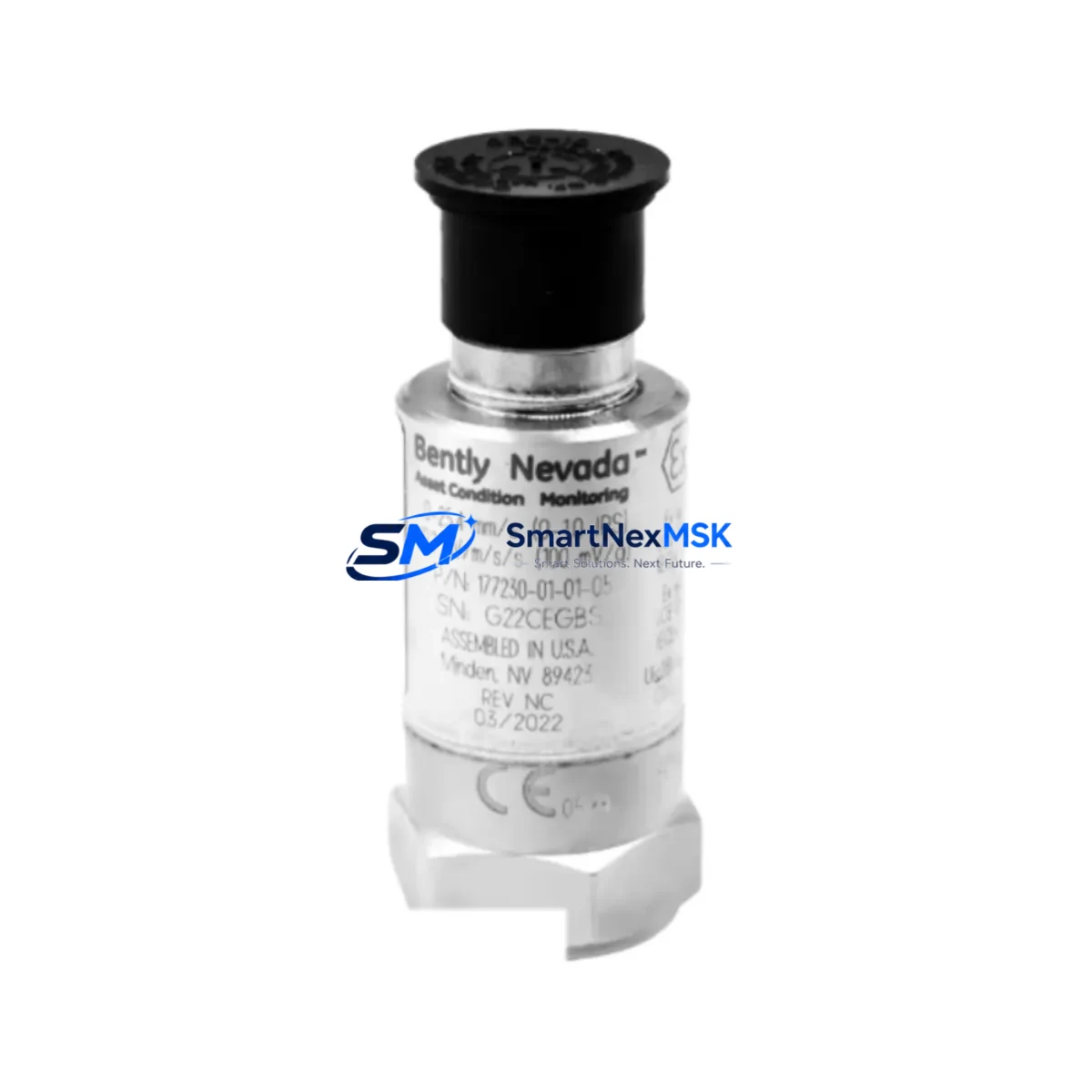
Bently Nevada TP100 Retrofit-Ready Accelerometer for TP Series Control Systems
The Bently Nevada TP100 is a high-reliability accelerometer engineered for seamless integration into existing TP Series vibration monitoring and machinery protection systems. As legacy condition monitoring infrastructure reaches end-of-service life, the TP100 provides a validated, drop-in retrofit path that preserves original wiring topology, signal conditioning compatibility, and system-level alarm logic — minimizing engineering rework and unplanned downtime during the upgrade cycle.
Whether you are replacing a failed sensor on a critical rotating asset, modernizing a legacy monitoring rack, or executing a planned outage upgrade across multiple measurement points, the TP100 delivers the dimensional accuracy, output signal fidelity, and connector compatibility required for direct substitution in TP Series installations. The unit is fully tested prior to shipment and backed by a 12-month warranty covering manufacturing defects and signal performance.
Upgrade Compatibility Table
| Parameter | TP100 (Replacement) | Legacy TP Series Units |
|---|---|---|
| Sensor Type | Industrial Accelerometer (ICP/IEPE) | ICP/IEPE Accelerometer |
| Output Signal | 4–20 mA / Voltage (configurable) | 4–20 mA / Voltage |
| Connector Interface | MIL-C-5015 / M12 (drop-in compatible) | MIL-C-5015 standard |
| Mounting Thread | 1/4-28 UNF / M6 (matched to TP Series) | 1/4-28 UNF |
| Communication Compatibility | Compatible with 3500 Series rack I/O | 3500 Series rack native |
| Replacement Recommendation | Direct drop-in; verify cable pinout | — |
| Commissioning Notes | Confirm sensitivity scaling in 3500/22M or 3500/42M monitor | — |
| Warranty | 12 Months | Manufacturer warranty (expired) |
Retrofit Planning for Existing Automation Systems
Successful TP100 integration into a running machinery protection system requires a structured pre-installation review. Engineers should begin by auditing the existing Bently Nevada 3500 Series rack configuration — specifically the 3500/22M Transient Data Interface or 3500/42M Proximitor/Seismic Monitor card assigned to the measurement channel being replaced. Confirm that the channel’s sensitivity setting (typically 100 mV/g for standard accelerometers) matches the TP100 output specification before energizing the new sensor.
Terminal wiring should be verified against the original loop drawing. The TP100 uses a standard two-wire ICP power loop; confirm that the barrier or signal conditioner — often a Bently Nevada 3500/20 Power Supply module — is supplying the correct constant-current excitation (typically 2–10 mA at 18–30 VDC). If the installation includes a Bently Nevada 3500/32 4-Channel Relay module for alarm output, verify that the OK relay logic and danger setpoints remain unchanged after sensor substitution.
For installations where the TP100 replaces a sensor feeding a Bently Nevada 1900/65 General Purpose Equipment Monitor or a legacy 7200 Series proximitor system, additional signal conditioning adapters may be required to bridge output impedance differences. In multi-channel racks, replacing sensors one channel at a time — while keeping adjacent channels live — is the recommended approach to maintain continuous protection on critical assets such as compressors, turbines, and pumps.
Where the control system integrates vibration data into a DCS or SCADA platform via a Bently Nevada 3500/92 Communication Gateway, confirm that the Modbus RTU or Ethernet/IP tag mapping for the affected channel remains valid after the sensor swap. No firmware changes to the gateway are typically required for a like-for-like sensor replacement, but channel scaling registers should be verified in the System 1 Evolution software or equivalent condition monitoring platform.
If the retrofit scope extends to replacing the proximitor extension cable or armored sensor cable alongside the TP100, ensure the replacement cable meets the original capacitance-per-foot specification to avoid signal attenuation errors at the monitor input. Cable routing through existing conduit should be confirmed before ordering to avoid field modification delays.
Downtime Control During System Migration
Minimizing production impact during a sensor retrofit requires pre-staging all replacement components — including the TP100 accelerometer, replacement cable assembly, and any required mounting adapters — before the maintenance window opens. A pre-tested, bench-verified TP100 unit eliminates the risk of discovering a defective replacement during a live outage.
The recommended sequence is: (1) place the affected machine in a safe, controlled shutdown state; (2) isolate the sensor loop at the 3500 rack terminal block without powering down adjacent channels; (3) remove the legacy sensor and install the TP100, verifying torque on the mounting stud; (4) reconnect the loop wiring and confirm OK status on the monitor front panel; (5) perform a bump test or calibration check using a reference shaker if available; (6) restore the channel to normal monitoring mode and confirm alarm setpoints are active before returning the machine to service.
For facilities operating under continuous-run constraints, a hot-swap approach using a Bently Nevada 3500/22M channel bypass feature — where supported — can allow sensor replacement without triggering a full rack shutdown. Consult the rack configuration documentation and confirm bypass authorization with the site reliability engineer before proceeding.
All TP100 units shipped by SMARTNEXMSK are pre-tested for sensitivity, frequency response, and output linearity. A factory test report is available upon request. This pre-shipment verification step directly reduces the risk of commissioning failures and supports faster return-to-service timelines.
Retrofit Support FAQ
Q1: Is the TP100 a direct replacement for my existing TP Series accelerometer without rewiring?
In most standard TP Series installations, the TP100 is a direct drop-in replacement. The connector interface, mounting thread, and output signal type are matched to the original TP Series specification. However, we recommend verifying the cable pinout and sensitivity setting in the associated 3500 Series monitor card before final commissioning to confirm full compatibility with your specific rack configuration.
Q2: What commissioning steps are required after installing the TP100?
After physical installation, confirm the OK LED status on the associated monitor module (e.g., 3500/42M or 3500/22M). Verify that the channel sensitivity scaling matches the TP100 output (100 mV/g standard). Perform a functional check by applying a known vibration input or using the monitor’s built-in self-test function. Confirm that all alarm and danger setpoints are active and that the System 1 or SCADA tag for the channel is reading correctly before returning the asset to service.
Q3: Can the TP100 be used in hazardous area (Ex) installations?
The TP100 is available in standard and intrinsically safe (IS) variants. For hazardous area installations classified under ATEX or IECEx zones, confirm the specific approval markings required for your site and specify the IS variant at the time of order. The associated Zener barrier or galvanic isolator in the loop must also be rated for the installation zone.
Q4: What does the 12-month warranty cover, and what is the return process?
The 12-month warranty covers manufacturing defects, signal performance deviations from specification, and connector integrity failures under normal operating conditions. It does not cover damage resulting from incorrect installation, overvoltage, or mechanical impact. To initiate a warranty claim, contact [email protected] with the order reference and a description of the fault. A replacement unit will be dispatched upon fault confirmation, with return shipping instructions provided at that time.
© 2026 SMARTNEXMSK. All rights reserved.
Original Source: https://smartnexmsk.com
Contact: [email protected] | +86 18259474341