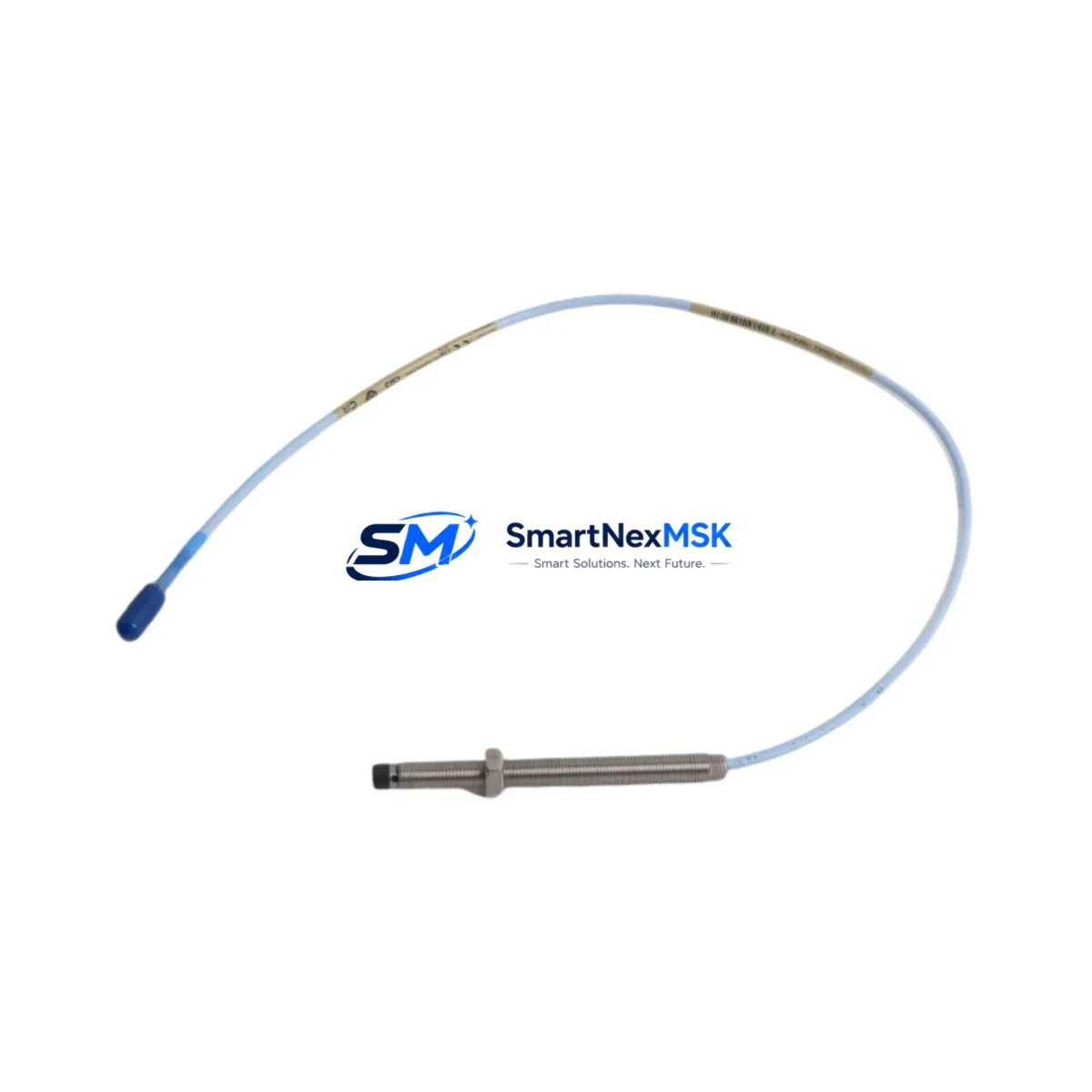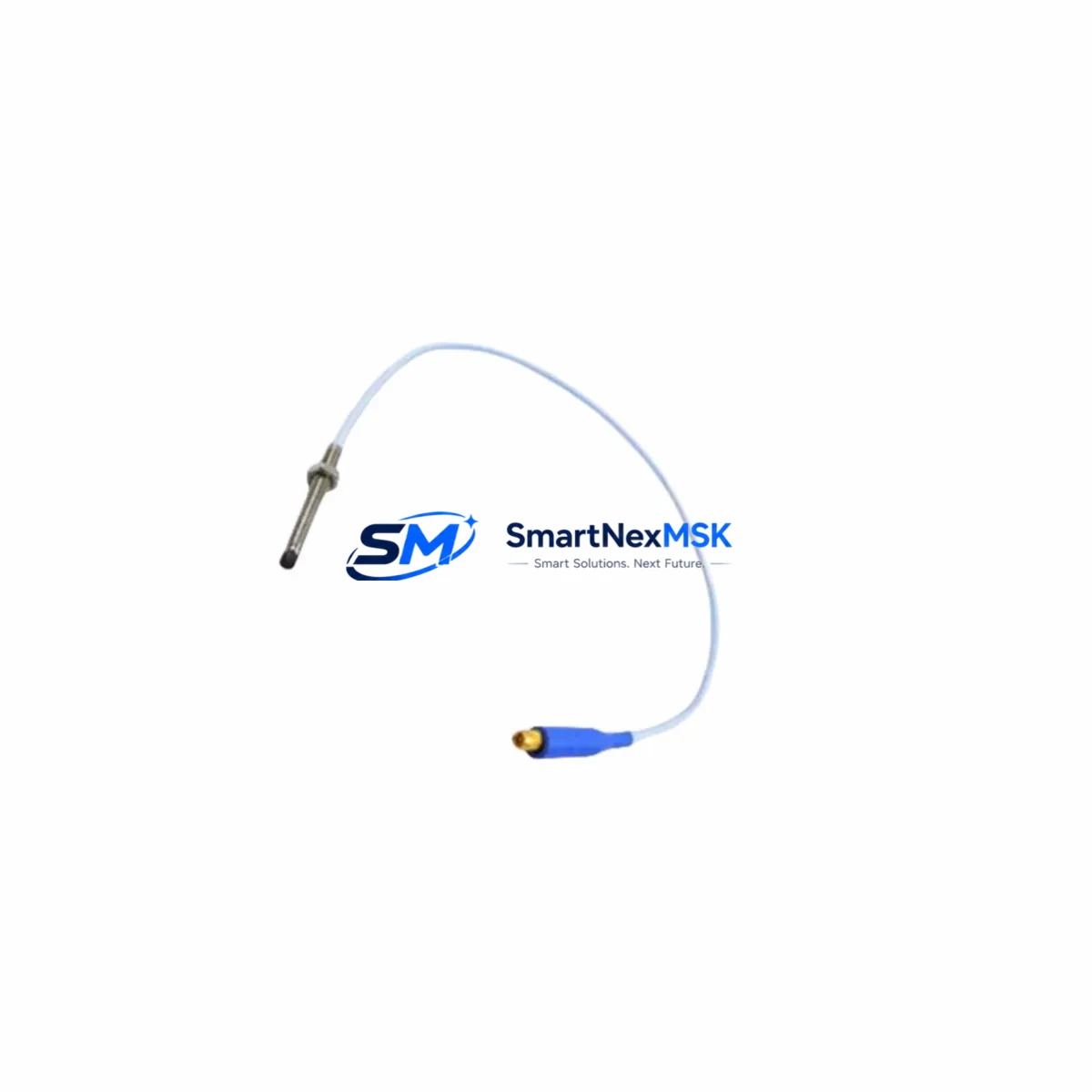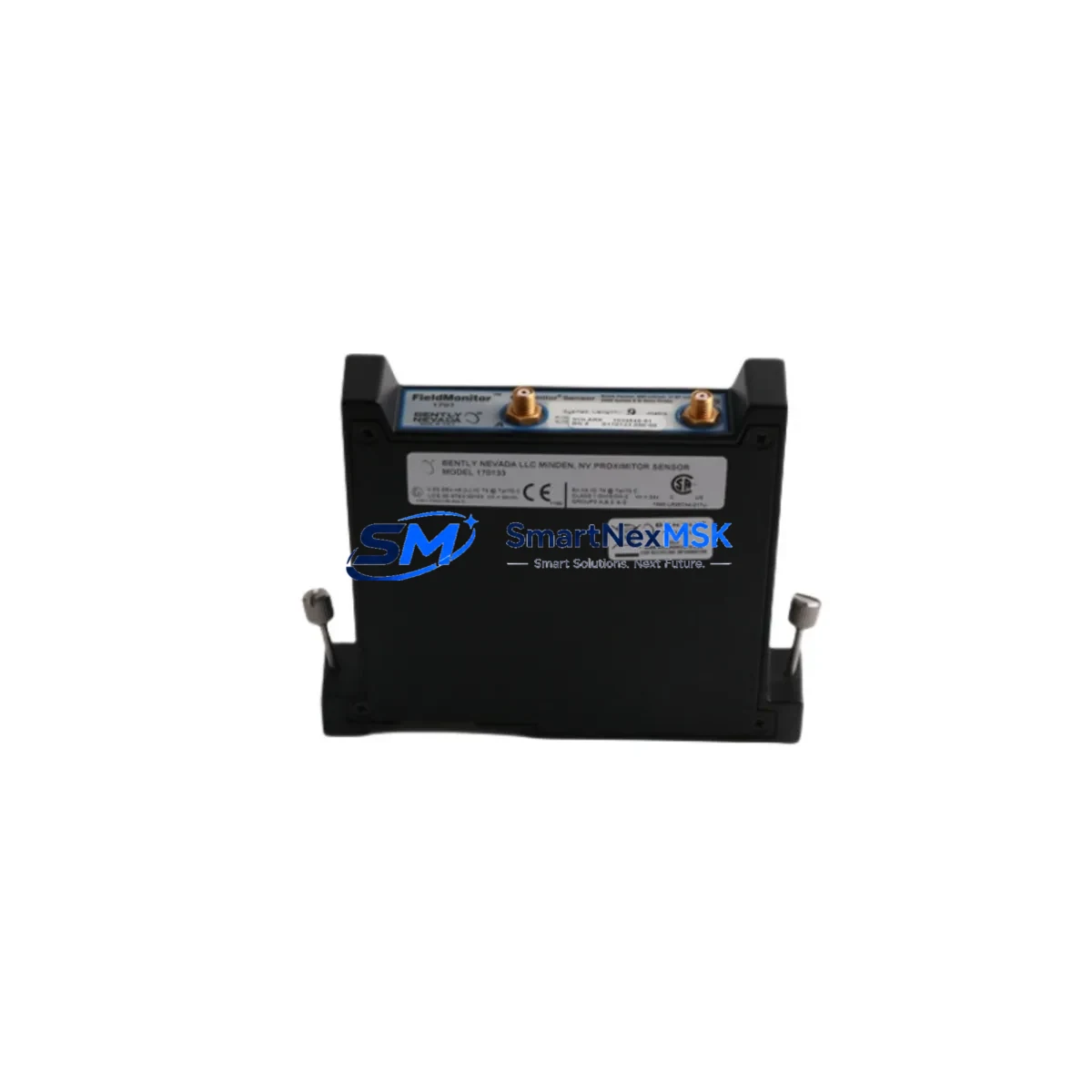
Bently Nevada 3017611.2 Retrofit-Ready Proximity Probe for 3000 Series Control Systems
The Bently Nevada 3017611.2 is an eddy current proximity probe engineered for seamless integration into existing 3000 Series vibration monitoring and machinery protection systems. As legacy installations age and OEM support for discontinued models becomes increasingly difficult to source, the 3017611.2 serves as a verified retrofit-ready replacement that preserves signal integrity, wiring compatibility, and system continuity without requiring full platform migration. Whether you are upgrading a turbine protection rack, replacing a failed probe in a compressor train, or modernizing a control cabinet that has been in service for over a decade, this probe is designed to minimize engineering risk and reduce commissioning time on the plant floor.
Industrial facilities operating Bently Nevada 3000 Series machinery protection systems frequently encounter the challenge of sourcing compatible replacement components when original parts reach end-of-life. The 3017611.2 addresses this directly by maintaining the same 8 mm tip diameter, standard Bently Nevada connector interface, and -24 VDC bias voltage specification that the 3000 Series Proximitor® sensor expects. Engineers can install this probe into existing conduit runs and terminal blocks without rerouting cables or modifying the junction box layout, which is critical in confined machinery spaces where access is limited and downtime windows are short.
Before proceeding with any retrofit installation, the engineering team should verify several key parameters. Power supply capacity at the Proximitor® sensor — typically the 3300 XL 8mm or 3300 NSv — must be confirmed to support the probe’s operating current draw within the existing rack’s power budget. Terminal wiring at the field junction box should be inspected for correct polarity and shield grounding, as improper grounding on eddy current probe circuits is a leading cause of signal noise and false trip events. The backplane interface within the 3000 Series rack, including the I/O module slot assignment and channel address configuration, must match the replacement probe’s gap voltage output range to ensure the vibration monitor interprets displacement readings correctly.
Upgrade Compatibility Table
| Parameter | Detail |
|---|---|
| SKU / Part Number | 3017611.2 |
| Brand / OEM | Bently Nevada |
| Compatible Series | Bently Nevada 3000 Series Machinery Protection Systems |
| Probe Tip Diameter | 8 mm (standard eddy current) |
| Connector Interface | Standard Bently Nevada coaxial, compatible with 3300 XL and 3300 NSv Proximitor® sensors |
| Bias Voltage | -24 VDC nominal |
| Installation Requirement | No conduit rerouting required; direct terminal block replacement |
| Communication Compatibility | Analog 4–20 mA / voltage output; compatible with existing DCS and PLC I/O cards |
| Replacement Recommendation | Direct drop-in for discontinued 3000 Series proximity probes; verify gap voltage calibration after installation |
| Commissioning Focus | Gap voltage verification, shield grounding, channel address confirmation, trip setpoint validation |
| Warranty | 12-Month Warranty — covers manufacturing defects and signal performance |
Retrofit Planning for Existing Automation Systems
A successful retrofit of the Bently Nevada 3017611.2 into an operating plant environment requires coordinated planning across instrumentation, controls, and maintenance disciplines. The probe is typically installed as part of a broader machinery protection upgrade that may also involve replacing the associated Proximitor® sensor — such as the 3300 XL 8mm Proximitor® — along with the interconnecting extension cable, which must be matched in length and impedance to maintain system scale factor accuracy. In many installations, the extension cable and probe are ordered as a matched set to avoid calibration errors that arise from mixing components with different sensitivity ratings.
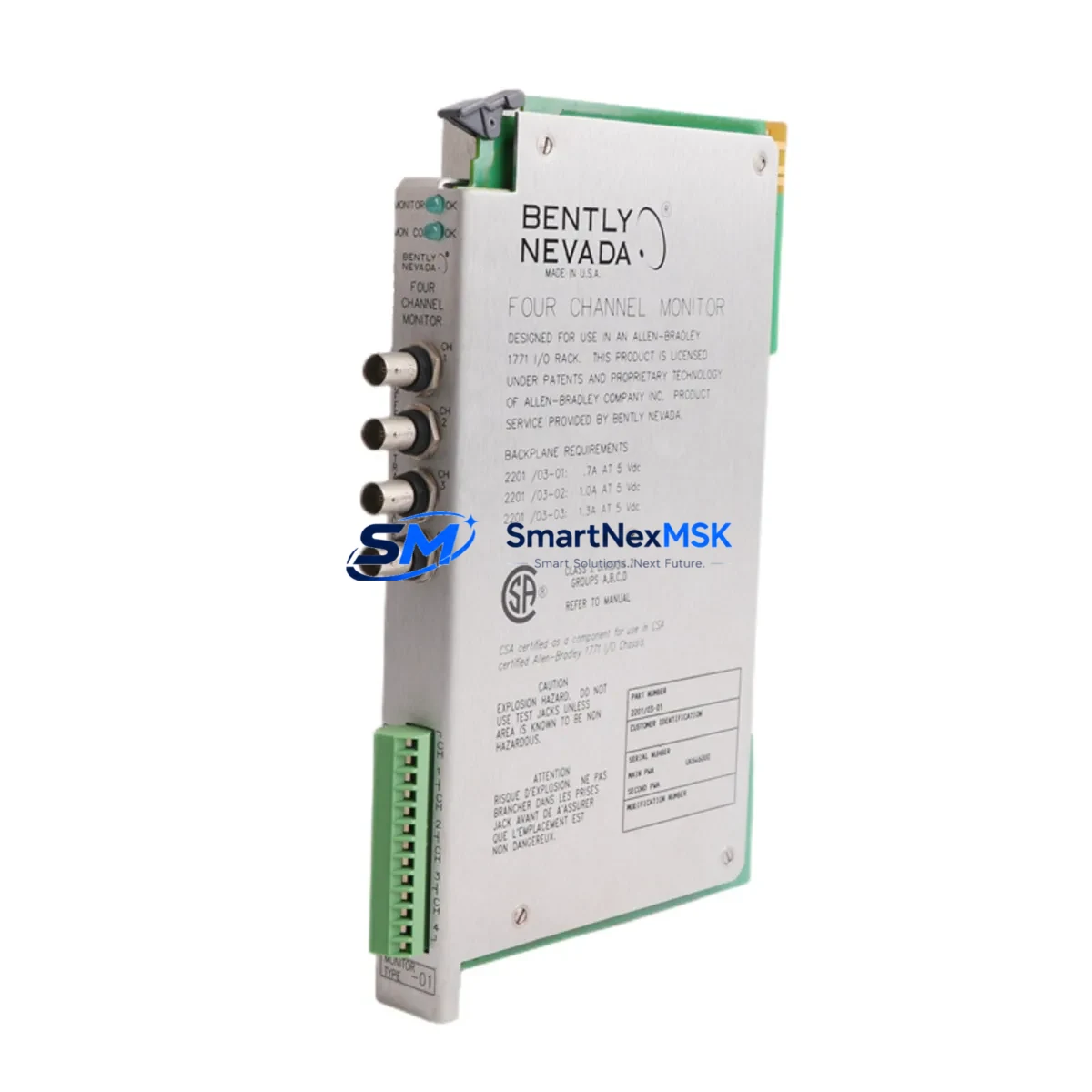
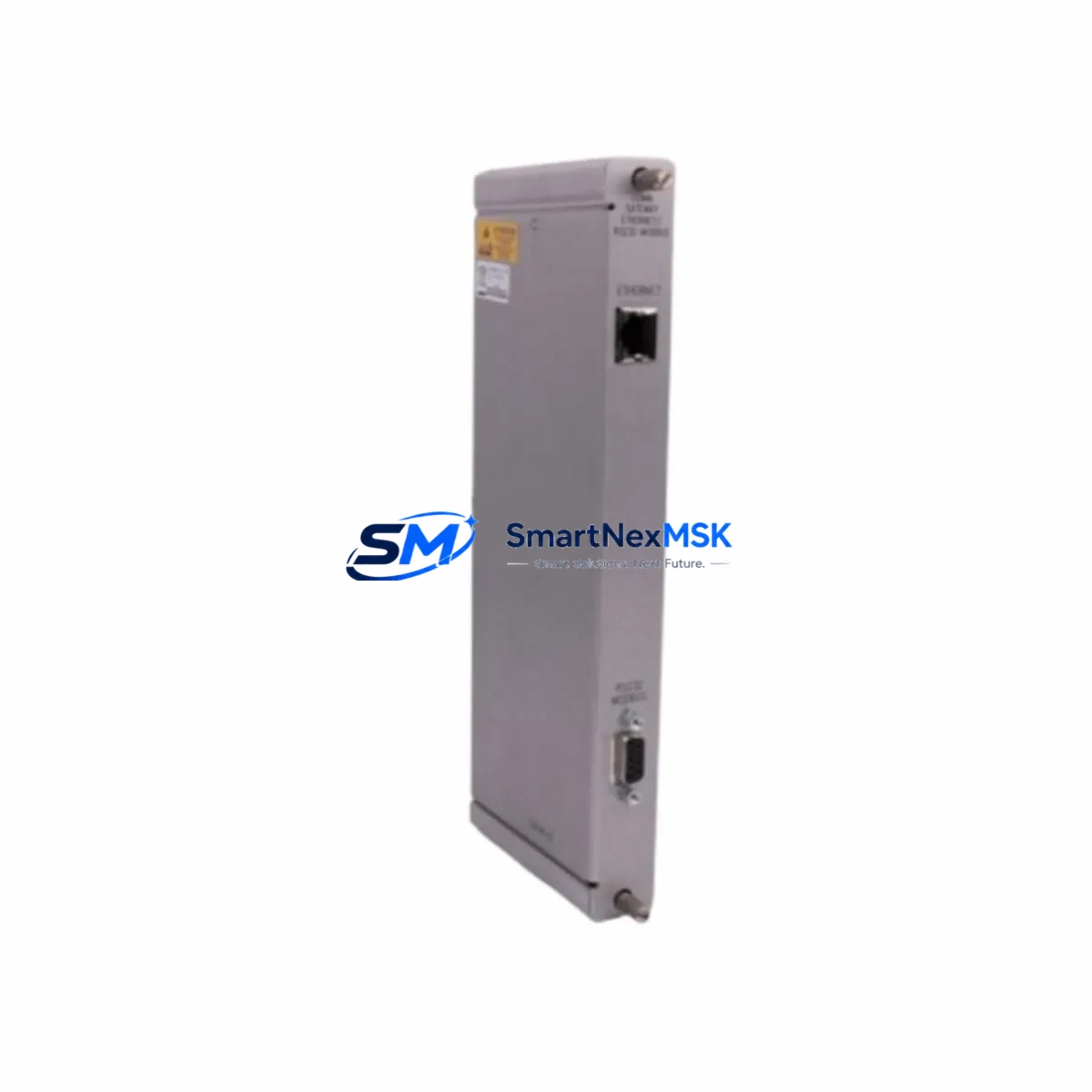
Within the 3000 Series rack, the vibration monitor module — for example a 3300/16 or 3300/20 dual-channel monitor — receives the conditioned signal from the Proximitor® and compares it against configured alert and danger setpoints. During a retrofit, the module’s channel configuration should be reviewed in the System 1 software or equivalent condition monitoring platform to confirm that the new probe’s scale factor (typically 200 mV/mil or 7.87 V/mm) is correctly entered. If the facility is also upgrading from an older 3000 Series rack to a newer 3500 Series platform, additional engineering is required to remap I/O assignments, reconfigure the rack’s communication module — such as the 3500/92 Ethernet I/O module — and update the DCS tag database to reflect the new channel addresses.
For facilities running a distributed control system such as a Honeywell Experion PKS or Emerson DeltaV, the analog input cards receiving vibration data from the 3000 Series rack must be verified for input range compatibility. The 4–20 mA or 0–10 V output from the Proximitor® sensor should fall within the DCS I/O card’s configured input range, and the engineering unit conversion in the DCS controller logic should be updated if the new probe has a different sensitivity specification than the unit being replaced. HMI faceplate displays showing vibration trend data should also be reviewed to confirm that the engineering unit labels, alarm limits, and historian tags remain consistent after the probe swap.
In control cabinets where space is constrained, the physical installation of the 3017611.2 may require temporary removal of adjacent terminal modules or cable trays to access the probe mounting boss. The probe body should be torqued to the manufacturer’s specification using a calibrated torque wrench, and the gap distance should be set using a non-conductive feeler gauge or a calibrated gap meter before the machine is returned to service. After installation, a static gap voltage reading should be taken at the Proximitor® output terminals and compared against the system’s calibration curve to confirm correct probe positioning.
Downtime Control During System Migration
Minimizing unplanned downtime is the primary operational concern when replacing proximity probes in a live machinery protection system. The recommended approach is to perform the probe replacement during a scheduled maintenance window when the monitored machine — typically a turbine, compressor, pump, or motor — is already offline for routine inspection. This eliminates the risk of triggering a spurious trip event during probe removal and reinstallation, which can occur if the vibration monitor interprets the open-circuit condition as a danger-level vibration signal.
Before disconnecting the existing probe, the vibration monitor channel should be placed in bypass mode using the System 1 software or the front-panel keyswitch on the 3000 Series monitor module. This prevents the monitor from issuing a trip output to the machine’s safety interlock system while the probe circuit is open. The bypass status should be logged in the plant’s permit-to-work system, and the operations team should be notified that the protection channel is temporarily inhibited. Once the new 3017611.2 probe is installed and the gap voltage is verified, the bypass can be removed and the channel returned to normal protection mode.
For facilities that cannot tolerate any reduction in protection coverage, a temporary portable vibration monitor can be connected to the Proximitor® output terminals in parallel with the existing monitor during the transition period. This approach maintains continuous vibration surveillance while the permanent monitor channel is reconfigured. After the retrofit is complete, the portable monitor is disconnected and the permanent system is verified against the plant’s acceptance test procedure, which should include a functional test of the alert and danger relay outputs, confirmation of the OK relay status, and a review of the System 1 trend data to confirm that the new probe is producing a clean, noise-free signal.
All retrofit work should be documented in the plant’s instrument maintenance management system, including the as-found and as-left gap voltage readings, the probe serial number, the installation date, and the name of the technician who performed the work. This documentation supports future troubleshooting and provides an audit trail for compliance with machinery protection standards such as API 670.
Retrofit Support FAQ
Q: Is the Bently Nevada 3017611.2 a direct replacement for the original discontinued probe in the 3000 Series system?
A: Yes. The 3017611.2 is designed as a retrofit-ready replacement for compatible 3000 Series proximity probe positions. It maintains the same tip diameter, connector type, and bias voltage specification as the original OEM component. After installation, a gap voltage verification and scale factor confirmation in the vibration monitor are recommended to ensure the replacement probe is performing within the system’s calibrated range.
Q: What wiring checks are required before installing the 3017611.2?
A: Inspect the field junction box for correct polarity at the probe terminals, verify that the cable shield is grounded at one end only (typically at the Proximitor® sensor end), and confirm that the extension cable length and impedance match the probe’s specification. Incorrect shield grounding or mismatched cable impedance are the most common causes of elevated noise floor readings after a probe replacement.
Q: Can the 3017611.2 be used in a system that is being migrated from the 3000 Series to the 3500 Series platform?
A: The 3017611.2 probe is compatible with both 3000 Series and 3500 Series Proximitor® sensors that accept 8 mm eddy current probes. However, a full platform migration from 3000 Series to 3500 Series requires additional engineering work, including rack reconfiguration, I/O remapping, and DCS tag updates. The probe itself does not require replacement during a rack-level migration if the Proximitor® sensor type is compatible.
Q: What does the 12-month warranty cover, and what is the shipping and testing process?
A: Every 3017611.2 unit is tested for signal output, gap voltage linearity, and connector integrity before shipment. The 12-month warranty covers manufacturing defects and signal performance failures under normal operating conditions. Units are shipped from our Xiamen warehouse with full inspection documentation. For warranty claims or technical support, contact our team at [email protected] or +86 18259474341.
© 2026 SMARTNEXMSK. All rights reserved.
Original Source: https://smartnexmsk.com
Contact: [email protected] | +86 18259474341