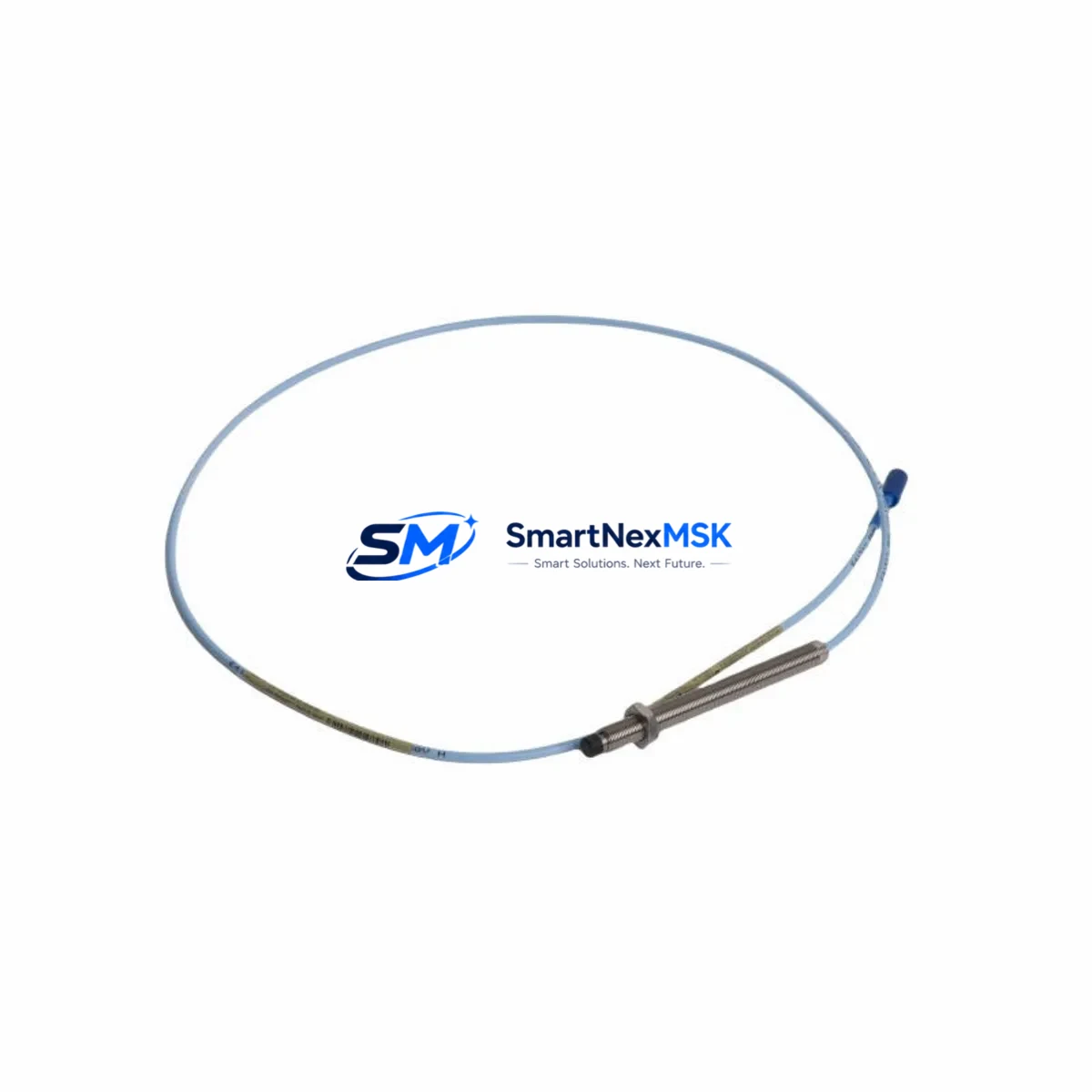
Bently Nevada 330905-00-05-10-01-00 3300 XL Spare: Spare Replacement & Industrial Downtime Risk Control
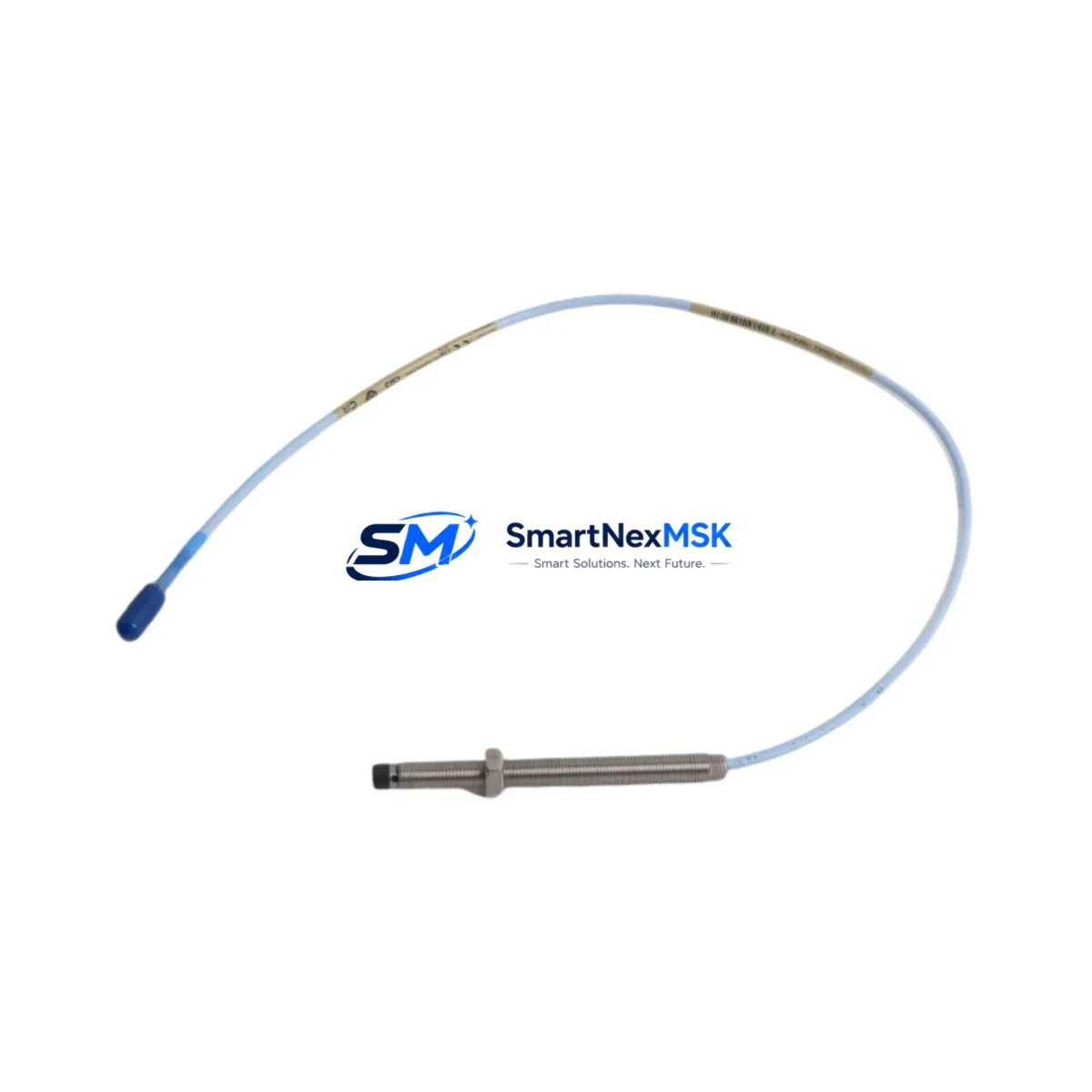
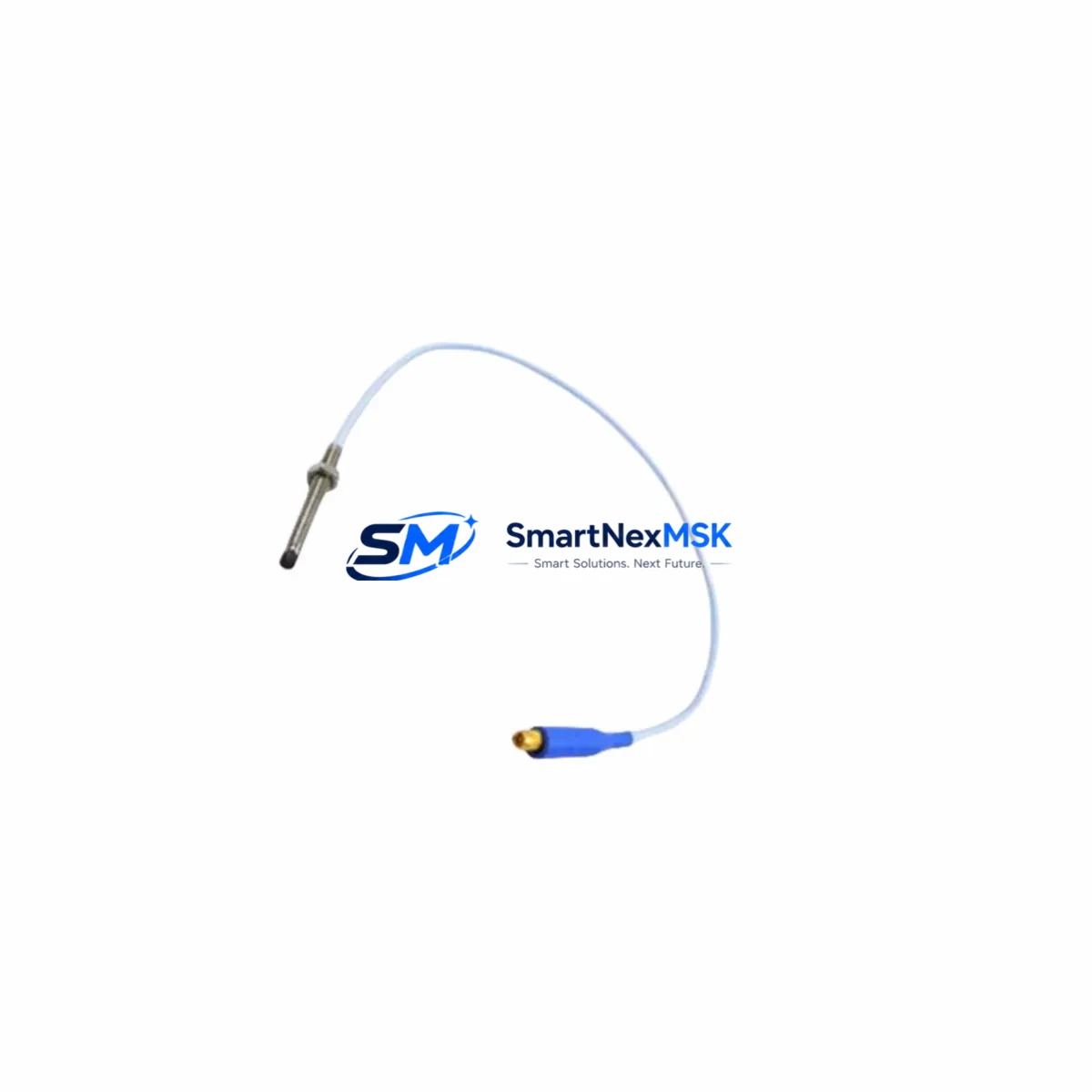
The Bently Nevada 330905-00-05-10-01-00 is a factory-original proximity transducer designed for the 3300 XL Series continuous vibration monitoring system. This eddy-current transducer delivers precise non-contact displacement measurement of rotating shafts in turbines, compressors, pumps, and other critical rotating machinery. For maintenance engineers managing aging machinery protection systems, having a verified spare of the 330905-00-05-10-01-00 on the shelf is a fundamental risk-reduction strategy — one unplanned outage caused by a failed transducer can cost far more than a full set of spares.
This unit ships tested and verified, with a 12-month warranty covering manufacturing defects and performance conformance. Each unit is inspected prior to dispatch to confirm signal output, cable integrity, and connector condition. Whether you are executing a planned turnaround, responding to a vibration alarm, or building out your critical spare inventory, the 330905-00-05-10-01-00 is a direct, drop-in replacement for the original installed unit.
Spare Maintenance Table
| Parameter | Specification |
|---|---|
| Part Number | 330905-00-05-10-01-00 |
| Brand | Bently Nevada |
| Series | 3300 XL Proximity Transducer System |
| Transducer Type | Eddy-Current Non-Contact Proximity Probe |
| Measurement Range | 5 mm (0–200 mil) |
| Cable Length | 10 m (extension cable included) |
| Output Signal | –24 VDC nominal bias voltage, linear analog |
| Connector Type | Standard 3300 XL series connector |
| Operating Temperature | –35°C to +121°C (probe tip) |
| Target Material Compatibility | AISI 4140 steel (standard); other alloys with calibration |
| Compatibility | 3300 XL Proximitor Sensor (e.g. 330180, 330130 series) |
| Application Environment | Turbines, compressors, pumps, gearboxes, motors |
| Installation | Threaded tip mount; gap set per OEM specification (typically 1.0–1.5 mm) |
| Maintenance Interval | Inspect at each planned shutdown; replace if bias voltage drifts beyond ±1 VDC of nominal |
| Origin | USA (Original Bently Nevada) |
| Warranty | 12 Months — covers manufacturing defects and performance conformance |
| Pre-shipment Test | Signal output, cable continuity, connector integrity verified |
Maintenance Planning for Continuous Operation
When a 330905-00-05-10-01-00 proximity transducer is flagged for replacement — whether due to a high-vibration alarm, a bias voltage out-of-range condition, or physical damage during a shutdown — experienced maintenance engineers know that the transducer itself is rarely the only component that needs attention. A thorough inspection of the surrounding measurement loop is essential to restore system integrity and prevent repeat failures.
Start with the 3300 XL Proximitor Sensor (such as the 330180-51-05 or 330130-080-01-00), which conditions the transducer signal and provides the –24 VDC supply. A degraded Proximitor can produce erratic output even with a new probe installed. Inspect the extension cable (typically the 330130 series armored cable) for jacket damage, connector corrosion, or continuity faults — cable failures are a leading cause of false vibration readings in field installations.
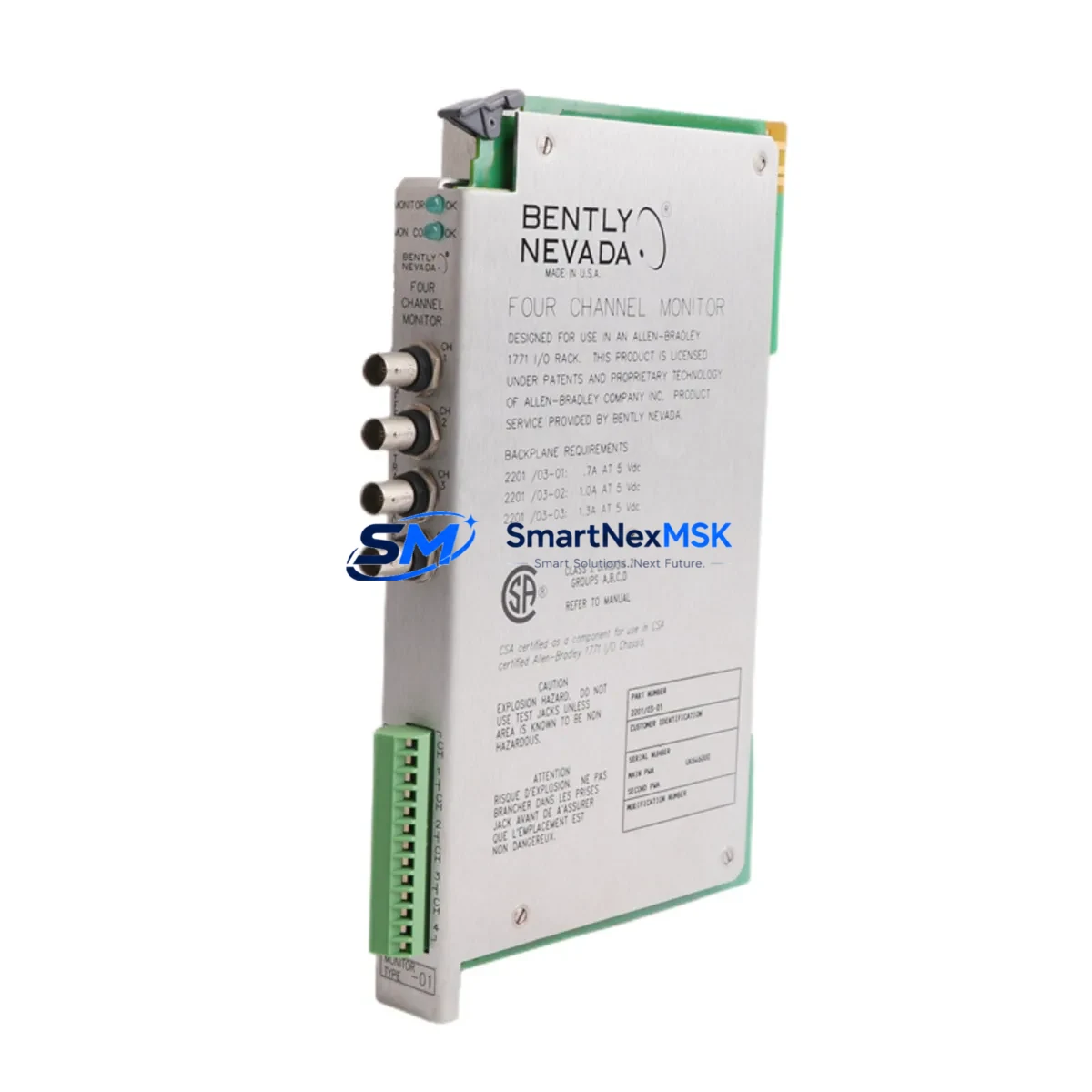
At the rack level, verify the 3500/42M Proximitor/Seismic Monitor or equivalent 3500 series I/O module is functioning correctly. Check the 3500 Rack Power Supply (e.g. 3500/15 or 3500/05) for stable output voltage; a marginal power supply can introduce noise into the measurement chain. If the machine protection system uses a 3500/22M Transient Data Interface, confirm that the channel configuration and alert/danger setpoints are correctly programmed after any hardware swap.
For installations where the 330905-00-05-10-01-00 is part of a differential expansion or thrust position measurement loop, also inspect the 3300 XL 8mm Proximity Transducer on the opposing measurement point and the associated 3500/45 Position Monitor module. Thrust bearing wear patterns often affect multiple measurement points simultaneously.
Do not overlook the junction box terminal blocks and field wiring connections. Loose terminals and corroded contacts in the field junction box are a common source of intermittent faults that are misdiagnosed as transducer failures. Inspect and torque all terminals during the replacement procedure. If the installation uses signal isolators or barriers in the measurement loop (common in hazardous area installations), verify that the isolator output is within specification before declaring the new transducer operational.
Finally, confirm that the System 1 Condition Monitoring Software or equivalent historian has been updated to reflect the replacement event, and that the new transducer’s gap voltage has been logged as a baseline for future trend analysis.
Site Replacement Workflow
Replacing the 330905-00-05-10-01-00 in the field is a straightforward procedure when the correct spare is on hand, but each step must be executed carefully to avoid introducing new faults or damaging the replacement unit.
Step 1 — Isolate and document. Before removing the existing transducer, record the current bias voltage reading from the Proximitor or rack monitor. This value confirms the gap setting and provides a baseline for the new installation. Note the alarm and danger setpoints active on the channel.
Step 2 — Remove the failed unit. Disconnect the extension cable at the Proximitor end first. Unthread the transducer from the mounting bracket carefully — avoid bending the probe tip or damaging the thread. Inspect the mounting bracket and target area for wear, contamination, or mechanical damage.
Step 3 — Install the replacement. Thread the new 330905-00-05-10-01-00 into the mounting bracket. Set the gap to the OEM-specified value (typically 1.0–1.5 mm for a 5 mm range transducer, yielding approximately –10 to –11 VDC bias). Use a calibrated gap tool or feeler gauge. Do not over-torque the locknut.
Step 4 — Reconnect and verify. Reconnect the extension cable. Power the Proximitor and measure the bias voltage at the monitor rack. Confirm the reading is within the linear range and matches the expected gap voltage. Check that the channel is reading correctly in the DCS or machinery protection system before returning the machine to service.
Step 5 — Update maintenance records. Log the replacement in your CMMS, record the new gap voltage baseline, and update the spare parts inventory. Order a replacement spare immediately to restore your buffer stock — a single-unit spare strategy leaves no margin for a second failure before the next planned shutdown.
This workflow minimizes downtime, ensures system compatibility, and maintains the measurement integrity that the 3300 XL system was designed to deliver. For aging installations where the original Bently Nevada 3300 XL hardware is approaching end-of-life, this replacement procedure also provides an opportunity to assess whether a full channel upgrade to the current 3500 series platform is warranted.
Spare Parts Support FAQ
Q: Is the 330905-00-05-10-01-00 a direct replacement for the original installed unit without recalibration?
A: Yes, for standard AISI 4140 steel targets, the 330905-00-05-10-01-00 is a direct replacement. The transducer is factory-calibrated to the 3300 XL system scale factor. After installation, you must set the physical gap to achieve the correct bias voltage — this is a mechanical adjustment, not an electronic recalibration. If your target material is a non-standard alloy, a material-specific calibration may be required.
Q: What is covered under the 12-month warranty, and how is a warranty claim handled?
A: The 12-month warranty covers manufacturing defects, signal output non-conformance, and cable/connector integrity failures under normal operating conditions. Physical damage caused by improper installation, over-torquing, or target contact is not covered. To initiate a warranty claim, contact [email protected] with the order number, installation date, and a description of the fault. Replacement units are dispatched after fault verification.
Q: How should the 330905-00-05-10-01-00 be stored as a long-term spare?
A: Store in the original packaging or an anti-static bag in a dry, temperature-controlled environment (0°C to +60°C). Avoid storing near strong magnetic fields or in high-humidity areas. Inspect the connector and cable jacket annually. The transducer has no shelf-life limitation under proper storage conditions, but we recommend rotating stock every 3–5 years for critical applications.
Q: Can this transducer be used with non-Bently Nevada Proximitor sensors or third-party monitors?
A: The 330905-00-05-10-01-00 is designed and calibrated for use with Bently Nevada 3300 XL series Proximitor sensors. Use with third-party signal conditioners is possible in principle but requires independent verification of scale factor compatibility and output linearity. For machinery protection applications where API 670 compliance is required, use only with the specified Bently Nevada Proximitor to maintain system certification.
© 2026 SMARTNEXMSK. All rights reserved.
Original Source: https://smartnexmsk.com
Contact: [email protected] | +86 18259474341