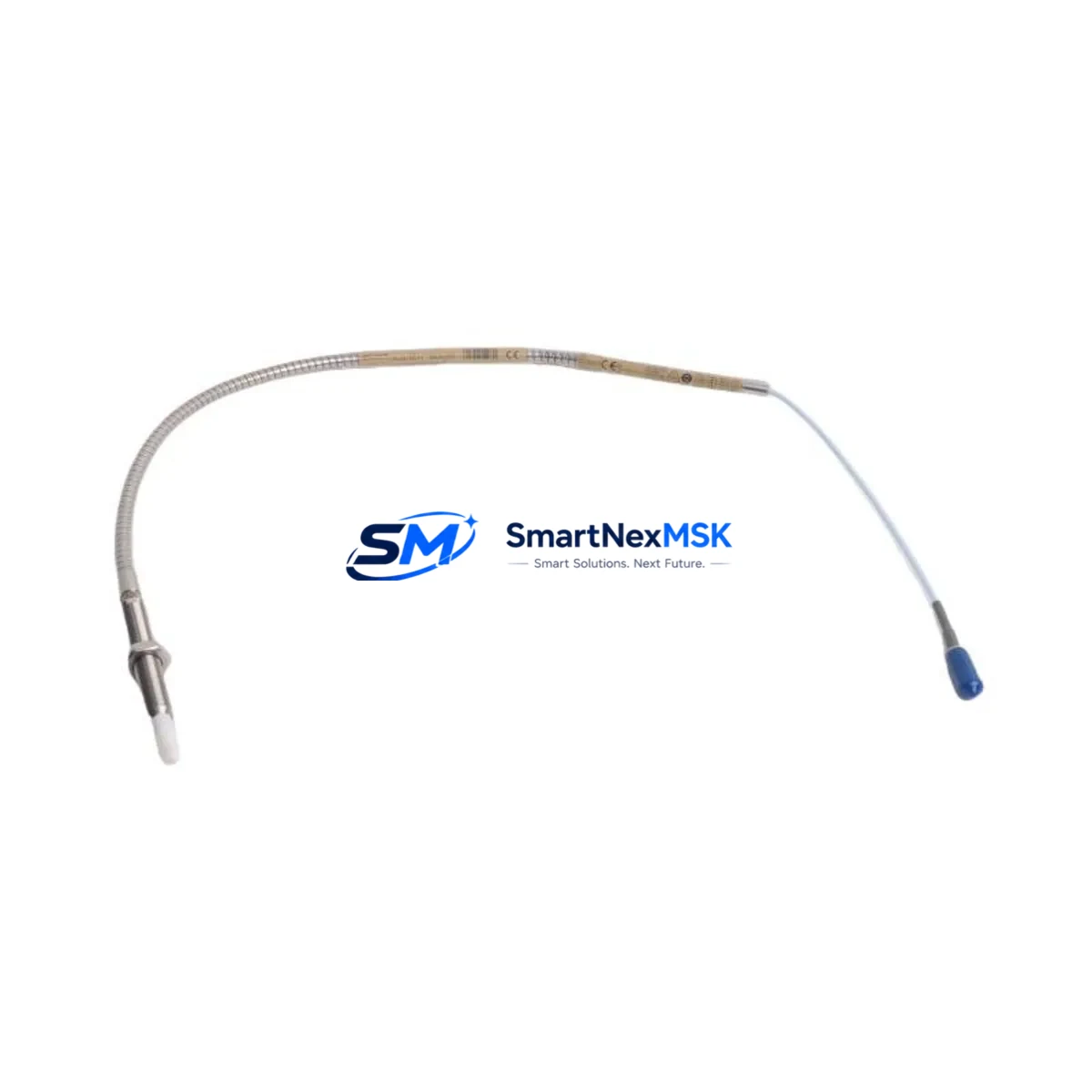
Bently Nevada 330910-00-08-10-02-00 Spare 3300 NSv: Precision Spare Parts Replacement for Industrial Downtime Control
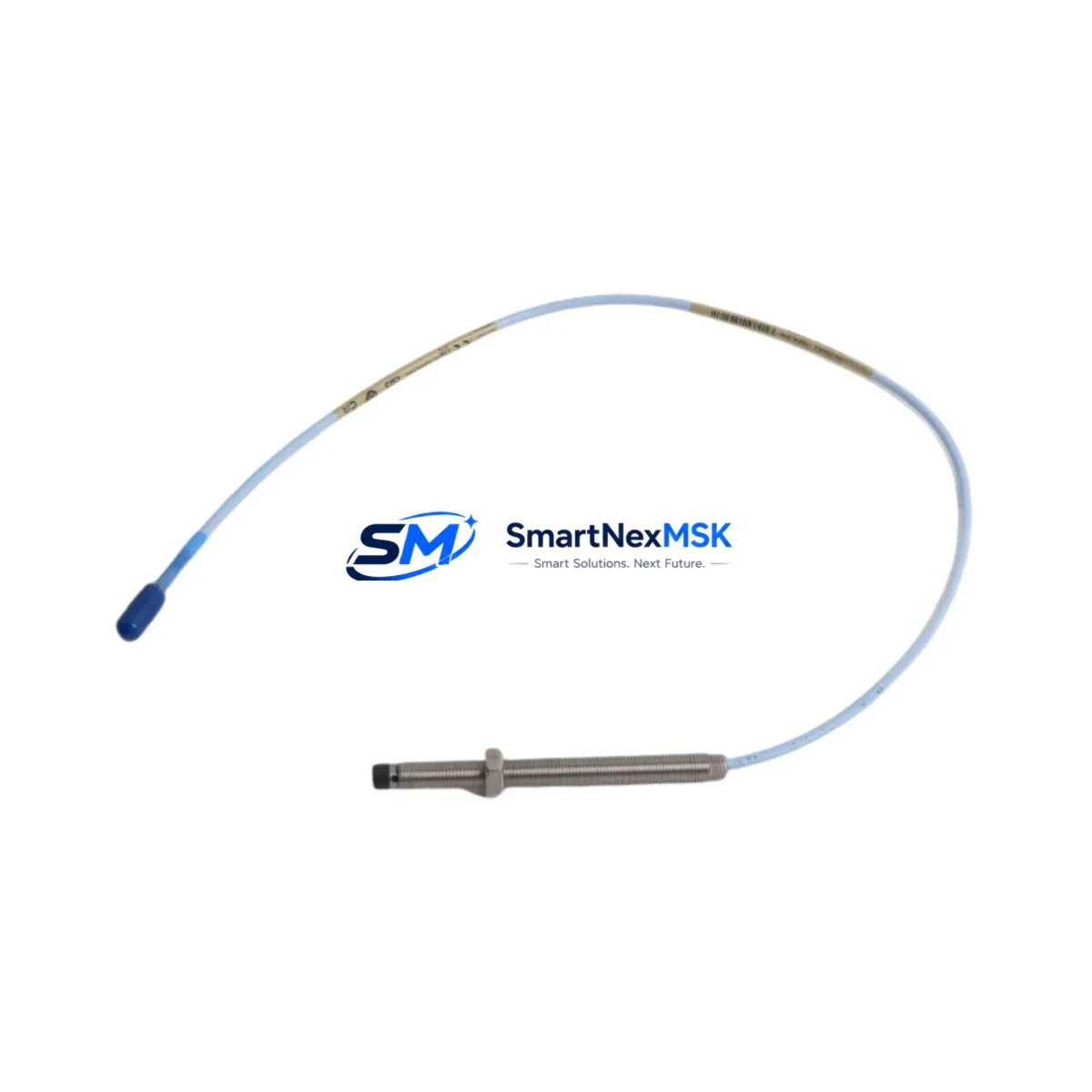
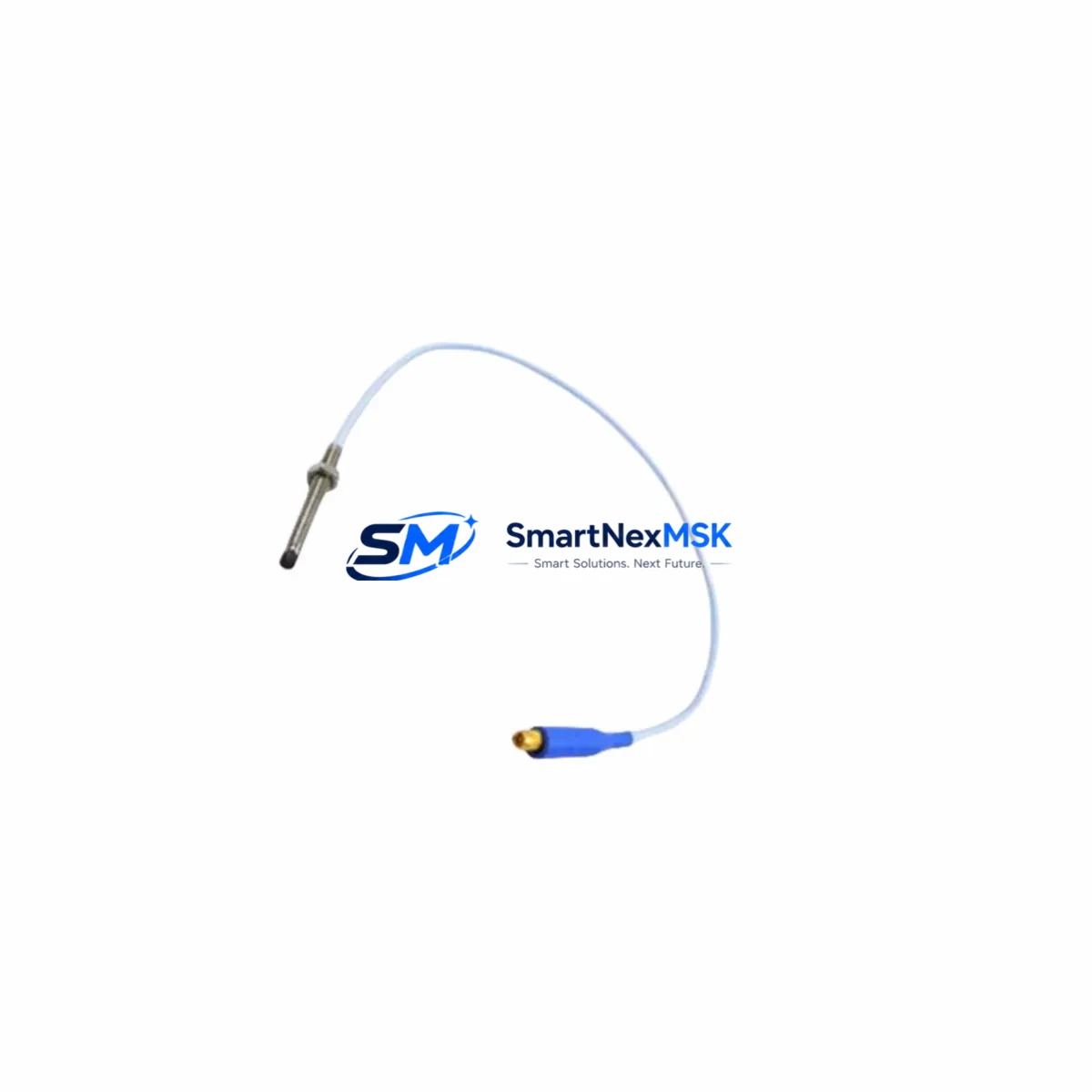
The Bently Nevada 330910-00-08-10-02-00 is an 8mm proximity probe with a 10-meter extension cable, designed for use within the 3300 NSv (Non-contact Vibration) measurement system. As a critical sensing element in rotating machinery protection and condition monitoring, this probe is commonly installed on turbines, compressors, pumps, and gearboxes across oil & gas, power generation, petrochemical, and heavy manufacturing facilities. When this component fails or degrades, the entire vibration monitoring loop is compromised — making a verified, pre-tested spare essential for any maintenance-ready operation.
Our 330910-00-08-10-02-00 units are sourced as original Bently Nevada components, inspected prior to dispatch, and backed by a 12-month warranty. Each unit ships with full traceability documentation to support your site acceptance and commissioning records.
Spare Maintenance Table
| Parameter | Specification |
|---|---|
| Part Number / SKU | 330910-00-08-10-02-00 |
| Brand | Bently Nevada |
| Series | 3300 NSv (Non-contact Vibration) |
| Probe Diameter | 8 mm |
| Cable Length | 10 m (extension cable integrated) |
| Output Signal | -18 VDC nominal (eddy-current, non-contact) |
| Sensitivity | 200 mV/mil (7.87 V/mm) |
| Linear Range | 0.25 mm – 2.25 mm (10 mil – 90 mil) |
| Operating Temperature | -35°C to +177°C (probe tip) |
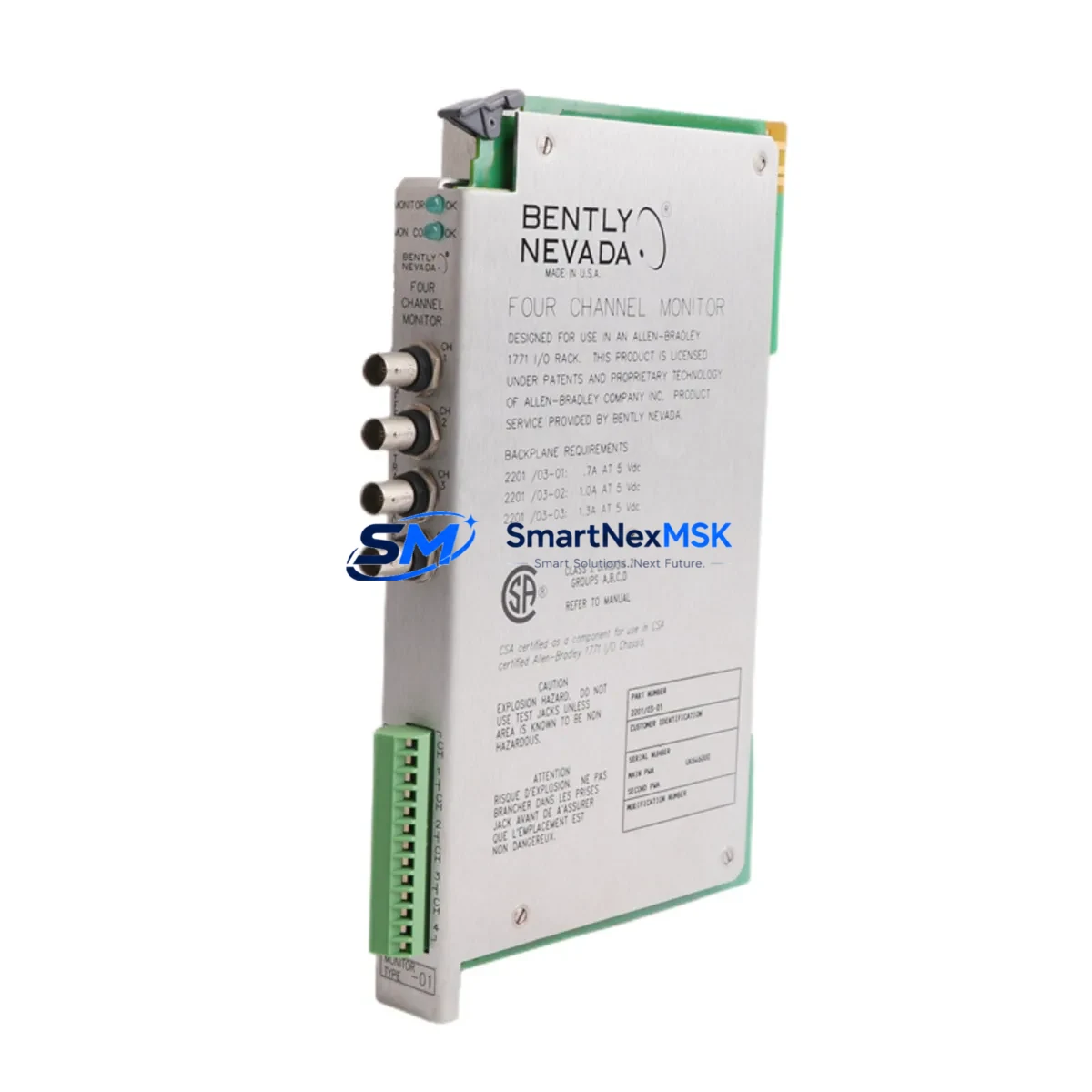
| Compatible Driver/Monitor | 3300 NSv Proximitor Sensor, 3500/40M, 3500/42M |
| Connector Type | MIL-C-5015 series (standard Bently Nevada) |
| Installation Environment | Hazardous area rated; suitable for Zone 1/2, Div 1/2 |
| Certification | ATEX / IECEx (original factory certification) |
| Origin | USA (Bently Nevada, a Baker Hughes company) |
| Pre-shipment Testing | Functional output verification, gap calibration check |
| Warranty | 12 Months from date of shipment |
| Lead Time | 3–7 business days (stock-dependent) |
Maintenance Planning for Continuous Operation
For maintenance engineers managing rotating machinery protection systems, the 330910-00-08-10-02-00 proximity probe is rarely a standalone failure point. When replacing this probe, a thorough inspection of the entire measurement chain is strongly recommended to prevent repeat failures and ensure signal integrity.
Begin with the 3300 NSv Proximitor Sensor (driver unit), which conditions the eddy-current signal from the probe. A degraded or mismatched Proximitor can produce erratic gap voltage readings even with a new probe installed. Verify the driver’s output voltage at the nominal gap distance before closing the loop.
Inspect the 330130 or 330180 series extension cables for continuity, insulation resistance, and connector integrity. Cable damage — particularly at conduit entry points and junction boxes — is a leading cause of probe system faults that are misdiagnosed as probe failures. Replace any cable showing signs of abrasion, moisture ingress, or connector corrosion.
At the monitor rack level, confirm that the 3500/40M Proximitor Monitor or 3500/42M Proximitor Monitor channel is correctly configured for the 8mm probe type and 10m cable length. Incorrect channel configuration will result in out-of-range gap alarms even after a successful probe replacement. Review the monitor’s configuration file and compare against the as-built documentation.
Check the 3500 Rack Power Supply (typically the 3500/15 or 3500/05 module) for stable DC output. Voltage ripple or supply degradation can introduce noise into the proximity measurement, causing false vibration trips. A power supply inspection is a low-cost step that prevents unnecessary shutdowns.
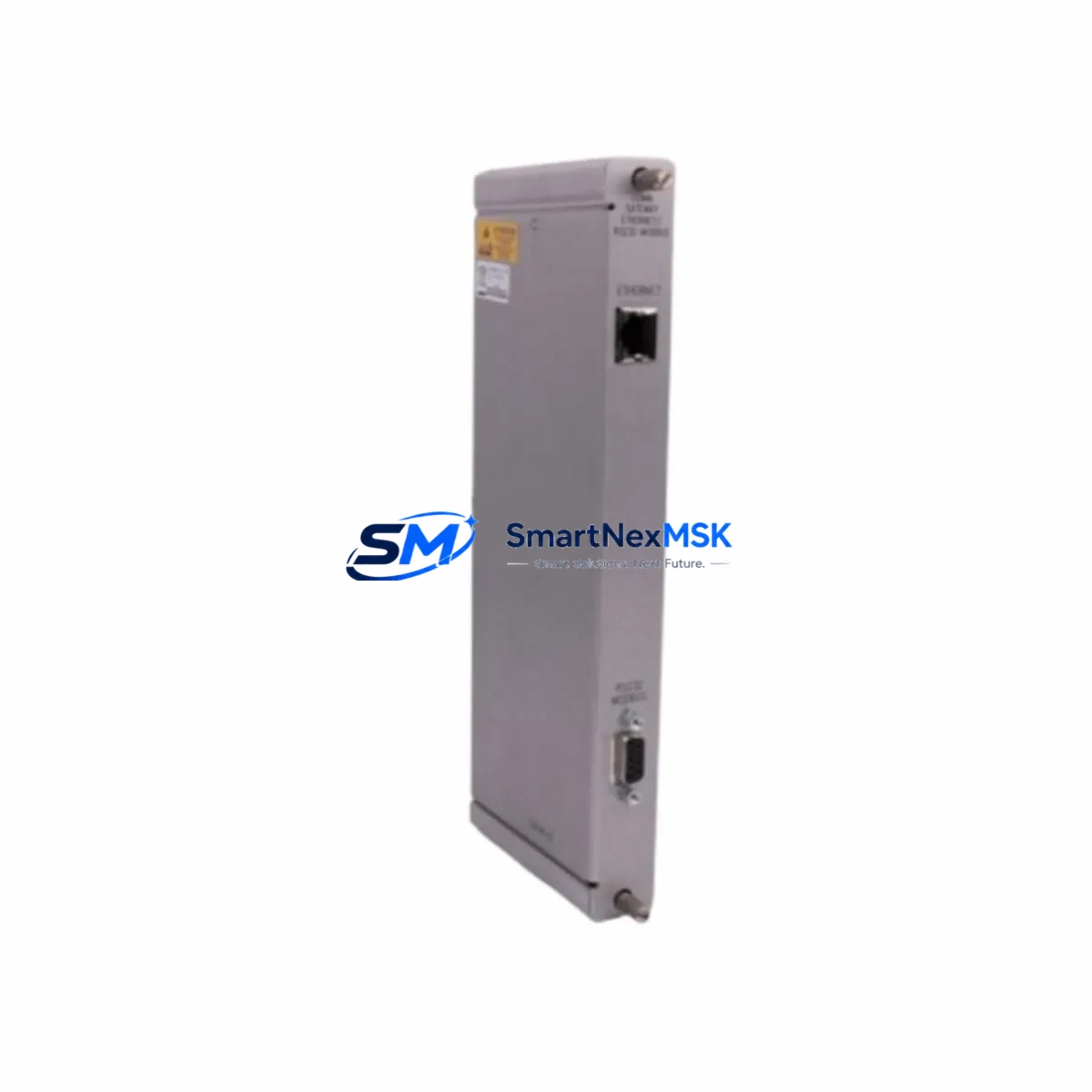
For facilities running 3500 series communication modules (such as the 3500/92 or 3500/93 Ethernet/Modbus gateway), verify that the channel data is correctly mapped to your DCS or historian after the probe replacement. A channel reconfiguration can sometimes reset communication tags, leading to data gaps in your condition monitoring records.
If your control cabinet includes signal isolators or barriers (Zener barriers or galvanic isolators for hazardous area installations), test these components during the same maintenance window. A degraded barrier can attenuate the probe signal and cause the monitor to report false high-vibration conditions.
Finally, review the terminal blocks and field wiring within the junction box. Loose terminations on the probe signal pair (typically a coaxial or triaxial arrangement) introduce intermittent faults that are difficult to diagnose remotely. Torque all terminals to specification and apply anti-corrosion treatment where appropriate for the installation environment.
Maintaining a minimum stock of one spare 330910-00-08-10-02-00 probe per critical machine train — alongside a spare Proximitor Sensor and extension cable set — is considered best practice for facilities with zero-tolerance downtime requirements.
Site Replacement Workflow
Step 1 — Isolation and Permit: Obtain a work permit and isolate the monitor channel at the 3500 rack. Place the channel in bypass mode to prevent spurious trips during probe removal. Do not de-energize the rack unless required by site procedure.
Step 2 — Probe Removal: Disconnect the extension cable at the junction box. Unthread the probe from the probe holder using the appropriate spanner. Note the installed gap (typically measured with a feeler gauge or recorded from the monitor’s gap voltage reading prior to removal).
Step 3 — New Probe Installation: Thread the replacement 330910-00-08-10-02-00 into the probe holder. Set the gap to the manufacturer’s recommended value (typically 1.0 mm / 40 mil for 8mm probes, unless the OEM specifies otherwise). Reconnect the extension cable and verify connector seating.
Step 4 — Signal Verification: With the channel still in bypass, measure the gap voltage at the Proximitor output. Compare against the expected value for the set gap distance. Acceptable gap voltage for a 1.0 mm gap is approximately -10.4 VDC (±0.5 VDC). Adjust gap if required.
Step 5 — Channel Reinstatement: Remove the bypass, restore the channel to normal monitoring mode, and confirm that the vibration and gap readings are within normal operating limits. Log the replacement in your maintenance management system (CMMS) with the new probe serial number and gap setting.
This workflow minimizes machine downtime to typically under two hours for a planned replacement, and supports full system compatibility without requiring rack reconfiguration for a like-for-like 330910-00-08-10-02-00 substitution.
Spare Parts Support FAQ
Q1: Is the 330910-00-08-10-02-00 compatible with older 3300 series monitors, or only the 3300 NSv?
The 330910-00-08-10-02-00 is specifically calibrated for the 3300 NSv Proximitor Sensor. While the physical connector and probe body are similar to earlier 3300 series probes, the sensitivity calibration and linear range are optimized for the NSv driver. Using this probe with a non-NSv Proximitor may result in out-of-specification gap voltage and inaccurate vibration readings. Always verify driver compatibility before installation.
Q2: What pre-shipment testing is performed on each unit?
Each 330910-00-08-10-02-00 unit undergoes functional output verification using a calibrated test fixture that simulates the Proximitor driver circuit. Gap voltage linearity is checked across the specified linear range, and the extension cable is tested for continuity and insulation resistance. Units that do not meet Bently Nevada’s original performance specifications are not dispatched. A test report is available upon request.
Q3: How should I manage spare probe inventory for a multi-machine facility?
For facilities with five or more critical machine trains monitored by 3300 NSv systems, we recommend maintaining a minimum of two 330910-00-08-10-02-00 probes in your on-site spare parts store, alongside matched extension cables and at least one spare Proximitor Sensor. Probes should be stored in their original packaging in a dry, temperature-controlled environment. Rotate stock on a first-in, first-out basis and inspect stored probes annually for connector corrosion or cable jacket degradation.
Q4: What does the 12-month warranty cover, and how is a warranty claim processed?
The 12-month warranty covers manufacturing defects, premature electrical failure under normal operating conditions, and out-of-specification performance at the time of installation. It does not cover damage resulting from incorrect installation, mechanical impact, chemical exposure, or use outside the specified operating parameters. To initiate a warranty claim, contact our sales team with the order reference, installation date, and a description of the fault. We will arrange return shipping and provide a replacement or credit within 10 business days of receiving the returned unit.
© 2026 SMARTNEXMSK. All rights reserved.
Original Source: https://smartnexmsk.com
Contact: [email protected] | +86 18259474341