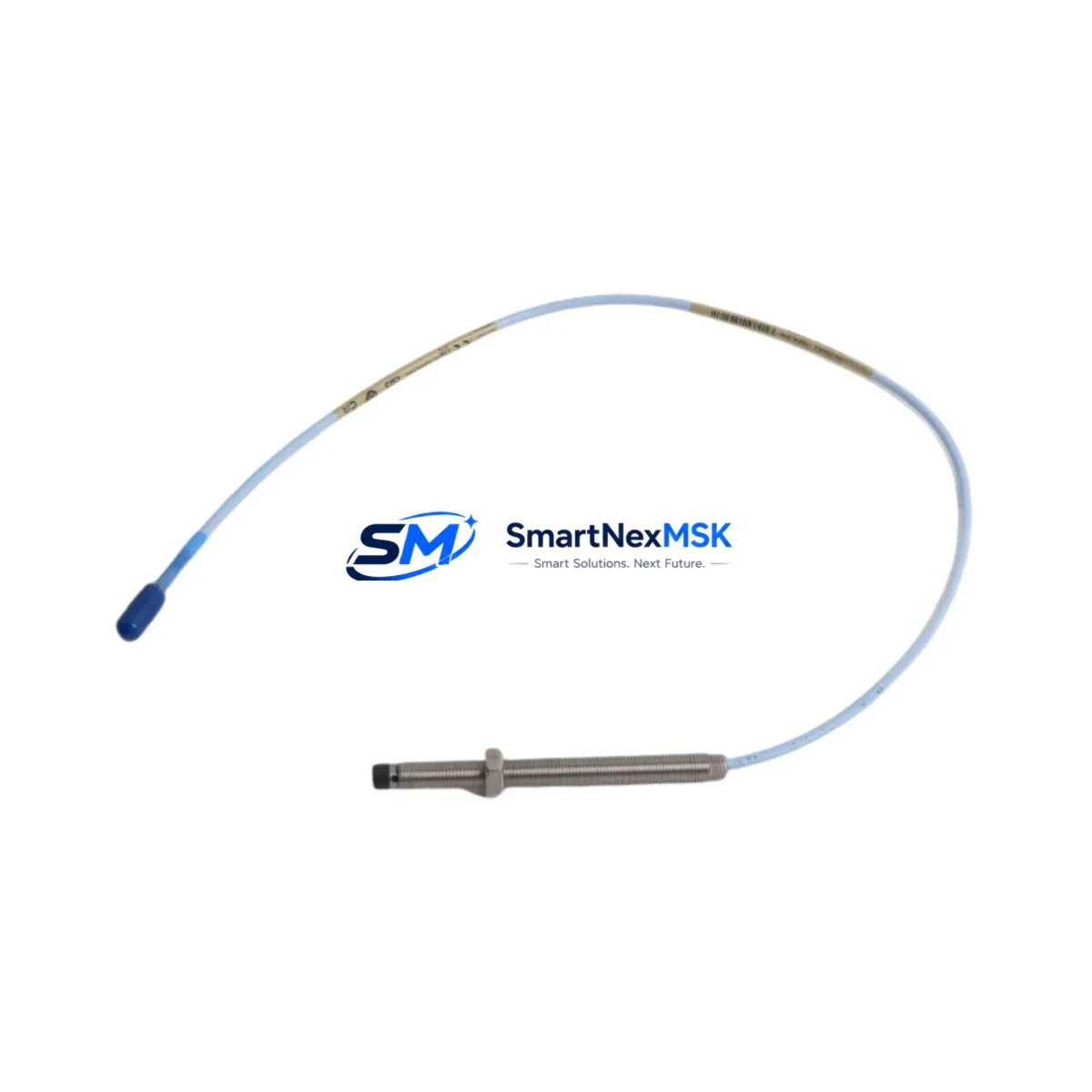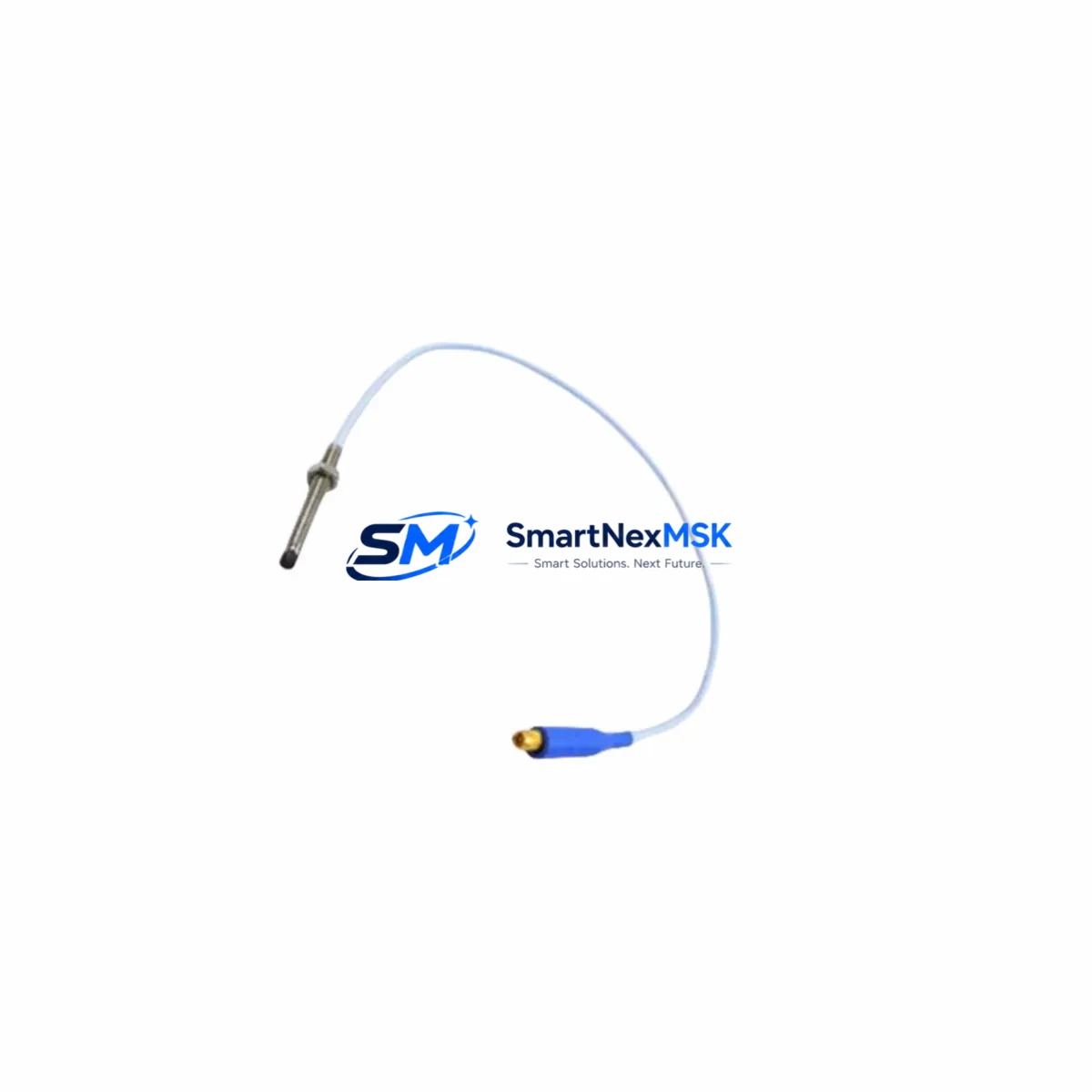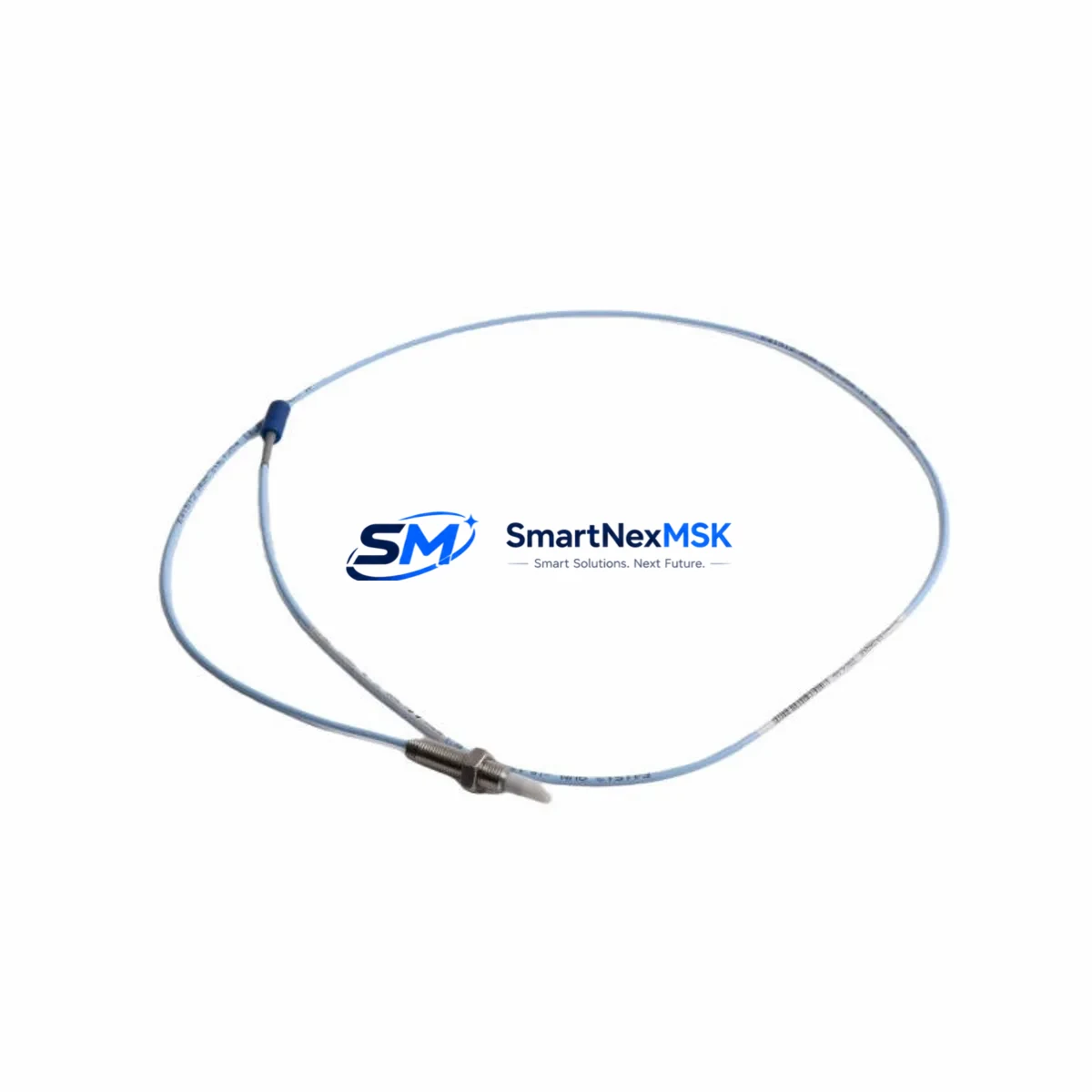
Bently Nevada 330930-065-02-05 Retrofit-Ready Proximity Transducer for 3300 XL NSv Control Systems
The Bently Nevada 330930-065-02-05 is an eddy-current proximity transducer engineered for the 3300 XL Non-contacting Vibration (NSv) monitoring platform. As legacy rotating machinery protection systems reach end-of-service life, this transducer serves as a verified drop-in replacement for discontinued 3300 series sensors, enabling maintenance teams to restore full vibration monitoring capability without redesigning the measurement chain or reconfiguring the monitoring rack.
Designed to operate within the 3300 XL system architecture, the 330930-065-02-05 integrates directly with the 3300 XL 8mm Proximitor® sensor signal conditioning circuitry. The transducer outputs a standard -24 VDC bias voltage signal, compatible with existing field wiring, junction boxes, and barrier terminal assemblies already installed in the control cabinet. When replacing a failed or obsolete unit, engineers should verify the extension cable length — typically paired with a 330130 or 330180 series extension cable — to ensure the total system scale factor remains within the calibrated range of the Proximitor module.
During retrofit planning, the gap voltage must be re-established at the target air gap (typically 1.0 mm for 8mm probes), and the output voltage should be confirmed at the Proximitor I/O terminal strip before reconnecting to the 3500/22M Transient Data Interface or the 3500/42M Proximitor Monitor card. If the plant is migrating from an older 3300/16 or 3300/20 monitor frame to the current 3500 rack architecture, the 330930-065-02-05 remains signal-compatible, though the monitor card slot assignment and channel address configuration in the System 1 software will require updating to reflect the new rack topology.
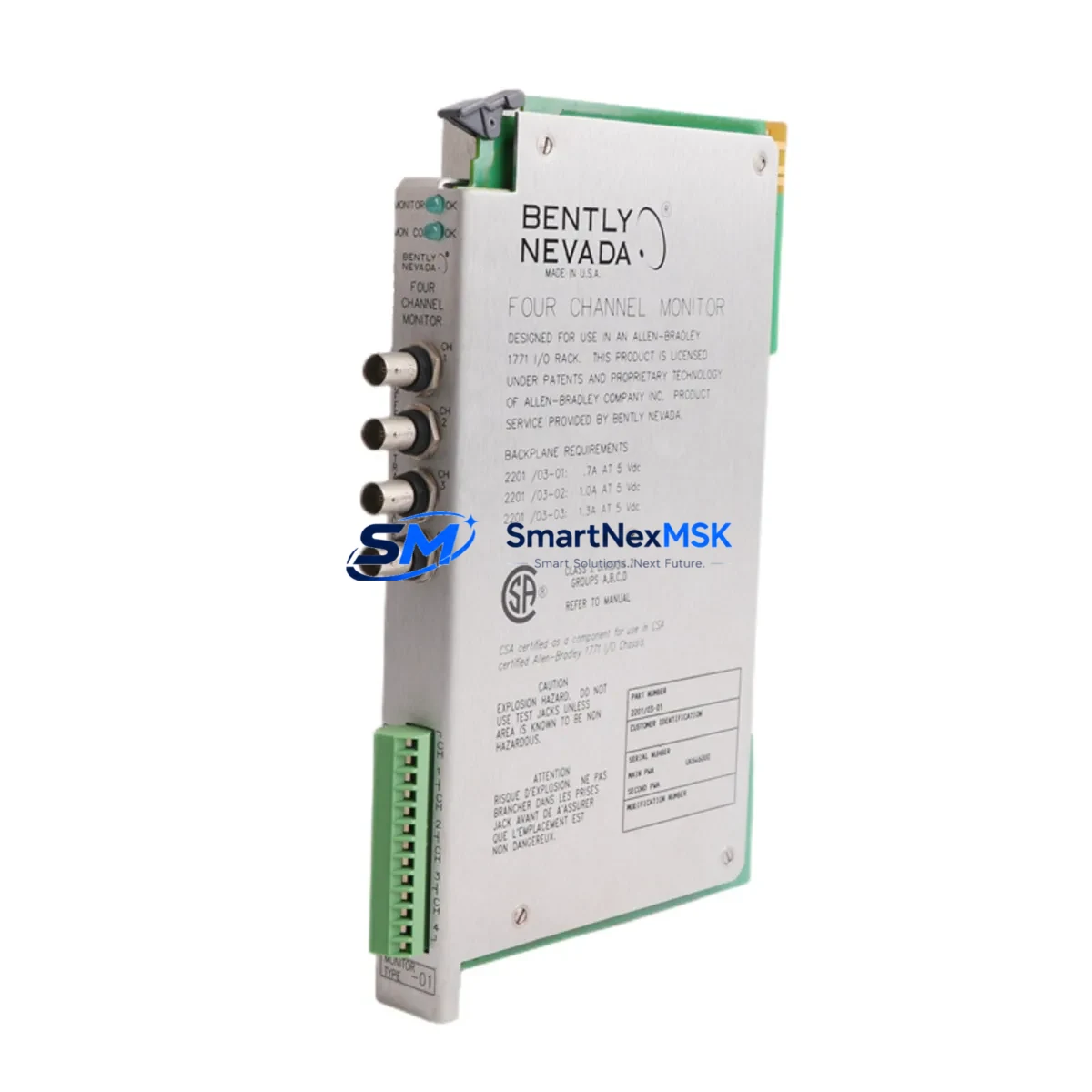
For facilities running a Bently Nevada 3500 Series machinery protection system, the transducer connects to the 3500/42M Proximitor/Seismic Monitor via the standard 9-pin field wiring connector. Maintenance engineers should confirm that the 3500/15 Power Supply module provides adequate current capacity for the additional transducer load, particularly in high-channel-count racks where multiple 330930 series probes are installed across radial and axial measurement positions. The 3500/20 Rack Interface Module (RIM) handles communication to the DCS or historian, and no firmware changes are required when substituting a like-for-like transducer within the same measurement point.
In applications where the original transducer was connected through a 3300 XL Proximitor mounted in a remote enclosure, the replacement procedure involves disconnecting the coaxial driver cable at the field junction, installing the 330930-065-02-05 at the probe tip, routing the extension cable back to the Proximitor, and performing a static gap check before returning the machine to service. The entire swap can typically be completed during a planned outage window of two to four hours, provided the replacement unit has been pre-tested and gap-set on a calibration fixture prior to arrival on site.
Plants operating GE Bently Nevada System 1 Evolution software should note that the transducer’s dynamic range and sensitivity specifications are stored in the channel configuration database. After physical replacement, a channel verification routine should be run to confirm that the gap, direct, and 1X/2X vibration readings fall within expected baseline limits before the machine is cleared for restart. This step is critical for turbine, compressor, and pump trains where axial position and radial vibration alarms are tied to automatic shutdown logic in the safety instrumented system.
Upgrade Compatibility Table
| Parameter | Details |
|---|---|
| SKU / Part Number | 330930-065-02-05 |
| Series Compatibility | Bently Nevada 3300 XL NSv, 3500 Series |
| Probe Type | 8mm Eddy-Current Proximity Transducer |
| Nominal Gap Voltage | -10.0 VDC @ 1.0 mm air gap |
| Bias Voltage Output | -24 VDC nominal |
| Scale Factor | 7.87 V/mm (200 mV/mil) |
| Extension Cable Compatibility | 330130, 330180 series extension cables |
| Monitor Card Compatibility | 3500/42M Proximitor/Seismic Monitor |
| Installation Requirement | Standard 8mm probe mount; re-gap to 1.0 mm target |
| Communication Compatibility | Analog signal; compatible with 3500/20 RIM for Modbus/TCP or OPC output |
| Replacement Recommendation | Direct drop-in for 330930-065-02-05; verify extension cable length |
| Commissioning Focus | Gap voltage verification, scale factor confirmation, System 1 channel check |
| Warranty | 12-Month Warranty — all units ship after functional bench test |
Retrofit Planning for Existing Automation Systems
A successful retrofit begins well before the maintenance window opens. The first step is a full audit of the existing measurement chain: confirm the probe body thread size and mounting boss dimensions, identify the extension cable part number (330130-045-00-00 or 330180-090-00-00 are common pairings), and record the current gap voltage at the Proximitor terminal to establish a pre-outage baseline. If the Proximitor itself is a legacy 3300 XL Proximitor rather than the integrated driver in a 3500/42M card, check whether the driver is still within its calibration interval — a worn driver can introduce scale factor drift that masks a healthy transducer reading.
In control cabinets where the 3500 rack is installed alongside a Bently Nevada 3500/61 Temperature Monitor or a 3500/70M Tachometer Interface Module, the power budget of the 3500/15 Power Supply should be recalculated to confirm that adding or replacing transducers does not exceed the rack’s current capacity. The 3500/05 Rack Interface Module provides the backplane communication path to the plant DCS, and its configuration should be backed up before any hardware changes are made to the rack.
For plants that have already migrated their operator interface to a modern HMI running on a Wonderware or FactoryTalk platform, the System 1 OPC server tag mapping for the affected measurement point should be verified after the transducer swap. Vibration trend displays, alarm setpoint screens, and Bode plot views in the HMI are driven by the channel tag, and a misconfigured channel address in the 3500 rack will produce a flatline or out-of-range reading on the operator screen without triggering a hardware fault. A brief functional test — bumping the shaft or using a calibration simulator — confirms end-to-end signal integrity from probe tip to HMI display before the machine is released to operations.
Where the retrofit involves migrating from a 3300 series standalone monitor to a full 3500 rack, the programming cable (typically a standard RS-232 or USB-to-serial adapter with Rack Configuration Software) is needed to download the new channel configuration. The 3500 Rack Configuration Software allows engineers to define the transducer type, gap range, full-scale range, and alarm setpoints for each channel, and the configuration file should be saved and archived as part of the as-built documentation for the upgraded system.
Downtime Control During System Migration
Minimizing unplanned downtime during a transducer replacement requires a structured pre-outage preparation protocol. Before the machine is taken offline, the replacement 330930-065-02-05 should be bench-tested against a calibration target to confirm gap voltage linearity and scale factor accuracy. Pre-setting the air gap on a fixture that matches the probe mounting depth reduces on-site adjustment time and eliminates the risk of a second outage caused by an out-of-tolerance gap reading.
The original program logic in the 3500 rack — including alarm setpoints, time delays, and relay output assignments — should be exported and saved before any hardware is touched. If the rack is connected to a safety instrumented system via a hardwired relay or a Modbus link, the SIS should be placed in bypass mode through the proper management of change procedure before the transducer is disconnected. This prevents a spurious shutdown signal from reaching the turbine trip solenoid or compressor anti-surge valve during the swap.
Once the new transducer is installed and gapped, the channel should be brought online in monitor mode with alarms inhibited while the gap voltage and dynamic readings are verified. Only after the System 1 channel check confirms that direct, gap, and filtered vibration values are within the expected baseline range should alarms be re-enabled and the SIS bypass lifted. This staged return-to-service approach protects both the machine and the production process, and the entire sequence — from isolation to alarm re-enable — can typically be completed within a four-hour planned maintenance window.
Retrofit Support FAQ
Q: Is the 330930-065-02-05 a direct replacement for other 330930 series variants?
A: The 330930-065-02-05 is specific to an 8mm probe with a 65mm body length and a 5mm tip-to-target range. Other 330930 suffix variants differ in body length or cable configuration. Always verify the full part number, including all suffix fields, before ordering a replacement to ensure dimensional and electrical compatibility with the existing mounting and extension cable.
Q: What commissioning steps are required after installation?
A: After physical installation, set the air gap to the target value (typically 1.0 mm), confirm the gap voltage at the Proximitor or 3500/42M terminal strip, run the System 1 channel verification routine, and perform a functional vibration test before re-enabling alarms. Document the as-found and as-left gap voltages in the maintenance record.
Q: Can this transducer be used with a 3500/42M monitor card without reconfiguring the rack?
A: Yes, provided the channel was previously configured for an 8mm eddy-current transducer with the same scale factor. If the rack configuration was set for a different probe type or sensitivity, the channel parameters must be updated using the 3500 Rack Configuration Software before the new transducer is placed in service.
Q: What does the 12-month warranty cover, and how are units tested before shipment?
A: Every 330930-065-02-05 unit is functionally bench-tested prior to shipment, including gap voltage linearity verification and output signal check. The 12-month warranty covers manufacturing defects and functional failures under normal operating conditions. Units are shipped with a test report. Contact [email protected] for warranty claims or technical support.
© 2026 SMARTNEXMSK. All rights reserved.
Original Source: https://smartnexmsk.com
Contact: [email protected] | +86 18259474341