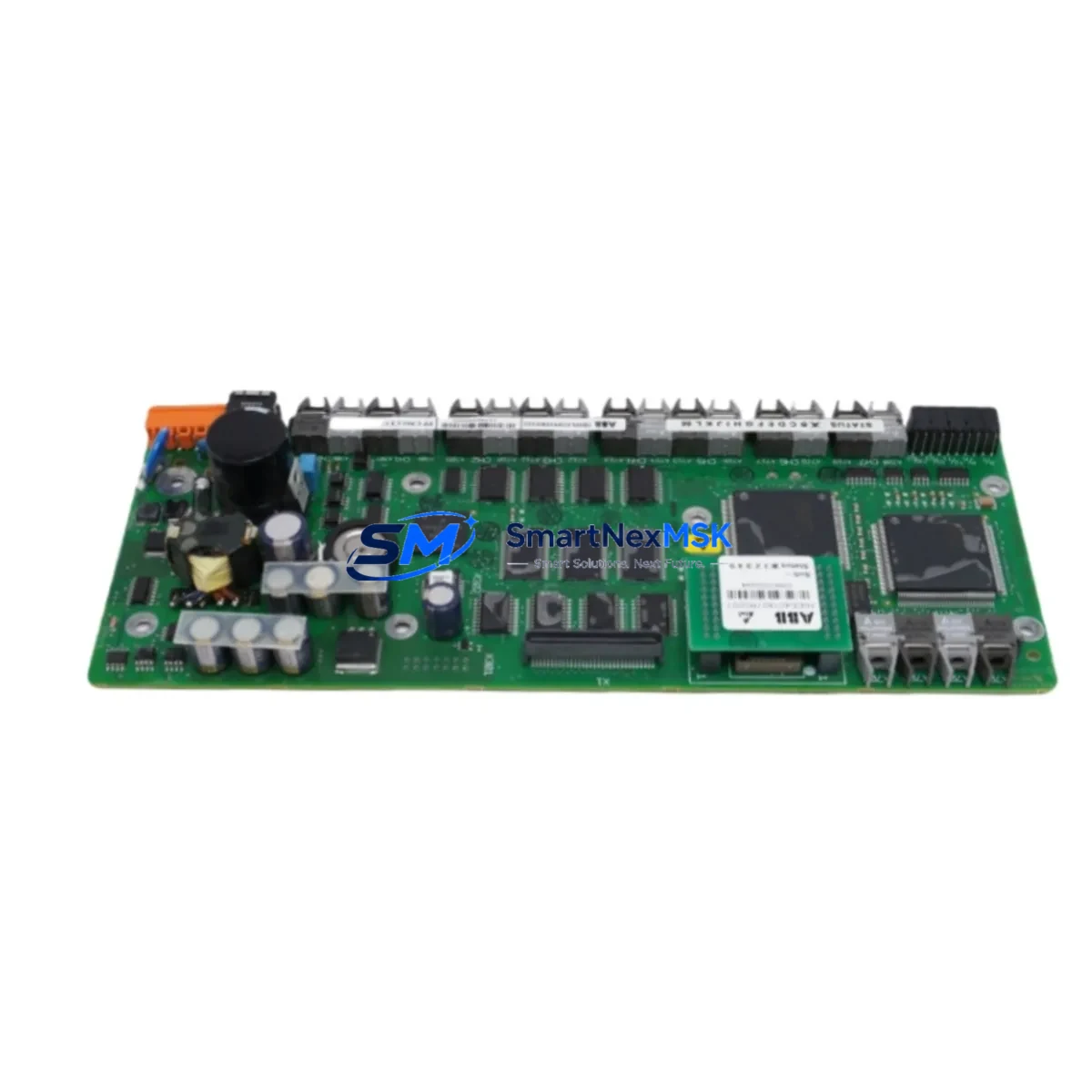
Fuji Electric 6MBI75UC-120-52 Retrofit-Ready IGBT Module for U-Series Control Systems
The Fuji Electric 6MBI75UC-120-52 is a 75A / 1200V U-Series IGBT module engineered for seamless integration into legacy inverter drives, servo amplifiers, and industrial power conversion systems. As original equipment manufacturers phase out older power module generations, the 6MBI75UC-120-52 has become a critical retrofit component for engineers tasked with extending the operational life of existing automation infrastructure without full system replacement.
This module is a direct drop-in replacement for end-of-life U-Series IGBT assemblies found in variable frequency drives (VFDs), CNC spindle drives, elevator control panels, and industrial welding inverters. Its compact DIP-IPM footprint and standardized gate-emitter pinout allow technicians to swap the module without modifying the existing PCB layout, driver circuit, or heatsink mounting arrangement — significantly reducing retrofit labor time and minimizing production downtime.
Each unit is pre-tested under full-load switching conditions prior to shipment, with gate threshold voltage, collector-emitter saturation voltage (VCEsat), and thermal resistance (Rth(j-c)) verified against Fuji Electric’s original datasheet specifications. Stock is available for immediate dispatch, supported by a 12-month warranty covering manufacturing defects and parametric failures.
Upgrade Compatibility Table
| Parameter | 6MBI75UC-120-52 Specification | Retrofit Notes |
|---|---|---|
| Collector Current (IC) | 75A | Verify drive output current rating matches or exceeds module rating |
| Collector-Emitter Voltage (VCES) | 1200V | Confirm DC bus voltage does not exceed 800V DC under transient conditions |
| Package Type | U-Series DIP-IPM | Direct pin-compatible with earlier 6MBI50UC-120 and 6MBI100UC-120 footprints (current derating required) |
| Gate Drive Voltage | +15V / -8V (recommended) | Verify existing gate driver board output levels; EXB841 and M57962L drivers are confirmed compatible |
| Thermal Interface | Rth(j-c) ≤ 0.20°C/W | Apply fresh thermal compound (≥ 1.0 W/m·K); re-torque heatsink to 2.5–3.0 N·m |
| Isolation Voltage | 2500 Vrms | Perform hi-pot test after installation before energizing the DC bus |
| Communication Compatibility | N/A (power stage) | No firmware or protocol changes required; upper-level PLC/HMI logic remains unchanged |
| Replacement Scope | Drop-in for U-Series IGBT | Replaces 6MBI75U4-120, 6MBI75UC-120, 6MBI75UC-120-01 in most drive platforms |
| Warranty | 12 Months | Covers parametric failure and manufacturing defects from date of shipment |
Retrofit Planning for Existing Automation Systems
A successful retrofit of the 6MBI75UC-120-52 begins well before the module arrives on-site. Engineers should first audit the host drive’s power supply rail — typically a 24V DC control supply and a 15V / -8V isolated gate drive supply — to confirm that voltage levels remain within the module’s gate drive specification. Many legacy drives using the Fuji Frenic-Multi or Frenic-Eco series incorporate onboard gate driver circuits that are fully compatible with the 6MBI75UC-120-52 without modification.
For systems built around older Mitsubishi FR-A500 or FR-E700 drive platforms that have been adapted with Fuji IGBT modules during previous service cycles, technicians should cross-reference the terminal block layout against the replacement module’s P, N, U, V, W, and control signal pins. In most cases, the existing Fuji CP32 or CP45 bus bar connectors and the associated DC link capacitor bank require no modification.
When the retrofit involves a multi-axis control cabinet — for example, a system coordinating a Yaskawa SGDV servo amplifier alongside a Fuji VFD on a shared DC bus — it is essential to isolate each axis before module replacement. The shared DC bus must be fully discharged (below 30V DC as measured at the P-N terminals) before any module is unbolted. A Fluke 87V or equivalent CAT III multimeter should be used to verify bus discharge.
I/O expansion modules connected to the upstream PLC — such as a Siemens ET 200SP distributed I/O or an Omron CJ1W-ID211 input module — do not require reconfiguration during an IGBT module swap, as the replacement is confined to the power stage. However, if the retrofit is part of a broader control system upgrade that includes migrating from a legacy GE Fanuc Series 90-30 PLC to a modern controller, the I/O address mapping and ladder logic should be validated in simulation before the new hardware is commissioned on the live line.
HMI screens linked to drive status registers — particularly fault code displays on Proface GP4000 or Weintek MT8000 panels — should be reviewed to confirm that the fault code table remains consistent after the module swap. In most U-Series drive platforms, the IGBT module replacement does not alter the drive’s internal fault register mapping, so existing HMI projects can be retained without modification.
For systems incorporating DeviceNet or PROFIBUS-DP communication cards installed in the drive’s option slot, the network node address and baud rate settings stored in the drive’s EEPROM are preserved through a module swap, provided the drive’s control board is not replaced simultaneously. This is a key advantage of component-level IGBT replacement over full drive replacement: the communication configuration, PID tuning parameters, and acceleration/deceleration ramp settings are all retained.
Downtime Control During System Migration
Minimizing unplanned downtime is the primary operational concern during any IGBT module retrofit. A structured replacement procedure for the 6MBI75UC-120-52 typically requires 2–4 hours of planned downtime per drive axis, compared to 1–3 days for a full drive replacement including recommissioning. The following sequence is recommended to protect program logic and maintain field control continuity:
1. Pre-shutdown data capture: Before de-energizing the drive, record all parameter settings using the drive’s built-in parameter copy function or a Fuji DU2 or TP-E1U keypad with parameter upload capability. This ensures that motor constants, PID gains, and communication settings can be restored exactly if the control board requires reseating during the repair.
2. Controlled shutdown and bus discharge: Command a controlled stop via the PLC output rather than cutting main power abruptly. This allows the drive’s braking resistor circuit — often a Fuji ERF-series braking resistor — to dissipate kinetic energy from the load before the DC bus is isolated. After main contactor opening, wait a minimum of 5 minutes and verify bus voltage below 30V DC before proceeding.
3. Module extraction and inspection: Remove the failed 6MBI75UC-120-52 and inspect the heatsink surface, gate resistor network, and snubber capacitors for secondary damage. If the gate resistors (typically 10–22Ω) show signs of thermal stress, replace them before installing the new module to prevent repeat failure.
4. Installation and torque verification: Install the replacement module, apply thermal compound uniformly, and torque all mounting screws to specification. Reconnect gate drive cables and verify connector seating. Perform an insulation resistance test (500V DC megger) between the module’s collector terminal and the heatsink before reconnecting the DC bus.
5. Controlled re-energization and test run: Restore power in stages — control supply first, then main power with the motor disconnected if possible. Run the drive through a low-speed no-load test cycle and monitor output current waveform symmetry across all three phases before reconnecting the mechanical load.
Retrofit Support FAQ
Q1: Is the 6MBI75UC-120-52 a direct replacement for the 6MBI75UC-120 and 6MBI75UC-120-01?
Yes. The -52 suffix denotes a minor process revision with no change to electrical ratings, pinout, or package dimensions. It is fully interchangeable with earlier suffix variants in all known drive applications.
Q2: What gate driver ICs are confirmed compatible with this module?
The EXB841, EXB840, M57962L, and HCPL-316J are all confirmed compatible gate driver ICs. The recommended gate drive voltage is +15V / -8V with a gate resistance of 10–22Ω on the turn-on path and 22–47Ω on the turn-off path, depending on the switching frequency and stray inductance of the drive’s DC bus layout.
Q3: How is the module tested before shipment?
Each 6MBI75UC-120-52 unit undergoes static parameter testing (VCEsat, VGES, ICES, leakage) and dynamic switching verification under resistive load conditions. A test report is available upon request. All units are shipped in anti-static packaging with desiccant to prevent moisture ingress during transit.
Q4: What does the 12-month warranty cover?
The warranty covers parametric failures and manufacturing defects from the date of shipment. It does not cover damage resulting from incorrect gate drive voltage, over-current events caused by external faults, improper thermal interface application, or mechanical damage during installation. Warranty claims are processed within 5 business days of receipt of the returned unit.
© 2026 SMARTNEXMSK. All rights reserved.
Original Source: https://smartnexmsk.com
Contact: [email protected] | +86 18259474341