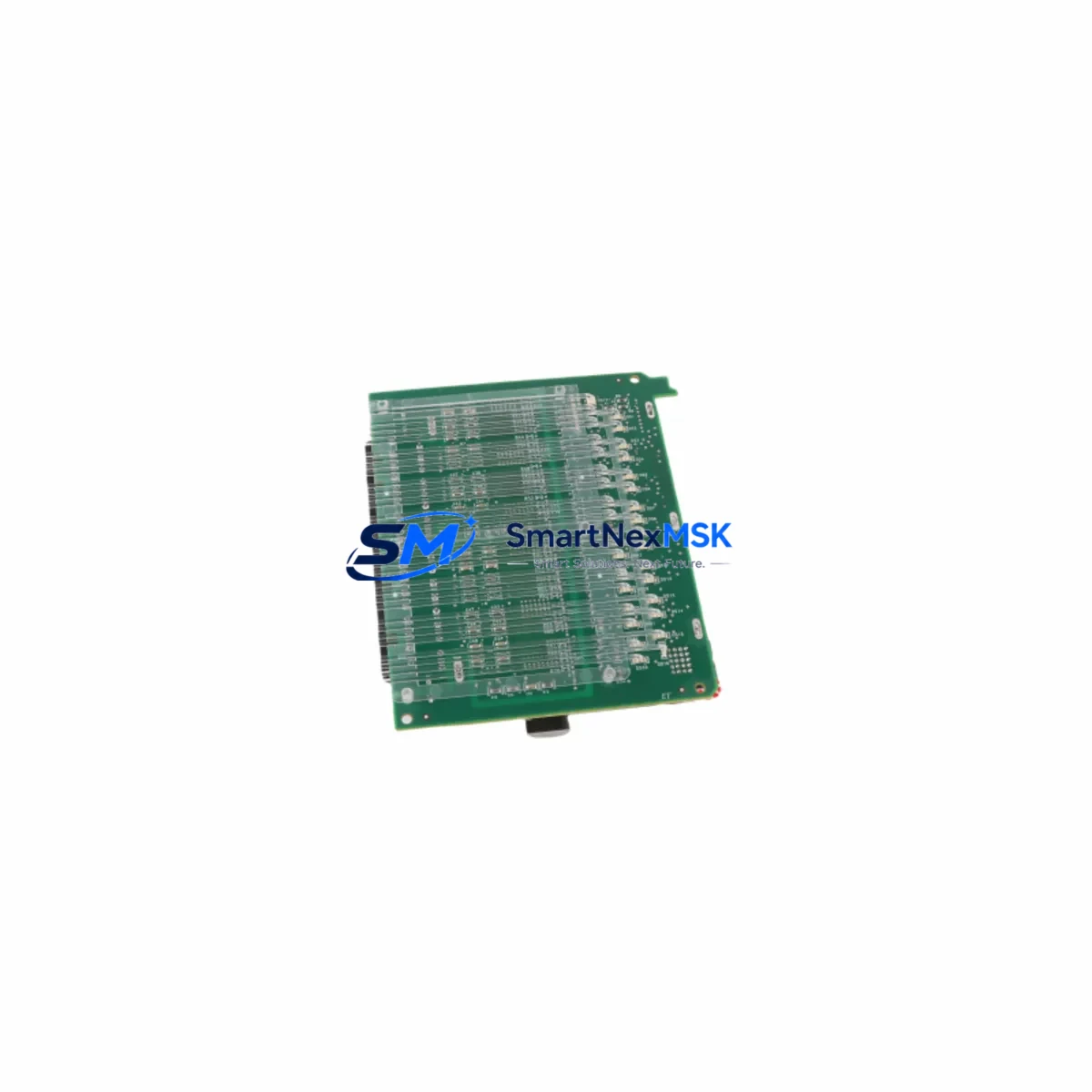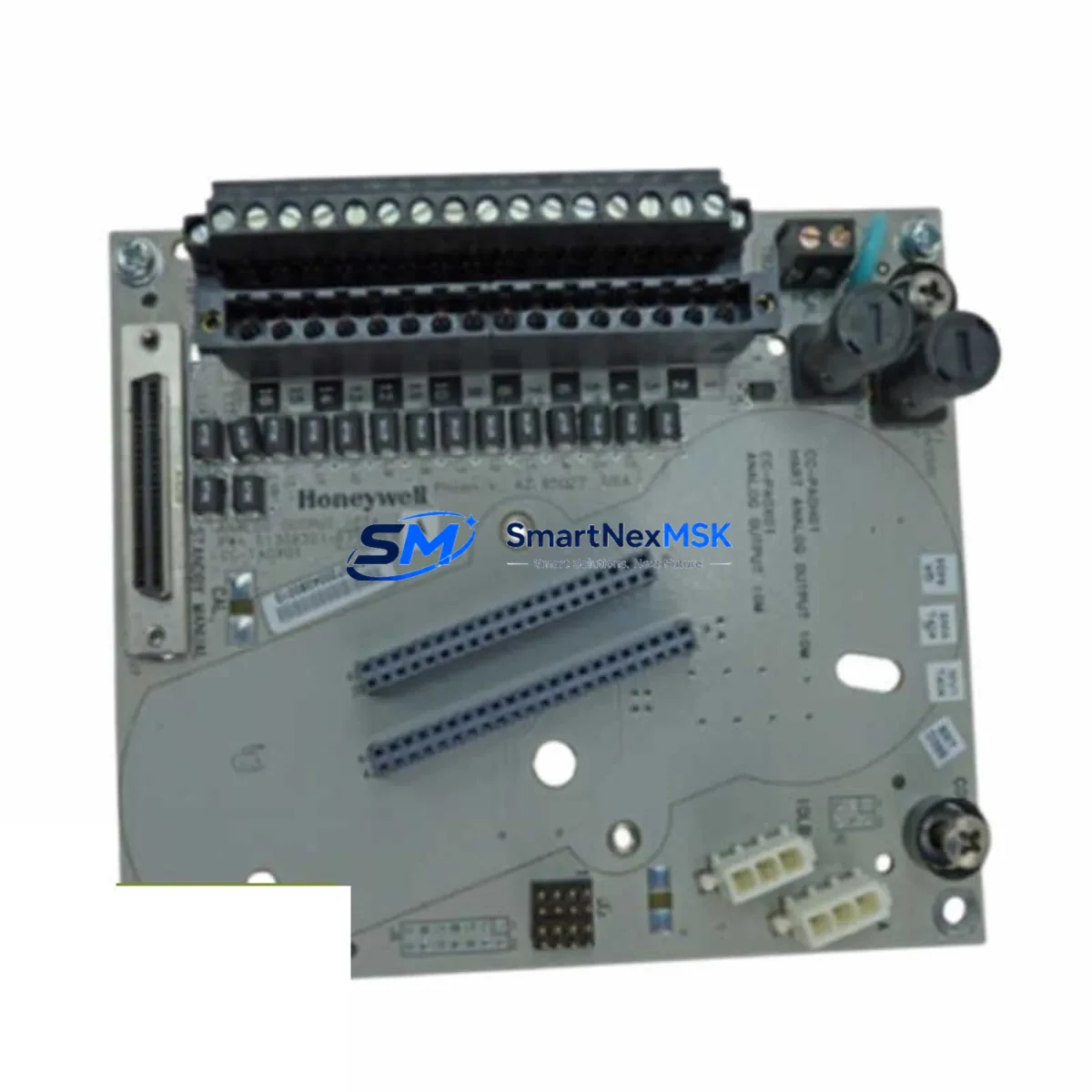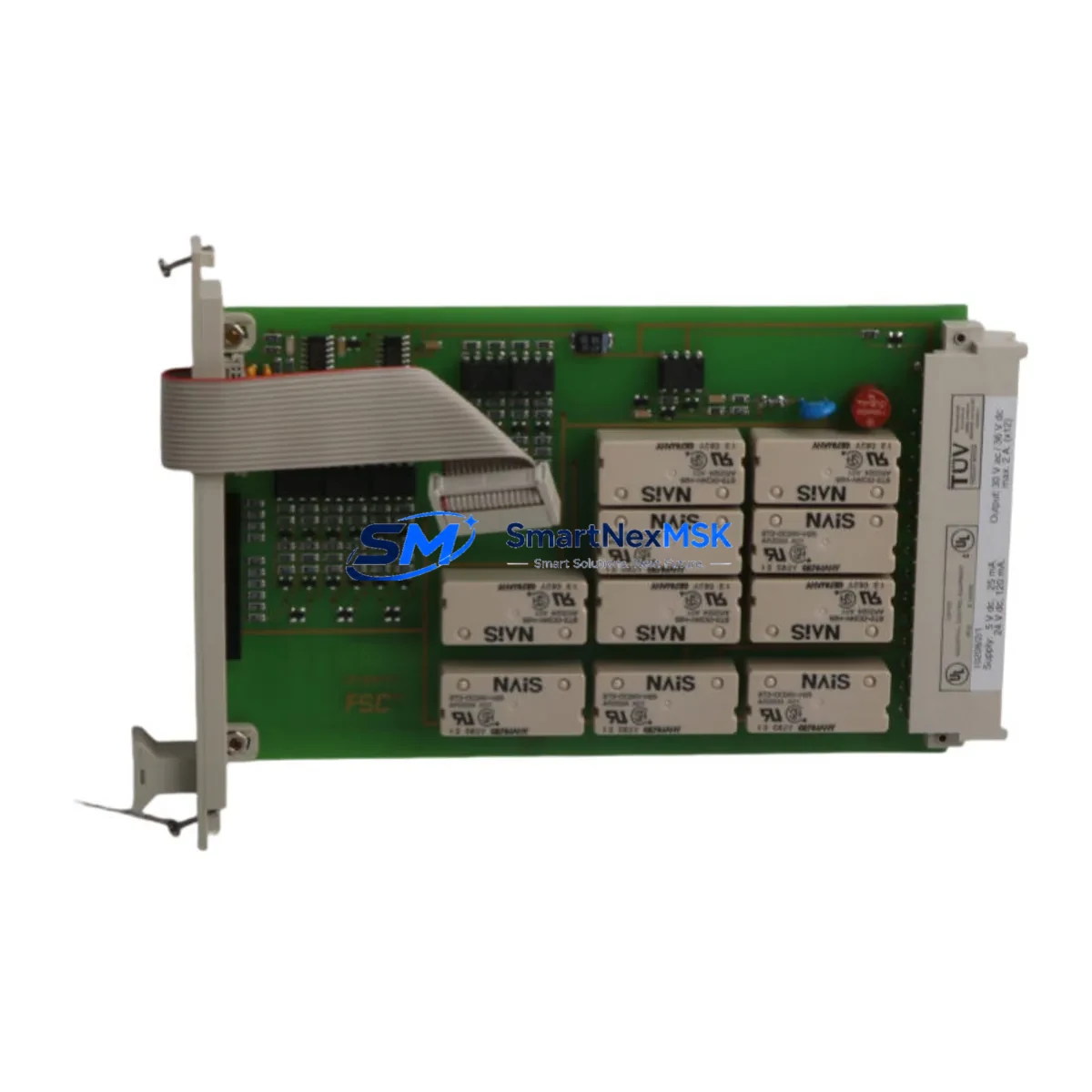
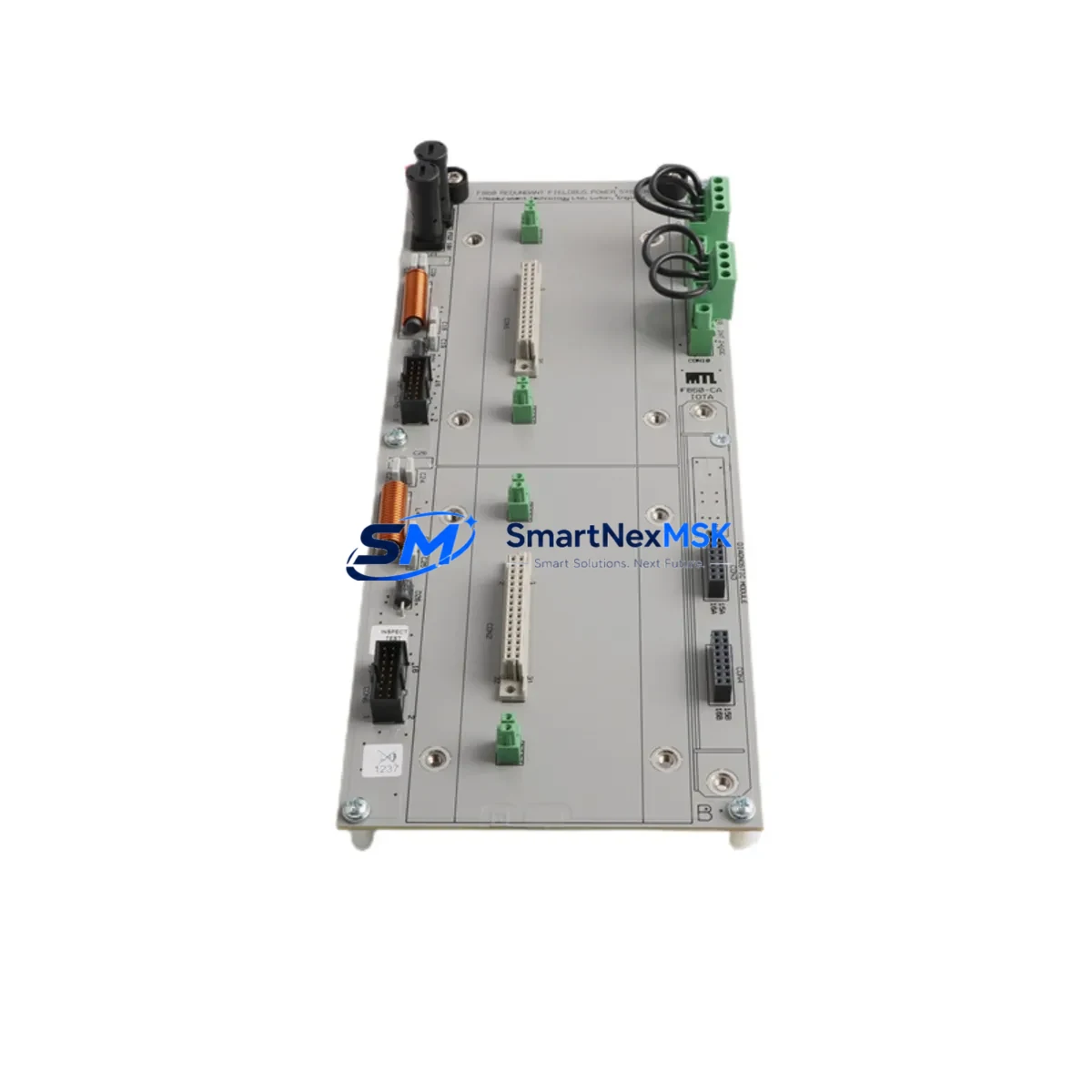
Honeywell F860-CA Maintenance-Ready Spare for FF-H1 Automation: Spare Replacement & Industrial Downtime Risk Control
The Honeywell F860-CA is an original FF-H1 Foundation Fieldbus Power Conditioner engineered for continuous-duty industrial automation environments. Designed for integration within Honeywell Experion PKS, TDC 3000, and Plantscape DCS platforms, the F860-CA conditions and delivers stable 24 VDC power to FF-H1 fieldbus segments while simultaneously supporting the digital communication signal on the same two-wire bus. When this component degrades or fails, the entire H1 segment loses both power and communication simultaneously — triggering immediate process disruption, instrument dropout, and unplanned production downtime.
For maintenance engineers managing aging DCS infrastructure, stocking the F860-CA as a certified ready spare is a fundamental risk-reduction strategy. Its compact DIN-rail form factor, wide input voltage tolerance, built-in short-circuit protection, and current-limiting design make it a reliable choice for both greenfield installations and legacy system life extension programs. Procurement engineers sourcing this unit should verify the input voltage specification, the number of supported H1 segments per unit, and the maximum current output per segment to ensure full compatibility with the existing segment load budget before installation.
Spare Maintenance Table
| Parameter | Specification / Detail |
|---|---|
| Part Number | F860-CA |
| Brand | Honeywell |
| Series | FF-H1 Fieldbus Power Conditioner |
| Compatible Systems | Honeywell Experion PKS, TDC 3000, Plantscape, compatible FF-H1 DCS platforms |
| Function | Conditions and supplies DC power to FF-H1 fieldbus segments; supports simultaneous data communication on the same two-wire bus |
| Nominal Input Voltage | 24 VDC (verify against system power supply specification) |
| Output Current per Segment | Up to 500 mA (segment load budget must be verified before replacement) |
| Protection Features | Short-circuit protection, current limiting, reverse polarity protection |
| Mounting | DIN rail (35 mm) |
| Operating Temperature | 0°C to +60°C (verify site ambient conditions) |
| Ingress Protection | IP20 (suitable for control cabinet installation) |
| Approvals | CE, UL (verify current certification status for your region) |
| Origin | United States |
| Warranty | 12 Months — functionally tested and verified before shipment |
| Maintenance Recommendation | Inspect segment current draw quarterly; replace proactively at first sign of voltage sag or communication errors on the H1 segment |
Maintenance Planning for Continuous Operation
When replacing the F860-CA in a live DCS environment, a disciplined maintenance approach requires inspecting the entire H1 segment ecosystem — not just the power conditioner itself. Begin with the 24 VDC segment power supply feeding the F860-CA input. A degraded or undersized power supply will cause the replacement unit to exhibit the same symptoms as the failed original. Measure output voltage under full segment load before declaring the repair complete.
Next, inspect the FF-H1 fieldbus trunk cable and termination resistors. A missing or double-terminated segment is a common root cause of communication errors incorrectly attributed to the power conditioner. Each H1 segment requires exactly two 100-ohm termination resistors — one at each physical end of the trunk. Verify the Honeywell CC-TCNT01 fieldbus terminator or equivalent installed in the junction box or marshalling cabinet is correctly positioned and making solid contact.
Review the Honeywell C300 Controller card for any logged H1 segment faults, communication timeouts, or device offline alarms that preceded the failure. These logs help distinguish a power conditioner fault from a controller-side or field-device-side issue. If the C300 card itself shows elevated error counts, schedule a card-level inspection or swap within the same maintenance window to avoid a repeat callout.
Inspect all field junction boxes on the affected H1 segment. Corroded terminals, water ingress, or loose spurs are frequent contributors to segment instability. While the cabinet is open, check the Honeywell STT850 temperature transmitters and ST 800 series pressure transmitters connected to the segment — verify their device addresses, communication status, and current draw to confirm the segment load budget remains within the F860-CA’s rated output capacity.
For control cabinets running multiple H1 segments, also inspect adjacent F860-CA units on parallel segments for early signs of aging: discoloration, elevated surface temperature, or intermittent segment dropouts. Proactive replacement of units showing early degradation prevents cascading failures during peak production. Additionally, verify that any Honeywell FSC Safety Controller or SIS interfaces sharing the same marshalling cabinet are unaffected by the maintenance activity. Confirm the Experion PKS Station HMI has re-acquired all field devices on the restored segment before returning the loop to automatic control. Document the replacement in the site CMMS with the new unit’s serial number, installation date, and segment load measurement.
Site Replacement Workflow
Step 1 — Pre-replacement verification: Confirm the F860-CA part number against the existing unit’s label and the site BOM. Verify input voltage, segment current draw, and number of connected field devices. Ensure the replacement unit is the correct variant — standard or redundant configuration — for your segment architecture. Cross-reference with the Honeywell Experion PKS engineering documentation to confirm hardware revision compatibility.
Step 2 — Safe isolation: Coordinate with the control room to place the affected H1 segment in manual or bypass mode. De-energize the segment power supply feeding the F860-CA. Follow site LOTO (Lockout/Tagout) procedures before opening the control cabinet. Notify the process operator of the expected outage window.
Step 3 — Physical swap: Remove the failed F860-CA from the DIN rail. Install the replacement unit, reconnect the 24 VDC input wiring and the FF-H1 segment output terminals. Verify terminal torque to manufacturer specification to prevent loose connections that cause intermittent faults post-repair.
Step 4 — Energize and verify: Re-energize the segment power supply. Measure the F860-CA output voltage at the segment terminals. Confirm all field devices on the segment return to online status in the DCS. Check for any residual communication alarms in the Experion PKS event log and clear confirmed false alarms.
Step 5 — Return to service: Return the loop to automatic control. Record the replacement in the site maintenance log. Update the spare parts inventory to trigger reorder of a replacement F860-CA unit, maintaining minimum stock levels for this critical component. This workflow minimizes mean time to repair (MTTR) and ensures the H1 segment is restored to full operational status with verified compatibility.
Spare Parts Support FAQ
Q1: Is the F860-CA a direct drop-in replacement for older Honeywell FF-H1 power conditioner models?
The F860-CA is designed as a maintenance replacement for Honeywell FF-H1 fieldbus power conditioner applications within Experion PKS and compatible DCS architectures. Before installation, verify the input voltage range, output current rating, and DIN rail mounting dimensions against the unit being replaced. For legacy TDC 3000 or Plantscape installations, confirm hardware revision compatibility with your site’s DCS version.
Q2: What pre-shipment testing is performed on the F860-CA?
Each F860-CA unit undergoes functional testing before shipment, including input voltage regulation, output current delivery, short-circuit protection response, and communication signal pass-through verification. Units ship with a 12-month warranty covering manufacturing defects and functional failures under normal operating conditions. Test records are available upon request for critical site documentation requirements.
Q3: How should the F860-CA be stored as a long-term spare?
Store the unit in its original anti-static packaging in a dry, temperature-controlled environment (recommended: 10°C to 40°C, relative humidity below 75% non-condensing). Avoid storage near strong electromagnetic fields or corrosive atmospheres. Inspect stored units annually for physical damage or component degradation. For sites with extended spare holding periods exceeding three years, perform a bench power-on test before deployment to confirm unit integrity.
Q4: What is the recommended spare parts strategy for FF-H1 segments in a continuous process plant?
For plants operating 24/7 with critical FF-H1 segments, maintain a minimum of one F860-CA spare per four active segments, with a maximum replenishment lead time of 48 hours. For remote or offshore sites, increase the on-site buffer to two units per segment group. Pair the F860-CA spare with fieldbus termination resistors, segment trunk cable connectors, and a spare 24 VDC segment power supply to enable complete segment restoration from a single spare kit without waiting for multiple deliveries.
© 2026 SMARTNEXMSK. All rights reserved.
Original Source: https://smartnexmsk.com
Contact: [email protected] | +86 18259474341