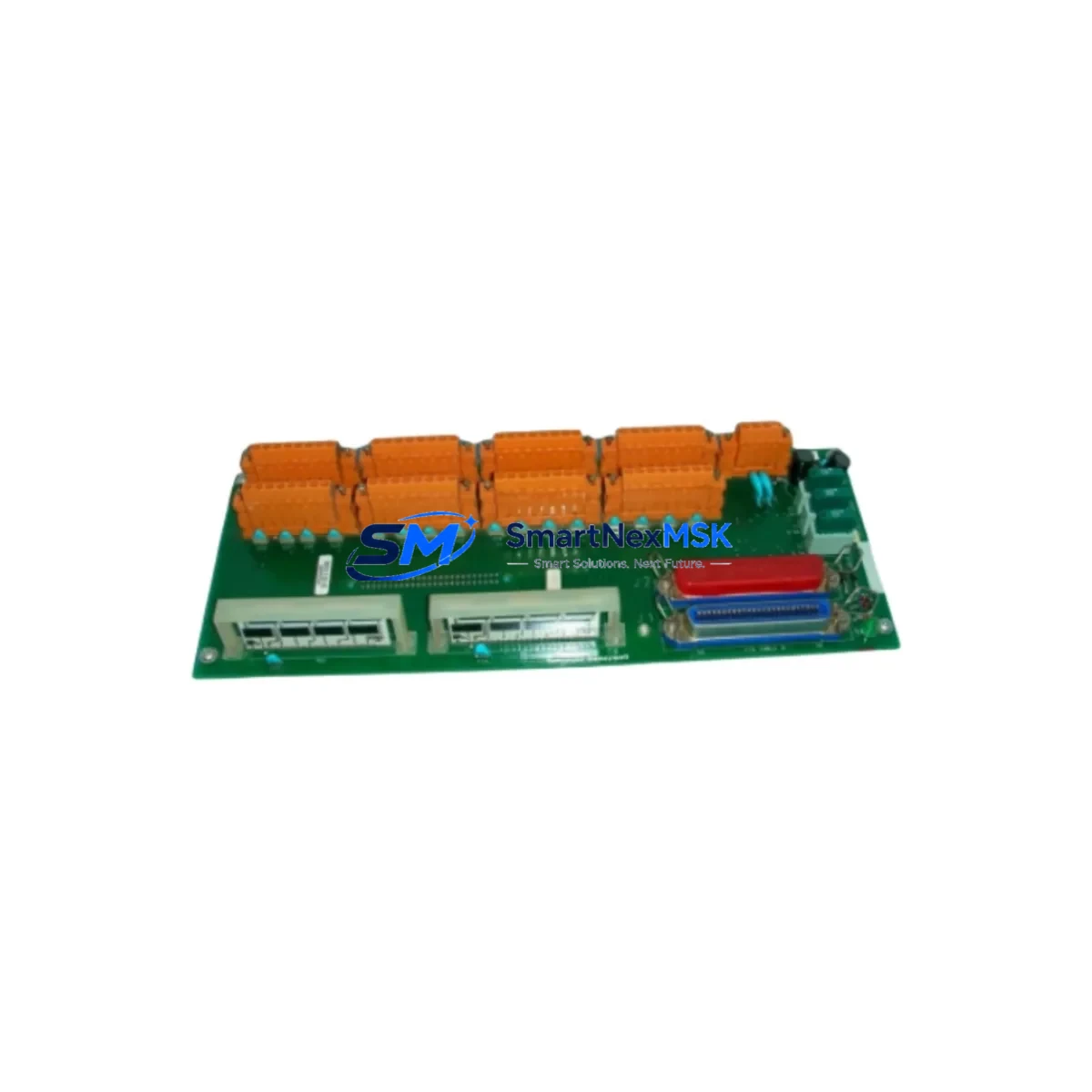
Honeywell MU-TAOY22 Retrofit-Ready Analog Output for TPS Control Systems
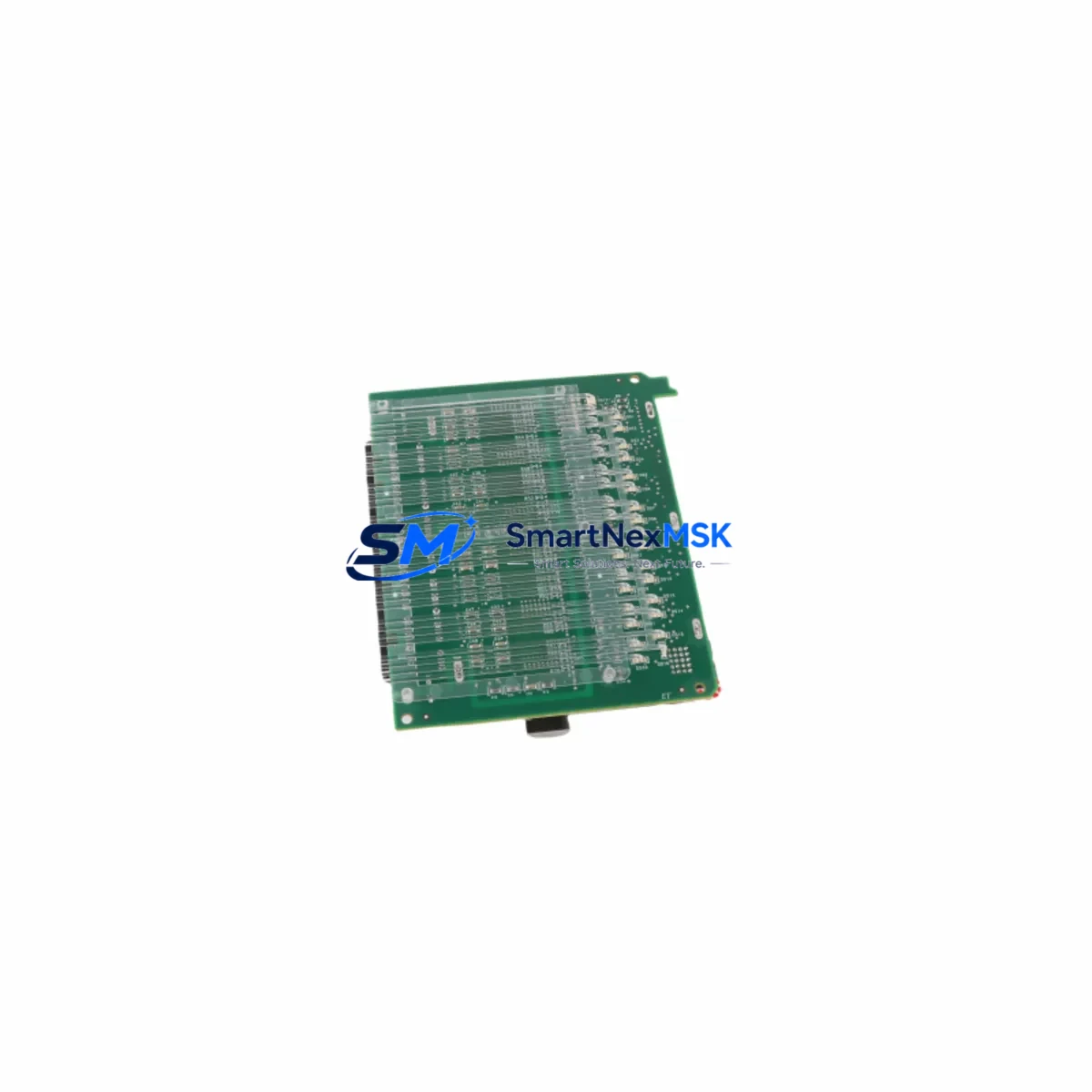
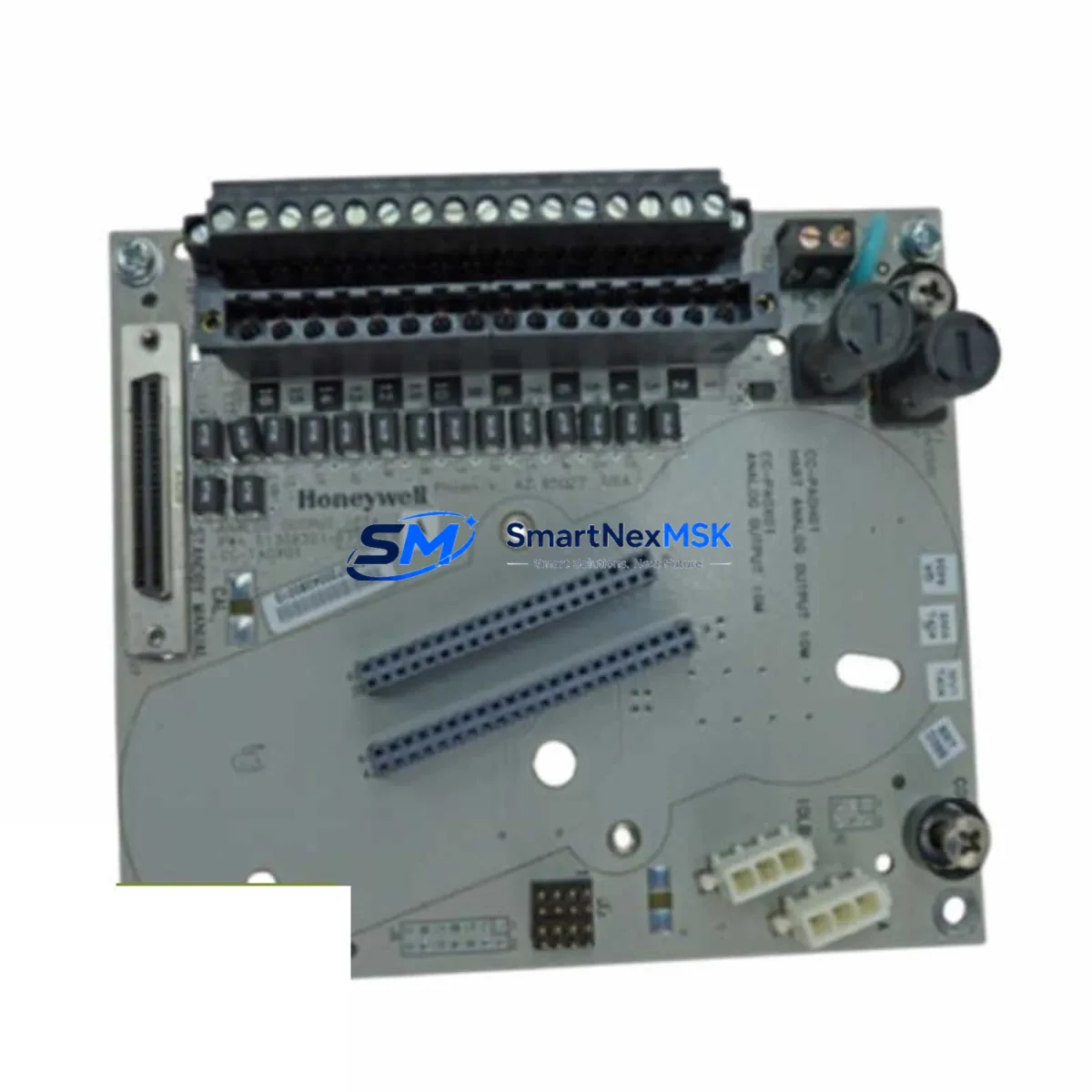
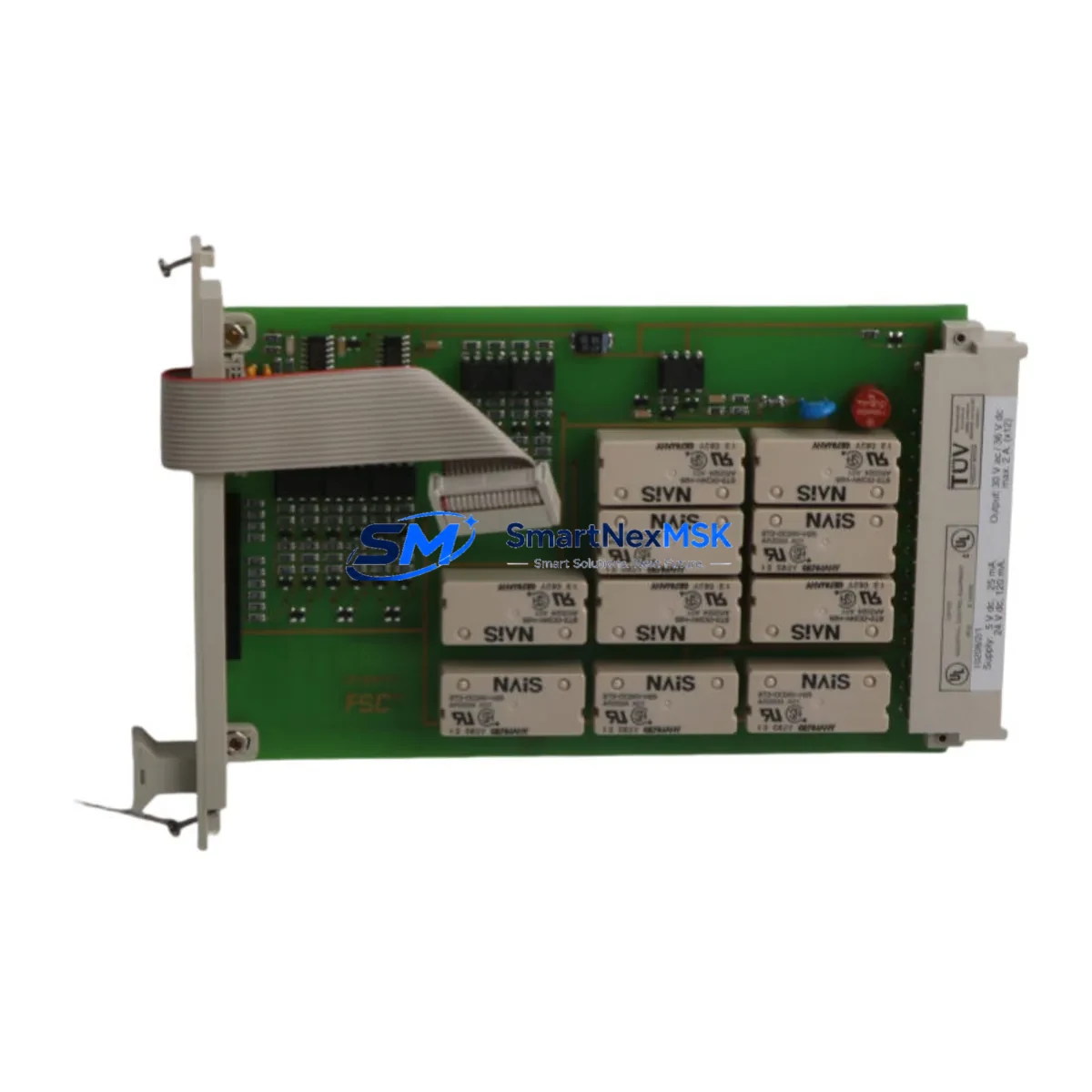
The Honeywell MU-TAOY22 is a 4-channel analog output module designed for the Honeywell TPS (Total Plant Solution) distributed control system platform. As legacy TPS installations approach end-of-support milestones, the MU-TAOY22 remains one of the most actively sourced replacement modules for plants executing phased modernization programs, emergency spare replenishment, and control cabinet upgrades without full DCS migration. SMARTNEXMSK maintains verified stock of the MU-TAOY22 with full functional testing, 12-month warranty coverage, and same-week dispatch capability to minimize unplanned downtime exposure.
Each MU-TAOY22 unit shipped by SMARTNEXMSK undergoes bench-level power-on verification and signal loop testing across all four output channels prior to packaging. Output range is confirmed at 4–20 mA per channel, consistent with the original Honeywell factory specification. Units are supplied with protective packaging suitable for international freight and are accompanied by a test report on request.
Upgrade Compatibility Table
| Parameter | MU-TAOY22 Specification | Retrofit Notes |
|---|---|---|
| Output Channels | 4 × Analog Output (4–20 mA) | Direct channel-for-channel replacement with legacy TPS AO modules |
| Backplane Interface | TPS I/O Link Bus | Compatible with standard TPS I/O carrier and FTA wiring termination assemblies |
| Field Termination | Via FTA (Field Termination Assembly) | Existing FTA wiring retained; no re-termination required in most installations |
| Module Address | Configured via UCN/IOP address assignment | Address must match original module slot assignment in the CL controller database |
| Communication Protocol | Honeywell UCN (Universal Control Network) | No protocol migration required; UCN topology preserved |
| Power Requirement | Supplied via TPS I/O Power Bus | Verify power supply module (e.g., MU-PSIM11 or equivalent) capacity before hot-swap |
| Installation Format | TPS I/O Carrier Slot | Fits standard TPS I/O carrier; confirm carrier model compatibility |
| Replacement Scope | Drop-in for discontinued TPS AO variants | Covers MU-TAOY11 and similar legacy analog output modules in same carrier family |
| Commissioning | CL (Control Language) program reload not required for identical replacement | Verify IOP status in Honeywell Station after insertion; perform loop calibration check |
| Warranty | 12-Month Warranty — covers functional failure under normal operating conditions | |
Retrofit Planning for Existing Automation Systems
Replacing the MU-TAOY22 within an operating TPS system requires a structured pre-outage review to avoid configuration drift and signal interruption. Before scheduling the swap window, engineers should pull the current IOP (Input/Output Processor) status from the Honeywell Universal Station or GUS (Global User Station) console and document the module’s slot address, UCN node number, and associated CL block references. This baseline record is essential for post-swap verification and for confirming that the replacement module is recognized at the correct address without requiring a full database download.
Field wiring connected to the FTA (Field Termination Assembly) associated with this module should be reviewed against the original loop drawings. In most TPS installations, the FTA remains in place during module replacement, which eliminates the need to disturb field cable terminations. However, if the FTA itself is aged or shows signs of terminal corrosion, concurrent replacement with a compatible FTA unit is advisable to prevent intermittent signal faults after the new module is commissioned.
Power budget verification is a critical pre-replacement step. The TPS I/O power bus, typically supplied by a dedicated power supply module such as the MU-PSIM11, must have sufficient headroom to support the replacement MU-TAOY22 without triggering an overload condition on the carrier. In cabinets where multiple I/O modules share a common power rail, the aggregate load should be recalculated if any modules have been added since the original system commissioning.
For plants running mixed I/O configurations — combining analog output modules like the MU-TAOY22 with analog input modules such as the MU-TAIX12 or MU-TAIX22, digital output modules like the MU-TDOY22, and digital input modules such as the MU-TDIX12 — the carrier and backplane slot assignments must be reviewed to confirm that the replacement module is inserted into the correct physical position. Slot mismatches in TPS systems result in address conflicts that require manual resolution at the UCN level.
Communication continuity across the UCN network should be monitored during the replacement window. The UCN coaxial or fiber trunk connecting the IOP to the Honeywell HPM (High-Performance Process Manager) or PM (Process Manager) controller should remain active throughout the swap. If the plant uses a redundant UCN topology, the secondary path should be confirmed active before the primary IOP is taken offline. After module insertion, the IOP status should be verified from the operator console, and each of the four analog output channels should be exercised through a calibrated loop tester to confirm 4–20 mA signal integrity before returning the loop to automatic control.
Plants that have partially migrated from TPS to the Honeywell Experion PKS platform may be operating in a hybrid configuration where legacy TPS I/O modules communicate through an EPLCG (Experion Process Controller with Legacy Gateway) or similar bridge. In these environments, the MU-TAOY22 replacement procedure remains the same at the hardware level, but the Experion control builder database should be checked to confirm that the associated control module references are correctly mapped to the physical I/O point after the swap.
For sites that also need to address aging communication infrastructure, concurrent replacement of the MU-NIIM02 network interface module or the MU-CBAM02 communication bus adapter may be appropriate if these components are showing fault indicators. Addressing multiple aging components within the same maintenance window reduces total system downtime compared to sequential single-module replacements.
Downtime Control During System Migration
Minimizing control system downtime during a TPS module replacement requires advance preparation, a clearly defined swap sequence, and a tested rollback plan. The MU-TAOY22 supports hot-swap insertion in most TPS carrier configurations, but the specific carrier model and firmware revision determine whether the IOP will automatically re-initialize upon module insertion or require a manual reset command from the operator console. This behavior should be confirmed in the plant’s TPS system documentation before the maintenance window begins.
The recommended approach is to place the affected control loops in manual mode at the operator station before removing the faulty module. This preserves the last output value on the field device — typically a control valve or variable-speed drive — and prevents an uncontrolled process excursion during the module swap interval. The duration of the swap itself, from module extraction to IOP recognition of the replacement unit, is typically under five minutes in a well-prepared environment, but the loop should remain in manual until all four output channels have been verified through loop testing.
Original CL program logic does not need to be reloaded for a like-for-like MU-TAOY22 replacement. The control strategy, PID tuning parameters, alarm setpoints, and HMI faceplate assignments stored in the HPM or PM controller are unaffected by the I/O module swap. HMI graphics on the GUS or Honeywell Station that reference the affected loops will continue to display correctly once the IOP returns to service. This is a significant advantage of module-level replacement over controller-level migration, as it eliminates the need for a full program download, database synchronization, or HMI screen reconfiguration.
For plants where a spare MU-TAOY22 is not immediately available on-site, SMARTNEXMSK offers priority dispatch with same-week shipping to most destinations. Maintaining a minimum of one spare MU-TAOY22 per active TPS cabinet is a standard recommendation for plants with no planned migration to a modern DCS platform within the next 24 months. This inventory posture eliminates the lead-time risk associated with sourcing discontinued modules from the open market under emergency conditions.
Retrofit Support FAQ
Q1: Is the MU-TAOY22 a direct drop-in replacement for other TPS analog output modules?
The MU-TAOY22 is a direct replacement for modules in the same TPS analog output family, including the MU-TAOY11. Both modules occupy the same carrier slot format and use the same FTA wiring interface. The replacement requires no field re-wiring in standard installations. Address assignment and IOP initialization should be verified at the UCN level after insertion to confirm correct system recognition.
Q2: What commissioning steps are required after installing the MU-TAOY22?
After physical installation, confirm IOP status from the operator console and verify that the module address matches the original slot assignment. Perform a 4–20 mA loop check on all four output channels using a calibrated loop tester. Return each loop from manual to automatic control only after signal integrity is confirmed. No CL program reload is required for a like-for-like replacement.
Q3: Does the MU-TAOY22 work in hybrid TPS/Experion PKS environments?
Yes. In hybrid environments where TPS I/O is bridged to Experion PKS through a legacy gateway, the MU-TAOY22 replacement procedure is identical at the hardware level. After the swap, verify that the Experion control builder database correctly maps the I/O point to the replacement module. No changes to the Experion control strategy are required for a like-for-like module replacement.
Q4: What warranty coverage is provided with the MU-TAOY22?
All MU-TAOY22 units supplied by SMARTNEXMSK carry a 12-month warranty covering functional failure under normal operating conditions. Each unit is tested prior to dispatch. Warranty claims are processed directly through SMARTNEXMSK with replacement dispatch prioritized to minimize plant downtime. Contact [email protected] for warranty registration and claim procedures.
© 2026 SMARTNEXMSK. All rights reserved.
Original Source: https://smartnexmsk.com
Contact: [email protected] | +86 18259474341