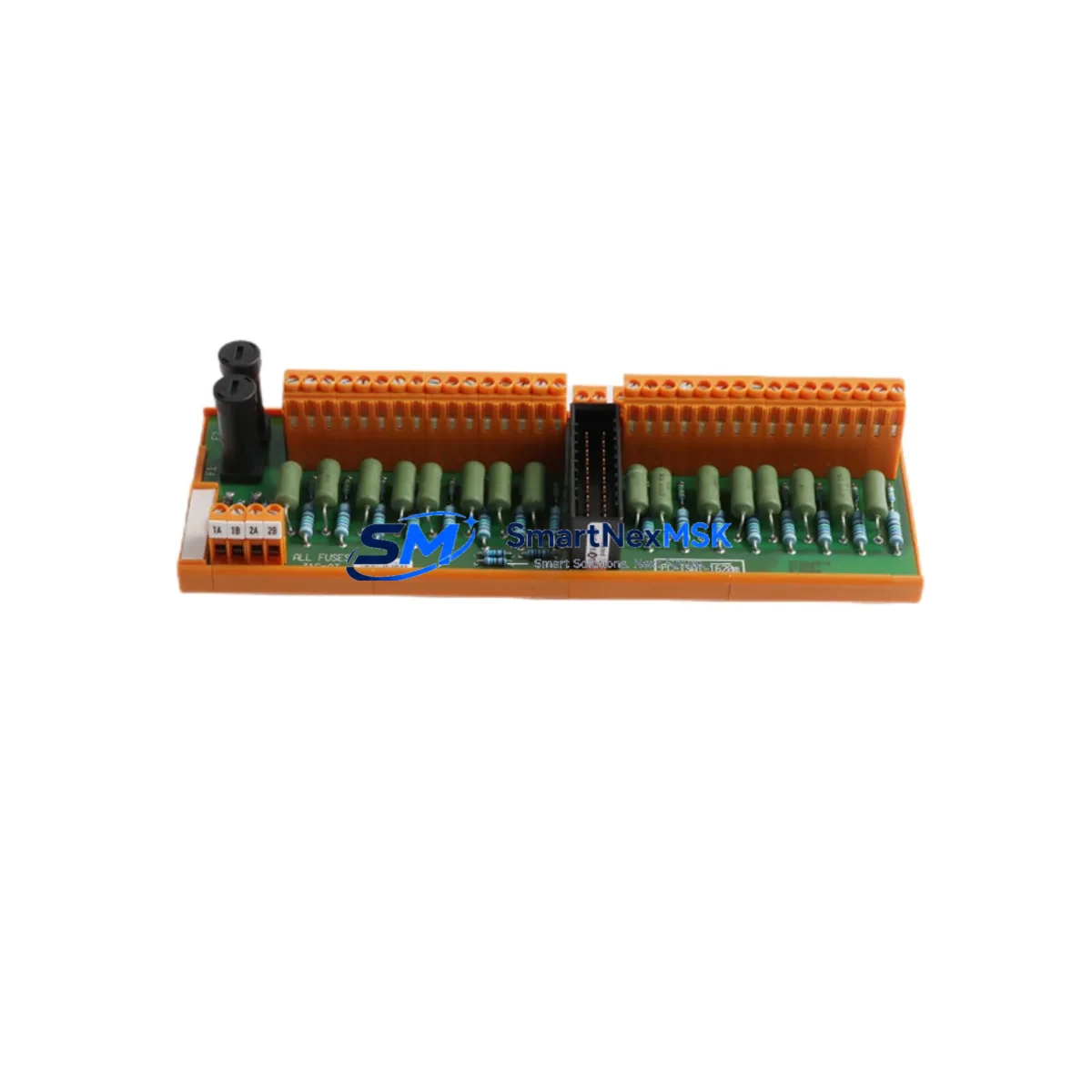
Honeywell TSAI-1620M Maintenance-Ready Spare for TPS DCS Automation
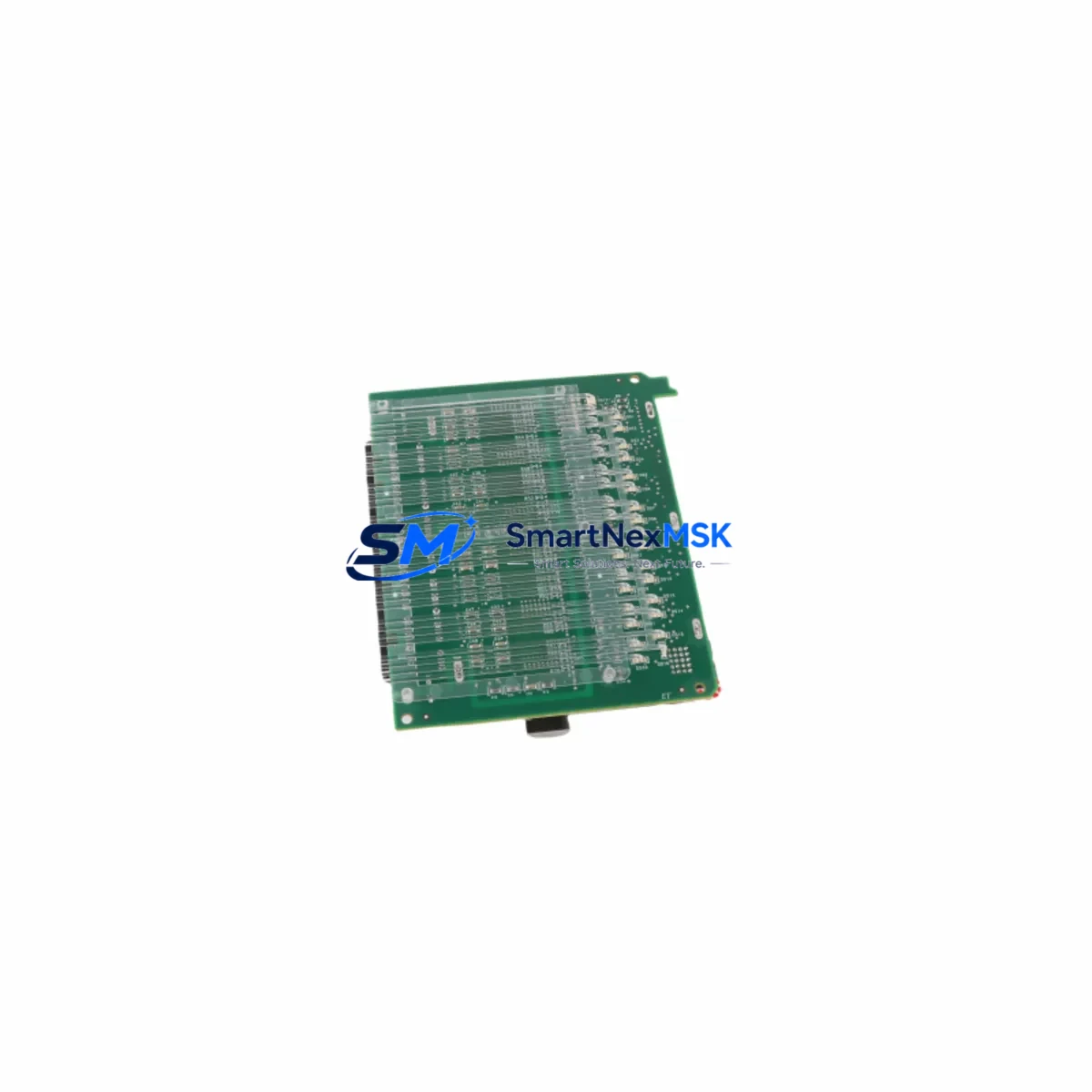
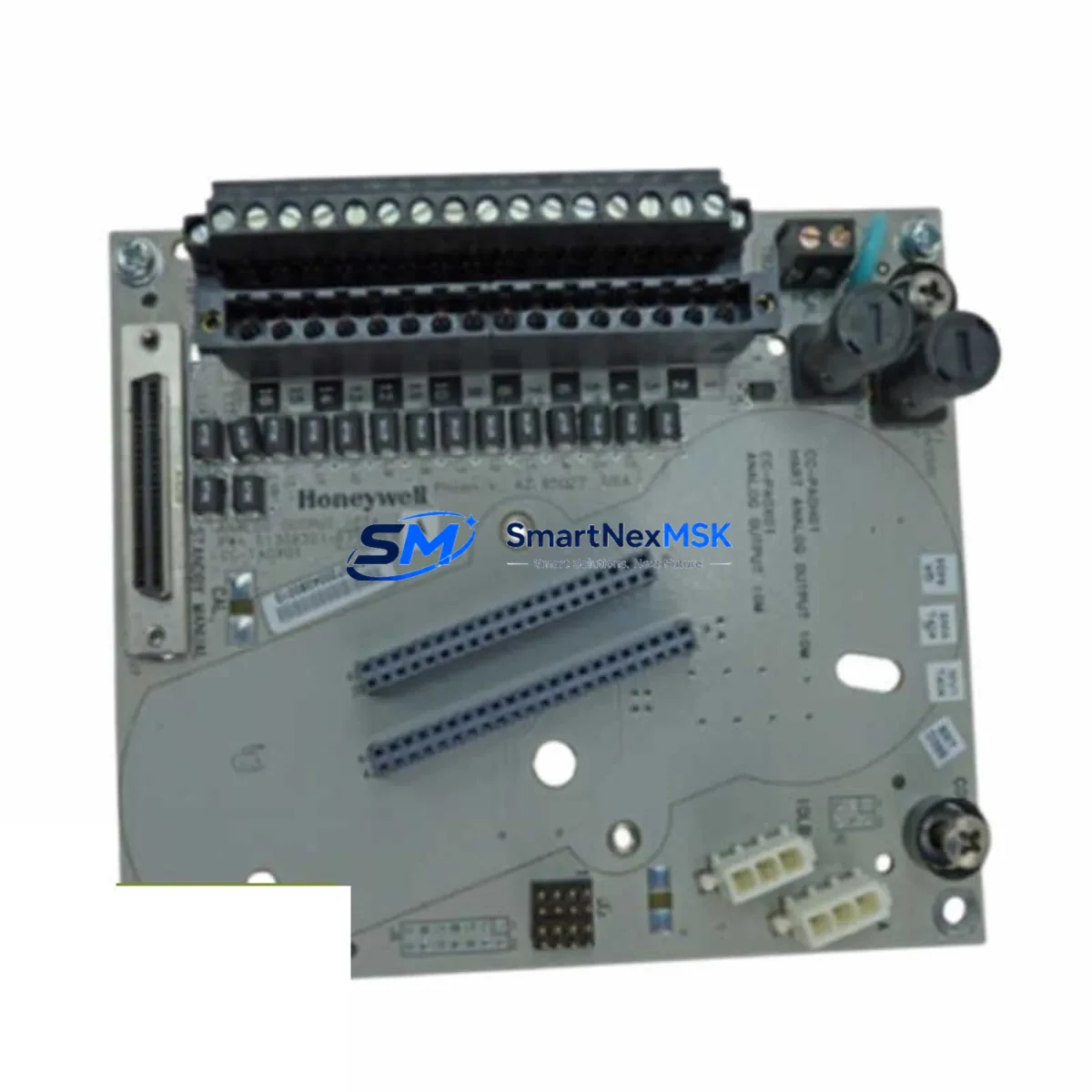
The Honeywell TSAI-1620M (also referenced as FC-TSAI-1620M) is a 16-channel analog input module designed for the TotalPlant Solution (TPS) Distributed Control System platform. As a critical field interface component, it handles 4–20 mA and voltage signal inputs from transmitters, sensors, and field instruments across process industries including refining, petrochemical, power generation, and pulp and paper. Maintaining a verified spare of the TSAI-1620M in your site inventory is one of the most effective strategies for controlling unplanned downtime in aging TPS installations.
For maintenance engineers managing legacy TPS cabinets, the TSAI-1620M occupies a standard I/O slot in the Universal Control Network (UCN) or Local Control Network (LCN) I/O subsystem. When a channel fault, module failure, or calibration drift is detected during routine inspection or process alarm response, a pre-tested replacement module allows the maintenance team to restore full analog input capacity within a single shift — without waiting weeks for procurement. Each unit shipped by SMARTNEXMSK undergoes functional verification and is backed by a 12-month warranty, giving procurement engineers confidence in both quality and supply continuity.
Sourcing the TSAI-1620M as a planned spare also supports broader maintenance strategies. During scheduled turnarounds, it is common practice to replace aging analog input modules proactively, particularly those showing intermittent channel faults or elevated noise floors on HART-enabled loops. The FC-TSAI-1620M variant designation is used interchangeably in Honeywell TPS documentation and refers to the same hardware assembly, ensuring full backward compatibility with existing I/O termination assemblies and field wiring.
Spare Maintenance Table
| Parameter | Specification / Detail |
|---|---|
| SKU / Part Number | TSAI-1620M / FC-TSAI-1620M |
| Module Type | 16-Channel Analog Input Module |
| Platform Compatibility | Honeywell TPS (TotalPlant Solution) DCS |
| Signal Input Range | 4–20 mA, 1–5 VDC (configurable per channel) |
| Channel Count | 16 single-ended or 8 differential (configuration-dependent) |
| HART Support | Yes — HART pass-through on supported channel configurations |
| Installation | Standard TPS I/O card slot; hot-swap capable with proper procedure |
| Power Consumption | Supplied via backplane; verify IOP/FTA power budget before installation |
| Operating Temperature | 0°C to 60°C (32°F to 140°F) |
| Termination | Via Field Termination Assembly (FTA); wiring remains on FTA during swap |
| Replacement Compatibility | Direct replacement for TSAI-1620M and FC-TSAI-1620M in TPS cabinets |
| Condition | Original / Refurbished — tested and verified before shipment |
| Warranty | 12 Months — covers functional defects under normal operating conditions |
| Lead Time | In stock — ships within 3–5 business days |
Maintenance Planning for Continuous Operation
Effective maintenance planning for a TPS DCS installation requires a systems-level view of the I/O subsystem. When the TSAI-1620M is identified as a replacement candidate — whether due to channel failure, calibration error, or end-of-life planning — maintenance engineers should simultaneously inspect several adjacent components to prevent secondary failures after the module swap.
The Field Termination Assembly (FTA) paired with the TSAI-1620M is the first item to verify. The FTA carries all field wiring and remains in place during a hot-swap; however, terminal blocks, screw connections, and signal conditioning components on the FTA should be inspected for corrosion, loose terminations, or moisture ingress. If the FTA shows signs of degradation, replacing it alongside the I/O module eliminates a common source of recurring faults.
The IOP (Input/Output Processor) card associated with the TSAI-1620M’s I/O Link segment should also be checked. A failing IOP can cause multiple modules to report communication errors simultaneously, which may be misdiagnosed as individual module failures. Verifying IOP firmware version and communication health before and after the module swap is standard practice in TPS maintenance procedures.
Power distribution within the TPS cabinet deserves attention as well. The 24 VDC field power supply feeding the analog input loops — often a dedicated DIN-rail power supply — should be load-tested to confirm it can support the full complement of 4–20 mA transmitters connected to the TSAI-1620M’s 16 channels. A marginal power supply can cause intermittent loop errors that mimic module faults.
Signal isolators installed between field transmitters and the TSAI-1620M input channels are another maintenance checkpoint. In older TPS installations, DIN-rail signal isolators or barriers may have drifted out of calibration or developed leakage paths that introduce offset errors on individual channels. Replacing or recalibrating these isolators during the same maintenance window avoids repeat call-outs.
For sites using HART communication over the analog loops, the HART multiplexer or HART interface module connected to the I/O segment should be verified for firmware compatibility with the replacement TSAI-1620M. Some HART multiplexer models require configuration updates when a new module is installed to correctly map device descriptors.
The TPS operator station or Honeywell Experion PKS HMI display associated with the affected I/O group should be reviewed after the swap. Confirm that all 16 channel tags are reading correctly, alarm limits are intact, and no orphaned bad-value alarms remain active. If the site has migrated partially to Experion PKS while retaining legacy TPS I/O, the C300 controller or ACE node managing the I/O bridge should also be checked for communication health.
Finally, the I/O Link cable connecting the IOP to the I/O carrier or backplane is a low-cost but high-impact component. Damaged or intermittently connected I/O Link cables are a known cause of module communication faults in aging TPS cabinets. Keeping a spare I/O Link cable alongside the TSAI-1620M spare is a low-cost insurance policy against extended downtime.
Site Replacement Workflow
Replacing the TSAI-1620M on a live TPS system requires a structured approach to minimize process disruption. The following workflow reflects best practices for sites where the affected I/O module cannot be taken offline without impacting critical process loops.
Step 1 — Pre-Replacement Verification: Confirm the replacement TSAI-1620M or FC-TSAI-1620M has the same hardware revision and firmware baseline as the installed unit. Review the TPS system database to identify which process tags are mapped to the failing module and notify the control room operator of the planned swap.
Step 2 — Loop Status Check: Place all 16 affected channels in manual mode or suppress alarms at the operator station before beginning physical work. Document current process values for each channel to enable post-swap verification.
Step 3 — Module Extraction: With the TPS cabinet door open and appropriate ESD precautions in place, extract the faulty TSAI-1620M from its slot. The FTA wiring remains connected throughout this step — no field wiring disconnection is required for a standard hot-swap.
Step 4 — Module Insertion and Initialization: Insert the replacement module into the same slot. The TPS IOP will automatically detect the new module and begin initialization. Monitor the module status LED sequence to confirm successful communication establishment — typically within 60–90 seconds.
Step 5 — Channel Verification: Return each channel from manual to automatic control one at a time, confirming that process values match pre-swap readings within expected tolerances. Verify HART device communication on HART-enabled channels if applicable.
Step 6 — Documentation: Record the replacement in the site maintenance management system (CMMS), including the module serial number, installation date, and post-swap verification results. Update the spare parts inventory to trigger reorder of a replacement spare.
Spare Parts Support FAQ
Q: Is the TSAI-1620M the same as the FC-TSAI-1620M?
A: Yes. Both designations refer to the same 16-channel analog input module for the Honeywell TPS DCS platform. The FC- prefix appears in some Honeywell documentation and procurement systems but does not indicate a different hardware revision. Both part numbers are fully interchangeable in TPS I/O cabinets.
Q: How do I verify compatibility before installation?
A: Confirm the hardware revision of the installed module matches the replacement unit. Check the TPS system configuration database to ensure the I/O slot assignment and channel configuration are compatible. If your site has migrated to Experion PKS with legacy TPS I/O, verify that the C300 or ACE node firmware supports the module revision being installed.
Q: What testing is performed before shipment?
A: Each TSAI-1620M unit is functionally tested prior to shipment. Testing includes power-on verification, communication initialization, and channel-level signal response checks. A test report is available upon request. All units are shipped with ESD-protective packaging to prevent damage in transit.
Q: What does the 12-month warranty cover?
A: The 12-month warranty covers functional defects arising under normal operating conditions, including communication failures, channel faults, and power-on failures not caused by incorrect installation, overvoltage, or physical damage. Warranty claims are supported by SMARTNEXMSK’s technical team, with replacement or repair options available depending on fault diagnosis.
© 2026 SMARTNEXMSK. All rights reserved.
Original Source: https://smartnexmsk.com
Contact: [email protected] | +86 18259474341