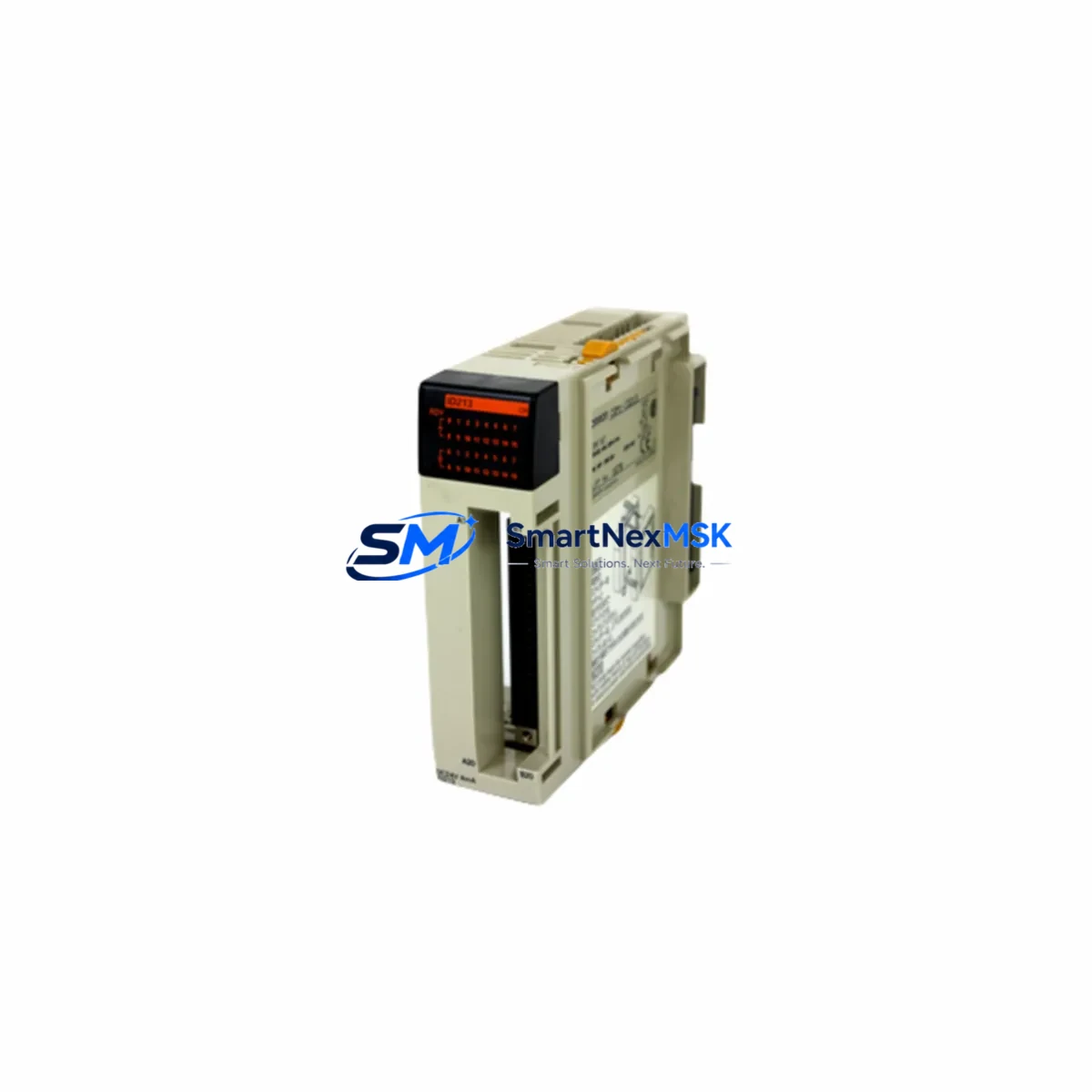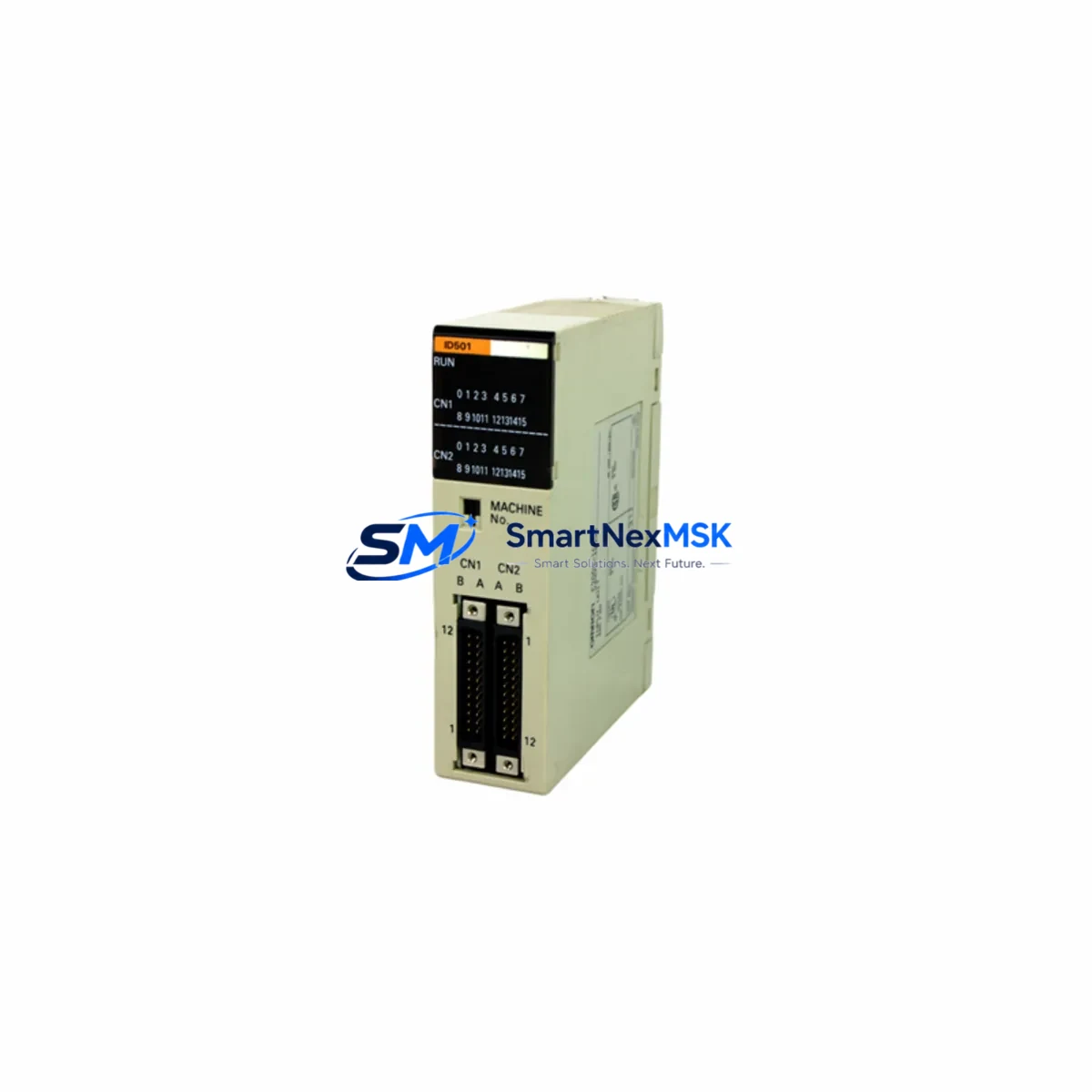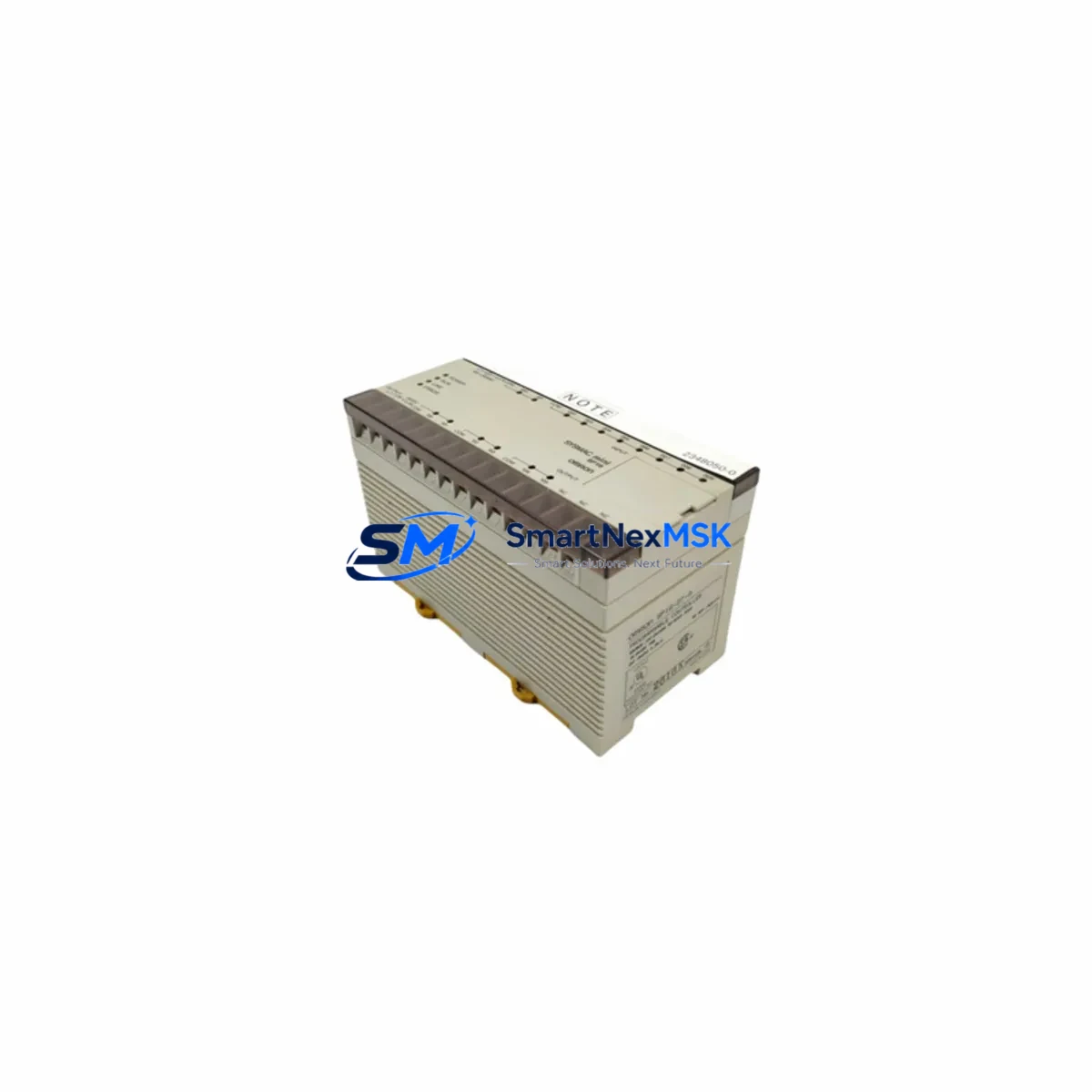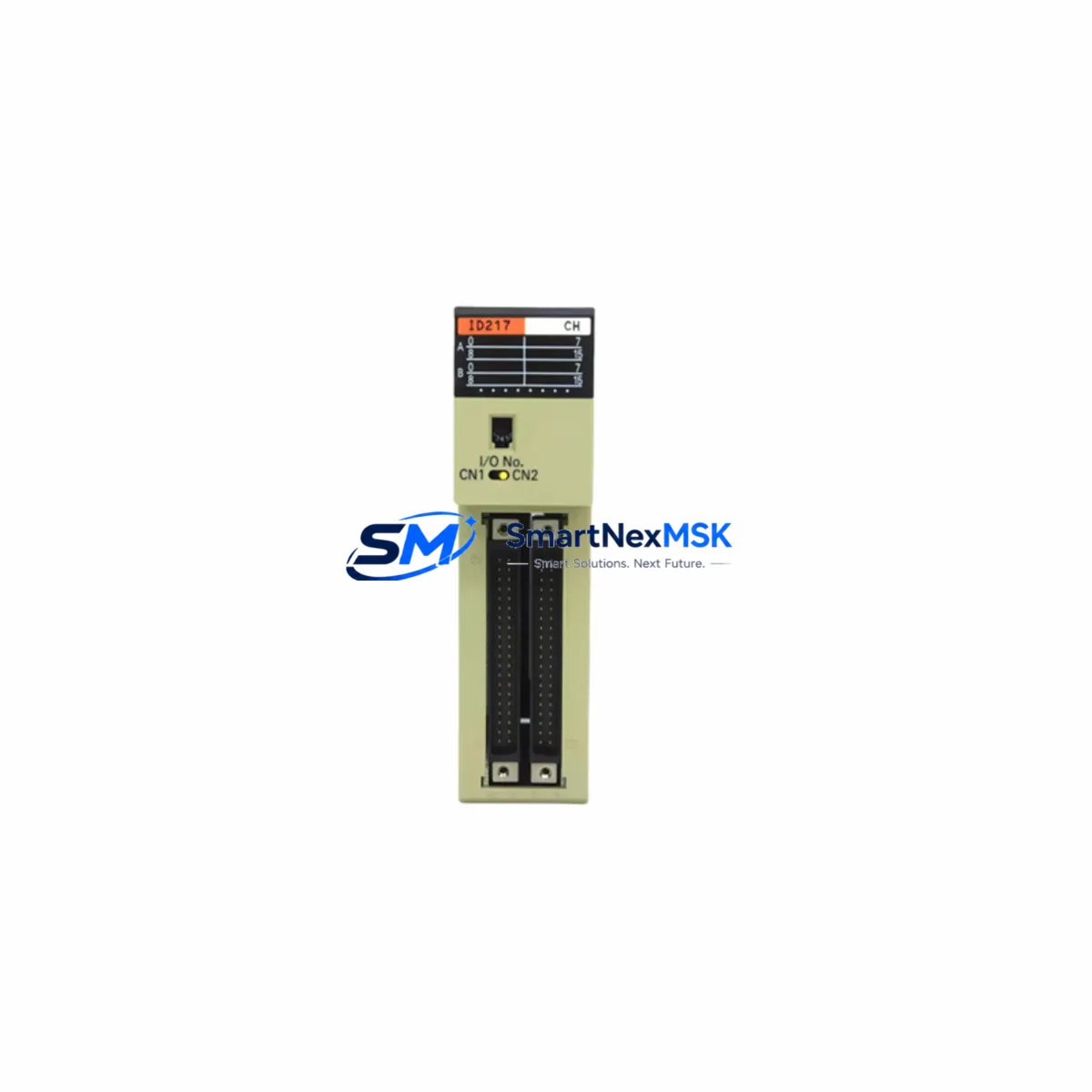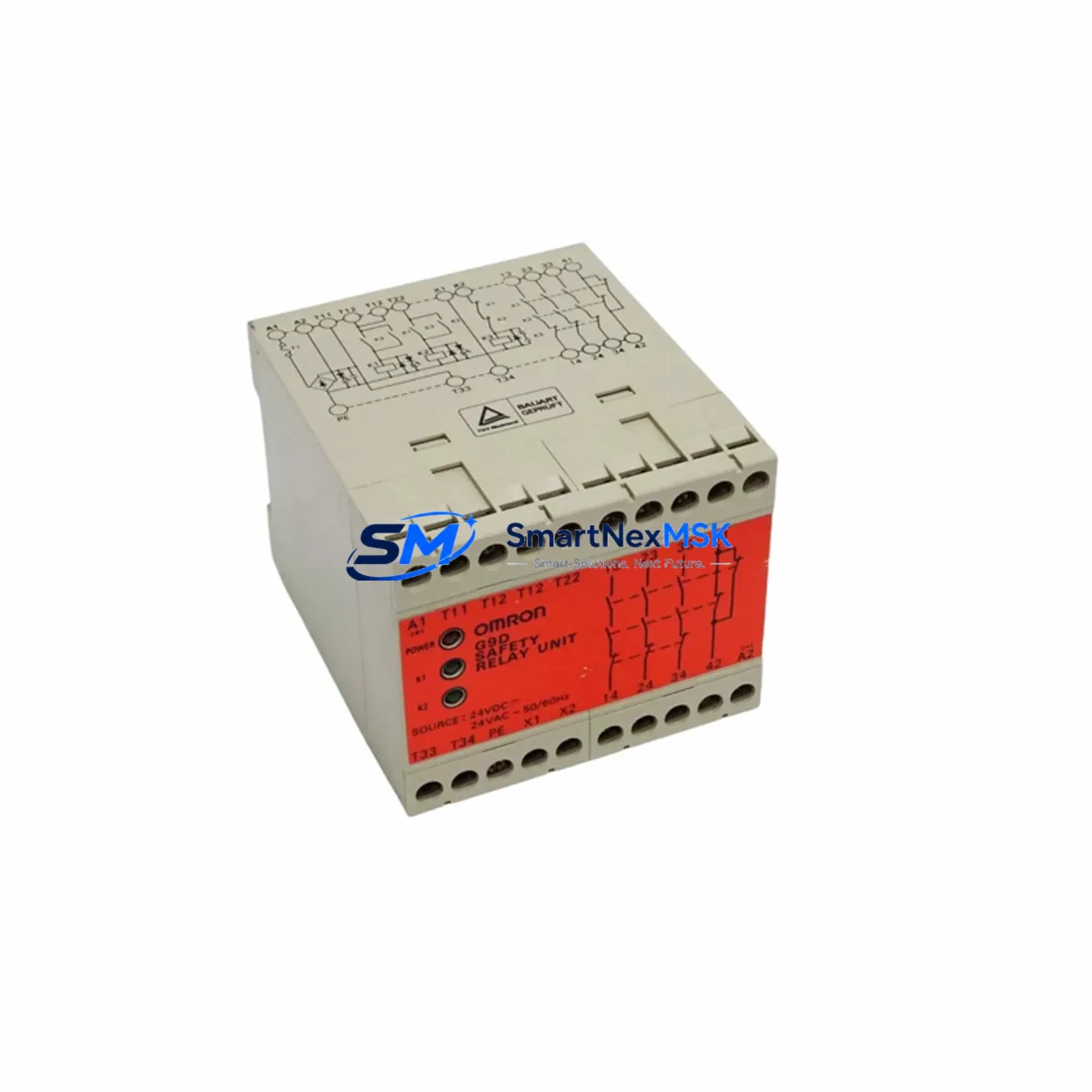
OMRON G9D-301 Retrofit-Ready Safety Relay for G9D Series Control Systems
The OMRON G9D-301 is a dual-channel safety relay module engineered for seamless integration into existing G9D Series safety control architectures. As industrial facilities face increasing pressure to modernize aging safety circuits without full system overhauls, the G9D-301 delivers a proven, drop-in compatible solution for E-stop loop replacement, light curtain interface upgrades, and two-hand control circuit modernization. Whether you are retiring a legacy G9D-200 or G9D-301B installation, migrating from a standalone relay panel to a structured safety bus, or simply restoring a discontinued spare, the G9D-301 provides the electrical and functional continuity your production line demands.
Designed to IEC 61508 SIL 2 and EN ISO 13849-1 PLd standards, the G9D-301 supports 24 VDC coil operation and provides two safety-rated N/O output contacts with a monitored feedback loop input. Its compact DIN-rail footprint is fully compatible with standard G9D Series mounting bases, eliminating the need for panel re-drilling or terminal block relocation during retrofit. Engineers replacing units in Siemens S7-300 or S7-400 safety-integrated cabinets, Allen-Bradley GuardLogix panels, or Mitsubishi MELSEC iQ-R safety racks will find the G9D-301’s terminal layout and wiring conventions consistent with established industrial safety wiring practices.
Upgrade Compatibility Table
| Parameter | G9D-301 (This Unit) | Retrofit Notes |
|---|---|---|
| Supply Voltage | 24 VDC ±10% | Verify existing PSU capacity; OMRON S8VK-series or equivalent 24 VDC DIN-rail power supply recommended |
| Safety Output Contacts | 2 × N/O, 6 A / 250 VAC | Compatible with existing G9D-200 and G9D-301B wiring; no terminal re-mapping required |
| Input Channels | Dual-channel, monitored | Supports E-stop buttons, light curtains (OMRON F3SG-R series), and two-hand control devices |
| Feedback / EDM Loop | Yes (monitored) | Connect downstream contactor auxiliary contacts to Y1/Y2 terminals; verify loop continuity before energizing |
| Mounting | 35 mm DIN rail | Direct replacement for G9D Series base; no panel modification required |
| Communication | Standalone (hardwired) | For DeviceNet or EtherNet/IP safety bus integration, pair with OMRON NE1A-SCPU01 Safety Network Controller |
| Replacement Compatibility | G9D-200, G9D-301B, G9D-AD2 | Functional drop-in; confirm firmware version on host PLC if using diagnostic feedback |
| Commissioning Requirement | Manual reset, monitored | Perform reset-circuit continuity test and output contact verification per IEC 62061 commissioning checklist |
| Warranty | 12 Months | Covers manufacturing defects; includes pre-shipment functional test report on request |
Retrofit Planning for Existing Automation Systems
Successful G9D-301 retrofits begin with a thorough audit of the existing safety circuit topology. Before removing the legacy module, document all terminal assignments on the existing G9D-200 or G9D-301B, photograph the wiring harness, and record the current PLC program’s safety function block configuration — particularly if the host controller is an OMRON CJ2M-CPU3x or NX1P2 running CX-Programmer or Sysmac Studio safety task logic.
Power budget verification is a critical pre-installation step. The G9D-301 draws approximately 1.5 W at 24 VDC. If the control cabinet houses multiple safety relays alongside an OMRON NX-series I/O terminal block, a CP1W-series expansion unit, or a CJ1W-PD022 power supply module, confirm that the aggregate load does not exceed the PSU’s rated output. In high-density panels, consider upgrading to an OMRON S8VK-G12024 or equivalent 5 A / 24 VDC supply to provide adequate headroom.
Terminal wiring on the G9D-301 follows the standard G9D Series pinout: A1/A2 for coil supply, S11/S12 and S21/S22 for dual-channel input, 13/14 and 23/24 for safety output contacts, and Y1/Y2 for the EDM feedback loop. When migrating from a G9D-AD2 installation that used an auxiliary terminal block adapter, verify that the adapter’s pass-through wiring is correctly re-terminated directly to the G9D-301 base. Use ferrule-crimped 0.75 mm² or 1.0 mm² conductors for all safety-circuit connections to ensure reliable contact pressure over the module’s service life.
For facilities integrating the G9D-301 into a broader safety network, the module can be monitored via an OMRON NE1A-SCPU01 Safety Network Controller over DeviceNet Safety, or via an NX-SL3300 Safety CPU Unit on EtherNet/IP Safety. In either case, the G9D-301’s hardwired output contacts feed into the safety network controller’s local I/O, and the controller’s program logic — developed in Sysmac Studio or CX-Programmer — handles the higher-level safety function management. Ensure that the safety network controller’s I/O map is updated to reflect the new module’s diagnostic feedback signals before going live.
HMI screen updates are often overlooked during safety relay retrofits. If the facility uses an OMRON NS-series or NB-series HMI panel with a dedicated safety status screen, verify that the bit addresses mapped to the G9D-301’s output contacts and fault indicators match the new module’s I/O allocation in the PLC program. Update the HMI project in CX-Designer or NB-Designer accordingly and perform a full screen-by-screen functional test before returning the line to production.
Downtime Control During System Migration
Minimizing unplanned downtime during a G9D-301 swap requires a structured hot-swap protocol even though the module itself is not hot-swappable. Begin by scheduling the replacement during a planned maintenance window and preparing a pre-tested spare G9D-301 with all terminal labels pre-applied. Before de-energizing the safety circuit, capture a full PLC program backup from the host OMRON CJ2M or NX1P2 controller using CX-Programmer or Sysmac Studio, and export the current safety task configuration to a version-controlled file.
De-energize only the affected safety zone — not the entire control panel — by using the zone isolation switches on the OMRON G9SB-3012C or equivalent zone safety relay if present. This preserves control continuity in adjacent production zones and reduces the blast radius of the maintenance window. After installing the G9D-301, perform a cold-start sequence: apply 24 VDC supply, verify the PWR LED illuminates, actuate the monitored reset input, and confirm that both safety output contacts close as indicated by the OUT1 and OUT2 LEDs.
Before releasing the line, conduct a full safety function test per ISO 13849-2: actuate each E-stop device and light curtain in the safety loop, verify that the G9D-301 de-energizes its output contacts within the specified response time (≤ 20 ms), and confirm that the EDM feedback loop correctly detects welded-contact faults on downstream contactors. Document all test results in the facility’s safety validation record. With a pre-staged spare and a disciplined commissioning checklist, total replacement time — including wiring, testing, and documentation — typically falls within a 45-to-90-minute maintenance window.
Retrofit Support FAQ
Q1: Is the G9D-301 a direct drop-in replacement for the G9D-200 and G9D-301B?
Yes. The G9D-301 shares the same DIN-rail mounting base, terminal pinout, and 24 VDC coil specification as the G9D-200 and G9D-301B. No panel modification or terminal re-mapping is required. Confirm that the replacement unit’s firmware revision is compatible with any diagnostic feedback logic in the host PLC program before energizing.
Q2: What wiring checks should I perform before commissioning the G9D-301?
Verify dual-channel input continuity on S11/S12 and S21/S22, confirm EDM loop wiring on Y1/Y2 with downstream contactor auxiliary contacts, and check that the A1/A2 coil supply is within 24 VDC ±10%. Use a calibrated multimeter to measure contact resistance on the safety output terminals (13/14 and 23/24) after the first reset cycle — resistance should be below 100 mΩ.
Q3: Can the G9D-301 interface with safety PLCs from other manufacturers, such as Siemens or Allen-Bradley?
Yes. The G9D-301 is a hardwired safety relay with standard N/O output contacts and is manufacturer-agnostic at the hardware level. Its output contacts can feed into any safety PLC’s digital input module — including Siemens ET 200SP F-DI modules or Allen-Bradley 1734-IB8S POINT Guard I/O — provided the input module’s voltage and current ratings are compatible with the G9D-301’s contact specifications.
Q4: What does the 12-month warranty cover, and is pre-shipment testing available?
The 12-month warranty covers all manufacturing defects in materials and workmanship from the date of shipment. Each G9D-301 unit undergoes a pre-shipment functional test covering coil energization, dual-channel input response, output contact closure, and EDM loop monitoring. A test report is available on request. Warranty claims are processed via [email protected] with proof of purchase and a fault description.
© 2026 SMARTNEXMSK. All rights reserved.
Original Source: https://smartnexmsk.com
Contact: [email protected] | +86 18259474341