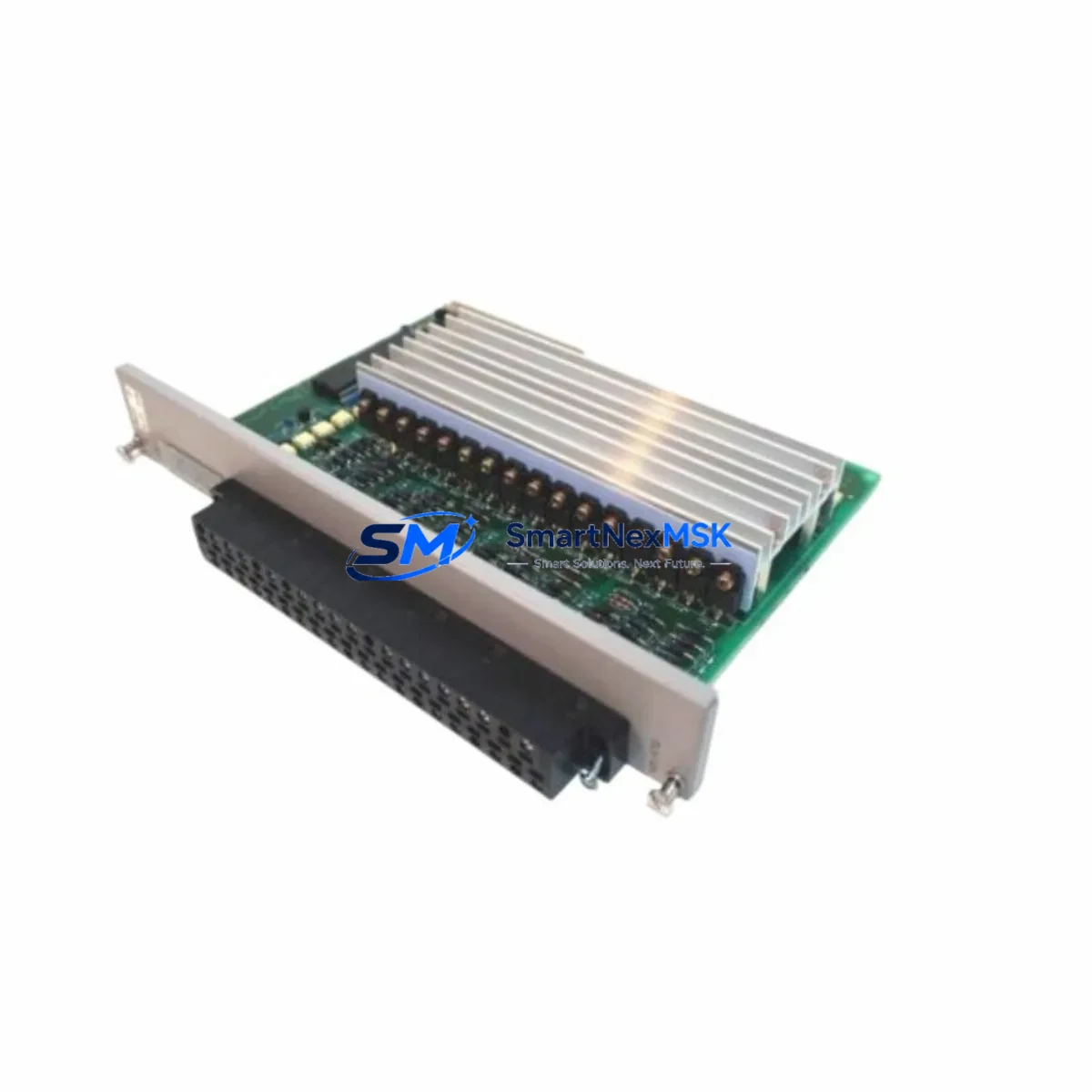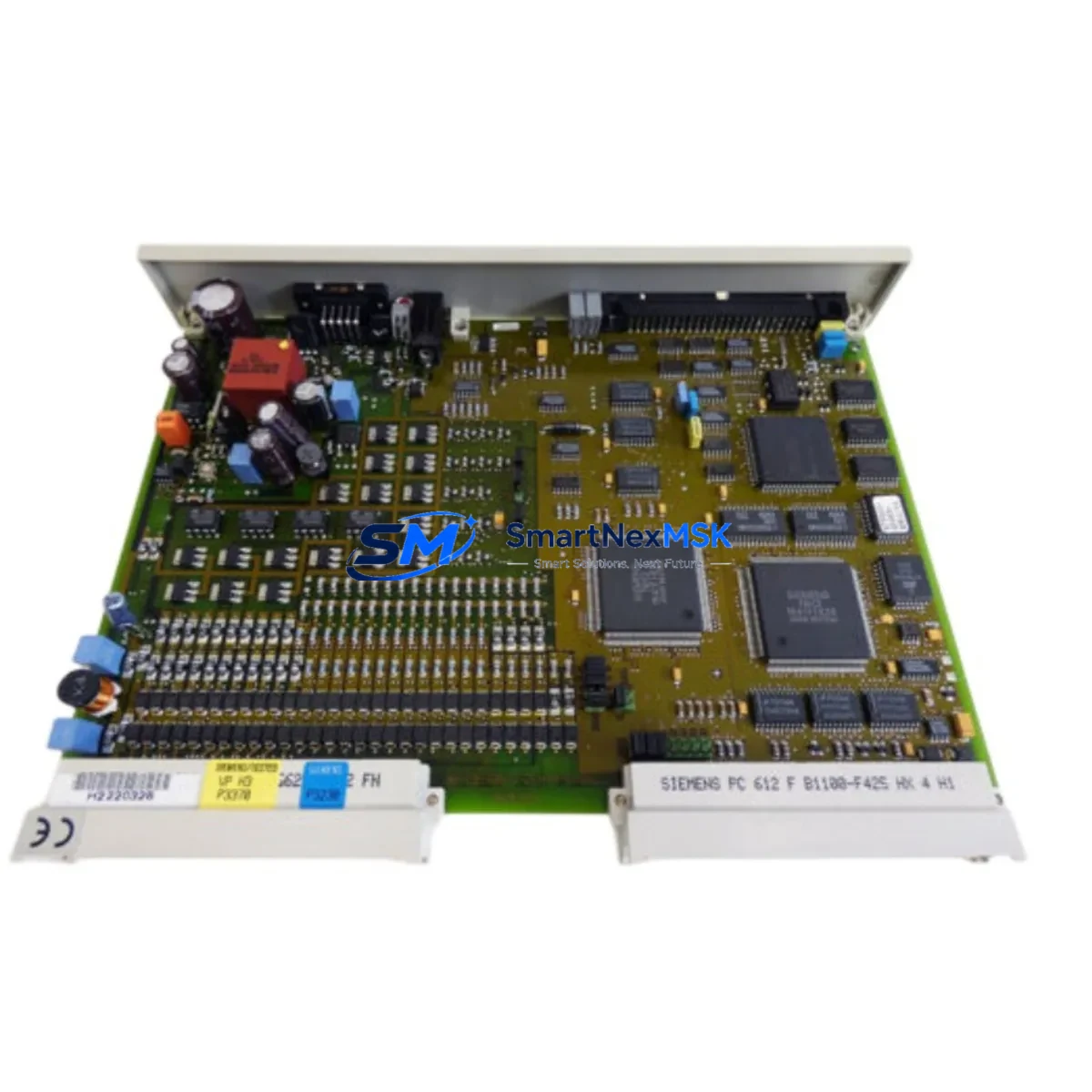
Siemens 6DS1717-8RR Retrofit-Ready Binary Calculation Module for TELEPERM M Control Systems
The Siemens 6DS1717-8RR is a Binary Calculation Module designed for the TELEPERM M Distributed Control System (DCS) platform — one of Siemens’ most widely deployed process automation architectures in the chemical, petrochemical, power generation, and water treatment industries. As the TELEPERM M series has reached end-of-life and spare parts availability continues to tighten, the 6DS1717-8RR has become a critical component for engineers managing legacy plant infrastructure, executing phased modernization programs, or responding to unplanned equipment failures.
SMARTNEXMSK maintains verified stock of the 6DS1717-8RR, sourced from decommissioned systems and authorized surplus channels. Every unit undergoes functional testing prior to shipment and is covered by a 12-month warranty. Whether you are replacing a failed module in an active production environment or building a retrofit inventory buffer, our team can support your procurement and technical requirements.
Upgrade Compatibility Table
| Parameter | Details |
|---|---|
| Module Designation | 6DS1717-8RR — Binary Calculation Module |
| Platform Compatibility | Siemens TELEPERM M DCS (AS230, AS235, AS388) |
| Backplane Interface | TELEPERM M standard subrack bus (S5-compatible signal levels) |
| Installation Requirement | Slot-specific addressing via DIP switch; verify rack address before insertion |
| Communication Compatibility | SINEC H1 / TELEPERM M internal bus; not directly compatible with PROFIBUS or PROFINET without gateway |
| Replacement Recommendation | Direct drop-in for failed or degraded 6DS1717-8RR units; confirm firmware revision if mixing module generations |
| Commissioning Focus | Verify binary I/O channel assignments, function block linkages in PROGRAF AP, and alarm thresholds post-swap |
| Warranty | 12 months from date of shipment — covers functional failure under normal operating conditions |
Retrofit Planning for Existing Automation Systems
Replacing the 6DS1717-8RR within a live TELEPERM M installation requires careful pre-planning to avoid disrupting process continuity. Before the module swap, engineers should document all binary channel assignments and cross-reference them against the PROGRAF AP function block diagram. The module occupies a defined slot within the TELEPERM M subrack (typically a 19-inch rack housing multiple I/O and calculation modules), and the slot address must be confirmed against the system configuration database before the replacement unit is inserted.
Power supply integrity is a prerequisite for any module replacement. The TELEPERM M system relies on dedicated 6DS1702-8AA or equivalent power supply modules to deliver regulated 24 VDC to the subrack bus. Before pulling the 6DS1717-8RR, verify that the bus voltage is within specification and that no adjacent modules — such as the 6DS1703-8AA analog input module or the 6DS1704-8AA analog output module — are showing fault indicators that could indicate a shared power rail issue.
Terminal wiring on the TELEPERM M front connector follows a fixed pin assignment. The 6DS1717-8RR uses a 48-pin front connector; technicians should photograph or record the existing wiring layout before disconnecting. If the replacement unit comes from a different production batch, compare the terminal labeling carefully — minor revisions in connector pinout have been documented across TELEPERM M module generations.
For plants that are executing a broader migration from TELEPERM M to a modern DCS platform such as Siemens SIMATIC PCS 7 or SIMATIC S7-400, the 6DS1717-8RR replacement can serve as a bridge solution while the migration project is phased in. In this context, the module keeps the existing control loop operational while engineering teams reconfigure the new platform. Communication protocol migration — from the legacy SINEC H1 network to PROFIBUS DP or Industrial Ethernet / PROFINET — typically requires a protocol gateway or a dedicated communication processor such as the CP 443-1 to bridge the two environments.
I/O expansion during the retrofit phase often involves adding ET 200M or ET 200S distributed I/O stations on the new PROFIBUS segment while retaining the TELEPERM M backbone for critical loops. The 6DS1717-8RR continues to handle binary calculation tasks on the legacy side until those loops are fully migrated and validated. HMI screens built on WinCC or legacy COROS LS-B operator stations will need to be updated to reflect the new tag structure once migration is complete.
Programming cable access for TELEPERM M configuration uses the PROGRAF AP engineering tool, typically connected via a serial interface to the AS230 or AS235 automation station. Ensure the engineering workstation retains a licensed copy of PROGRAF AP before beginning any module replacement, as re-downloading the configuration to the replacement module may be required if the module’s internal memory has been cleared.
Downtime Control During System Migration
Minimizing unplanned downtime is the primary operational concern when replacing a 6DS1717-8RR in a running process plant. The recommended approach is a hot-standby swap procedure where the replacement module is pre-configured offline — DIP switches set to match the slot address, firmware version confirmed — before the live module is removed. This reduces the in-rack exposure window to the minimum time required for physical connector engagement.
Where the process permits a brief controlled shutdown of the affected control loop, coordinate with the operations team to place the loop in manual mode at the COROS LS-B or WinCC operator station before the swap. This preserves the last known setpoint and prevents the process from responding to transient signals during the module changeover. After reinsertion, bring the loop back to automatic mode only after confirming that all binary channel status indicators on the 6DS1717-8RR front panel are showing the expected states.
Original program logic stored in the AS230 or AS235 automation station is retained in the station’s battery-backed RAM and is not affected by a module swap at the I/O level. However, if the automation station itself has been powered down as part of the maintenance window, verify that the backup battery on the CPU module is functional before restart to prevent program loss. A full program reload from the PROGRAF AP engineering station should be prepared as a contingency.
Post-swap functional testing should include a channel-by-channel verification of all binary inputs and outputs handled by the 6DS1717-8RR, confirmation of alarm and interlock logic response, and a review of the historian or data logger to confirm that process values are being recorded correctly after the module is back online. Document the replacement in the plant maintenance management system with the module serial number, slot location, and test results for traceability.
Retrofit Support FAQ
Q1: Is the 6DS1717-8RR a direct replacement for all TELEPERM M binary calculation module variants?
The 6DS1717-8RR is the standard Binary Calculation Module for the TELEPERM M platform. It is compatible with AS230, AS235, and AS388 automation stations. If your existing installation uses an earlier variant with a different suffix, confirm the hardware revision and firmware compatibility before installation. Our technical team can assist with cross-referencing the module designation against your system configuration.
Q2: What commissioning steps are required after installing the replacement module?
After physical installation, verify the DIP switch slot address matches the system configuration, reconnect the 48-pin front connector, and power up the subrack. Use PROGRAF AP to confirm that the module is recognized by the automation station and that all function block linkages are intact. Perform a channel-by-channel I/O test and validate alarm thresholds before returning the loop to automatic control.
Q3: Can the 6DS1717-8RR be used in a hybrid system alongside SIMATIC S7-400 or PCS 7 hardware?
The 6DS1717-8RR operates on the TELEPERM M internal bus and cannot be directly inserted into an S7-400 rack or PCS 7 I/O station. In hybrid retrofit architectures, the TELEPERM M subrack continues to operate independently while the new platform is brought online in parallel. Protocol gateways or OPC server bridges are used to share process data between the two systems during the transition period.
Q4: What does the 12-month warranty cover, and what is the shipping lead time?
The 12-month warranty covers functional failure of the module under normal operating conditions, including internal component failure and communication faults attributable to the module itself. Physical damage caused by incorrect installation, overvoltage, or environmental factors is excluded. Units are shipped within 2–5 business days of order confirmation. Express shipping options are available for urgent breakdown situations. Contact our team for lead time confirmation on your specific order.
© 2026 SMARTNEXMSK. All rights reserved.
Original Source: https://smartnexmsk.com
Contact: [email protected] | +86 18259474341