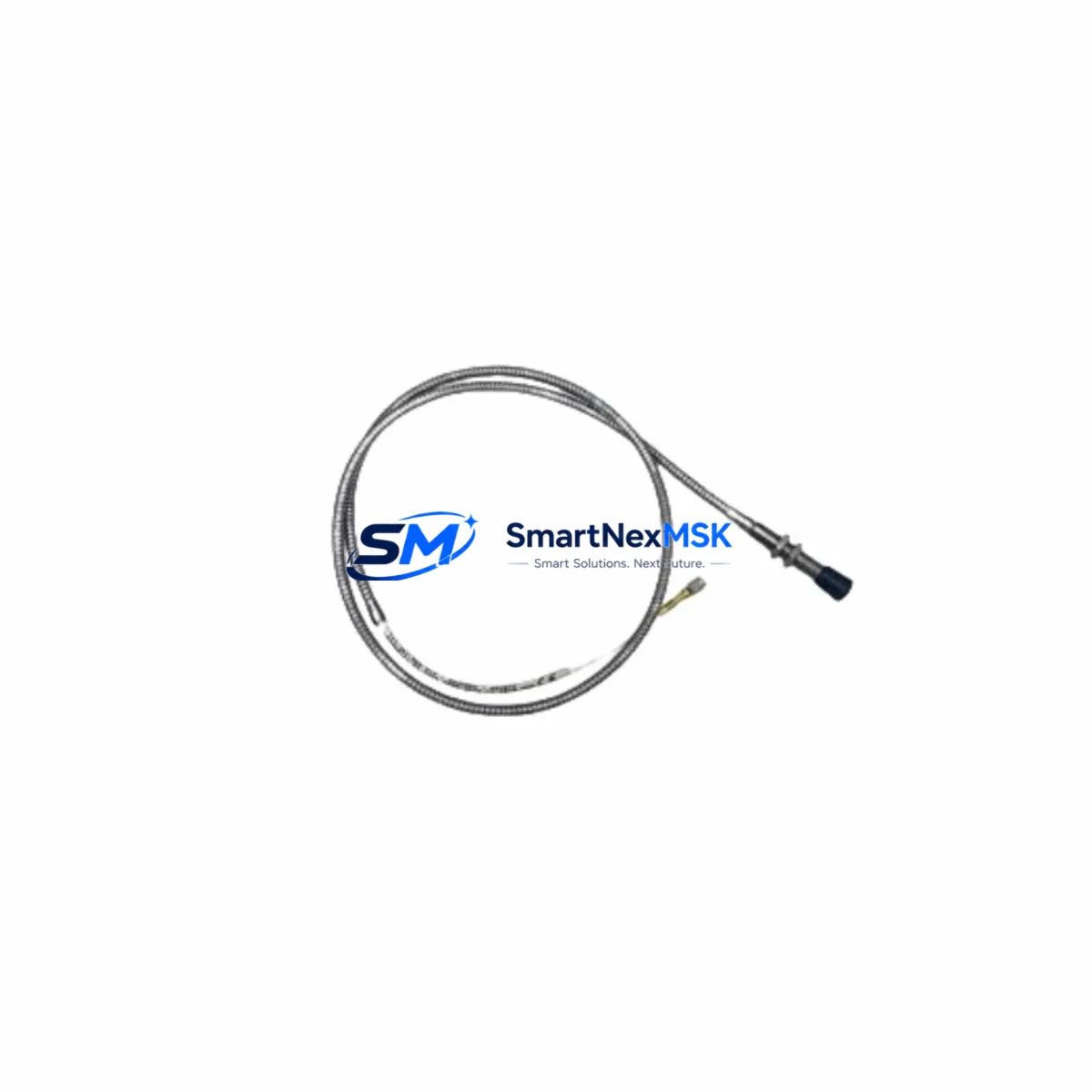
Turck 111-412-000-012 Maintenance-Ready Spare TQ412: Spare Replacement & Industrial Downtime Risk Control
The Turck 111-412-000-012 is a TQ412 series M12 inductive proximity sensor designed for demanding industrial automation environments. As a maintenance-ready original spare, this component is critical for facilities that cannot afford unplanned downtime on conveyor lines, assembly stations, robotic cells, or PLC-controlled process equipment. With a compact M12 cylindrical housing, IP67 ingress protection, and a wide 10–30V DC operating range, the TQ412 integrates directly into Siemens S7, Allen-Bradley ControlLogix, Mitsubishi MELSEC, and Omron CJ/NJ series PLC systems without additional signal conditioning.
Stocking the 111-412-000-012 as a verified spare ensures that maintenance engineers can execute a like-for-like swap during planned shutdowns or emergency callouts, restoring sensor feedback loops to the PLC input card within minutes rather than waiting days for procurement. This is especially important in facilities running legacy TQ4 and TQ412 sensor arrays where the original Turck part number is the only guaranteed fit for existing M12 connector harnesses and mounting brackets.
Spare Maintenance Table
| Parameter | Specification |
|---|---|
| Part Number | 111-412-000-012 |
| Series | TQ412 |
| Brand | Turck |
| Sensor Type | Inductive Proximity Sensor |
| Housing Form Factor | M12 Cylindrical |
| Operating Voltage | 10–30V DC |
| Output Type | PNP / NPN (NO/NC) |
| Sensing Distance | 2 mm (standard ferrous target) |
| Protection Rating | IP67 |
| Connection | M12 4-pin connector |
| Operating Temperature | -25°C to +70°C |
| Country of Origin | Germany |
| Compatibility | Siemens S7-300/400/1200/1500, Allen-Bradley ControlLogix, Mitsubishi MELSEC, Omron CJ/NJ |
| Mounting | Flush / Non-flush (series dependent); standard M12 thread |
| Maintenance Recommendation | Inspect sensing face for contamination every 3 months; verify output signal under load annually |
| Warranty | 12 Months from date of shipment |
| Pre-shipment Test | Function-tested and inspected before dispatch |
Maintenance Planning for Continuous Operation
When replacing the Turck 111-412-000-012 in the field, a thorough maintenance engineer will treat the swap as an opportunity to audit the surrounding electrical circuit and control cabinet. The sensor’s M12 connector harness — typically a Turck RSC 4T-2/TXL or equivalent 4-pin M12 cordset — should be inspected for insulation cracking, pin corrosion, and secure locking. A damaged cable is the most common cause of repeat sensor failures and is frequently overlooked during emergency replacements.
The 24V DC supply feeding the sensor input circuit should be verified at the Turck PS510D or equivalent DIN-rail power supply. Voltage sag below 18V DC under load can cause marginal switching behavior that mimics a faulty sensor. Upstream, the Siemens 6ES7 321 series digital input module or equivalent PLC I/O card should be checked for blown input channels — a shorted sensor can damage input circuitry, so confirming input channel integrity before powering the new sensor prevents a second failure.
In cabinets where multiple TQ412 sensors share a common 0V rail, the terminal block distribution strip (e.g., Phoenix Contact UK 2.5 or Weidmüller WDU 2.5) should be torque-checked and inspected for discoloration indicating thermal stress. If the control cabinet includes a Turck IM12-CCO or FDN20-4IOL IO-Link master, verify that the port configuration still matches the replacement sensor’s IO-Link device profile.
For facilities running older Turck Bi2-M12-AP6X or Ni4-M12-AP6X proximity sensors alongside the TQ412, this is an ideal time to cross-check the entire sensor manifest against current Turck catalog equivalents and flag any end-of-life part numbers for proactive replacement. Keeping a minimum of two units of the 111-412-000-012 in the on-site spare parts cabinet eliminates single-point-of-failure risk on high-cycle detection stations. Additionally, any Turck BLCDN-8M12LT distributed I/O node connected to TQ412 sensors should have its firmware version confirmed to ensure compatibility with the replacement unit’s switching characteristics.
Site Replacement Workflow
Step 1 — Isolate and lock out: De-energize the sensor circuit at the field junction box or cabinet terminal. Apply LOTO per site procedure. Confirm 0V at the M12 connector with a calibrated multimeter before disconnecting.
Step 2 — Document the existing installation: Photograph the sensor orientation, cable routing, and mounting depth. Note the PLC address tag on the cable label. This prevents re-commissioning errors, especially in multi-sensor arrays where address mix-ups cause logic faults.
Step 3 — Remove and inspect: Unscrew the M12 connector, remove the sensor from its mounting bracket, and inspect the bracket for corrosion or deformation. A damaged bracket will misalign the new sensor and cause intermittent detection.
Step 4 — Install the 111-412-000-012: Thread the replacement TQ412 to the same depth as the original. Use the factory-set sensing distance as a baseline and fine-tune with a steel target and indicator light. Torque the locknut to the manufacturer’s specification (typically 15–20 Nm for M12 housings).
Step 5 — Reconnect and verify: Re-engage the M12 connector with an audible click. Re-energize the circuit and confirm the PLC input channel transitions correctly with a test target. Log the replacement in the CMMS with the new part serial number and installation date.
Step 6 — Return to service: Clear any latched PLC faults related to the sensor address. Confirm the machine cycle runs without alarm for a minimum of 10 consecutive cycles before releasing to production. This workflow typically achieves full downtime recovery in under 30 minutes for a prepared maintenance team.
Spare Parts Support FAQ
Q1: Is the Turck 111-412-000-012 a direct replacement for older TQ412 variants?
Yes. The 111-412-000-012 is the current active part number for the TQ412 M12 inductive sensor family. It is dimensionally and electrically compatible with earlier TQ412 variants sharing the same M12 housing and 4-pin connector pinout. Always verify the output type (PNP vs NPN) and switching logic (NO vs NC) against the original wiring diagram before installation.
Q2: How is the unit tested before shipment?
Every 111-412-000-012 unit is function-tested prior to dispatch. Testing includes output switching verification under a standard ferrous target at rated voltage, insulation resistance check on the cable assembly, and visual inspection of the M12 connector pins and housing. A test report is available on request for quality-critical applications.
Q3: What is the recommended spare parts stocking strategy for the TQ412?
For facilities with more than five TQ412 sensors in service, we recommend maintaining a minimum of two units of the 111-412-000-012 on-site at all times. High-cycle applications (>1 million cycles/year) should consider a quarterly inspection interval and annual proactive replacement on the highest-duty stations. Bulk pricing is available for orders of five units or more.
Q4: What does the 12-month warranty cover?
The 12-month warranty covers manufacturing defects, premature output failure under normal operating conditions, and connector integrity. It does not cover damage from incorrect wiring, overvoltage, mechanical impact, or installation outside the rated environmental specifications. Warranty claims are processed with photographic evidence of the installation and a brief fault description. Replacement units are dispatched within 3 business days of claim approval.
© 2026 SMARTNEXMSK. All rights reserved.
Original Source: https://smartnexmsk.com
Contact: [email protected] | +86 18259474341