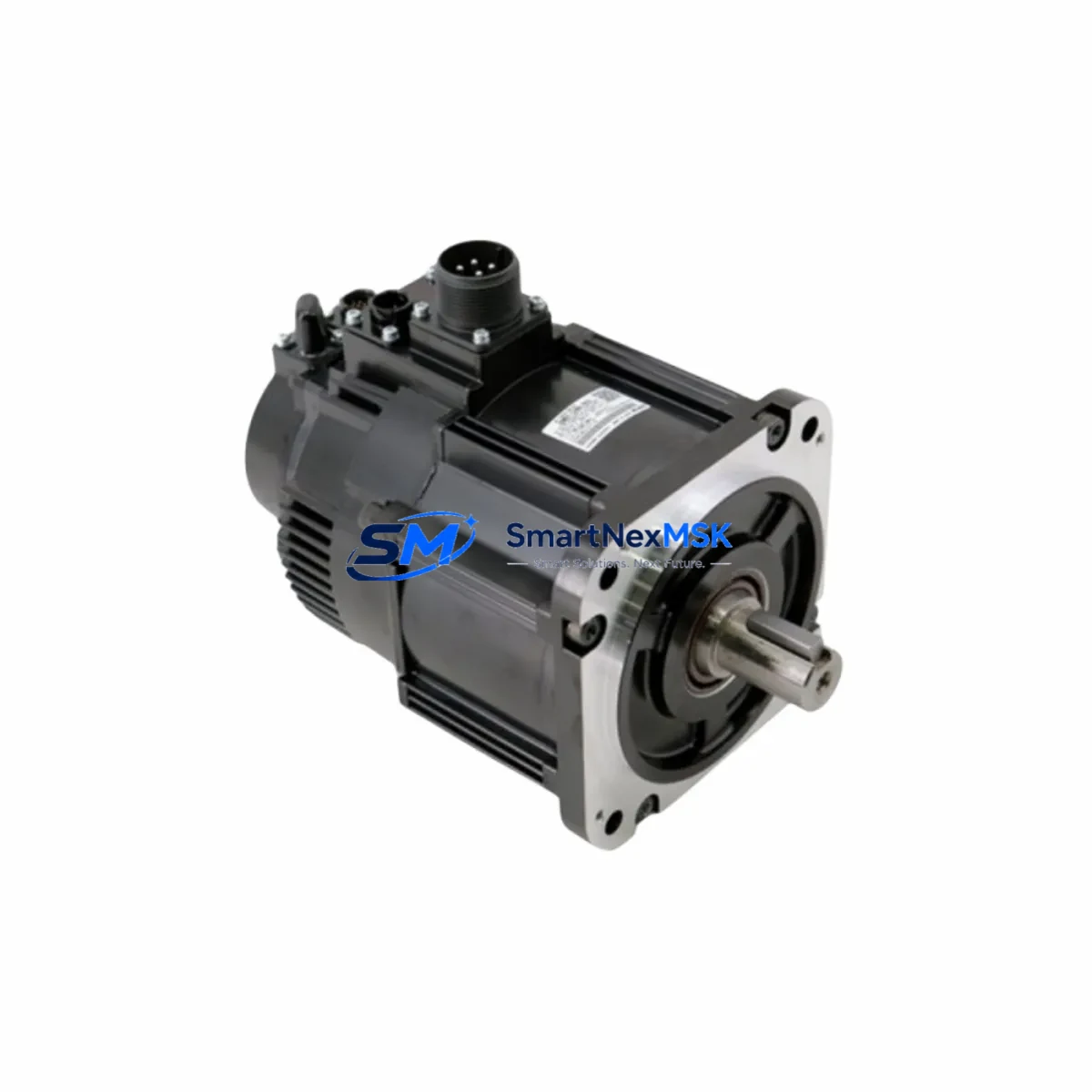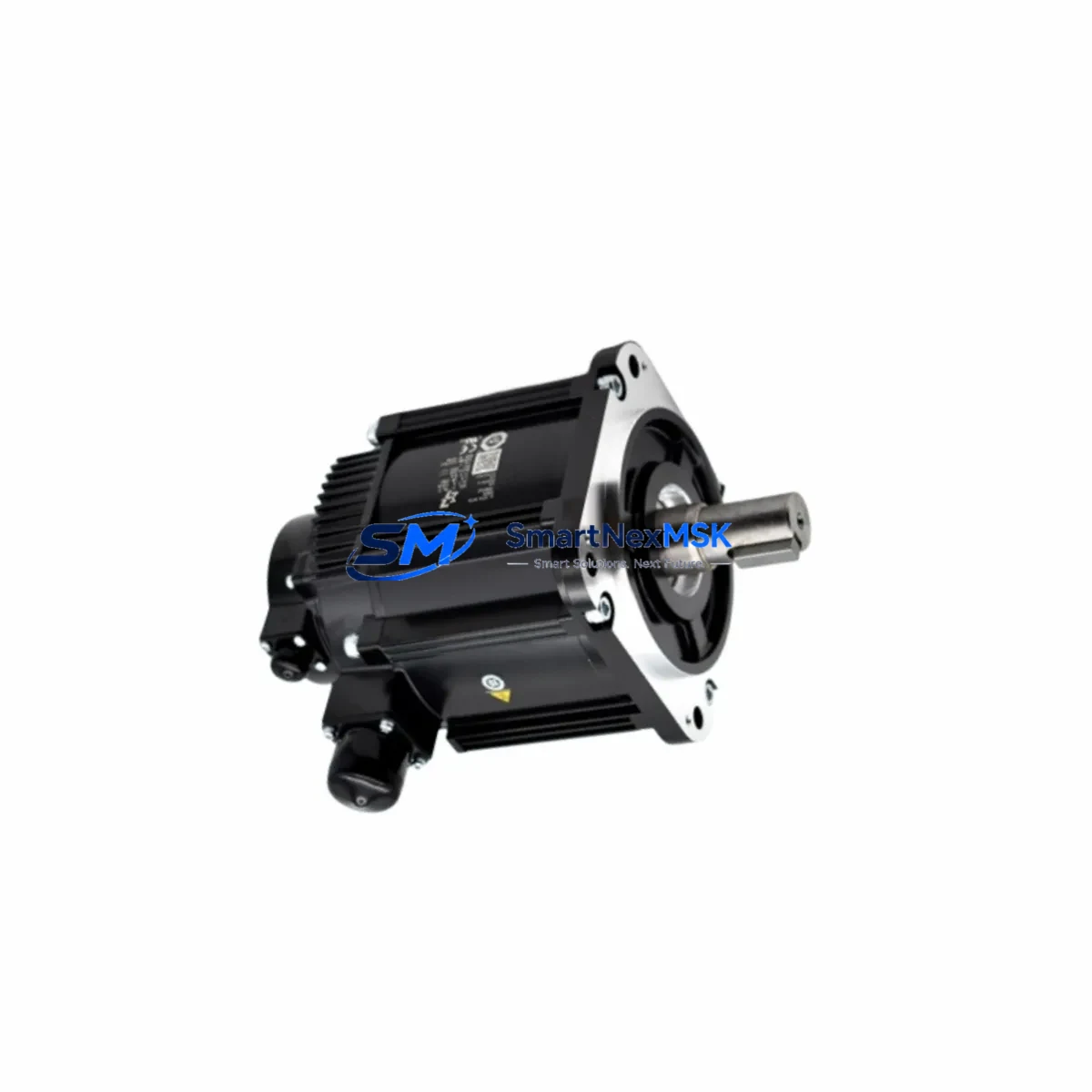
Yaskawa SGM7G-44APK-YR11 Retrofit-Ready AC Servo Motor: Compatible Modernization & Smooth Legacy System Upgrade
The Yaskawa SGM7G-44APK-YR11 is a 4.4 kW, 1500 rpm AC servo motor from the industry-leading Sigma-7 series, engineered for high-precision motion control in demanding industrial environments. As legacy Sigma-5 and Sigma-II servo systems approach end-of-life or become increasingly difficult to source, the SGM7G-44APK-YR11 stands as the definitive retrofit-ready replacement — offering superior torque density, enhanced encoder resolution, and full backward compatibility with existing Yaskawa servo drive infrastructure when properly configured.
Whether you are managing a planned upgrade of an aging production line, responding to an unplanned motor failure, or executing a phased control cabinet modernization, the SGM7G-44APK-YR11 delivers the performance, compatibility, and supply reliability your operation demands. SMARTNEXMSK maintains verified stock of this unit with a 12-month warranty and pre-shipment functional testing on every unit dispatched.
Upgrade Compatibility Table
| Parameter | SGM7G-44APK-YR11 (Sigma-7) | Legacy Reference (Sigma-5 / Sigma-II) | Retrofit Notes |
|---|---|---|---|
| Rated Output | 4.4 kW | 4.4 kW (SGMGH / SGMSH class) | Direct power-class match; no drive derating required |
| Encoder Type | 24-bit absolute serial encoder | 17-bit incremental / absolute | Verify SGDV / SGDH drive firmware supports 24-bit encoder; update if needed |
| Shaft & Flange | Standard IEC flange, keyed shaft | Compatible flange dimensions | Confirm coupling bore; adapter plate may be required for older SGMGH frames |
| Connector Interface | CN1 power + CN2 encoder (Yaskawa standard) | CN1 / CN2 legacy pinout | Use Yaskawa encoder cable JZSP-CVP02 or equivalent; verify pin mapping |
| Drive Compatibility | SGDV-470A (Sigma-7 drive recommended) | SGDH-45DE / SGDV series | Pair with SGDV-470A for full Sigma-7 performance; SGDH requires parameter tuning |
| Communication Protocol | MECHATROLINK-III / Analog / Pulse | MECHATROLINK-II / Analog | Protocol migration may require controller-side module upgrade (e.g., JAPMC-MC2300) |
| Installation | Foot mount / flange mount | Same mounting options | Confirm cabinet depth and cable routing clearance |
| Commissioning Tool | SigmaWin+ v7 or later | SigmaWin+ v5/v6 | Use latest SigmaWin+ for autotuning and parameter migration |
| Warranty | 12 months from shipment date — covers manufacturing defects, encoder failure, and winding faults | ||
Retrofit Planning for Existing Automation Systems
Successful integration of the SGM7G-44APK-YR11 into an existing automation system begins well before the motor arrives on site. A thorough pre-retrofit audit should cover power supply capacity, terminal wiring layouts, backplane interface assignments, module addressing, program compatibility, HMI screen bindings, communication link integrity, and field commissioning procedures.
Power Supply Verification: Confirm that the existing 24 VDC control power supply — often a Yaskawa JUSP-OP05A-1 or equivalent panel-mount unit — can sustain the inrush current during motor initialization. For larger control cabinets running multiple servo axes, verify that the main AC power feed and transformer rating accommodate the 4.4 kW continuous load plus regenerative braking peaks. If the existing regenerative resistor unit is undersized for the new motor’s deceleration profile, a JUSP-RA04 regenerative resistor assembly should be added to the drive circuit.
Terminal Wiring and Backplane Interface: When replacing a legacy SGMGH-44ACA61 or similar Sigma-5 motor, the encoder cable harness must be inspected for compatibility with the 24-bit serial encoder interface of the SGM7G-44APK-YR11. The standard Yaskawa encoder cable JZSP-CVP02-03-E is the recommended replacement harness. On the drive side, if the existing SGDH-45DE drive is being retained temporarily during a phased migration, parameter Pn002 must be reconfigured to recognize the new encoder type, and the drive’s control board firmware should be verified against Yaskawa’s compatibility matrix.
Module Addressing and Program Compatibility: In systems where the servo drive communicates with a Yaskawa MP3300 machine controller or a third-party PLC via MECHATROLINK-II, migrating to MECHATROLINK-III requires a controller-side communication module upgrade — typically replacing the JAPMC-MC2300 with the JAPMC-MC2310 or equivalent. Axis address assignments in the motion program must be re-mapped, and all position reference scaling parameters should be recalculated to account for the higher encoder resolution of the Sigma-7 platform. If the control system uses a Yaskawa CP-9200SH or legacy MP900 series controller, a full controller migration to the MP3300 platform is strongly recommended as part of the same project scope.
HMI Screen and Communication Link Review: HMI panels — whether a Yaskawa OP-84V operator panel or a third-party touch screen communicating via RS-422 or Ethernet/IP — must have their tag databases reviewed to ensure that servo status words, fault codes, and position feedback registers remain correctly mapped after the drive and motor upgrade. Communication link integrity between the servo drive and the host controller should be verified using SigmaWin+ network diagnostics before the system is returned to production.
I/O Expansion and Safety Circuit Continuity: If the retrofit involves expanding the I/O count — for example, adding a SGDV-OCA01A option card for safety torque-off (STO) compliance — the safety relay circuit wiring must be validated against IEC 62061 SIL 2 requirements. Existing I/O terminal blocks, including any JUSP-NS600 DeviceNet option modules, should be audited for compatibility with the new drive generation before the control cabinet is reassembled.
Downtime Control During System Migration
Minimizing production downtime during a servo motor replacement is a primary concern for any plant engineer or maintenance manager. A structured migration approach — rather than a direct swap — protects the original program logic and maintains field control continuity throughout the transition.
Pre-Swap Preparation: Before removing the legacy motor, use SigmaWin+ to export a full parameter backup from the existing SGDH-45DE or SGDV-470A drive. Save the backup to a USB drive and retain a printed copy. Document all current Pn parameter values, particularly Pn100 (speed loop gain), Pn102 (position loop gain), Pn401 (torque reference filter), and Pn110 (online autotuning mode). These values serve as the baseline for re-tuning after the new motor is installed.
Parallel Commissioning Strategy: Where production schedules permit, commission the new SGM7G-44APK-YR11 on a test bench using a spare SGDV-470A drive before the planned maintenance window. Run the motor through its full speed and torque range, verify encoder feedback integrity, and confirm that the SigmaWin+ autotuning routine converges within acceptable gain margins. This pre-validation step eliminates the most common causes of extended downtime — encoder wiring errors, parameter conflicts, and mechanical coupling misalignment.
Cutover Sequence: During the actual cutover, isolate the axis from the motion program by placing the controller in manual mode or disabling the relevant axis in the MECHATROLINK network configuration. Swap the motor and encoder cables, restore the parameter backup to the drive, and run the SigmaWin+ autotuning routine under no-load conditions before re-engaging the axis in the production program. Verify that all fault history is cleared and that the drive’s ready signal is correctly received by the host controller — whether a Yaskawa MP3300, a Mitsubishi MELSEC Q-series PLC, or a Siemens S7-300 system — before resuming automatic operation.
Post-Commissioning Verification: After the axis is returned to automatic mode, monitor the servo drive’s torque utilization, position error, and thermal status for a minimum of one full production cycle. SMARTNEXMSK’s technical support team is available to assist with remote parameter review and commissioning guidance throughout the 12-month warranty period.
Retrofit Support FAQ
Q1: Is the SGM7G-44APK-YR11 a direct drop-in replacement for the SGMGH-44ACA61 (Sigma-5)?
The SGM7G-44APK-YR11 matches the rated output and flange class of the SGMGH-44ACA61, but the 24-bit absolute encoder interface differs from the Sigma-5’s 17-bit encoder. The existing encoder cable must be replaced with a Sigma-7 compatible harness (JZSP-CVP02 series), and the drive must be configured or upgraded to support the new encoder type. When paired with a SGDV-470A Sigma-7 drive, the replacement is straightforward. Retaining a legacy SGDH drive requires additional parameter configuration and firmware verification.
Q2: What wiring changes are required in the control cabinet?
The primary wiring changes involve the encoder cable harness and, if upgrading the drive simultaneously, the CN1 power connector pinout. The motor power terminals (U, V, W, PE) are standard and compatible with existing cable cross-sections for 4.4 kW class motors. The brake connector (if the -YR11 suffix indicates a holding brake variant) must be verified against the existing brake power supply circuit — typically 24 VDC at 0.9 A. All terminal connections should be torqued to specification and verified with a continuity test before energizing the drive.
Q3: How does SMARTNEXMSK verify units before shipment?
Every SGM7G-44APK-YR11 unit dispatched by SMARTNEXMSK undergoes a pre-shipment functional test that includes encoder signal integrity verification, winding resistance measurement, insulation resistance testing (megger test at 500 VDC), and a no-load run test at rated speed. A test report is available upon request. All units are shipped with original or equivalent packaging and carry a 12-month warranty covering manufacturing defects, encoder failure, and winding faults from the date of shipment.
Q4: Can this motor be used with a non-Yaskawa controller or PLC?
Yes. The SGM7G-44APK-YR11, when paired with a SGDV-470A drive configured for analog speed/torque reference or pulse train position reference mode, is fully compatible with third-party controllers including Mitsubishi MELSEC iQ-R series, Siemens S7-1500, Omron NJ/NX series, and Rockwell Automation ControlLogix platforms. MECHATROLINK-III native communication requires a compatible network master module on the controller side. Contact SMARTNEXMSK’s technical team for application-specific wiring diagrams and parameter configuration guides.
© 2026 SMARTNEXMSK. All rights reserved.
Original Source: https://smartnexmsk.com
Contact: [email protected] | +86 18259474341