
Siemens SINAMICS V90 to S200: Spare and Retrofit Checks
Siemens lifecycle guidance for SINAMICS V90 users: verify exact spares, motor and feedback compatibility, and S200 migration evidence before an outage.
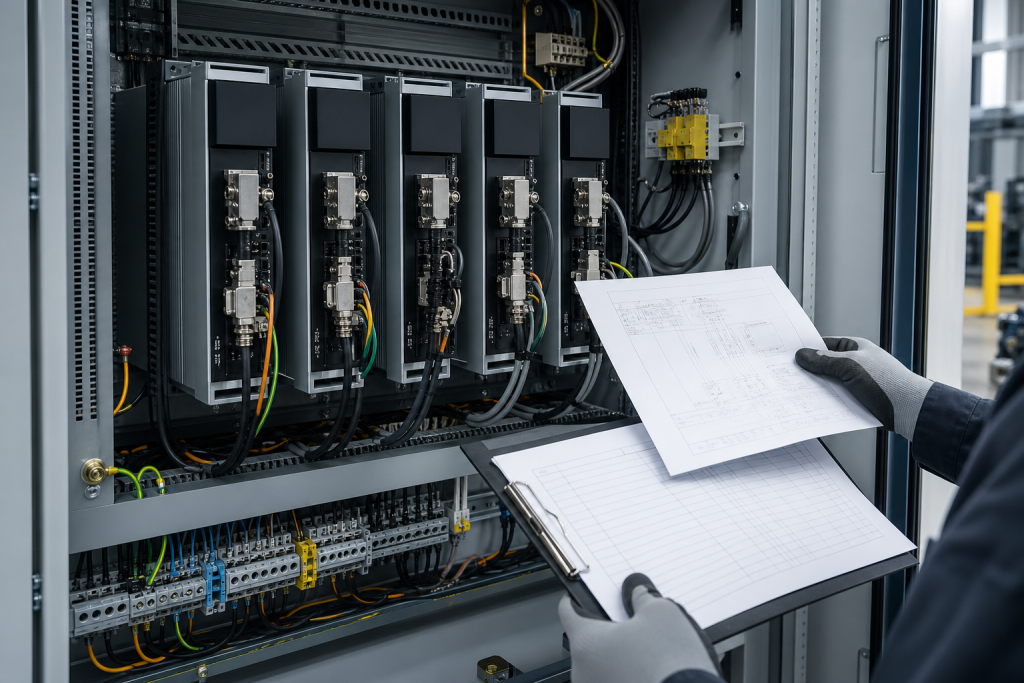
Servo drive lifecycle changes rarely create a failure on the day a manufacturer publishes an announcement. The risk appears later, when a maintenance team discovers that the drive, motor, encoder cable, and engineering project were treated as one interchangeable item. Siemens’ current automation migration guidance places the SINAMICS V90 family into the next stages of its product lifecycle and recommends SINAMICS S200 for new applications. For plants running V90 equipment, the practical question is not simply “What is the successor?” It is whether the existing motion axis can be supported, repaired, or migrated without turning a planned outage into a commissioning emergency.
What the V90 lifecycle signal means for maintenance
A lifecycle transition is a planning trigger, not an instruction to replace every installed drive immediately. Existing V90 systems may continue to run normally. The concern is the shrinking decision window for exact spares, repair options, and engineering support. Siemens advises users of existing installations to verify spare-part availability, article-number status, and service plans through current Industry Online Support and SiePortal information. That verification should be tied to each installed article number, not just to the V90 family name.
Start with an installed-base list for every axis: complete drive order number, power rating, supply voltage, firmware, communication interface, motor type, encoder or resolver arrangement, motor and feedback cable, brake resistor, control mode, and machine location. Record whether the unit is a line-critical spare, a common spare shared across machines, or an isolated project-specific component. This turns a general lifecycle notice into a usable maintenance risk register.
Do not treat S200 as a drop-in spare
Siemens presents SINAMICS S200 as the recommended direction for new applications, but a new-generation drive should not be approved as a drop-in replacement solely because the name contains “SINAMICS.” A replacement review must compare the complete motion system.
- Electrical fit: supply voltage, rated current, overload profile, braking method, short-circuit protection, cabinet heat loss, and available panel space.
- Motor and feedback: motor family, rated speed, encoder type, connector pinout, cable length, shield termination, and whether the original feedback device is supported.
- Control and communications: PLC interface, telegram or fieldbus configuration, motion commands, diagnostics, addressing, and network topology.
- Application behavior: homing, positioning accuracy, torque limits, safe motion functions, ramp settings, recipe data, and machine interlocks.
- Engineering evidence: TIA Portal version, drive parameter backup, motor data, original commissioning records, and the test procedure required before production release.
The drive may fit mechanically and still fail the application test. A change in encoder handling, communication behavior, or parameter structure can affect repeatability, alarms, HMI diagnostics, and recovery time. That is why the replacement decision belongs with maintenance, controls engineering, and procurement together.
Build two plans: exact spare coverage and migration readiness
Plants often make one of two mistakes. They either buy a replacement before confirming the installed system, or they postpone every decision because the running drive has not failed. A better approach is to keep two parallel plans.
Plan A: protect the installed V90 system. Identify the exact drive and motor combinations that can stop the highest-value line. Confirm the latest sourcing status, acceptable condition, repair route, storage requirements, and whether the spare has been inspected. Keep the drive, motor, feedback cable, and parameter backup linked in the asset record. A drive without its matching data and cable information is only partial recovery coverage.
Plan B: prepare the S200 migration. Select one representative axis and perform a controlled engineering comparison before the outage. Document the electrical changes, mounting and wiring work, PLC or motion-program changes, safety review, commissioning steps, and production acceptance criteria. Do not use a successful bench power-up as proof of machine compatibility. The acceptance test must cover the actual motion profile and failure-recovery sequence.
Procurement checklist for a V90 spare or S200 review
A useful RFQ should make the decision auditable. Include the full drive article number, motor and encoder information, quantity, destination, urgency, condition requirement, and whether the request is for an exact V90 spare, a repair, or an S200 migration assessment. Add photographs of the rating label, connectors, cabinet position, and any visible option modules.
Ask the supplier to distinguish new, surplus, refurbished, repaired, and exchange condition. Request inspection scope, traceability evidence, warranty terms, packaging method, and estimated dispatch timing. For a proposed S200 path, ask for a compatibility matrix that states what is confirmed, what requires engineering validation, and which parts of the machine may need rewiring or software changes. If the model label is incomplete, pause the order until the label and cabinet context have been reviewed.
SmartNexMSK’s Siemens automation parts directory can be used to organize brand-specific model requests, while the servo motors and drives category provides the correct sourcing context for drive and motor inquiries. These links are category and brand routes, not proof that a particular V90 or S200 unit is currently listed. Exact availability still depends on the verified article number and condition requirement.
Frequently asked questions
Does the V90 lifecycle transition mean an installed drive must be replaced now?
No. It means the maintenance team should verify support status, exact spare coverage, and the future migration path before procurement choices become narrower.
Is SINAMICS S200 a direct replacement for every V90 installation?
No. Power, motor, feedback, communication, safety, cabinet, software, and application requirements must be checked axis by axis.
What information should be sent with a V90 spare request?
Send the complete drive article number, motor and feedback details, quantity, destination, urgency, condition requirement, and clear photographs of labels and connectors.
Should a plant buy an exact spare or start migration first?
Protect critical installed systems with verified exact-spare coverage while preparing a representative migration test. The balance depends on line criticality, recovery time, remaining support, and planned outage access.
What proves that a replacement is ready for production?
A documented test should cover wiring, parameter loading, communication, motion performance, safety functions where applicable, alarms, HMI behavior, and controlled failure recovery. A bench power-up alone is not sufficient.
Close the evidence gap before the outage
Siemens’ lifecycle guidance gives maintenance teams a reason to act early, but it does not remove the need for model-level verification. Send the drive and motor labels, cabinet photos, project or parameter information, destination, and required delivery timing to [email protected] or WhatsApp/Phone +86 18259474341. The correct outcome may be an exact spare, a repair route, or a staged migration review. The important point is to make that decision while the machine is still available for inspection.
Route this topic into a sourcing request
Connect the article topic to a model number, category, brand, quantity, and destination before opening the RFQ.
Related Insights
Continue with sourcing and model matching guides
 Sep 8, 2026
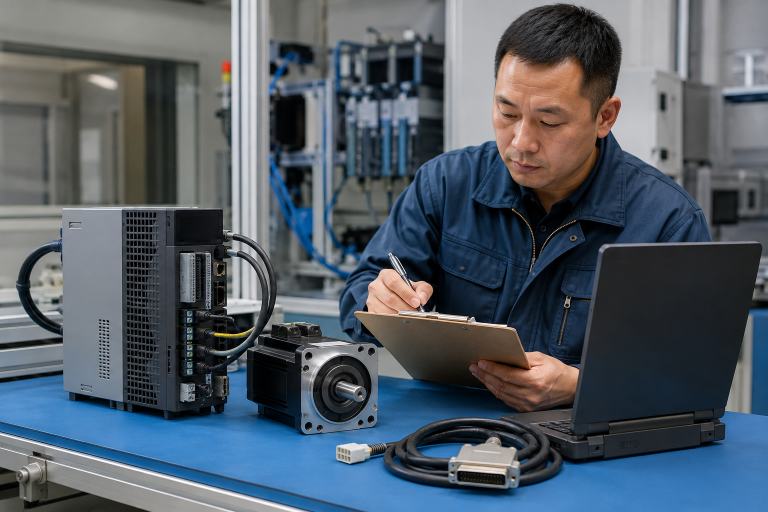
SANYO DENKI QS1E Spares: Save Parameters First
When a SANMOTION Q axis stops, the purchasing request often becomes a model number: “Please quote QS1E01AA0H4A3P1T.” That is a useful starting point, but…
Read guide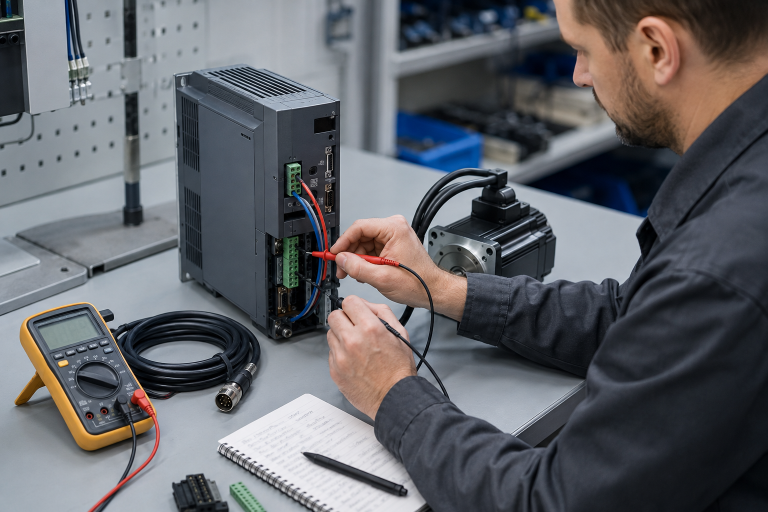 Sep 6, 2026
Yaskawa SGDH-05DE-OY Spares: Check the Servo Chain
A servo drive fault often produces a deceptively simple purchasing request: “Replace the SGDH-05DE-OY.” In a running machine, however, the amplifier is only one…
Read guide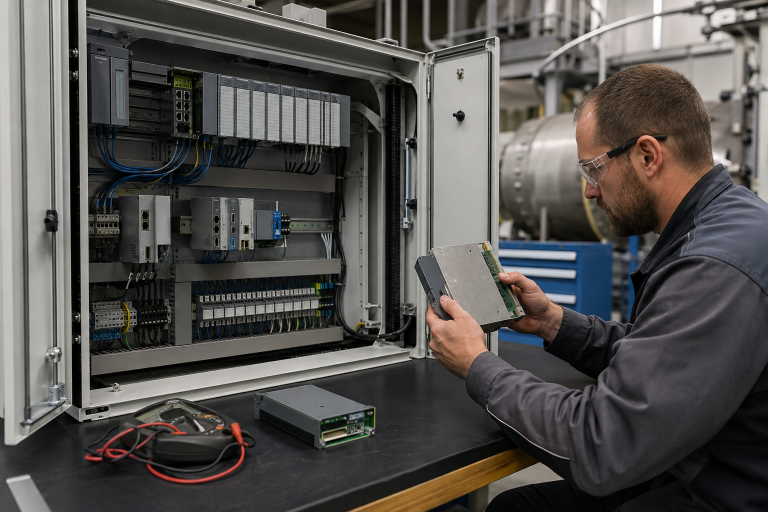 Sep 5, 2026
GE IS220PCLAH1A Spares: Check Mark VIe Fit
When a Mark VIe cabinet develops an intermittent control fault, the urgent request often becomes a single line: “Please quote IS220PCLAH1A.” That is understandable…
Read guide