
Control Transformer Spares: Check Load VA
Keep transformer voltage and frequency identity, sealed load VA, load inrush evidence and scope of supply together before accepting a spare.
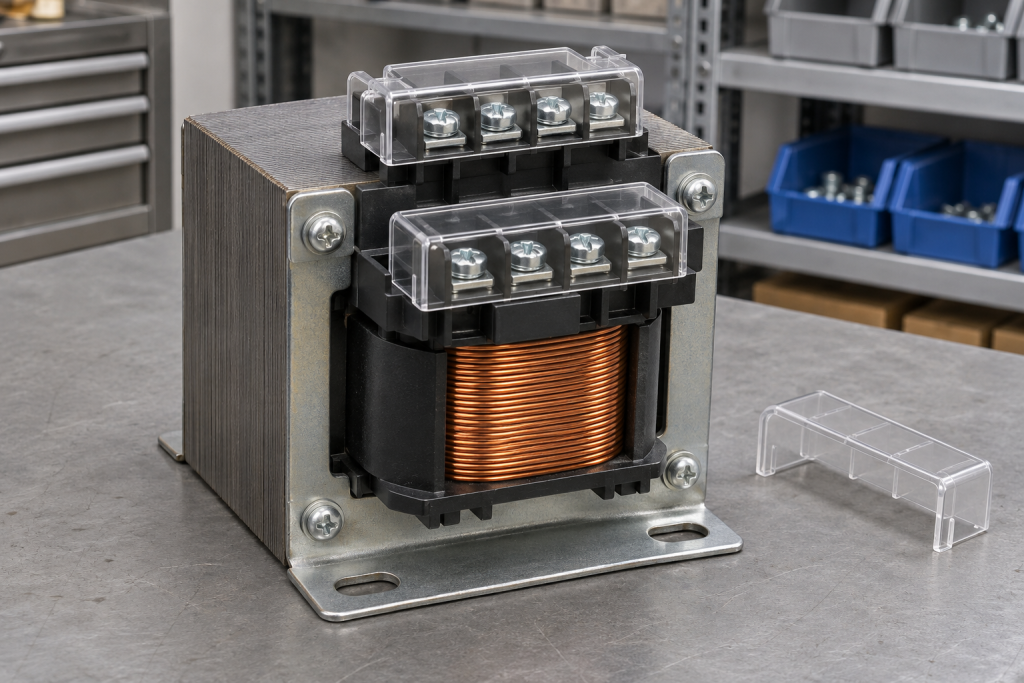
A control transformer spare can match the required secondary voltage while its ability to support the control circuit remains unproven. A purchasing comparison that records only the nameplate VA may omit the demand when several devices operate together. That gap belongs in the enquiry, before an apparently suitable unit becomes a counted spare.
For control transformer spares, keep the voltage identity, continuous load and load inrush evidence together. This is a documentary purchasing review, not a transformer sizing calculation, connection diagram or permission to interrupt a working panel. Installation, isolation and application acceptance remain with qualified personnel under the equipment owner’s approved procedures.
Identify the circuit before comparing the spare
Ask the controls owner which approved circuit the transformer supplies. Record the drawing reference and the connected devices relevant to the accepted operating sequence. A general panel description does not establish whether the enquiry concerns an AC control transformer, another supply component or an entire supported-power assembly.
Keep coil demand separate from the load switched by that coil. The relay coil and contact-duty guide explains that distinction. A motor rating on a contactor’s main contacts is not the same information as the demand its operating coil presents to a control supply.
Preserve documented changes since the original selection. An added device or revised sequence is a question for engineering review, even when the old transformer still fits the panel. Do not assume that copying the previous nameplate proves coverage for a changed circuit.
Keep the complete voltage and frequency identity
Record the complete manufacturer reference, primary and secondary voltage requirements, phase and frequency from the approved documentation. Preserve suffixes and the relevant drawing revision. Similar VA ratings or a familiar family name do not establish that two units have the same electrical identity.
Hammond Power Solutions’ control transformer overview distinguishes molded, open and enclosed constructions and voltage-code-dependent frequency ratings. That supports retaining the complete offered configuration rather than treating all products in a family as interchangeable.
Keep mounting, terminal access and required enclosure or accessory arrangements in the comparison as well. A bare transformer, a guarded component and an enclosed assembly represent different supplies. A photograph is useful for identifying a question, but is not an approved wiring arrangement.
Separate sealed VA from load inrush VA
HPS’s industrial control transformer selection reference distinguishes steady-state, or sealed VA, from inrush VA associated with loads energised together. It also identifies inrush load power factor as a selection consideration. These are different parts of the evidence, not alternative names for one rating.
Request the applicable device-manufacturer data and the operating sequence accepted by the controls owner. Keep the evidence for continuing loads alongside the demand associated with simultaneous operation. If the sequence or device data is missing, mark it unresolved rather than substituting a generic multiplier.
This article does not calculate a transformer rating or assign a power factor. It does not equate a device’s nominal watts with the complete circuit’s VA requirement. The responsible reviewer must identify the applicable method and approve the proposed combination for the installation.
Keep the selection table’s conditions attached
The same HPS reference presents continuous ratings separately from inrush capability under stated regulation conditions. A selection-table figure should therefore travel with its family, voltage basis and column conditions. A large isolated number copied into a quotation is not a complete acceptance record.
Ask the supplier to identify the manufacturer’s reference supporting the proposed complete code. Have engineering resolve which published conditions apply to the installation. Do not transfer a value between unrelated constructions or assume that one family’s table qualifies another manufacturer’s spare.
Distinguish control-load inrush evidence from any separate consideration when the transformer itself is energised. The enquiry should name the question being reviewed instead of collecting unlike current or VA figures under one heading. Procurement need not invent a test to resolve that distinction.
Make the scope of supply explicit
List the required guards, fuse-holder accessories, mounting parts and documentation as separate enquiry items where appropriate. Record whether they are included with the offered assembly. Matching a transformer reference does not establish the contents of an accessory kit or the approval of a protection arrangement.
The published control transformer category is a sourcing route, not a compatibility table. No individual listing is endorsed here for an unidentified circuit. Require a supplier to disclose differences; retain the application owner’s acceptance rather than allowing urgency to stand in for that decision.
Separate receiving inspection from application release
HPS’s industrial control transformer instructions include receiving inspection for shipping damage and verification of nameplate information. Those checks are useful receiving evidence, but do not replace the earlier circuit review or qualify an alternative by themselves.
Keep the received identity, supplied parts and supporting documents against the accepted enquiry. Separate documentary acceptance, physical receiving inspection and any authorised application verification. Record the owner and next action for an unresolved difference; an item physically in stores is not automatically qualified coverage.
FAQ
Does matching the secondary voltage qualify a transformer spare?
No. Preserve the complete voltage and frequency identity, load evidence, supplied assembly and applicable acceptance reference.
Are sealed VA and load inrush VA interchangeable?
No. They describe different load conditions. Keep the manufacturer data and approved operating sequence with each figure.
Does a larger nameplate VA prove a replacement is suitable?
No. A larger number does not resolve different voltages, frequency, construction, table conditions or application requirements.
Does a receiving inspection replace the engineering review?
No. Identity and damage checks do not by themselves qualify the control circuit, protection arrangement or proposed alternative.
Prepare the control transformer enquiry
Send the full model, nameplate photos, approved voltage and frequency requirements, available load evidence, discontinued-part replacement need and delivery requirement to [email protected] or WhatsApp/Phone +86 18259474341. Identify application questions still awaiting engineering acceptance.
Route this topic into a sourcing request
Connect the article topic to a model number, category, brand, quantity, and destination before opening the RFQ.
Related Insights
Continue with sourcing and model matching guides
 Nov 28, 2026
Series 90-30 Spares: Check the RX3i Rack Boundary
Separate exact Series 90-30 spares from the verified RX3i rack, processor and retained I/O needed for a planned migration.
Read guide Nov 27, 2026
HMI Screen Spares: Identify the Failed Layer
Separate surface damage, touch input and the supported display assembly before specifying an HMI hardware spare.
Read guide Nov 26, 2026
Motor Brake Rectifier Spares: Match the Coil
Check the fitted brake coil and approved control function before treating a motor brake rectifier as an exact spare.
Read guide