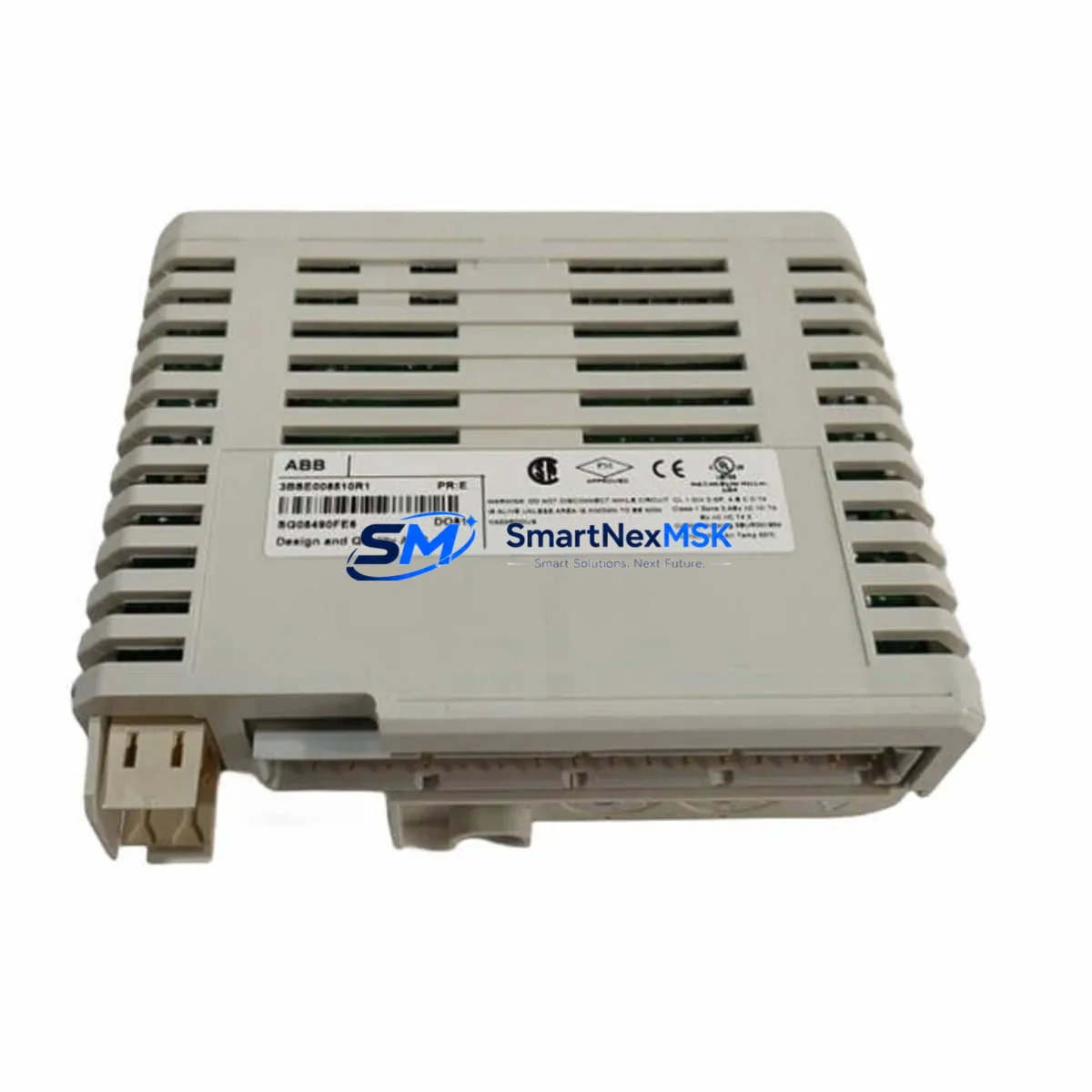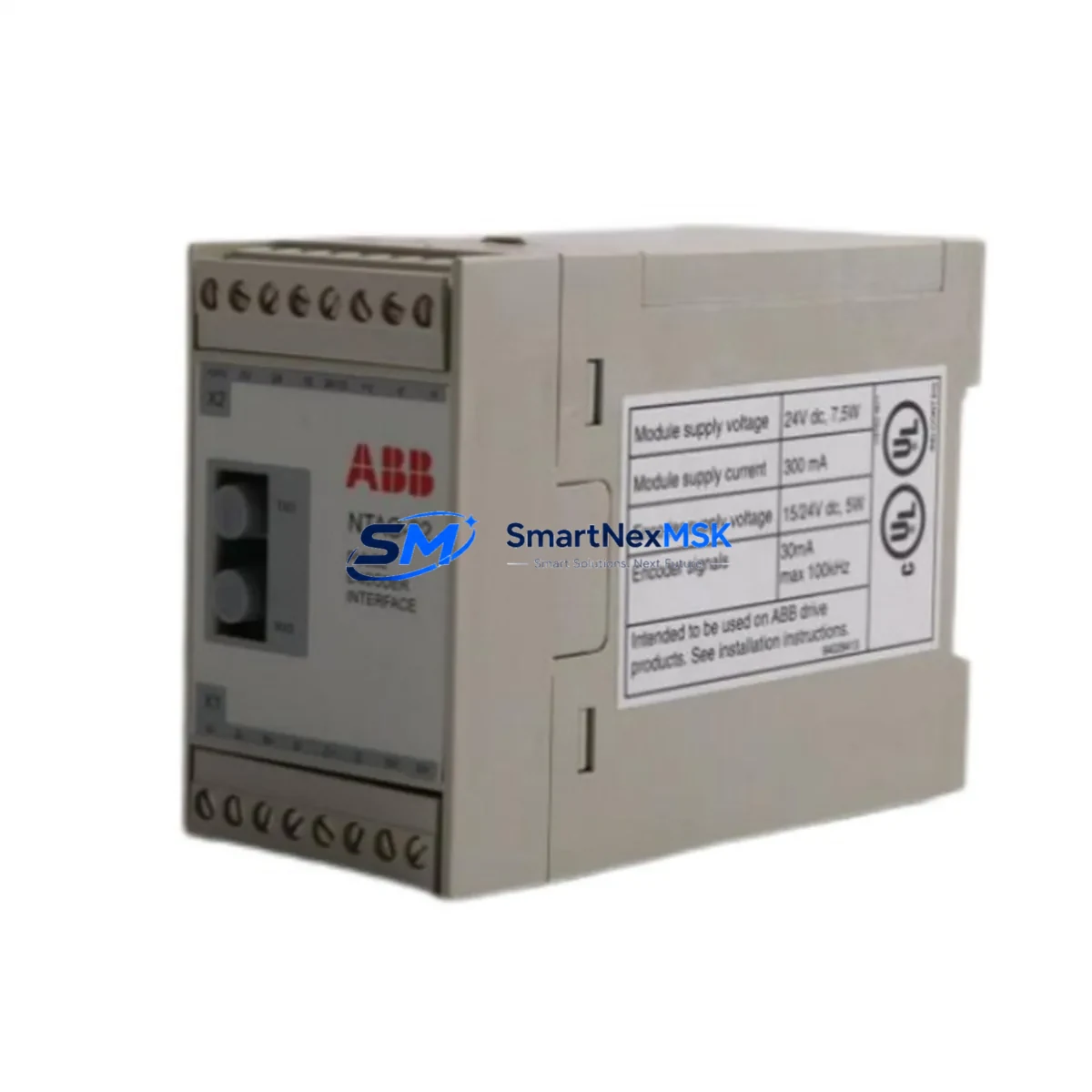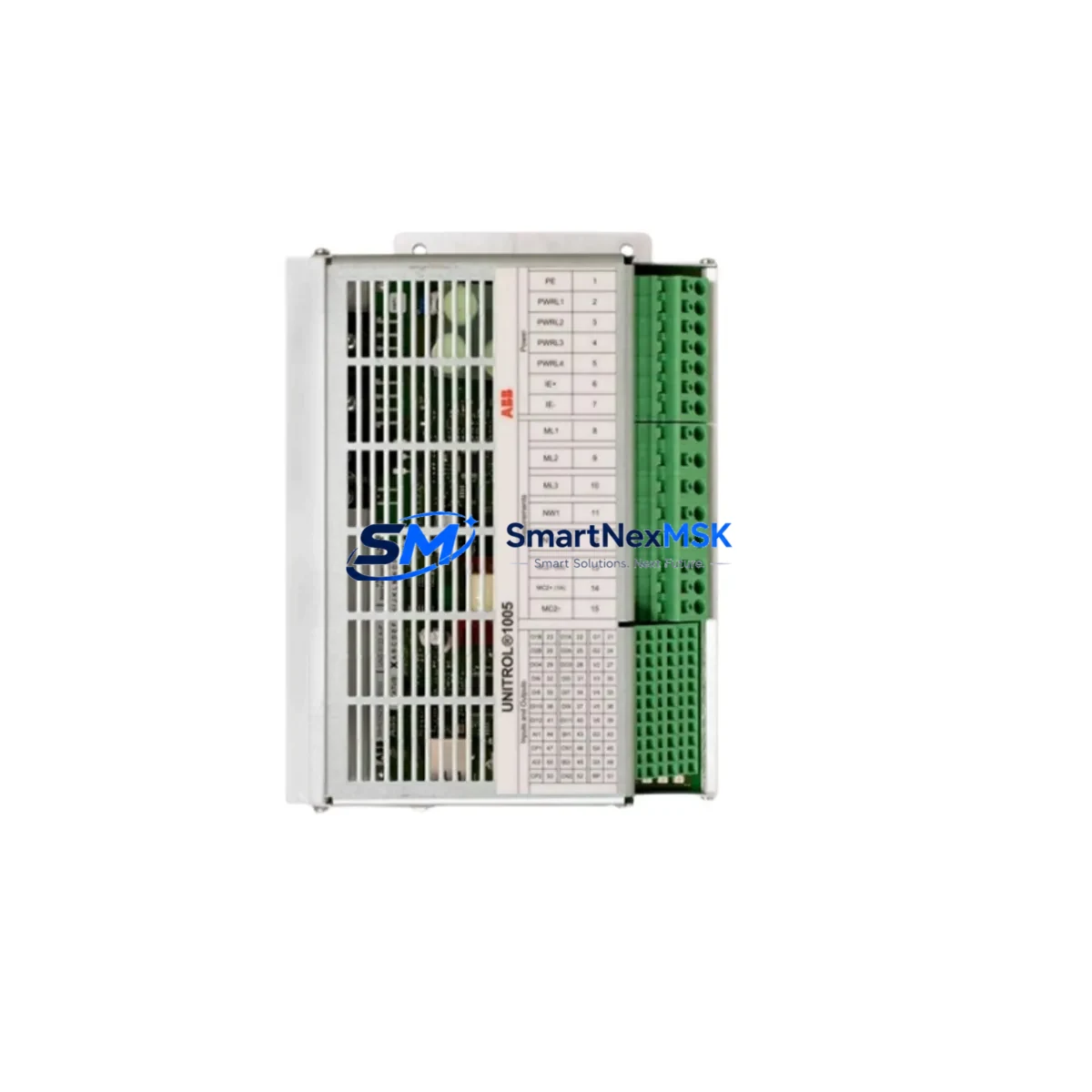
ABB 3BHE043576R0011 Retrofit-Ready AVR for UNITROL 1005 ECO Control Systems
The ABB 3BHE043576R0011 is a retrofit-ready Automatic Voltage Regulator (AVR) engineered for seamless integration into legacy UNITROL 1005 ECO excitation control systems. As ABB’s UNITROL 1005 series approaches end-of-life support cycles, power plant operators, OEM integrators, and industrial maintenance teams are actively seeking verified replacement modules that preserve existing wiring infrastructure, control logic, and generator protection schemes. The 3BHE043576R0011 addresses this need directly — offering a compatible upgrade path without requiring full excitation panel redesign.
This module is designed for synchronous generator excitation applications where voltage regulation accuracy, response speed, and system stability are non-negotiable. Whether you are replacing a failed unit on an emergency basis or executing a planned modernization of an aging control cabinet, the 3BHE043576R0011 provides the electrical and functional compatibility required to restore or upgrade your excitation loop with minimal disruption to plant operations.
Upgrade Compatibility Table
| Parameter | Details |
|---|---|
| Replaced Model | ABB UNITROL 1005 ECO (legacy AVR modules) |
| Replacement SKU | 3BHE043576R0011 |
| Series Compatibility | UNITROL 1005 ECO excitation control platform |
| Mounting / Installation | DIN rail or panel-mount per original UNITROL 1005 ECO mechanical spec |
| Terminal Wiring | Compatible with original terminal block layout; verify PT/CT input wiring before energizing |
| Communication Interface | Supports MODBUS RTU; verify baud rate and node address against existing SCADA/DCS configuration |
| Excitation Input | AC excitation input compatible with brushless and static excitation topologies |
| Retrofit Recommendation | Direct replacement; parameter re-entry required via ABB CMT or local HMI panel |
| Commissioning Focus | PID gain re-tuning, PSS enable/disable, droop setting, and reactive power sharing verification |
| Warranty | 12 Months — covers manufacturing defects and functional failure under normal operating conditions |
Retrofit Planning for Existing Automation Systems
A successful retrofit of the ABB 3BHE043576R0011 into an existing UNITROL 1005 ECO installation requires systematic pre-work across several engineering disciplines. Before removing the failed or obsolete AVR module, the site engineer should document all existing parameter settings using the ABB CMT (Commissioning and Maintenance Tool) software or extract a parameter backup from the local operator panel if the unit is still partially functional.
On the power supply side, confirm that the auxiliary power feed — typically 110 VAC or 220 VAC depending on panel configuration — is within tolerance and that the excitation transformer secondary voltage matches the input rating of the 3BHE043576R0011. If the existing excitation panel also houses an ABB UNITROL 1010 or UNITROL 6080 as a redundant channel, verify that the inter-module communication link (typically via fiber or RS-485) remains intact after the swap.
Terminal block wiring should be mapped against the original UNITROL 1005 ECO wiring diagram. Pay particular attention to the voltage transformer (VT) and current transformer (CT) input terminals, the field current feedback circuit, and the binary I/O connections used for start/stop, fault reset, and remote setpoint adjustment. If the control cabinet also contains an ABB AC800M controller or a third-party DCS I/O module handling generator protection relay signals, confirm that the analog output scaling from the new AVR matches the expected 4–20 mA or 0–10 V range at the receiving end.
For sites running an ABB Symphony Plus DCS or an older Advant OCS platform, the MODBUS RTU register map of the 3BHE043576R0011 should be cross-referenced against the existing driver configuration. Node address, baud rate (typically 9600 or 19200 bps), and parity settings must match the master station configuration to restore remote monitoring and setpoint control. If the original system used a proprietary ABB LON or PROFIBUS DP interface, a protocol gateway or interface converter may be required as part of the retrofit scope.
HMI screen updates are often overlooked during AVR replacements. If the plant uses an ABB CP600 operator panel or a third-party SCADA system with dedicated excitation control faceplates, the tag names, register addresses, and alarm thresholds linked to the old UNITROL 1005 ECO module will need to be updated to reflect the new module’s register map. Failure to update HMI bindings is a common cause of post-retrofit alarm floods and false trips.
Where the original installation included an ABB UNITROL 1005 ECO expansion I/O board for additional binary inputs or analog feedback channels, verify whether the 3BHE043576R0011 supports the same I/O expansion architecture or whether a standalone I/O module such as an ABB TU810 or CI854 needs to be added to the rack to maintain full signal coverage. Backplane slot assignments and module addressing should be confirmed before powering up the new configuration.
Downtime Control During System Migration
Minimizing generator downtime during an AVR retrofit is a primary concern for power utilities, industrial co-generation plants, and marine propulsion systems. The recommended approach is to pre-configure the 3BHE043576R0011 offline using ABB CMT software before the scheduled outage window. Load the parameter set derived from the original UNITROL 1005 ECO backup, adjust for any known hardware differences, and perform a bench-level functional check — including analog I/O verification and communication link test — before the module is transported to site.
During the outage, follow a structured swap sequence: isolate the excitation circuit, de-energize the field breaker, remove the old AVR module, install the 3BHE043576R0011, reconnect all terminal wiring per the verified wiring map, and restore auxiliary power. Before closing the field breaker, perform a static check of all binary inputs and outputs using the local panel or a laptop running CMT. Confirm that the voltage setpoint, droop coefficient, and reactive power sharing parameters are correctly loaded.
For sites where continuous operation is critical, consider a parallel commissioning strategy: install the new module in a shadow configuration alongside the existing unit (if panel space permits), verify all signal connections and communication links while the old module remains in control, then execute a bumpless transfer to the new AVR during a brief planned interruption. This approach is particularly effective in dual-channel excitation systems where an ABB UNITROL 6080 or a redundant excitation channel is available as a fallback during the transition.
Post-energization, monitor generator terminal voltage, reactive power output, and excitation current for at least 30 minutes under loaded conditions before declaring the retrofit complete. Log all commissioning data for the plant maintenance record and update the as-built wiring documentation to reflect the new module’s terminal assignments.
Retrofit Support FAQ
Q1: Is the ABB 3BHE043576R0011 a direct drop-in replacement for the original UNITROL 1005 ECO AVR module?
A: In most installations, yes — the 3BHE043576R0011 is designed as a functional replacement for the UNITROL 1005 ECO platform. However, parameter re-entry is always required after module swap, as settings are stored locally on the module and are not automatically transferred. We recommend backing up all parameters from the existing unit before removal using ABB CMT software.
Q2: What commissioning steps are required after installing the 3BHE043576R0011?
A: After physical installation and wiring verification, the key commissioning steps include: loading the parameter backup, verifying VT/CT input scaling, confirming MODBUS communication link integrity, re-tuning PID gains if the generator characteristics differ from the original setup, and performing a no-load voltage build-up test before connecting to the grid. A full load test with reactive power sharing verification is recommended before returning the unit to normal service.
Q3: Does the 3BHE043576R0011 support the same communication protocols as the original UNITROL 1005 ECO?
A: The module supports MODBUS RTU as the primary serial communication protocol, consistent with the UNITROL 1005 ECO platform. If your existing DCS or SCADA system uses a different protocol such as PROFIBUS DP or LON, a protocol converter will be required. Please confirm your site’s communication architecture before ordering.
Q4: What does the 12-month warranty cover, and how is it handled?
A: The 12-month warranty covers manufacturing defects and functional failures under normal operating conditions from the date of shipment. Each unit undergoes pre-shipment functional testing before dispatch. In the event of a warranty claim, contact our technical support team with the unit serial number, installation date, and a description of the fault. Replacement or repair will be arranged promptly to minimize your system downtime.
© 2026 SMARTNEXMSK. All rights reserved.
Original Source: https://smartnexmsk.com
Contact: [email protected] | +86 18259474341