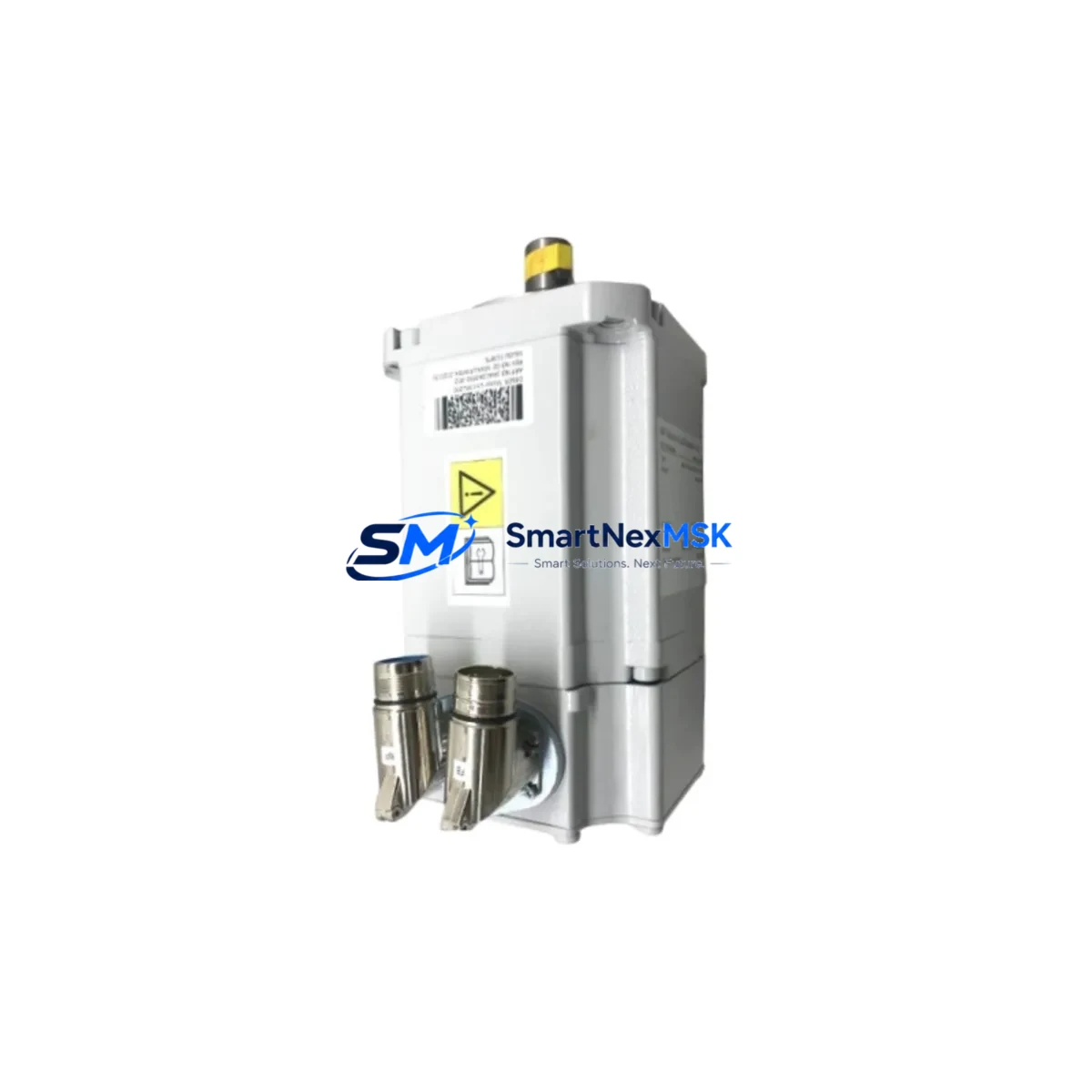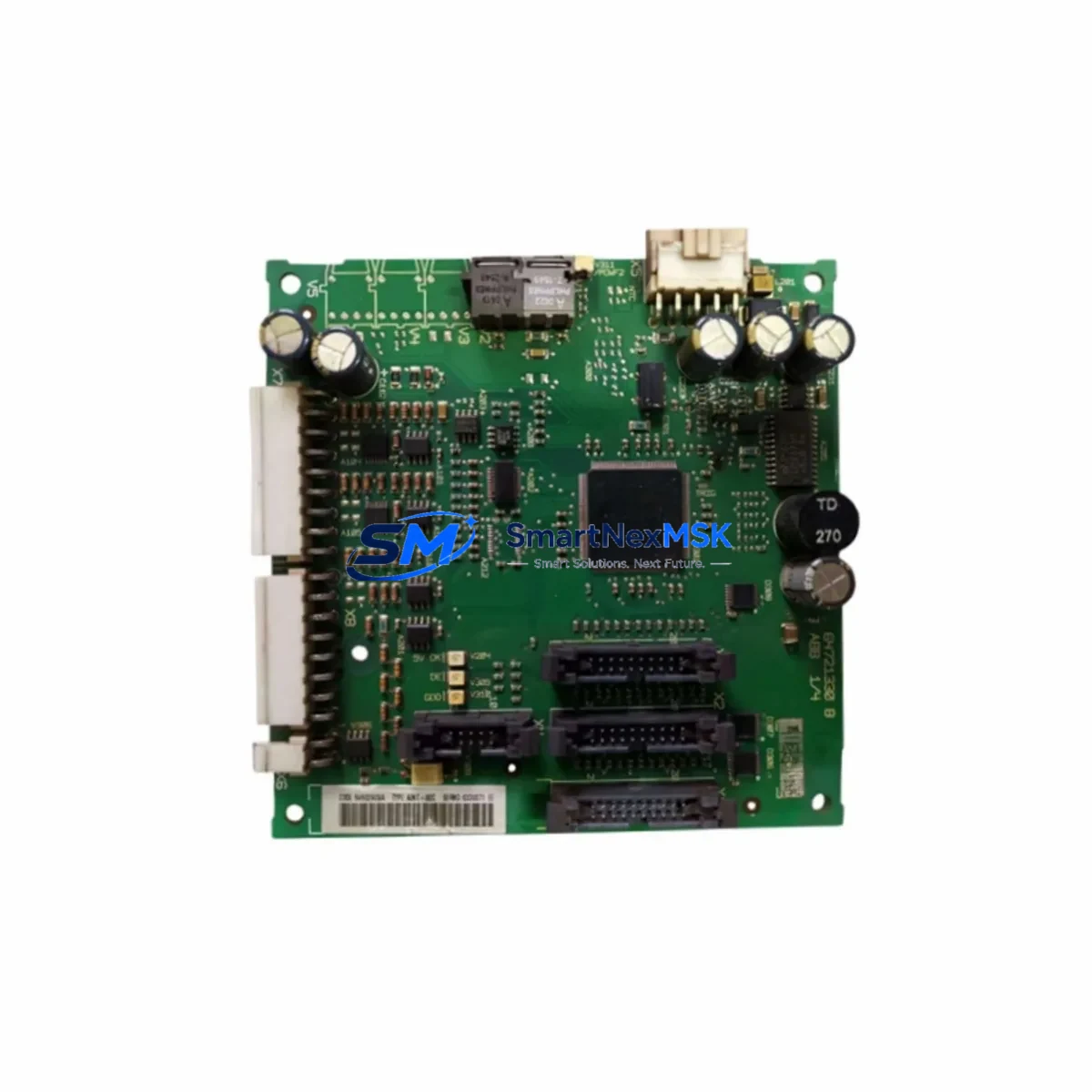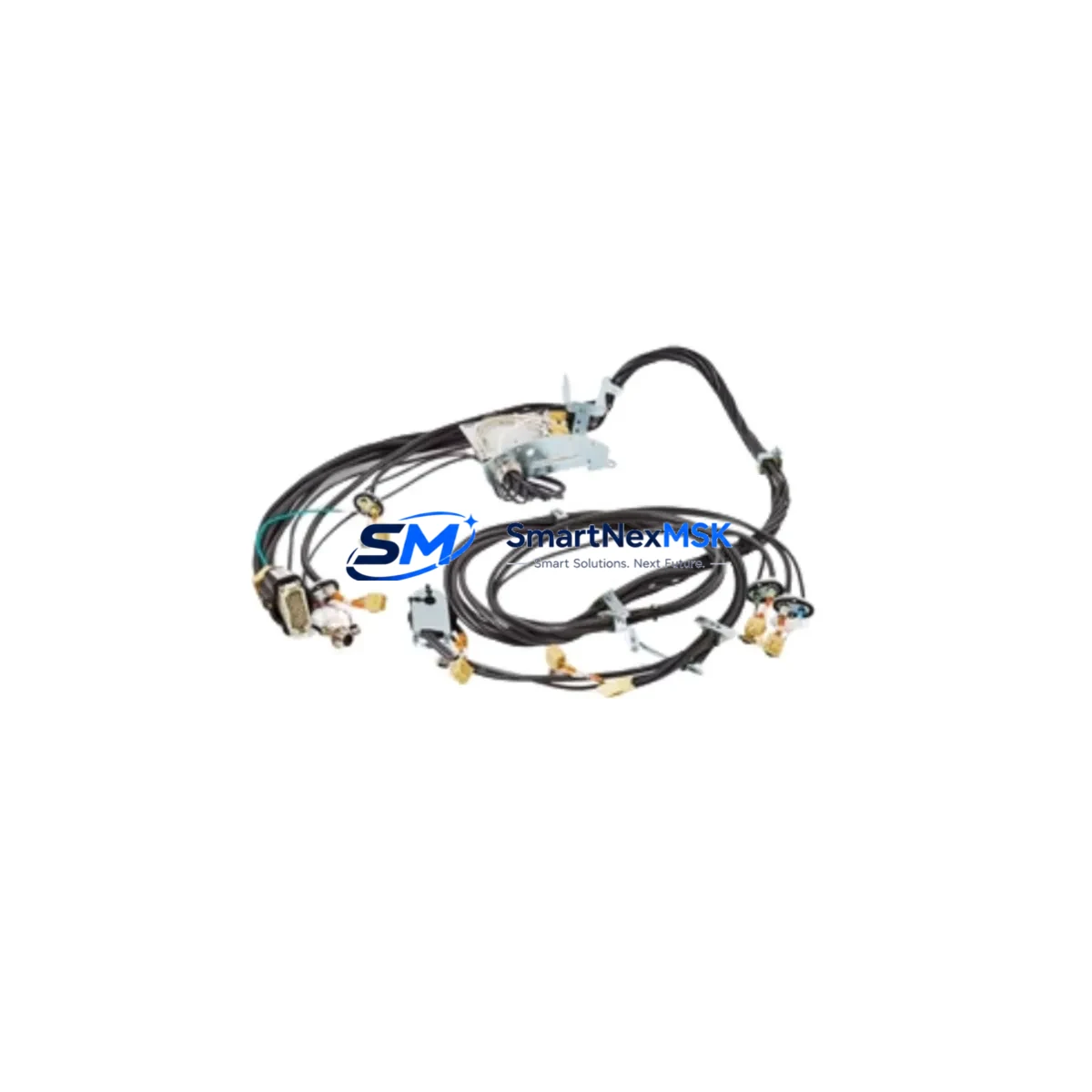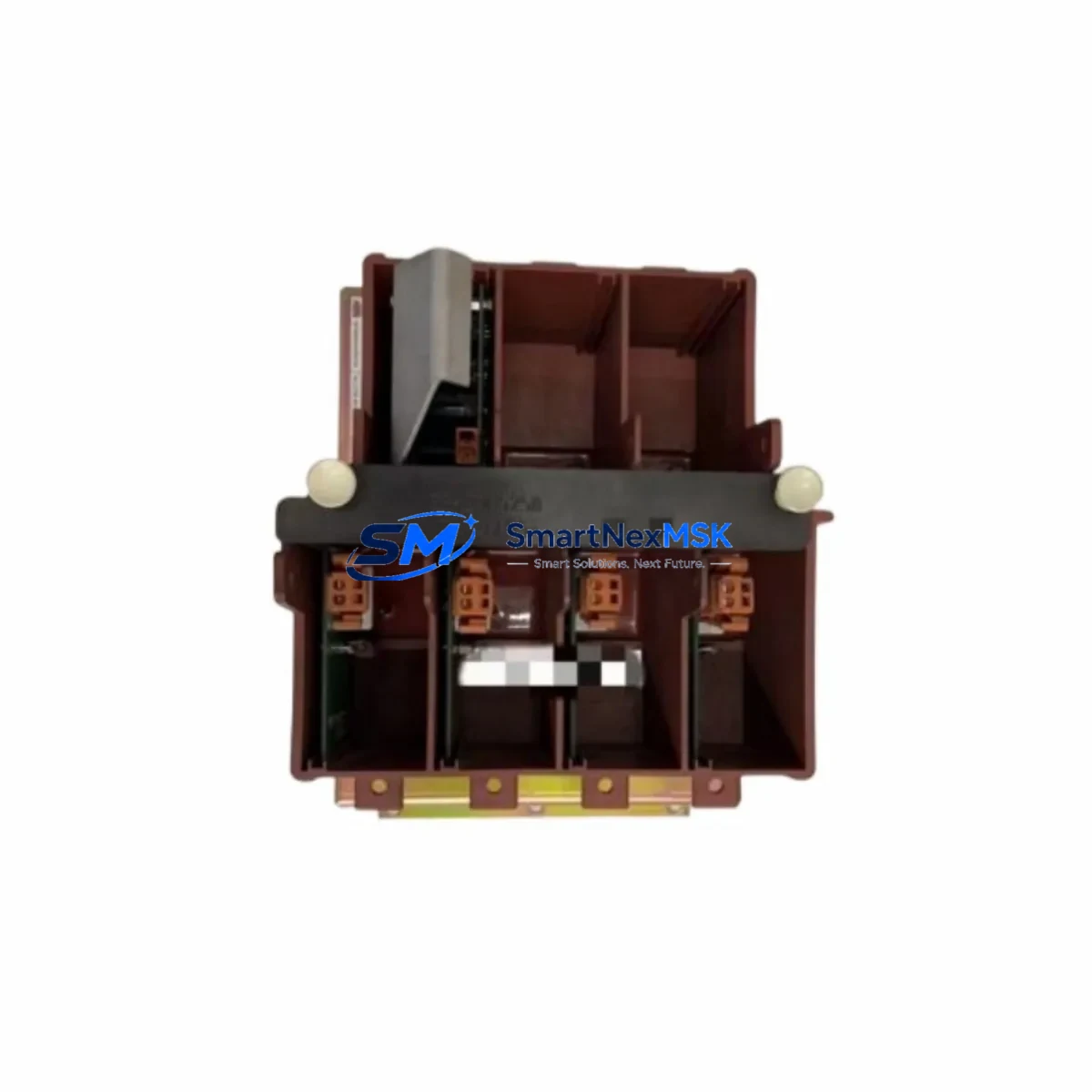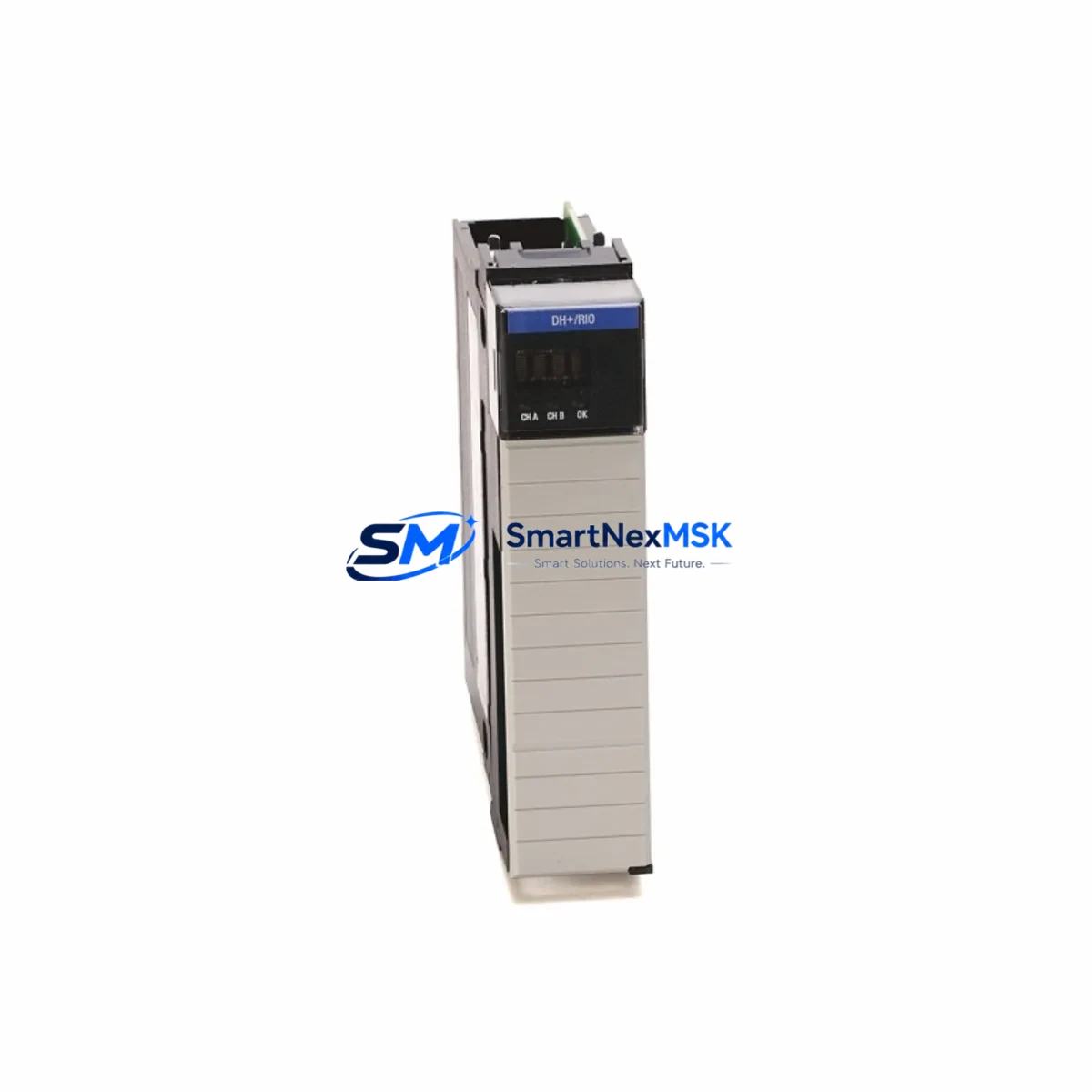
ABB 3HAC062340-004 Retrofit-Ready Servo Motor Unit for IRB 7600 Control Systems
The ABB 3HAC062340-004 is a two-axis servo motor unit engineered for the IRB 7600 series industrial robot platform — one of ABB’s most widely deployed heavy-payload robotic arms in automotive, foundry, and heavy manufacturing environments. As original ABB production lines age and OEM support windows narrow, facilities running IRB 7600 cells increasingly face the challenge of sourcing reliable, specification-matched replacement servo drives without triggering full system requalification. The 3HAC062340-004 addresses this directly: it is a retrofit-ready, drop-in compatible unit that preserves existing wiring harnesses, encoder feedback loops, and axis-mapping configurations, allowing maintenance teams to restore full robot functionality with minimal downtime.
Before installing the 3HAC062340-004, engineers should verify several critical parameters. Power supply capacity at the drive cabinet must be confirmed against the unit’s rated input voltage and peak current draw — the IRC5 controller’s drive module (typically a DSQC 661 or DSQC 662 power unit) must be capable of sustaining the servo’s peak torque demand during acceleration phases. Terminal wiring should be cross-referenced against the original axis wiring diagram; connector pinouts on the 3HAC062340-004 are designed to match the IRB 7600 harness standard, but any field modifications to the existing cable assembly must be documented and reversed before installation. The backplane interface and axis board slot assignment within the IRC5 cabinet must also be confirmed — incorrect slot addressing will cause axis configuration faults during the robot’s startup self-test.
Module address configuration is handled through the IRC5 FlexPendant or RobotStudio offline programming environment. After physical installation, the axis parameters stored in the robot’s system configuration files (typically under the MOC.cfg and SYS.cfg modules) must be validated against the replacement unit’s motor data sheet. If the original program was developed on an older S4C+ controller and has since been migrated to IRC5, additional attention is required to confirm that motion instruction timing, zone data, and speed profiles remain within the new servo’s operational envelope. HMI screen layouts referencing axis status or torque feedback should be reviewed in parallel to ensure display values remain accurate post-swap.
Communication link integrity is another key checkpoint. The 3HAC062340-004 operates within ABB’s standard DeviceNet and PROFIBUS-compatible drive architecture. If the facility’s control network uses EtherNet/IP or PROFINET for higher-level SCADA integration, the IRC5 communication board — such as the DSQC 688 DeviceNet board or DSQC 669 PROFIBUS adapter — must be confirmed as active and correctly addressed before the replacement servo is brought online. Any changes to the network topology during the retrofit window should be logged and communicated to the process control team to avoid conflicts with upstream PLC logic.
Upgrade Compatibility Table
| Parameter | Details |
|---|---|
| Compatible Robot Model | ABB IRB 7600 (all variants: IRB 7600-150/3.5, IRB 7600-325/3.1, IRB 7600-500/2.55) |
| Controller Compatibility | IRC5 Single / IRC5 Panel Mounted Controller |
| Replaces / Supersedes | Earlier 3HAC series two-axis servo units for IRB 7600 platform |
| Connector Interface | Standard ABB IRB 7600 harness pinout — no rewiring required |
| Communication Protocol | DeviceNet, PROFIBUS-DP (via IRC5 communication board) |
| Installation Type | Drop-in replacement; backplane slot assignment must be confirmed |
| Axis Configuration | Two-axis servo unit; MOC.cfg and SYS.cfg validation required post-install |
| Commissioning Tool | ABB FlexPendant / RobotStudio |
| Pre-Shipment Testing | Full functional test performed before dispatch |
| Warranty | 12-Month Warranty — covers manufacturing defects and functional failure |
Retrofit Planning for Existing Automation Systems
A successful IRB 7600 servo retrofit begins well before the maintenance window opens. The planning phase should include a full audit of the robot cell’s electrical cabinet, confirming the condition of the IRC5 drive module, the DSQC 661 or DSQC 662 power supply unit, and the axis computer board. If the existing axis computer shows signs of wear — intermittent fault codes, erratic encoder readings, or communication dropouts — it is advisable to replace it alongside the 3HAC062340-004 servo unit to avoid a second unplanned outage. The DSQC 633 axis computer or its current equivalent should be on hand as a contingency spare.
Terminal block wiring within the drive cabinet should be photographed and labeled before any disconnection. The IRB 7600’s motor cable assembly — which routes through the robot’s upper arm and wrist — should be inspected for insulation wear, particularly at flex points near axis 4 and axis 5. If the cable shows cracking or abrasion, replacing it during the same maintenance window avoids a repeat shutdown. The 3HAC026253-001 motor cable or its current revision is the standard replacement reference for this platform.
For facilities running multiple IRB 7600 units on a shared IRC5 MultiMove controller, the retrofit scope expands. Each robot’s axis configuration must be isolated within the MultiMove task structure, and the replacement servo’s motor data must be loaded into the correct task partition. The DSQC 668 fieldbus adapter and any associated I/O modules — such as the DSQC 652 digital I/O board — should be verified as correctly mapped before the cell is returned to production. If the cell includes a connected ABB CP600 or CP400 HMI panel, axis status displays and alarm pages should be tested against live robot data after commissioning.
For older facilities still operating S4C+ controllers with DSQC 504 or DSQC 532 drive units, a direct swap to the 3HAC062340-004 is not possible without a controller upgrade. In these cases, the recommended migration path is a full IRC5 controller retrofit, which can be planned in parallel with the servo replacement to consolidate downtime into a single scheduled outage. Programming cables such as the ABB JSHD4 teach pendant cable or a USB-to-serial adapter for RobotStudio connectivity should be prepared in advance for program backup and restore operations.
Downtime Control During System Migration
Minimizing production interruption during a servo replacement requires a structured pre-outage preparation protocol. At least 48 hours before the maintenance window, the robot’s current program — including all RAPID modules, system parameters, and I/O configuration — should be backed up to a USB drive via the FlexPendant’s backup function or exported through RobotStudio. This backup serves as the restore baseline if the new servo unit triggers unexpected axis configuration conflicts during startup.
During the outage, the IRC5 controller should be powered down in the correct sequence: first disabling the motor power contactor, then shutting down the controller PC, and finally isolating the main power supply. The 3HAC062340-004 can then be installed, connectors seated, and the cabinet closed before power is restored. On first power-up, the controller will perform a self-test; any axis configuration warnings should be resolved through the FlexPendant’s configuration editor before attempting to run any motion program.
Once the axis configuration is confirmed, a slow-speed jog test across the full range of motion for each axis should be completed before returning the robot to automatic mode. Torque and speed feedback values should be monitored through the FlexPendant’s diagnostic screens to confirm the replacement servo is performing within expected parameters. If the cell uses a safety PLC — such as an ABB JOKAB Safety or a Pilz PNOZ controller — the safety circuit should be re-validated after the servo swap to confirm that all emergency stop and safeguarding functions remain intact. Only after a complete functional verification should the cell be returned to production, with the maintenance record updated to reflect the component change and the 12-month warranty start date logged.
Retrofit Support FAQ
Q: Is the ABB 3HAC062340-004 a direct replacement for the original servo unit on all IRB 7600 variants?
A: The 3HAC062340-004 is compatible with the IRB 7600 platform across its primary payload variants (150 kg, 325 kg, and 500 kg). However, axis-specific motor data parameters must be validated in the IRC5 system configuration after installation. We recommend confirming the exact robot serial number and axis assignment before ordering.
Q: What commissioning steps are required after installing the replacement servo?
A: After physical installation, power up the IRC5 controller and check for axis configuration warnings on the FlexPendant. Load the backed-up system parameters, verify MOC.cfg motor data entries, perform a slow-speed jog test across all axes, and confirm torque feedback values are within specification. Safety circuit re-validation is required before returning the cell to automatic production mode.
Q: Does the 3HAC062340-004 require any wiring modifications to the existing IRB 7600 cable harness?
A: No rewiring is required under standard conditions. The unit uses the same connector pinout as the original ABB IRB 7600 servo harness. If the existing cable assembly has been field-modified, those modifications must be reversed before installation to ensure correct signal mapping.
Q: What does the 12-month warranty cover, and what is the pre-shipment testing process?
A: Every 3HAC062340-004 unit undergoes a full functional test before dispatch, verifying encoder output, power stage integrity, and communication interface response. The 12-month warranty covers manufacturing defects and functional failure under normal operating conditions. Warranty claims are supported by our technical team at [email protected].
© 2026 SMARTNEXMSK. All rights reserved.
Original Source: https://smartnexmsk.com
Contact: [email protected] | +86 18259474341