ABB ARC093AE01 Retrofit-Ready Relay Output Module for AC800M S800 I/O Control Systems
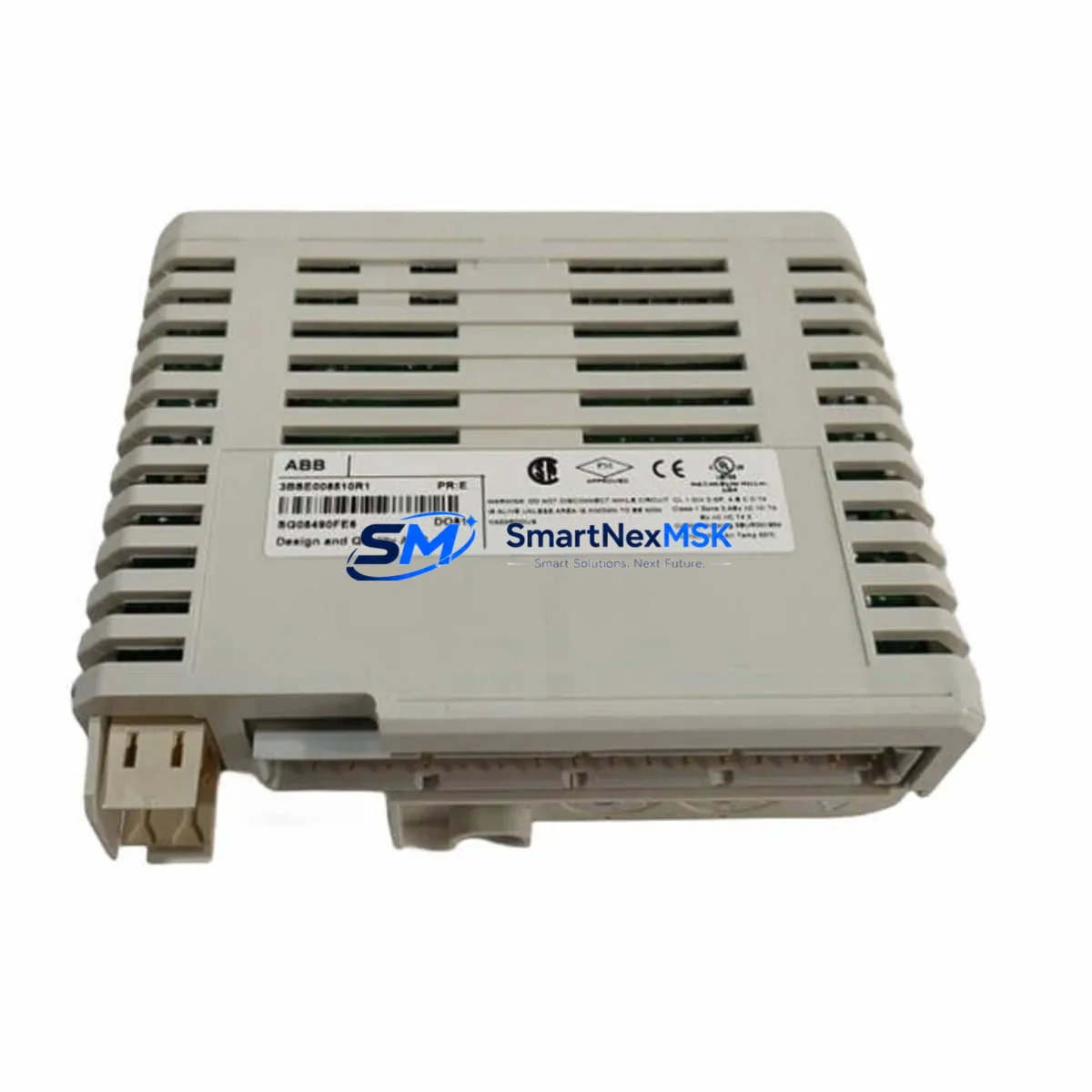
The ABB ARC093AE01 (also catalogued as HIEE300690R0001) is a relay output module engineered for the ABB AC800M distributed control platform and the S800 I/O subsystem. As legacy process plants and manufacturing facilities face the challenge of maintaining aging DCS infrastructure, the ARC093AE01 has become one of the most sought-after retrofit components for engineers tasked with keeping AC800M-based control systems operational without a full platform migration. This module provides eight relay output channels, each capable of switching dry-contact signals to field devices including solenoid valves, motor starters, alarm annunciators, and interlock circuits — making it a critical interface between the controller logic and physical plant equipment.
When an original ARC093AE01 fails or reaches end-of-service life, the replacement process requires careful attention to several system-level parameters. Engineers must first verify the power budget of the existing S800 I/O station: the ARC093AE01 draws its supply from the TB820V2 or TB840A termination unit bus, and the total current draw across all modules on the same baseplate must remain within the rated capacity of the PS800 power supply module. If the station is already near its power ceiling — particularly in dense configurations using AI810, AO810V2, or DI810 modules alongside relay outputs — a power audit should precede any module swap.
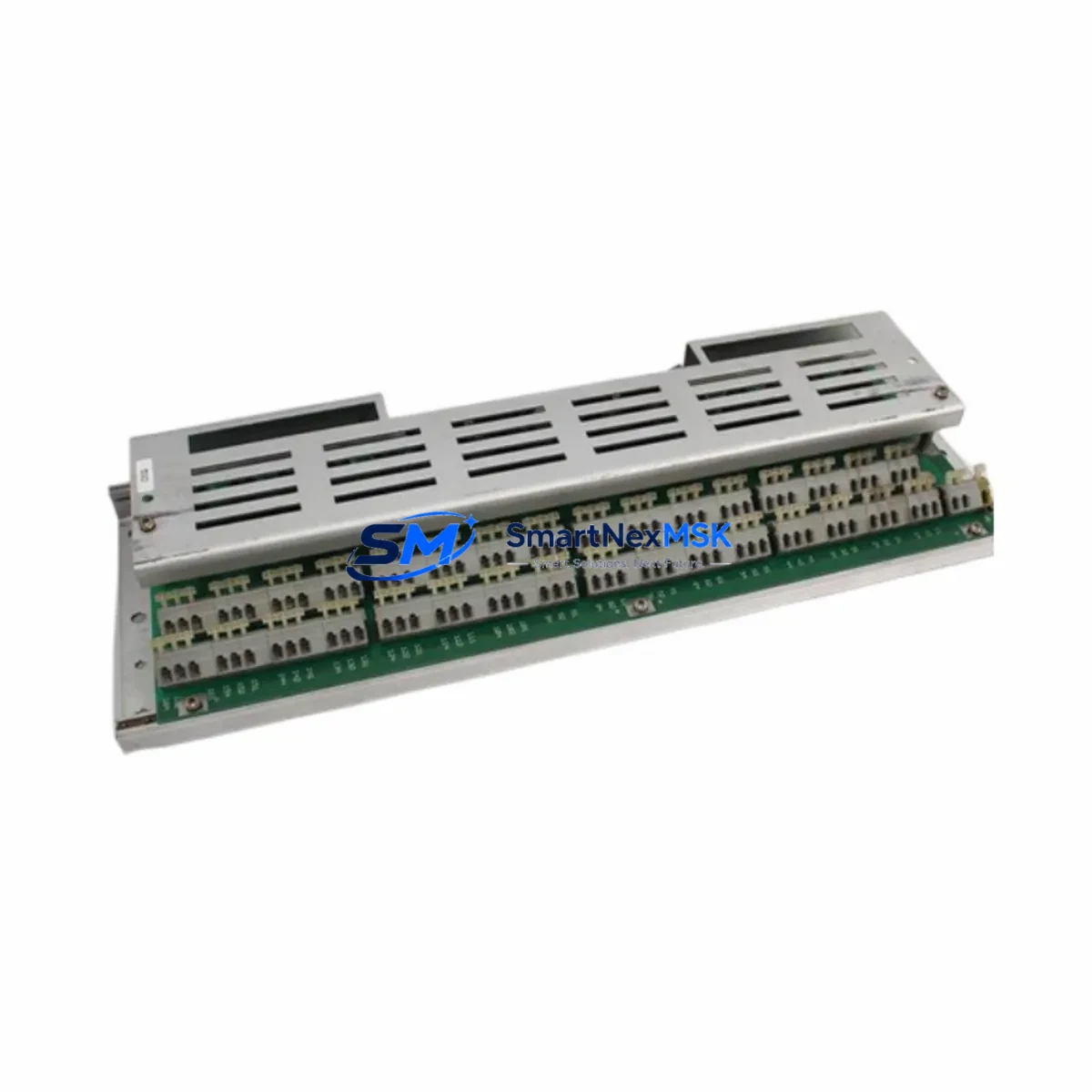
Terminal wiring is another critical checkpoint. The ARC093AE01 connects to field wiring through its paired termination unit, typically the TB820V2 or a compatible marshalling panel. Before removing the failed module, technicians should photograph or document the existing terminal assignments, verify continuity of the field cable shield grounding, and confirm that relay coil voltage ratings match the field device specifications. In retrofit scenarios where the original termination unit has also degraded, a simultaneous replacement of both the ARC093AE01 and its termination unit is recommended to eliminate latent wiring faults.
Backplane slot addressing is handled automatically by the AC800M controller through the S800 I/O bus protocol. When the replacement ARC093AE01 is inserted into the same physical slot on the S800 baseplate — whether a TB807 or TB811 rack — the PM866 or PM864 controller processor will recognize the module type via its hardware identity register and restore the pre-configured channel assignments without requiring manual address programming. However, engineers should confirm in Control Builder M that the module type definition in the hardware configuration tree matches the installed unit, particularly if the replacement module carries a different firmware revision.
Program compatibility is generally preserved in direct slot-for-slot replacements, since the ARC093AE01’s I/O channel mapping is defined in the AC800M application program rather than stored on the module itself. Nevertheless, a cold-start download of the application to the PM866 controller after module replacement is advisable to ensure all output force states are cleared and the relay channels initialize to their defined safe states. If the plant uses an 800xA System or Freelance DCS operator station, the HMI faceplate for the affected output group should be verified post-replacement to confirm that status feedback signals — particularly relay energized/de-energized indications — are updating correctly.
Communication link integrity between the S800 I/O station and the AC800M controller is maintained through the ModuleBus or PROFIBUS DP interface, depending on the station configuration. In systems using an AF100 fieldbus or CI854 PROFIBUS interface module, the ARC093AE01 replacement does not require any fieldbus parameter changes, as the module’s presence is transparent to the communication layer. However, if the I/O station uses a CI801 or CI810B interface module operating in redundant mode, the switchover behavior should be tested after replacement to confirm that the standby path correctly mirrors the relay output states.
For facilities undertaking broader control system modernization — migrating from an older Advant OCS or MOD 300 platform to AC800M — the ARC093AE01 is frequently specified as part of the new S800 I/O build-out. In these migration projects, the module is typically paired with AI835A analog input modules, AO820 analog output modules, DI885 digital input modules, and CI854A PROFIBUS interface modules to construct a complete I/O station that replicates the signal inventory of the legacy system. The TB820V2 termination unit simplifies field cable re-termination by providing clearly labeled screw terminals that can be pre-wired and tested before the controller cutover window.
Upgrade Compatibility Table
| Parameter | ARC093AE01 / HIEE300690R0001 |
|---|---|
| Compatible Platform | ABB AC800M, S800 I/O System |
| Module Type | Relay Output Module, 8-Channel |
| Termination Unit | TB820V2 / TB840A (field-side wiring) |
| Backplane Interface | S800 ModuleBus (auto-addressed) |
| Compatible Racks | TB807, TB811 S800 Baseplates |
| Compatible Controllers | PM864, PM866, PM891 (AC800M series) |
| Communication Compatibility | CI801, CI810B, CI854A, AF100 (no parameter change required) |
| HMI Compatibility | 800xA System, Freelance DCS (status feedback verification recommended) |
| Replacement for | ARC093AE01 (HIEE300690R0001) — direct slot-for-slot drop-in |
| Program Re-download | Cold-start download recommended post-swap |
| Commissioning | Force-state clear, relay channel initialization, HMI feedback check |
| Warranty | 12-Month Warranty — covers hardware defects, DOA replacement |
Retrofit Planning for Existing Automation Systems
A successful ARC093AE01 retrofit begins well before the maintenance window opens. The engineering team should compile a complete module inventory of the affected S800 I/O station, listing every installed card — AI810 analog inputs, AO810V2 analog outputs, DI810 digital inputs, DO810 digital outputs, and any existing relay output modules — along with their slot positions and channel assignments. This inventory becomes the baseline for the replacement bill of materials and the post-commissioning verification checklist.
Power supply sizing is the first hard constraint. The PS800 power supply module feeding the station must have sufficient headroom to support the ARC093AE01’s relay coil energization current in addition to the existing load. In stations where the power budget is tight, engineers sometimes opt to redistribute modules across two baseplates connected by an expansion cable, using a second PS800 to share the load. The TB807 and TB811 baseplates support this configuration natively.
Field wiring documentation should be updated to reflect the new module’s terminal assignments. The TB820V2 termination unit used with the ARC093AE01 provides clearly numbered screw terminals; each relay output channel corresponds to a specific terminal pair for the normally-open and common contacts. In older installations where the original wiring labels have faded or the as-built drawings are incomplete, a point-to-point continuity check using a loop tester is essential before energizing the replacement module.
For plants migrating from a legacy Advant OCS or MOD 300 system, the ARC093AE01 is often installed alongside CI854A PROFIBUS DP interface modules and AI835A HART-enabled analog input modules to build a modern S800 I/O station that supports both legacy 4–20 mA field instruments and newer HART-communicating devices. The programming cable SC520 or USB-to-serial adapter is used to connect a laptop running Control Builder M to the PM866 controller for application download and online diagnostics during commissioning.
Downtime Control During System Migration
Minimizing unplanned downtime during an ARC093AE01 replacement requires a structured hot-swap or planned-outage strategy. The AC800M platform supports online module replacement in non-redundant I/O configurations: the controller continues executing the application program while the failed module is removed, holding the last known output state in memory. When the replacement ARC093AE01 is inserted, the controller detects the module’s return, re-initializes the relay channels, and resumes normal output control — typically within one scan cycle. This behavior protects the original program logic and avoids the need for a full controller restart in most scenarios.
For safety-critical output loops — such as emergency shutdown relay circuits or interlock outputs connected to safety instrumented systems — the replacement should be coordinated with the safety system engineer and performed under a formal management of change procedure. The affected output channels should be placed in manual control or bypassed at the safety system level before the module is removed, and the bypass should remain in place until the replacement ARC093AE01 has been verified to respond correctly to controller commands.
Post-replacement, a structured commissioning sequence should confirm: relay channel energization and de-energization in response to forced output commands from Control Builder M; correct status feedback in the 800xA or Freelance HMI; continuity of the field device control loop (e.g., solenoid valve actuation confirmed by position feedback); and communication link stability between the S800 station and the AC800M controller over the CI810B or CI854A interface. Logging the commissioning results in the plant maintenance management system closes the work order and provides a traceable record for future audits.
Retrofit Support FAQ
Q1: Is the ARC093AE01 a direct drop-in replacement for HIEE300690R0001?
Yes. ARC093AE01 and HIEE300690R0001 are the same module under different ABB part numbering conventions — the former is the commercial order number and the latter is the hardware identity code printed on the module label. Both designations refer to the identical hardware and firmware, and the module can be installed in any S800 I/O slot previously occupied by either part number without any configuration changes.
Q2: Do I need to reprogram the AC800M controller after replacing the ARC093AE01?
In most cases, no reprogramming is required. The application logic, channel assignments, and I/O mapping are stored in the PM866 or PM864 controller, not on the module itself. However, a cold-start download is recommended to clear any forced output states and ensure the relay channels initialize to their defined safe states. Verify in Control Builder M that the hardware configuration tree reflects the correct module type before downloading.
Q3: What wiring checks should be performed before installing the replacement module?
Before inserting the replacement ARC093AE01, verify terminal assignments on the TB820V2 termination unit against the as-built drawings, check continuity of each field cable conductor, confirm that relay coil voltage ratings match the field device specifications, and inspect the terminal block for corrosion or loose connections. Re-torque all screw terminals to the manufacturer’s specification after re-termination.
Q4: What does the 12-month warranty cover?
All ARC093AE01 modules supplied by SMARTNEXMSK carry a 12-month warranty covering hardware manufacturing defects and dead-on-arrival (DOA) failures. Each unit undergoes pre-shipment functional testing including relay coil energization, contact resistance measurement, and backplane interface verification. In the event of a warranty claim, SMARTNEXMSK provides a replacement unit and return shipping coordination. The warranty period begins from the date of confirmed delivery.
© 2026 SMARTNEXMSK. All rights reserved.
Original Source: https://smartnexmsk.com
Contact: [email protected] | +86 18259474341