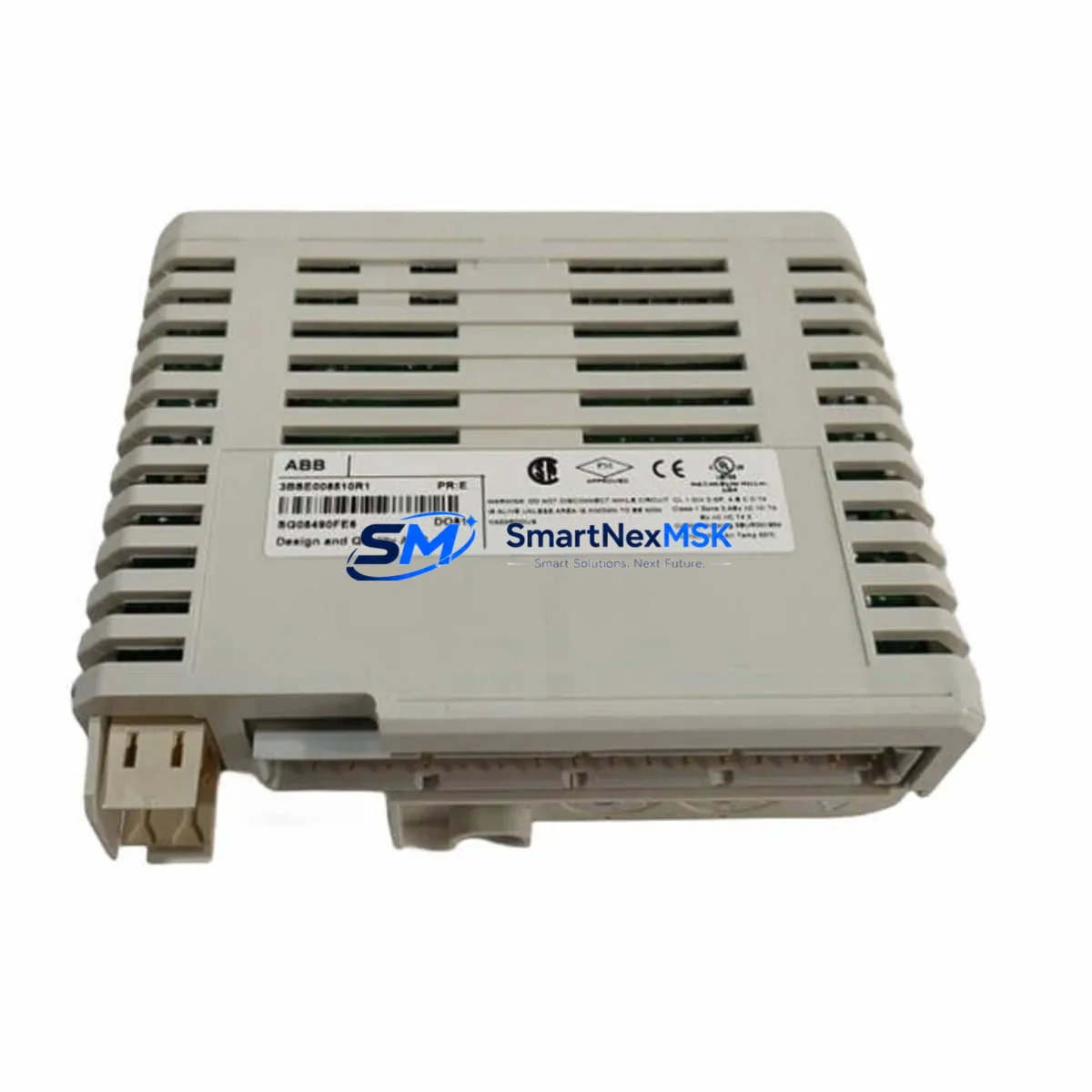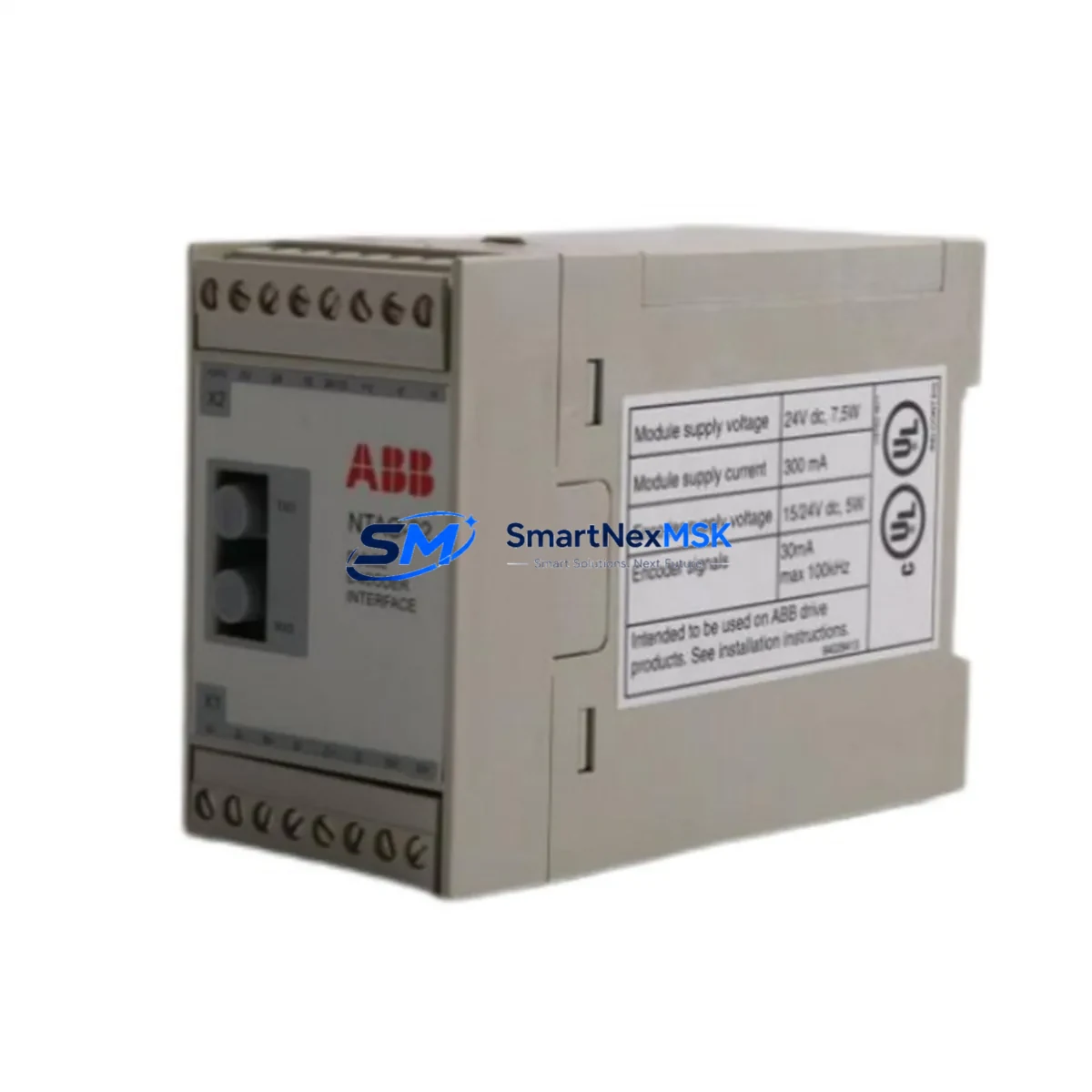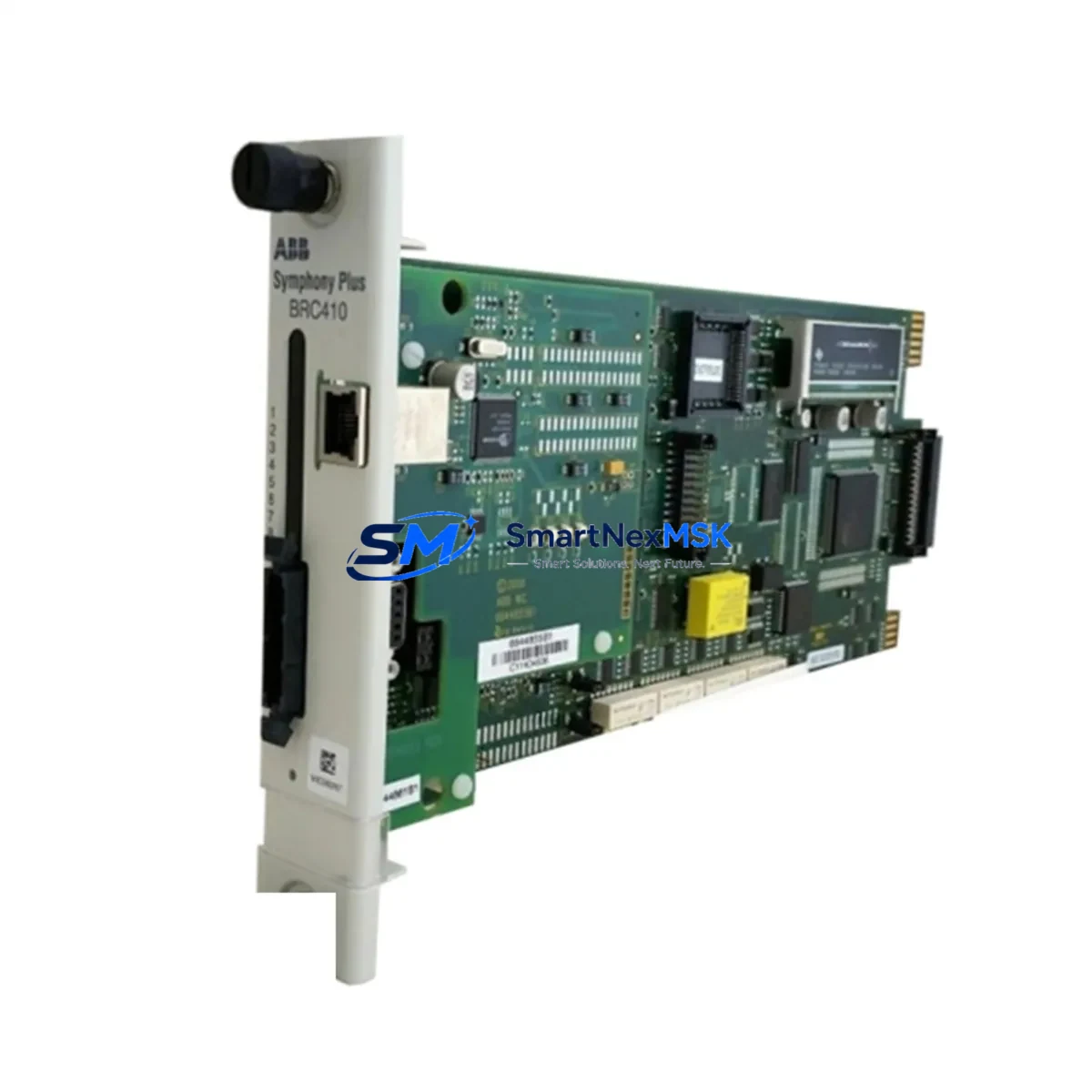
ABB SPBRC300 Retrofit-Ready Bridge Controller for Symphony Plus Control Systems
The ABB SPBRC300 is a high-reliability DCS bridge controller designed for seamless integration into ABB Symphony Plus distributed control system architectures. As legacy Symphony Harmony and Melody platforms approach end-of-life, the SPBRC300 serves as a critical retrofit component enabling plant engineers to modernize control infrastructure without full system replacement. Whether you are migrating from an older SPBRC200 or SPBRC100 bridge controller, upgrading a Symphony Harmony rack to Symphony Plus, or restoring a failed node in an active production environment, the SPBRC300 delivers the compatibility, communication integrity, and I/O coordination required for uninterrupted process control.
This unit supports ABB’s proprietary Harmony Bus and CI873 communication interfaces, making it directly compatible with existing Symphony Plus controller nodes such as the PM891 and PM865 process controllers. The SPBRC300 bridges field-level I/O modules — including AI810, AO810, DI810, and DO810 series — to the main control network, preserving existing wiring infrastructure and eliminating the need for full cabinet rewiring during upgrade projects. Its backplane interface is compatible with standard Symphony Plus S800 I/O racks, and the module address configuration follows the same DIP switch and software-based addressing scheme used across the Symphony Plus platform.
For facilities operating aging ABB Advant OCS or Master Bus 300 networks, the SPBRC300 provides a validated migration path. Engineers can retain existing field wiring, terminal blocks, and marshalling cabinets while replacing only the controller-side bridge hardware. This approach significantly reduces retrofit engineering hours and minimizes the risk of introducing wiring errors during cutover. The module is fully compatible with ABB’s 800xA System configuration tools, allowing program logic, function block diagrams, and HMI faceplates to be preserved and reused without rewriting control strategies from scratch.
Power supply compatibility is a key consideration during any bridge controller replacement. The SPBRC300 operates on 24 VDC supplied via the rack backplane, consistent with the SD821 and SD822 power supply modules commonly deployed in Symphony Plus cabinets. Before installation, engineers should verify that the existing power supply module provides sufficient current headroom for the SPBRC300 alongside co-installed I/O modules. In high-density racks, a supplementary SD823 power supply may be required to maintain stable operation across all installed modules.
Communication link integrity is equally critical. The SPBRC300 maintains Ethernet-based communication to the 800xA server via the SC510 communication interface module or equivalent CI873 Ethernet adapter. During migration, it is essential to verify that IP addressing, subnet masks, and PROFINET or Modbus TCP configurations are correctly transferred from the legacy controller node to the replacement unit. Any mismatch in communication parameters will result in loss of controller visibility in the 800xA operator station and may trigger process alarms or safety interlocks.
Field commissioning of the SPBRC300 follows a structured sequence: rack power-down, module extraction, physical installation of the replacement unit, address verification, rack power-up, and online diagnostics via the 800xA Engineering Workplace. Engineers should confirm that the module status LED sequence matches the expected initialization pattern before transferring control responsibility from the backup controller. Where redundant controller configurations are in use — such as paired PM891 controllers with automatic failover — the SPBRC300 replacement can be performed online with minimal process disruption by activating the redundant path prior to the physical swap.
Upgrade Compatibility Table
| Parameter | Details |
|---|---|
| Compatible Platform | ABB Symphony Plus, Symphony Harmony, Melody |
| Replaces | SPBRC200, SPBRC100, legacy Harmony bridge controllers |
| Backplane Interface | S800 I/O rack, standard Symphony Plus backplane |
| Communication Protocols | Harmony Bus, PROFINET, Modbus TCP, CI873 Ethernet |
| Power Supply Requirement | 24 VDC via rack backplane (SD821 / SD822 / SD823) |
| Compatible I/O Modules | AI810, AO810, DI810, DO810, AI830, AO830 series |
| Compatible Controllers | PM891, PM865, PM864 process controllers |
| Configuration Tool | ABB 800xA Engineering Workplace, Control Builder M |
| Module Addressing | DIP switch + software-based (consistent with Symphony Plus) |
| Installation Type | Hot-swap capable in redundant configurations |
| Commissioning Interface | SC510 / CI873 communication interface module |
| Warranty | 12 Months — covers hardware defects and functional failure |
Retrofit Planning for Existing Automation Systems
Successful SPBRC300 retrofit projects begin with a thorough audit of the existing control cabinet. Engineers should document the current rack layout, recording the slot positions of all installed modules including the PM891 or PM865 process controller, AI810 and DI810 field I/O modules, the SD822 power supply, and any SC510 or CI873 communication adapters. This inventory forms the baseline for the replacement bill of materials and ensures that no ancillary components are overlooked during the upgrade planning phase.
Terminal block wiring compatibility is a frequent concern during bridge controller replacements. The SPBRC300 uses the same TB820 and TB840 terminal block form factor as its predecessors, meaning that existing field cable terminations can typically be reused without modification. However, engineers should inspect terminal block condition and verify that wire ferrules and labeling remain legible and accurate before proceeding with the cutover. In older installations where the TB820 terminal units show signs of corrosion or mechanical wear, proactive replacement alongside the SPBRC300 is strongly recommended.
For plants running ABB Master Bus 300 or Advant Controller 450 networks, the migration path to Symphony Plus via the SPBRC300 typically involves installing a new CI873 Ethernet communication module to replace the legacy MB300 bus interface. This protocol migration step must be coordinated with the 800xA system administrator to update the hardware configuration tree and reassign I/O module addresses within Control Builder M. The TP830 termination panel and associated field junction boxes generally remain unchanged, preserving the bulk of the field wiring investment.
HMI screen updates are an often-underestimated element of bridge controller retrofit projects. When the SPBRC300 replaces a legacy unit with a different module address or communication path, 800xA operator graphics that reference specific controller node paths may require reconfiguration. Plant engineers should coordinate with the DCS system integrator to verify that all process displays, trend groups, and alarm configurations correctly reference the new SPBRC300 node address before returning the system to automatic control.
Downtime Control During System Migration
Minimizing unplanned downtime is the primary operational constraint in any bridge controller replacement project. Where the existing Symphony Plus configuration includes redundant PM891 controller pairs, the SPBRC300 replacement can be executed as a live swap: the redundant controller assumes full process responsibility while the primary bridge controller is physically replaced. This approach limits process interruption to the automatic failover transition time, typically under 100 milliseconds for Symphony Plus redundant configurations.
For non-redundant installations, a planned maintenance window should be scheduled during a low-production period. Prior to shutdown, engineers should export a full backup of the 800xA project database, including all control module configurations, I/O assignments, and communication parameters. This backup serves as both a recovery resource and a reference document for verifying post-replacement system integrity. The SPBRC300 should be pre-configured offline using Control Builder M before the maintenance window begins, reducing in-window commissioning time to physical installation, address verification, and online diagnostics.
Program logic preservation is non-negotiable. The SPBRC300 does not store application logic internally — all control strategies reside in the PM891 or PM865 process controller and the 800xA project database. Replacing the bridge controller therefore does not risk loss of control logic, provided that the process controller itself remains powered and the 800xA server connection is maintained throughout the swap. Engineers should confirm controller redundancy status and server connectivity before initiating the physical replacement to ensure that the control program remains active and the process remains under automatic regulation during the transition.
Post-replacement, a structured commissioning checklist should be completed before returning the system to full automatic control. This includes verifying module status LEDs, confirming I/O channel readbacks against field instrument readings, checking communication link status in the 800xA hardware tree, and reviewing the system event log for any fault or warning messages generated during the restart sequence. All commissioning results should be documented and retained as part of the plant’s maintenance record.
Retrofit Support FAQ
Q: Is the SPBRC300 a direct drop-in replacement for the SPBRC200?
A: In most Symphony Plus installations, yes. The SPBRC300 uses the same backplane slot form factor and is compatible with the same S800 I/O rack infrastructure. However, engineers should verify module address settings and confirm that the 800xA hardware configuration reflects the SPBRC300 module type before powering up the replacement unit. Minor configuration updates in Control Builder M may be required if the legacy SPBRC200 was configured with non-default communication parameters.
Q: What wiring changes are required when installing the SPBRC300?
A: In the majority of retrofit scenarios, no field wiring changes are required. The SPBRC300 interfaces with existing TB820 or TB840 terminal blocks and is powered via the rack backplane from the installed SD821 or SD822 power supply. The only wiring activity typically required is reconnecting the CI873 Ethernet cable to the new module’s RJ45 port and verifying that the cable routing does not create strain on the connector.
Q: How is the SPBRC300 tested before shipment?
A: Each SPBRC300 unit undergoes functional power-on testing prior to dispatch. The module is verified for correct LED initialization, backplane communication response, and absence of hardware fault codes. Units are shipped with original or equivalent protective packaging to prevent ESD damage and mechanical shock during transit. A 12-month warranty covering hardware defects and functional failure is included with every unit.
Q: What is covered under the 12-month warranty?
A: The 12-month warranty covers hardware defects, component failure under normal operating conditions, and functional non-conformance to the SPBRC300 specification. It does not cover damage resulting from incorrect installation, overvoltage events, physical impact, or unauthorized modification. Warranty claims are processed via [email protected] with a fault description and photographic evidence of the defect.
© 2026 SMARTNEXMSK. All rights reserved.
Original Source: https://smartnexmsk.com
Contact: [email protected] | +86 18259474341