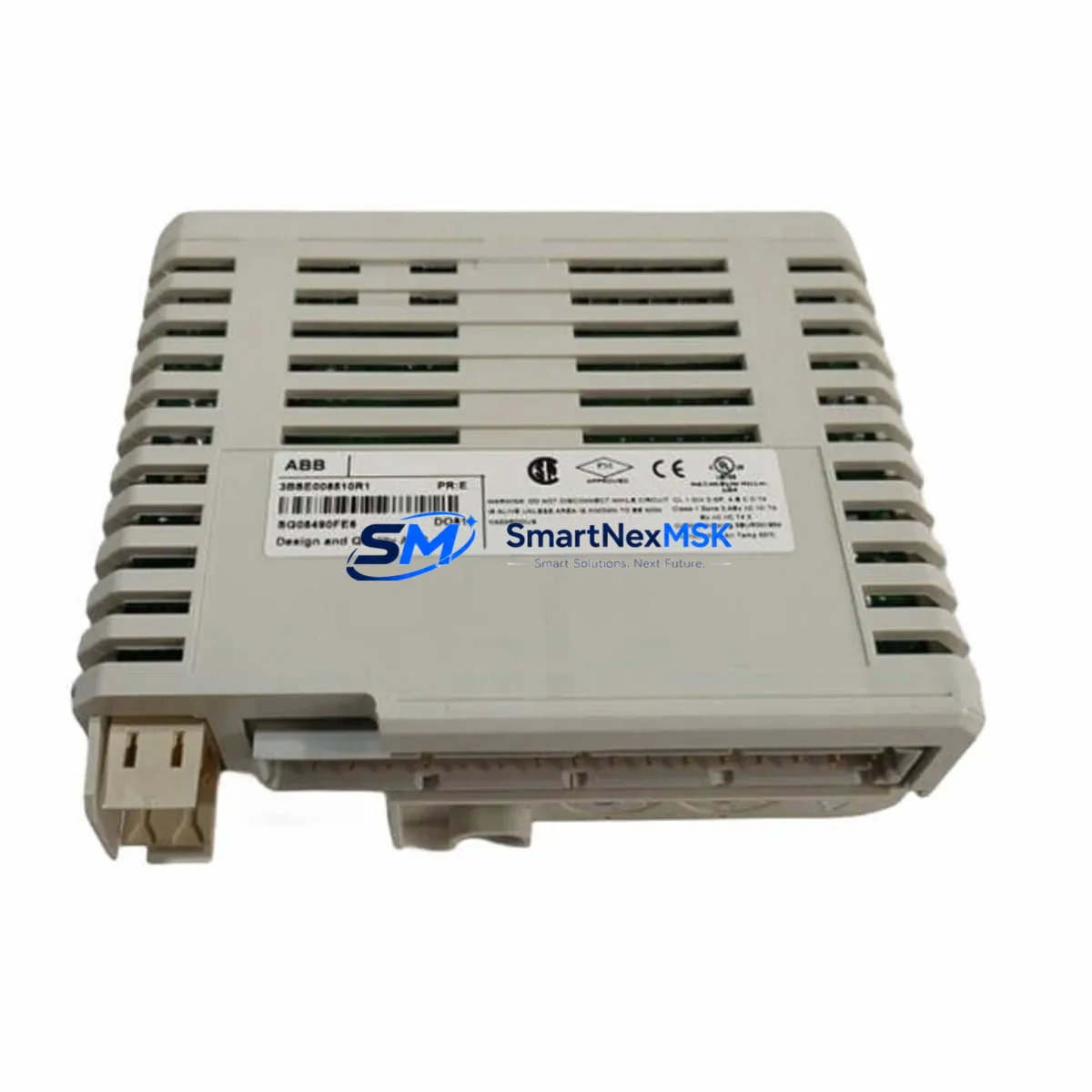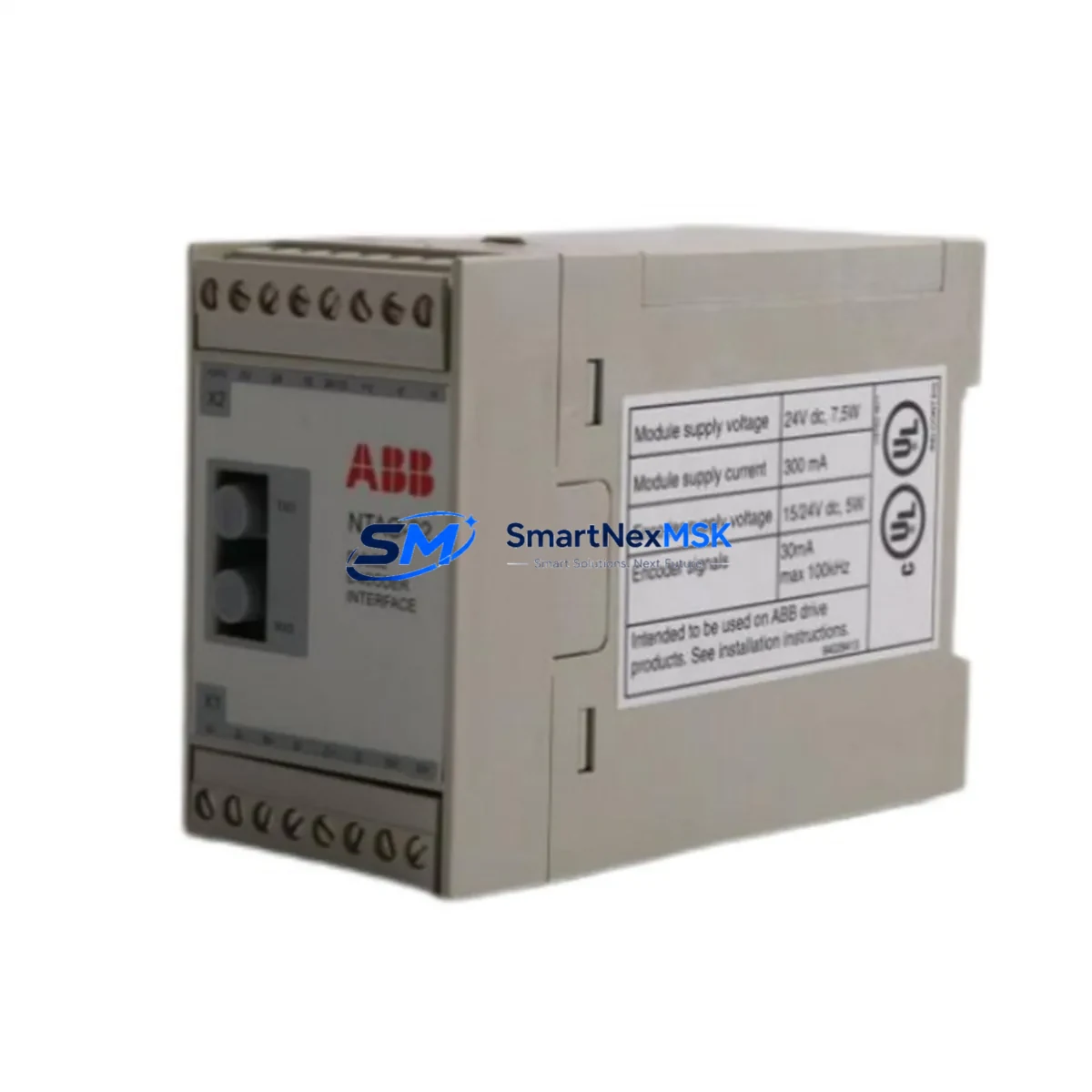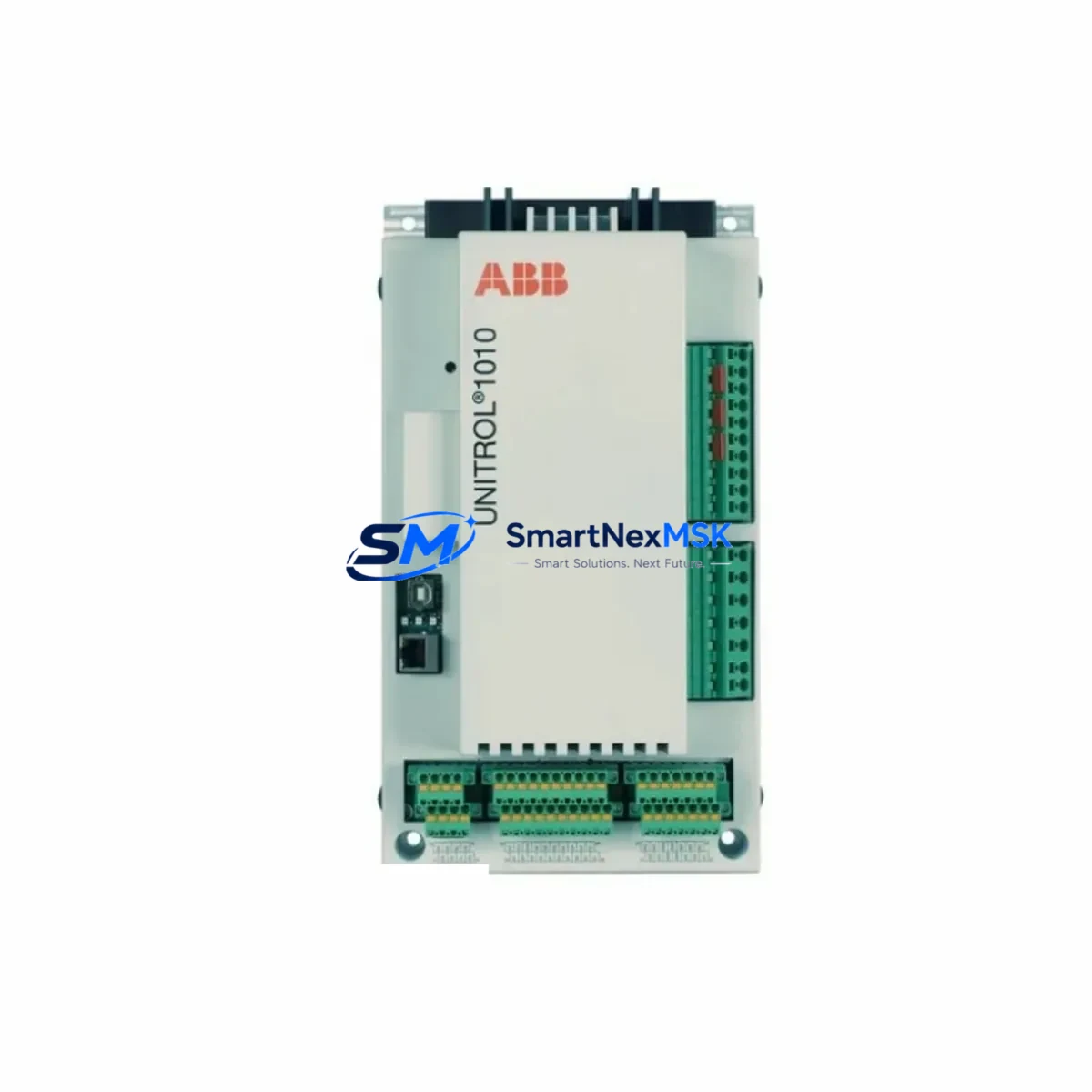
ABB UNITROL1010 3BHE035301R0001 Retrofit-Ready AVR for UNITROL Series Control Systems
The ABB UNITROL1010 (part number 3BHE035301R0001, variant UNS0121) is a compact, high-performance Automatic Voltage Regulator (AVR) engineered for synchronous generator excitation control. Designed as a retrofit-ready replacement for aging UNITROL Series excitation systems, this module delivers precise voltage regulation, reactive power control, and power factor management in a form factor compatible with existing generator control panels and excitation cubicles. Whether you are modernizing a legacy power plant, upgrading a standby generator set, or replacing a failed excitation controller in a critical industrial facility, the UNITROL1010 3BHE035301R0001 provides a reliable, field-proven upgrade path with minimal engineering rework.
The UNITROL1010 platform succeeds earlier ABB excitation controllers and is fully compatible with the UNITROL Series architecture. It supports both analog and digital setpoint interfaces, making it suitable for integration into existing DCS environments — including ABB Symphony Plus, ABB 800xA, and third-party SCADA systems — without requiring a complete control system overhaul. The module accepts standard generator terminal voltage feedback and field current feedback signals, preserving existing CT and PT wiring in most retrofit scenarios.
Upgrade Compatibility Table
| Parameter | Details |
|---|---|
| Part Number | 3BHE035301R0001 |
| Variant / Catalog Code | UNS0121 |
| Platform | ABB UNITROL1010 Series |
| Replaces / Compatible With | UNITROL 1000, UNITROL 5000 (legacy AVR boards), earlier 3BHE-series excitation modules |
| Mounting / Installation | DIN rail or panel mount; standard UNITROL excitation cubicle footprint |
| Input Voltage (Auxiliary Supply) | 24 VDC / 110–230 VAC (model-dependent; verify nameplate before ordering) |
| Communication Interfaces | RS-485 (MODBUS RTU), analog I/O; optional PROFIBUS DP via expansion |
| Regulation Modes | AVR (Automatic Voltage Regulation), FCR (Field Current Regulation), Power Factor Control |
| Retrofit Recommendation | Direct replacement for failed or end-of-life UNITROL Series AVR modules; verify terminal mapping against existing wiring diagram |
| Commissioning Notes | Parameter upload via UNITROL Tool software; verify PID gains, limiters, and protection setpoints after installation |
| Warranty | 12-Month Warranty — covers manufacturing defects and functional failure under normal operating conditions |
Retrofit Planning for Existing Automation Systems
Replacing an ABB UNITROL Series AVR in an operating facility requires careful pre-engineering to avoid unplanned outages and protect existing control logic. Before removing the legacy module, engineers should document all terminal wiring, including the generator terminal voltage PT connections, field current CT feedback, auxiliary power supply wiring, and any hardwired interlock signals connected to the excitation cubicle. The UNITROL1010 3BHE035301R0001 preserves the standard UNITROL terminal layout in most configurations, but minor adapter wiring may be required when replacing very early UNITROL 1000 or UNITROL 5000 boards where terminal numbering conventions differ.
In systems where the excitation controller interfaces with an ABB AC800M controller or an ABB AC500 PLC via MODBUS RTU over RS-485, the communication node address and baud rate settings stored in the legacy AVR must be replicated in the UNITROL1010 before the new module is brought online. Failure to match these parameters will cause the supervisory controller to report a communication fault and may trigger an automatic generator trip. Similarly, if the plant uses an ABB CP600 HMI or a third-party operator panel with hardwired analog setpoint signals, the analog input scaling parameters in the new AVR must be calibrated to match the existing signal range — typically 0–10 V or 4–20 mA for voltage setpoint reference.
For facilities running ABB Symphony Plus DCS, the UNITROL1010 can be integrated via the existing MODBUS gateway without changes to the DCS database, provided the register map of the replacement module matches the legacy device. It is strongly recommended to export the full parameter set from the old AVR using the UNITROL Tool software before decommissioning, and to import this parameter file into the new module as the baseline configuration. This approach significantly reduces commissioning time and minimizes the risk of setpoint errors during the first energization.
When the excitation system is part of a larger generator protection and control scheme — for example, where a Basler Electric BE1-11g or SEL-300G generator protection relay monitors field current and terminal voltage — the retrofit team must verify that the new AVR’s analog output signals remain within the relay’s expected input range. Any deviation may require relay setting adjustments or signal conditioning. Additionally, if the generator control panel includes an ABB SACE Emax or Tmax circuit breaker with motorized operation, the AVR’s field breaker control output must be verified for compatibility with the breaker’s auxiliary contact wiring before the first test run.
Power supply capacity is another critical checkpoint. The UNITROL1010 draws its auxiliary power from the station battery or UPS system. Before installation, confirm that the existing 24 VDC or 110 VAC auxiliary supply rail has sufficient spare capacity to power the new module without overloading the distribution fuse or MCB. In older excitation cubicles, the auxiliary supply may also feed an ABB SDCS-CON-4 or SDCS-PIN-48 power interface board; ensure that adding the UNITROL1010 does not exceed the total load budget of the supply rail.
Downtime Control During System Migration
Minimizing generator downtime during an AVR retrofit is the primary operational concern for plant engineers and maintenance managers. The recommended approach is to pre-configure the UNITROL1010 3BHE035301R0001 on a bench test setup before the scheduled outage window. Using the UNITROL Tool software, load the parameter file exported from the legacy module, adjust any known differences in terminal mapping or communication settings, and perform a functional simulation if a test generator set is available. This pre-commissioning work can reduce the on-site installation and commissioning time to as little as two to four hours for a straightforward like-for-like replacement.
During the outage, follow a structured sequence: isolate the generator from the busbar, de-energize the excitation cubicle, remove the legacy AVR module, install the UNITROL1010, verify all terminal connections against the updated wiring diagram, restore auxiliary power, and perform a no-load voltage build-up test before reconnecting to the grid. If the generator protection relay — such as an ABB REG670 or a GE Multilin 489 — is set to block closing on abnormal terminal voltage, ensure the AVR setpoint is within the relay’s permissive window before attempting synchronization.
For critical applications where even a brief unplanned outage is unacceptable, consider maintaining a pre-configured spare UNITROL1010 3BHE035301R0001 in the plant’s spare parts inventory. A pre-loaded parameter file stored on a USB drive or laptop alongside the spare module allows the maintenance team to complete a hot-swap replacement within a single shift, restoring full generator control capability with minimal disruption to plant operations. All units supplied by SMARTNEXMSK are tested prior to shipment and covered by a 12-month warranty, providing additional assurance for critical spare parts programs.
Retrofit Support FAQ
Q1: Is the ABB UNITROL1010 3BHE035301R0001 a direct drop-in replacement for my existing UNITROL Series AVR?
In most cases, yes. The UNITROL1010 is designed as the successor to earlier UNITROL Series excitation controllers and shares the same basic terminal layout and communication architecture. However, we recommend comparing the terminal diagram of your existing module with the UNITROL1010 installation drawing before ordering. Our technical team can assist with compatibility verification based on your existing wiring documentation.
Q2: How do I transfer the parameters from my old AVR to the new UNITROL1010?
ABB’s UNITROL Tool software (available from ABB’s software portal) allows you to connect to the legacy module via RS-232 or USB-RS485 adapter, export the full parameter set as a file, and import it into the new UNITROL1010. We recommend performing this export before the scheduled outage. If the legacy module has already failed and parameters cannot be retrieved, our team can provide a standard baseline parameter set based on your generator nameplate data as a starting point for commissioning.
Q3: What testing is performed before shipment, and what does the 12-month warranty cover?
Every UNITROL1010 3BHE035301R0001 unit supplied by SMARTNEXMSK undergoes functional testing prior to shipment, including auxiliary power supply verification, communication interface check, and analog I/O signal validation. The 12-month warranty covers manufacturing defects and functional failures under normal operating conditions. It does not cover damage resulting from incorrect installation, overvoltage events, or environmental conditions outside the module’s rated specifications.
Q4: Can the UNITROL1010 be used with a generator that was previously controlled by a third-party AVR (non-ABB)?
Yes, with engineering adaptation. The UNITROL1010 accepts standard generator feedback signals (terminal voltage via PT, field current via CT or shunt) that are common across most synchronous generator excitation systems. The main integration work involves mapping the existing wiring to the UNITROL1010 terminal layout and configuring the regulation parameters to match the generator’s excitation characteristics. Our team can provide application engineering support for non-standard retrofit projects upon request.
© 2026 SMARTNEXMSK. All rights reserved.
Original Source: https://smartnexmsk.com
Contact: [email protected] | +86 18259474341