
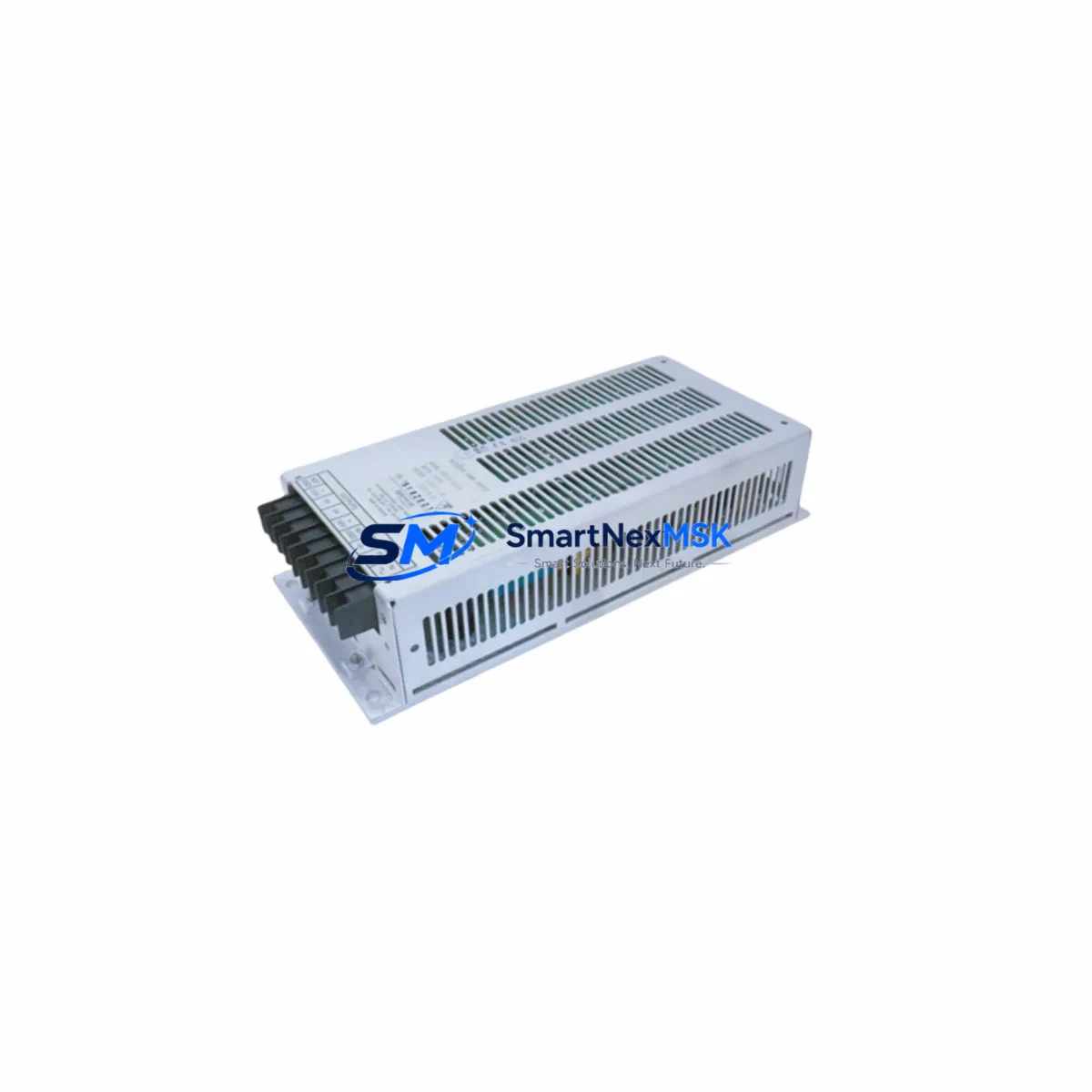
ABSOPULSE MIM105-Q6949 Spare for MIM Series Automation: Rapid Replacement for Industrial Power Continuity
The ABSOPULSE MIM105-Q6949 is a rugged, wide-input DC-DC power converter from the MIM Series, engineered for demanding industrial automation environments where power supply reliability is non-negotiable. Whether you are managing a planned maintenance window, responding to an unscheduled shutdown, or building a strategic spare parts inventory for aging control systems, the MIM105-Q6949 represents a critical line item in any serious maintenance BOM. Downtime caused by a failed DC-DC converter can cascade across an entire control cabinet — affecting PLC CPU modules, I/O racks, communication gateways, and HMI panels simultaneously. Stocking a verified original replacement eliminates the most common single point of failure in distributed power architectures.
ABSOPULSE Electronics is a Canadian manufacturer with a long-standing reputation for high-reliability power conversion products used in railway, oil & gas, industrial automation, and military applications. The MIM Series is specifically designed for wide-input voltage ranges, making it suitable for installations where input bus voltage may fluctuate due to generator switching, battery backup transitions, or long cable runs in field panels. The MIM105-Q6949 delivers stable, regulated DC output to downstream automation components, protecting sensitive electronics from voltage transients and ripple that would otherwise cause erratic behavior or premature failure.
Spare Maintenance Table
| Parameter | Specification / Detail |
|---|---|
| Part Number / SKU | MIM105-Q6949 |
| Brand | ABSOPULSE Electronics |
| Series | MIM Series |
| Product Type | DC-DC Power Converter (Industrial Grade) |
| Input Voltage Range | Wide-input (Quad-range, refer to MIM105 datasheet) |
| Output Configuration | Regulated DC output, isolated |
| Mounting / Form Factor | DIN rail or panel mount (MIM Series standard) |
| Operating Temperature | Industrial extended range; suitable for control cabinet environments |
| Compatibility | Direct replacement for MIM105-Q6949; compatible with MIM Series installations |
| Origin | Canada (ABSOPULSE Electronics) |
| Condition | Original, new spare — not refurbished |
| Application Environment | Factory automation, process control, railway, oil & gas, field panels |
| Maintenance Recommendation | Inspect every 12–24 months; replace proactively at first sign of output ripple or thermal stress |
| Warranty | 12 Months — covers manufacturing defects; tested before shipment |
| Lead Time | In-stock units ship within 3–5 business days; long-term supply available |
Maintenance Planning for Continuous Operation
When a maintenance engineer identifies the MIM105-Q6949 as a replacement candidate during a control cabinet inspection or fault diagnosis, the replacement event should be treated as a broader system health checkpoint — not an isolated swap. The DC-DC converter sits at the heart of the cabinet’s power distribution chain, and its failure or degradation often signals stress on adjacent components that share the same input bus or output rail.
During the same maintenance window, engineers should verify the condition and output voltage of any upstream AC-DC power supply or battery charger feeding the converter’s input. Input-side fuses and circuit breakers — particularly those rated for the MIM105-Q6949’s input current draw — should be inspected for signs of thermal discoloration or contact erosion. On the output side, the regulated DC rail feeds downstream loads that may include PLC CPU modules, digital and analog I/O expansion modules, relay output cards, and terminal block assemblies. Each of these components should be checked for correct supply voltage under load before the cabinet is returned to service.
Communication infrastructure within the same cabinet deserves equal attention. Profibus DP repeaters, PROFINET switches, Modbus RTU converters, and serial communication modules are sensitive to supply voltage quality. A degraded DC-DC converter that has been operating outside its regulation band for an extended period may have already introduced noise or micro-interruptions into the communication bus, causing intermittent faults that are difficult to trace after the converter is replaced. Reviewing communication error logs before and after the replacement is a recommended practice.
Signal integrity components — including signal isolators, loop-powered transmitter barriers, and surge protection modules on analog input channels — should also be inspected during the same visit. These devices are often powered from the same 24 VDC rail as the MIM105-Q6949’s output and can exhibit drift or increased error rates when supply quality degrades. HMI panels and operator terminals connected to the same cabinet should be power-cycled and tested for display stability and communication responsiveness after the converter replacement is complete.
For facilities operating legacy automation systems where the MIM105-Q6949 has been in service for five or more years, a proactive spare parts strategy should include at minimum one additional MIM105-Q6949 unit held in bonded inventory, alongside spare fuse sets, a replacement relay output module, and a backup communication gateway. This approach supports system life extension without requiring a full platform migration.
Site Replacement Workflow
Step 1 — Pre-Replacement Verification: Confirm the failed or degraded unit is the MIM105-Q6949 by checking the label on the converter housing. Record the input voltage, output voltage under load, and any fault indicators before de-energizing the cabinet. This baseline data supports root cause analysis.
Step 2 — Safe Isolation: Follow your site’s lockout/tagout (LOTO) procedure. Isolate the input supply to the converter. Discharge any bulk capacitance on the input bus before handling. Verify zero voltage with a calibrated meter before proceeding.
Step 3 — Physical Removal: Disconnect input and output wiring, noting terminal assignments and wire labels. Remove the MIM105-Q6949 from its mounting position. Inspect the mounting rail and surrounding components for signs of heat damage, corrosion, or mechanical stress.
Step 4 — New Unit Installation: Mount the replacement MIM105-Q6949 in the same position. Reconnect input and output wiring per the original terminal assignments. Verify torque on all terminal screws to manufacturer specification to prevent loose connections that could cause future faults.
Step 5 — Energization and Functional Test: Re-energize the input supply. Measure output voltage under no-load and then under full load. Confirm output is within the specified regulation band. Verify that all downstream PLC modules, I/O cards, and communication devices power up correctly and report no faults.
Step 6 — System Validation: Run a full I/O check and communication bus diagnostic. Confirm HMI displays are stable and all process signals are reading correctly. Log the replacement in the site maintenance record with the date, technician name, and new unit serial number.
This workflow minimizes total downtime to under two hours for a prepared maintenance team with the spare unit on hand — compared to days or weeks of lead time if the replacement must be sourced reactively after a failure.
Spare Parts Support FAQ
Q1: Is the MIM105-Q6949 a direct drop-in replacement for the original unit in my MIM Series installation?
Yes. The MIM105-Q6949 is an original ABSOPULSE Electronics part number. It is a direct replacement for the same SKU in any MIM Series installation. No firmware changes, configuration adjustments, or wiring modifications are required. Confirm input voltage range and output rating against your existing installation drawings before installation as a standard verification step.
Q2: What pre-shipment testing is performed on each unit?
Each MIM105-Q6949 unit is tested for input-to-output isolation, output voltage regulation under load, and thermal performance before shipment. Units are shipped with individual test records available on request. The 12-month warranty covers manufacturing defects identified during installation or operation under normal conditions.
Q3: How should I manage long-term spare parts inventory for aging MIM Series systems?
For systems with five or more years of service life remaining, we recommend holding a minimum of one MIM105-Q6949 unit in bonded on-site inventory. For multi-cabinet installations or critical process lines, a two-unit buffer is advisable. Spare units should be stored in original packaging in a dry, temperature-controlled environment and rotated into service on a first-in, first-out basis. Contact our team for volume pricing on multi-unit spare kits.
Q4: Can you support long-term supply for obsolete or end-of-life ABSOPULSE MIM Series parts?
Yes. We maintain long-term supply relationships for MIM Series components including the MIM105-Q6949 and related models. If your system relies on parts that are no longer in active production, contact us to discuss a scheduled supply agreement that ensures availability for your planned maintenance cycles over a multi-year horizon.
© 2026 SMARTNEXMSK. All rights reserved.
Original Source: https://smartnexmsk.com
Contact: [email protected] | +86 18259474341