
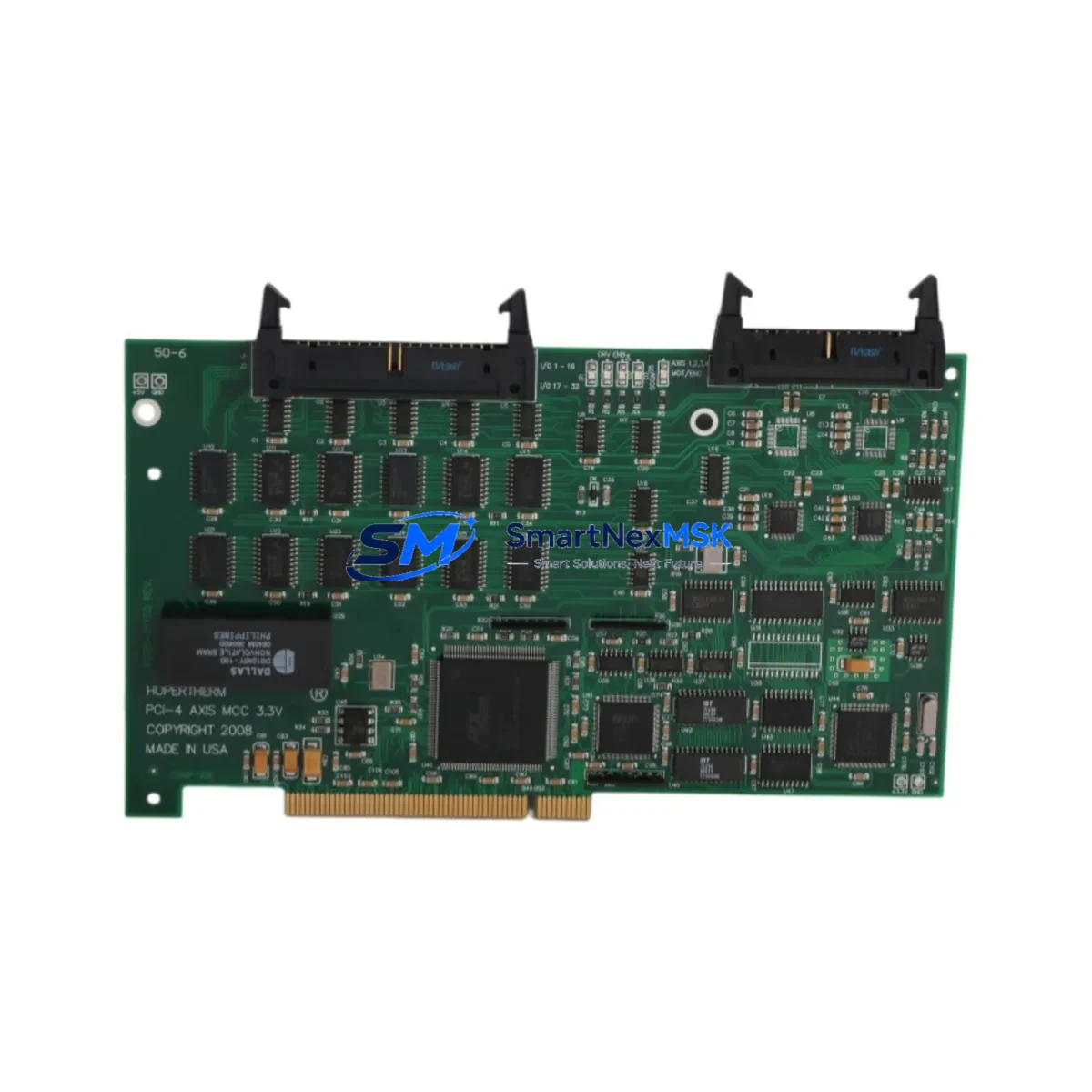
ALPHI PCI-4PACK 736-5-001 Retrofit-Ready PCIe Bus Interface Module for Legacy Control System Upgrades
The ALPHI PCI-4PACK 736-5-001 is a high-reliability PCIe bus interface module engineered for industrial control system modernization. Designed as a retrofit-ready replacement for the legacy PCI-4PACK Series, this module enables engineers and system integrators to upgrade aging automation platforms without redesigning the entire control architecture. Whether you are replacing a discontinued component in a VME-based control cabinet, migrating from legacy PCI backplane configurations, or expanding I/O capacity in an existing rack, the 736-5-001 delivers verified compatibility, reduced integration risk, and a clear upgrade path for mission-critical applications.
ALPHI Technology has long been recognized for producing rugged, deterministic interface hardware for defense, aerospace, and industrial automation environments. The PCI-4PACK 736-5-001 continues this tradition by supporting seamless integration into existing control cabinets where downtime tolerance is minimal and system continuity is paramount. With a 12-month warranty and pre-shipment functional testing, this module is a trusted choice for procurement engineers sourcing hard-to-find or end-of-life automation components.
Upgrade Compatibility Table
| Parameter | Legacy PCI-4PACK Series | ALPHI PCI-4PACK 736-5-001 | Retrofit Notes |
|---|---|---|---|
| Bus Interface | PCI (32-bit, 33 MHz) | PCIe-compatible bridge | Verify backplane slot type before installation |
| Form Factor | Standard PCI card | Equivalent form factor | Direct mechanical fit in most legacy racks |
| Communication Protocol | PCI local bus | PCIe Gen 1/2 compatible | Driver update may be required on host controller |
| I/O Connector | Legacy pin header | Compatible terminal layout | Confirm terminal wiring map against original drawings |
| Power Requirement | +3.3V / +5V rail | +3.3V / +5V / +12V | Verify PSU capacity; check power budget in control cabinet |
| Operating Temperature | 0–70°C (commercial) | 0–70°C (commercial) | No thermal derating required in standard enclosures |
| Driver / Software | Legacy WDM / VxWorks | Windows / Linux compatible | Re-validate HMI screen bindings after driver swap |
| Mounting / Backplane | PCI backplane slot | PCI / PCIe hybrid backplane | Confirm backplane slot keying and address mapping |
| Warranty | Varies (OEM) | 12 months from shipment | Includes pre-shipment functional test report |
| Replacement Recommendation | Discontinued / EOL | Direct retrofit replacement | No firmware re-flash required in most configurations |
Retrofit Planning for Existing Automation Systems
Successful integration of the ALPHI PCI-4PACK 736-5-001 into an existing control system begins with a thorough pre-retrofit audit. Before removing the legacy module, engineers should document the current backplane slot assignment, module address configuration, and all terminal wiring connections. In multi-slot rack systems — particularly those using passive PCI backplanes or hybrid PCI/PCIe backplanes — it is essential to confirm that the target slot supports the electrical and mechanical requirements of the 736-5-001.
Power budget verification is a critical first step. Many legacy control cabinets were sized for older PCI cards drawing power exclusively from the +5V rail. The 736-5-001 may draw from the +3.3V and +12V rails as well, so the system power supply unit (PSU) — often an ALPHI or third-party industrial PSU rated for the rack — must be assessed for available headroom. If the existing PSU is operating near capacity, a supplemental power module or PSU upgrade should be planned before the retrofit window opens.
Terminal wiring adaptation is another key consideration. When replacing a legacy PCI-4PACK module, the field wiring connected to the I/O terminal block must be mapped against the 736-5-001 pinout. In systems where the original wiring was routed through a marshalling panel or a dedicated I/O terminal module, the transition is typically straightforward. However, in older installations where wiring was direct-connected to the card’s rear I/O bracket, a wiring adapter or breakout board may be required to maintain signal integrity.
For systems running real-time operating environments such as VxWorks or QNX, the host controller’s driver stack must be validated against the 736-5-001’s hardware abstraction layer. In Windows-based SCADA or HMI environments, the existing HMI screen bindings — particularly those tied to I/O channel addresses — should be re-verified after the driver update. Communication links to upstream DCS controllers, Modbus RTU masters, or PROFIBUS DP networks should be tested in loopback mode before returning the system to live production.
In rack-based systems where the PCI-4PACK 736-5-001 operates alongside other modules — such as an ALPHI TPMC-AIO analog I/O module, a digital I/O expansion card, a serial communication module supporting RS-232/RS-422/RS-485, or a timing and synchronization module — the module address map must be reviewed to prevent address conflicts. Systems using a shared backplane with a VME-to-PCI bridge or a cPCI controller board should also confirm that the new module’s base address does not overlap with existing peripherals.
Where the control system includes a programmable logic controller (PLC) interfacing with the ALPHI card via a shared memory or interrupt-driven protocol, the PLC program logic — particularly any ladder rungs or function blocks referencing the module’s I/O channels — should be backed up and re-validated in simulation before the live cutover. If the system uses a dedicated programming cable or USB-to-serial adapter for on-site PLC configuration, ensure that the programming environment is available on-site during the retrofit window.
Downtime Control During System Migration
Minimizing unplanned downtime during a PCI-4PACK 736-5-001 retrofit requires a structured migration plan with clearly defined rollback checkpoints. The recommended approach is to perform a full system backup — including PLC program files, HMI project files, and communication configuration exports — before any hardware is disturbed. This backup should be stored on a portable medium and verified for integrity before the retrofit begins.
Where production schedules permit, a parallel bench test is strongly recommended. Install the 736-5-001 in a test rack alongside a representative backplane and power supply, and validate all I/O channels, communication links, and driver behavior before the planned maintenance window. This approach allows the engineering team to identify and resolve compatibility issues — such as driver conflicts, address mapping errors, or terminal wiring discrepancies — without impacting the live production line.
During the live cutover, the sequence should follow a defined order: power down the control cabinet, remove the legacy PCI-4PACK module, install the 736-5-001, restore power, load the updated driver, verify communication link status, and perform a channel-by-channel I/O check before releasing the system to automatic control. If the system includes a redundant controller or a hot-standby configuration, the switchover to the standby controller should be executed before the primary module is replaced, ensuring continuous process control throughout the migration.
Post-retrofit, a 24-hour monitored run-in period is recommended to confirm stable operation under normal load conditions. Any anomalies in communication latency, I/O response time, or interrupt handling should be logged and reviewed against the pre-retrofit baseline. SMARTNEXMSK provides technical support during the commissioning phase, and all units ship with a pre-shipment functional test report to accelerate on-site verification.
Retrofit Support FAQ
Q1: Is the ALPHI PCI-4PACK 736-5-001 a direct drop-in replacement for the original PCI-4PACK Series modules?
In most configurations, yes. The 736-5-001 is designed to match the mechanical form factor and electrical interface of the legacy PCI-4PACK Series. However, engineers should verify the backplane slot keying, power rail requirements, and driver compatibility before installation. A pre-retrofit compatibility checklist is available upon request.
Q2: What commissioning steps are required after installing the 736-5-001 in a live control system?
After physical installation, the recommended commissioning sequence includes: driver installation and verification, module address confirmation, terminal wiring continuity check, I/O channel functional test, communication link validation (Modbus, PROFIBUS, or proprietary protocol as applicable), HMI screen binding re-verification, and a supervised run-in period under normal operating conditions. All units ship with a pre-shipment test report to support on-site commissioning.
Q3: Can the 736-5-001 be used in systems with mixed PCI and PCIe backplane slots?
Yes. The PCI-4PACK 736-5-001 supports hybrid backplane environments. In systems where both legacy PCI and PCIe slots are present, the module can be installed in the appropriate slot based on the backplane’s slot keying. Confirm the slot assignment with the backplane manufacturer’s documentation and verify that the host controller’s PCIe enumeration correctly identifies the module after installation.
Q4: What warranty and quality assurance does SMARTNEXMSK provide for the PCI-4PACK 736-5-001?
All ALPHI PCI-4PACK 736-5-001 units supplied by SMARTNEXMSK carry a 12-month warranty from the date of shipment. Each unit undergoes pre-shipment functional testing, and a test report is included with the delivery. In the event of a warranty claim, SMARTNEXMSK provides RMA support and, where stock permits, advance replacement to minimize system downtime.
© 2026 SMARTNEXMSK. All rights reserved.
Original Source: https://smartnexmsk.com
Contact: [email protected] | +86 18259474341