
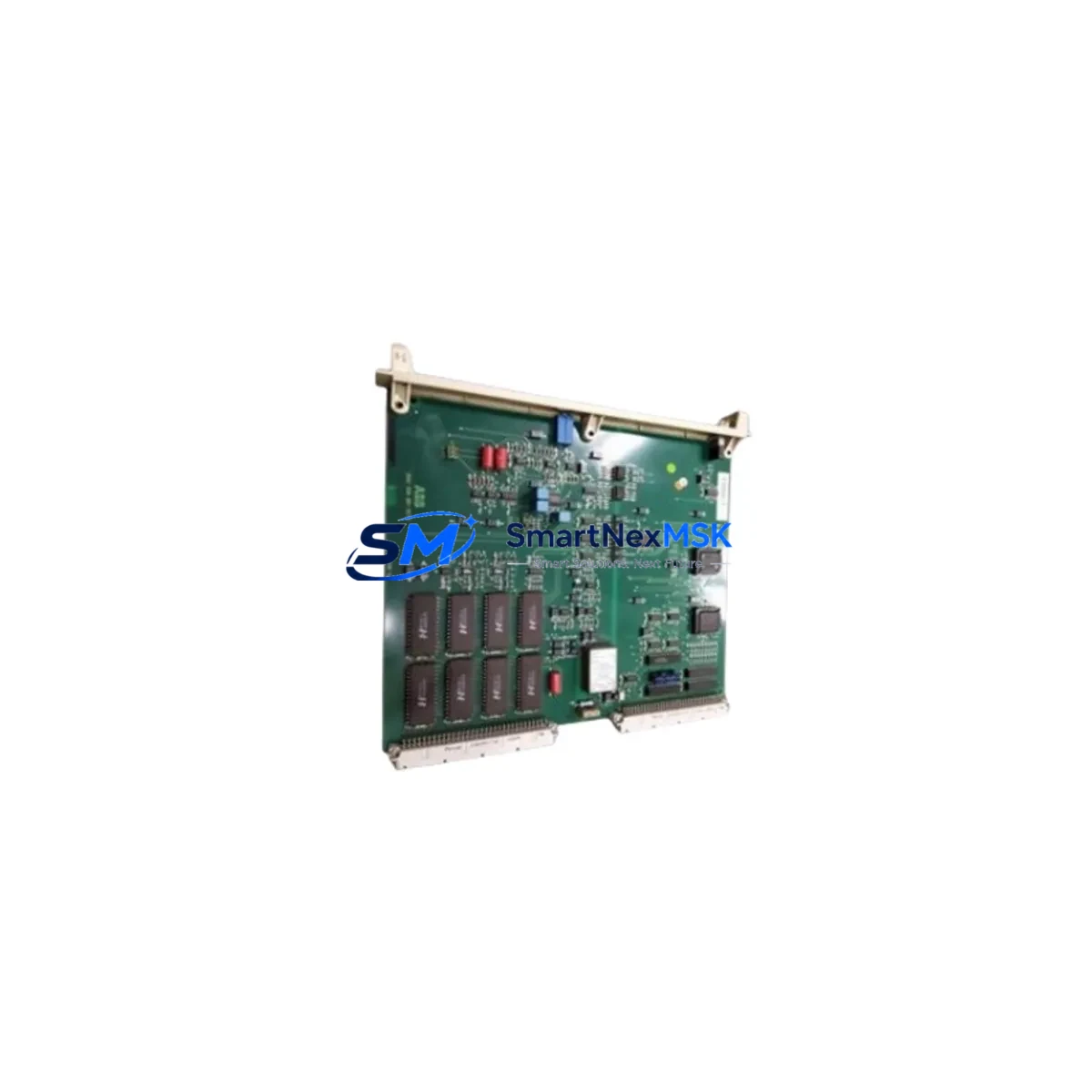
AVAGO AFCT-5715APZ Retrofit-Ready Multimode SFP Transceiver: Compatible Upgrade for Legacy Fiber Control Systems
The AVAGO AFCT-5715APZ is a 1.25 Gbps, 850 nm multimode SFP (Small Form-factor Pluggable) fiber transceiver engineered for seamless integration into existing industrial fiber optic networks and control system backbones. As legacy fiber infrastructure ages and OEM support for original components is discontinued, the AFCT-5715APZ serves as a proven, drop-in retrofit solution for engineers managing plant-floor communication upgrades, DCS fiber ring replacements, and PLC-to-HMI fiber link modernization projects.
Whether you are replacing a failed unit in a Siemens PROFINET fiber segment, upgrading an aging Allen-Bradley ControlLogix fiber I/O link, or migrating a Schneider Electric Modicon fiber backbone to a more supportable platform, the AFCT-5715APZ delivers the electrical and optical compatibility required for a smooth, low-risk transition. Its LC duplex interface, 550 m reach over OM2 multimode fiber, and standard SFP MSA compliance make it interoperable with a wide range of managed industrial switches, media converters, and fiber-capable PLCs without requiring firmware changes or optical re-cabling.
Upgrade Compatibility Table
| Parameter | AVAGO AFCT-5715APZ | Retrofit Notes |
|---|---|---|
| Data Rate | 1.25 Gbps (Gigabit Ethernet / SONET OC-24) | Compatible with 1G SFP slots on industrial switches and PLCs |
| Wavelength | 850 nm (VCSEL) | Matches standard multimode 850 nm fiber infrastructure |
| Fiber Type | Multimode (OM1/OM2/OM3) | No fiber replacement required for existing OM1/OM2 plant cabling |
| Connector Interface | LC Duplex | Verify existing patch panel connectors; SC-to-LC adapters available if needed |
| Max Reach | 550 m (OM2) / 300 m (OM1) | Confirm link budget before installation in long-run segments |
| Supply Voltage | 3.3 V (SFP standard) | Confirm host slot voltage; most industrial switches supply 3.3 V natively |
| Form Factor | SFP (MSA compliant) | Hot-swappable; no system shutdown required for module replacement |
| Communication Compatibility | Gigabit Ethernet, PROFINET, EtherNet/IP, Modbus TCP | Protocol-agnostic at the physical layer; no protocol reconfiguration needed |
| Replacement Recommendation | Direct drop-in for AFCT-5715APZ, AFCT-5715PZ, and equivalent 1.25G 850nm SFPs | Cross-reference OEM part number before ordering |
| Commissioning Focus | Link LED status, DOM readout, BER test | Use managed switch DOM interface to verify Tx/Rx power post-installation |
| Warranty | 12-Month Warranty | Covered against manufacturing defects; includes pre-shipment functional test |
Retrofit Planning for Existing Automation Systems
Successful integration of the AFCT-5715APZ into a brownfield automation environment begins with a structured pre-replacement audit. Before pulling the legacy module, engineers should document the current fiber link topology — including patch panel routing, fiber type (OM1 vs. OM2), and connector style — to confirm that the AFCT-5715APZ’s 850 nm VCSEL and LC duplex interface align with the installed plant cabling. In most cases, existing OM2 multimode runs require no modification.
On the host equipment side, verify that the SFP cage on your industrial managed switch — such as a Siemens SCALANCE X208, Hirschmann RS20, or Moxa EDS-510A — supplies a stable 3.3 V rail and supports MSA-compliant third-party SFP modules. Some older managed switches enforce vendor-locked SFP authentication; in these cases, a firmware update or switch replacement with an open-standard unit may be required before the AFCT-5715APZ can be recognized.
For systems where the fiber link carries PROFINET IO or EtherNet/IP traffic between a Siemens S7-300 CPU or Allen-Bradley ControlLogix L7x controller and remote I/O racks, the SFP replacement is transparent at the protocol layer — no changes to the PLC program, I/O module addressing, or network configuration are required. The same applies to Modbus TCP links between a Schneider Electric Modicon M340 and fiber-connected HMI panels such as the Siemens TP900 Comfort or Weintek MT8000 series.
Where the fiber segment connects a DCS fiber ring — for example, in an Emerson DeltaV or Yokogawa CENTUM VP installation — coordinate the replacement window with the control room operator to ensure the redundant ring path is active before removing the primary SFP. Most ring-topology managed switches will automatically reroute traffic within milliseconds, but confirming ring health via the network management console before and after the swap is essential for maintaining process continuity.
If the retrofit involves migrating from an older 100BASE-FX SFP (100 Mbps, 1310 nm) to the 1.25G AFCT-5715APZ, note that the host switch port must support Gigabit Ethernet. In mixed-speed environments, plan for a phased upgrade of both the SFP modules and any associated fiber media converters or fiber patch panels to avoid speed mismatch errors. Pre-stage replacement LC-LC multimode patch cords and confirm that the fiber end-faces are clean and undamaged before installation — contaminated connectors are the leading cause of elevated bit error rates in post-retrofit commissioning.
Downtime Control During System Migration
Minimizing unplanned downtime during an SFP replacement is achievable with disciplined pre-staging and a clear change management procedure. Because the AFCT-5715APZ is hot-swappable, the physical module exchange can be completed in under two minutes without powering down the host switch or the connected PLC rack. However, the brief link interruption during the swap — typically 1 to 5 seconds — will cause a momentary loss of communication on that fiber segment.
To protect the original PLC program logic during this window, configure the controller’s communication fault timeout to a value greater than the expected link recovery time. For Allen-Bradley ControlLogix systems, set the RPI (Requested Packet Interval) timeout multiplier to at least 3× before the swap. For Siemens S7 systems using PROFINET, verify that the watchdog time on the IO controller is set to tolerate a brief communication gap without triggering a CPU STOP or safety shutdown.
Where process continuity is critical — such as in continuous chemical dosing, conveyor synchronization, or temperature-controlled curing lines — schedule the SFP swap during a planned maintenance window or shift changeover. Pre-notify the HMI operator so that any communication alarm generated during the swap is acknowledged as a planned event rather than a process fault. After re-seating the AFCT-5715APZ, confirm link re-establishment via the switch’s port status LED and validate Tx/Rx optical power levels using the switch’s DOM (Digital Optical Monitoring) interface before returning the system to automatic mode.
For multi-drop fiber segments serving multiple remote I/O nodes, test each downstream node’s communication status individually after the swap to confirm that all addresses have re-registered on the network. Document the pre- and post-swap DOM readings as part of the maintenance record to establish a baseline for future predictive maintenance cycles.
Retrofit Support FAQ
Q1: Is the AVAGO AFCT-5715APZ a direct replacement for the original AFCT-5715APZ, and will it work in my existing SFP slot without any configuration changes?
Yes. The AFCT-5715APZ is MSA-compliant and is designed as a direct drop-in replacement for the original AVAGO AFCT-5715APZ and functionally equivalent 1.25G 850 nm multimode SFPs. No firmware changes, IP reconfiguration, or protocol adjustments are required. Simply remove the legacy module, insert the replacement, and confirm link status via the host switch’s port LED or management interface.
Q2: What wiring and interface checks should I perform before installing the replacement SFP?
Before installation, inspect the LC duplex fiber connectors for contamination or physical damage and clean with an appropriate fiber optic cleaning tool if necessary. Confirm that the host switch SFP cage is free of debris and that the 3.3 V supply rail is within tolerance. Verify that the existing multimode fiber run does not exceed 550 m (OM2) or 300 m (OM1). If the legacy installation used SC connectors, source an SC-to-LC adapter or replace the patch cord before proceeding.
Q3: How do you verify compatibility and perform commissioning after the SFP swap?
After inserting the AFCT-5715APZ, check the switch port’s link LED for a solid green indication. Use the switch’s DOM readout to verify that Tx power is within the module’s specified output range (typically −9.5 to −3 dBm) and that Rx power is above the receiver sensitivity threshold (typically −17 dBm). Run a brief ping or loopback test to confirm end-to-end connectivity before returning the segment to production. For PROFINET or EtherNet/IP networks, verify that all IO devices have re-established their cyclic connections in the controller’s diagnostic view.
Q4: What does the 12-month warranty cover, and what pre-shipment testing is performed?
Every AVAGO AFCT-5715APZ unit shipped by SMARTNEXMSK undergoes a pre-shipment functional test covering optical output power, receiver sensitivity, and digital diagnostic interface (DDM/DOM) readout verification. The 12-month warranty covers manufacturing defects and functional failures under normal operating conditions. Units that fail within the warranty period are eligible for replacement or refund. Warranty claims are processed through [email protected] with proof of purchase and a fault description.
© 2026 SMARTNEXMSK. All rights reserved.
Original Source: https://smartnexmsk.com
Contact: [email protected] | +86 18259474341