
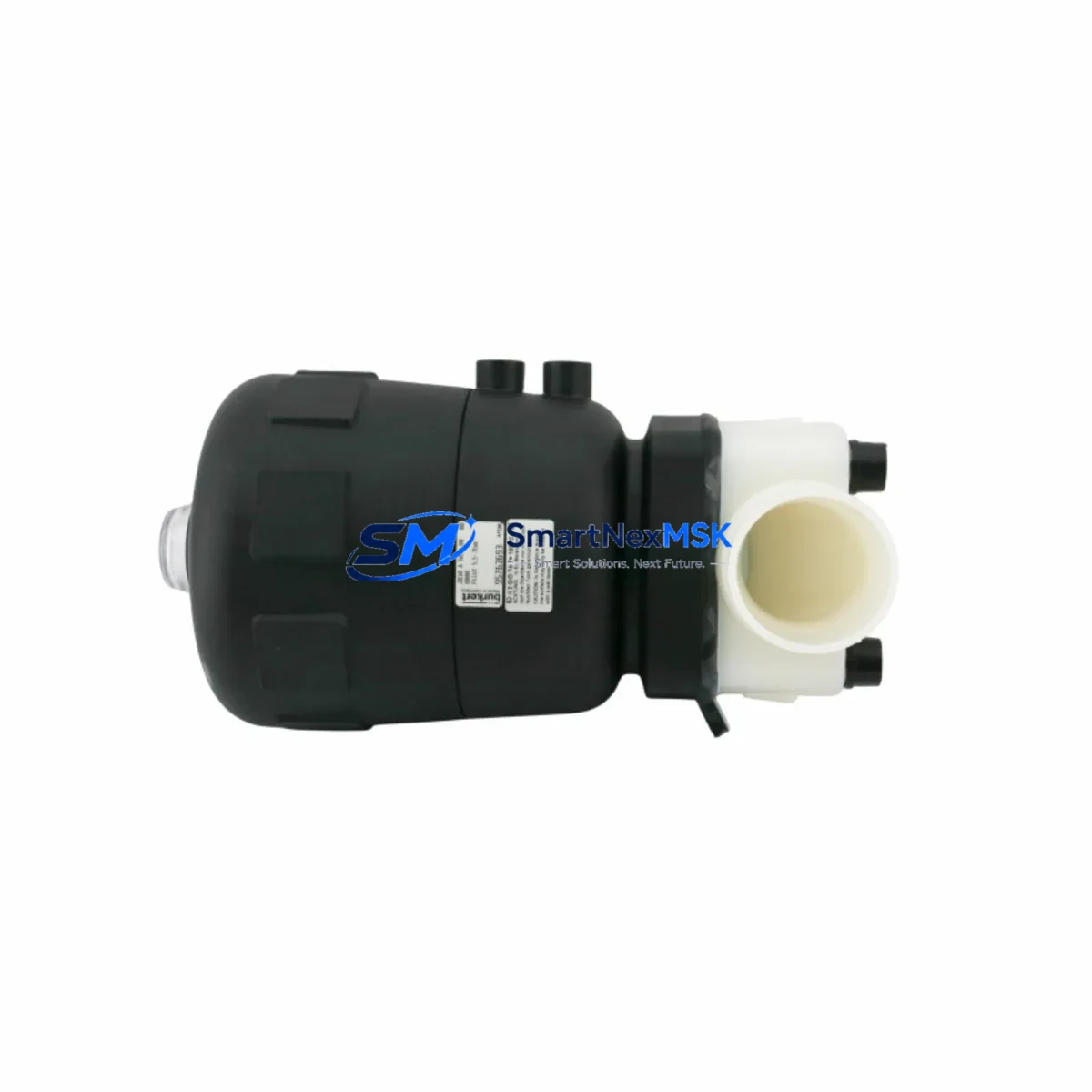
Burkert 95763693 TYPE 2030 Safety-Enhanced Valve Control
In continuous production environments — petrochemical plants, water treatment facilities, metallurgical lines, and power generation stations — unplanned valve failure is not merely an operational inconvenience. It is a safety event. The Burkert 95763693, a piston-operated diaphragm valve of the TYPE 2030 series rated at 5.5–7 bar, is engineered to eliminate that risk. Designed for aggressive media, corrosive atmospheres, and high-cycle duty, this valve delivers the control precision and mechanical integrity that safety-critical fluid circuits demand.
Whether installed in a chemical dosing loop, a cooling water bypass, a scrubber feed line, or a critical interlock circuit, the 95763693 provides reliable shut-off and modulating control without signal drift, seat leakage, or actuator fatigue. Its diaphragm construction isolates the actuator from process media, making it the preferred choice for hygienic, corrosive, and abrasive fluid applications where metal-seated valves would degrade rapidly.
For maintenance engineers managing aging control cabinets or executing planned turnarounds, sourcing a verified OEM-compatible replacement for the Burkert TYPE 2030 is the first step in restoring loop integrity. This unit ships fully tested, with dimensional and functional verification completed prior to dispatch.
Safety Reliability Table
| Parameter | Specification |
|---|---|
| Part Number | 95763693 |
| Series | TYPE 2030 |
| Valve Type | Piston-Operated Diaphragm Valve |
| Operating Pressure | 5.5 – 7 bar |
| Actuator Code | TTLA08-11 |
| Function Code | F-MFC_AI_4 |
| Body Reference | 3808-020005-11 |
| Actuator Reference | 3881-020010-12 |
| Manufacturer | Burkert Fluid Control Systems |
| Country of Origin | Germany |
| Media Compatibility | Corrosive, abrasive, and hygienic process fluids |
| Diaphragm Isolation | Full actuator-media separation |
| Installation Environment | Harsh industrial, outdoor, chemical, and high-humidity sites |
| Interlock Suitability | Compatible with safety interlock and ESD circuit integration |
| Pre-Shipment Testing | Functional and leak test completed before dispatch |
| Warranty | 12-Month Warranty |
Control Cabinet Protection Strategy
Replacing the Burkert 95763693 in a live process system requires a coordinated review of the surrounding control architecture. A diaphragm valve operating in a safety-critical loop does not function in isolation — its performance depends on the integrity of every upstream and downstream component in the same electrical and pneumatic circuit.
Begin with the solenoid pilot valve that drives the TYPE 2030 actuator. Burkert Type 6013 or Type 6014 solenoid valves are commonly paired with this actuator series; inspect coil resistance, IP rating, and voltage compatibility before reinstalling. If the pilot valve shows signs of coil degradation or spool wear, replace it concurrently to avoid a repeat failure within the same maintenance window.
Next, verify the positioner or I/P converter feeding the 4–20 mA control signal (F-MFC_AI_4 function code indicates analog input control). A drifting Burkert Type 8694 or equivalent electropneumatic positioner will cause the replacement valve to behave erratically even if the valve body itself is perfect. Calibrate or replace the positioner as part of the same work order.
On the electrical side, inspect the 24 VDC instrument power supply feeding the solenoid and positioner. Voltage sag, ripple, or ground faults in the power rail are a leading cause of spurious valve actuation in harsh environments. A Siemens SITOP or Phoenix Contact QUINT power supply with integrated diagnostics provides the supply stability that safety loops require.
Review the terminal blocks and field wiring at the junction box nearest the valve. Corroded Weidmüller or Phoenix Contact terminal blocks, loose ferrules, or degraded cable insulation introduce resistance that mimics signal faults. Clean, re-torque, or replace terminals as needed. In high-vibration environments, spring-clamp terminals are preferred over screw types.
For installations in classified hazardous areas, confirm that the Zener barrier or galvanic isolator in the intrinsically safe circuit remains within calibration. A P+F (Pepperl+Fuchs) or MTL isolator that has drifted out of specification will limit the signal range available to the positioner, causing the valve to fail to reach full open or full closed positions — a critical safety deficiency in ESD applications.
Finally, check the process transmitter providing feedback to the DCS or PLC loop controller. A Burkert Type 8098 or equivalent flow or pressure transmitter with degraded sensor drift will cause the control loop to hunt, placing excessive mechanical stress on the new valve diaphragm and shortening its service life prematurely.
Critical Industrial Safety Applications
The Burkert 95763693 TYPE 2030 is deployed across the most demanding process industries, where valve reliability is directly linked to personnel safety and environmental compliance.
In petrochemical and refinery environments, it controls the flow of caustic wash solutions, hydrocarbon condensates, and cooling water in heat exchanger bypass circuits. Its full actuator-media isolation prevents process fluid from contaminating the pneumatic actuator, which is essential when handling flammable or toxic media.
In power generation facilities — including coal, gas, and nuclear auxiliary systems — the TYPE 2030 is used in demineralized water circuits, chemical injection skids, and turbine cooling loops. The 5.5–7 bar pressure rating covers the majority of auxiliary service pressures found in these plants.
In mining and mineral processing, where slurry, acid leach solutions, and reagent dosing lines are common, the diaphragm construction resists abrasion and chemical attack that would destroy conventional globe or ball valves within months. Planned replacement cycles of Burkert diaphragm valves are a standard element of mine maintenance schedules.
In water and wastewater treatment plants, the 95763693 manages chlorine dosing, polymer feed, and sludge transfer circuits. Its hygienic design and corrosion-resistant wetted materials meet the requirements of both potable water and industrial effluent treatment applications.
In metallurgical and steel plants, it is installed in cooling water distribution, hydraulic descaling, and acid pickling circuits — environments characterized by high temperatures, aggressive chemistry, and continuous 24/7 operation where unplanned downtime carries significant production cost.
Safety and Quality FAQ
Q1: What does the 12-month warranty cover for the Burkert 95763693?
The 12-month warranty covers manufacturing defects, material failures, and functional non-conformance under normal operating conditions. Each unit undergoes functional and leak testing prior to shipment. If a unit fails within the warranty period under specified operating conditions, we provide replacement or full credit. Warranty claims are supported with test documentation upon request.
Q2: How is compatibility with my existing TYPE 2030 installation confirmed?
Compatibility is confirmed by cross-referencing the full SKU string: TYPE 2030, 5,5-7BAR, 95763693, TTLA08-11, F-MFC_AI_4, 3808-020005-11, 3881-020010-12. Each sub-code defines the body size, actuator stroke, control function, and connection standard. Provide your existing nameplate data or P&ID reference and our technical team will verify dimensional and functional interchangeability before shipment.
Q3: Can this valve be used as a direct drop-in replacement for an ESD or safety interlock application?
The TYPE 2030 is a process control valve. For use in a formally classified Safety Instrumented Function (SIF), the complete loop — including the solenoid pilot, positioner, and valve — must be assessed against the required SIL level under IEC 61511. We supply the valve with full test documentation to support your functional safety assessment. Consult your process safety engineer before installing any replacement component in a certified SIL loop.
Q4: What is the lead time and long-term supply availability?
Stock units ship within 1–3 business days. For planned maintenance programs requiring scheduled deliveries of multiple units, we support blanket order arrangements with guaranteed allocation. The Burkert TYPE 2030 series remains an active product line, and we maintain ongoing supplier relationships to ensure long-term availability for customers managing extended asset lifecycles.
© 2026 SMARTNEXMSK. All rights reserved.
Original Source: https://smartnexmsk.com
Contact: [email protected] | +86 18259474341