
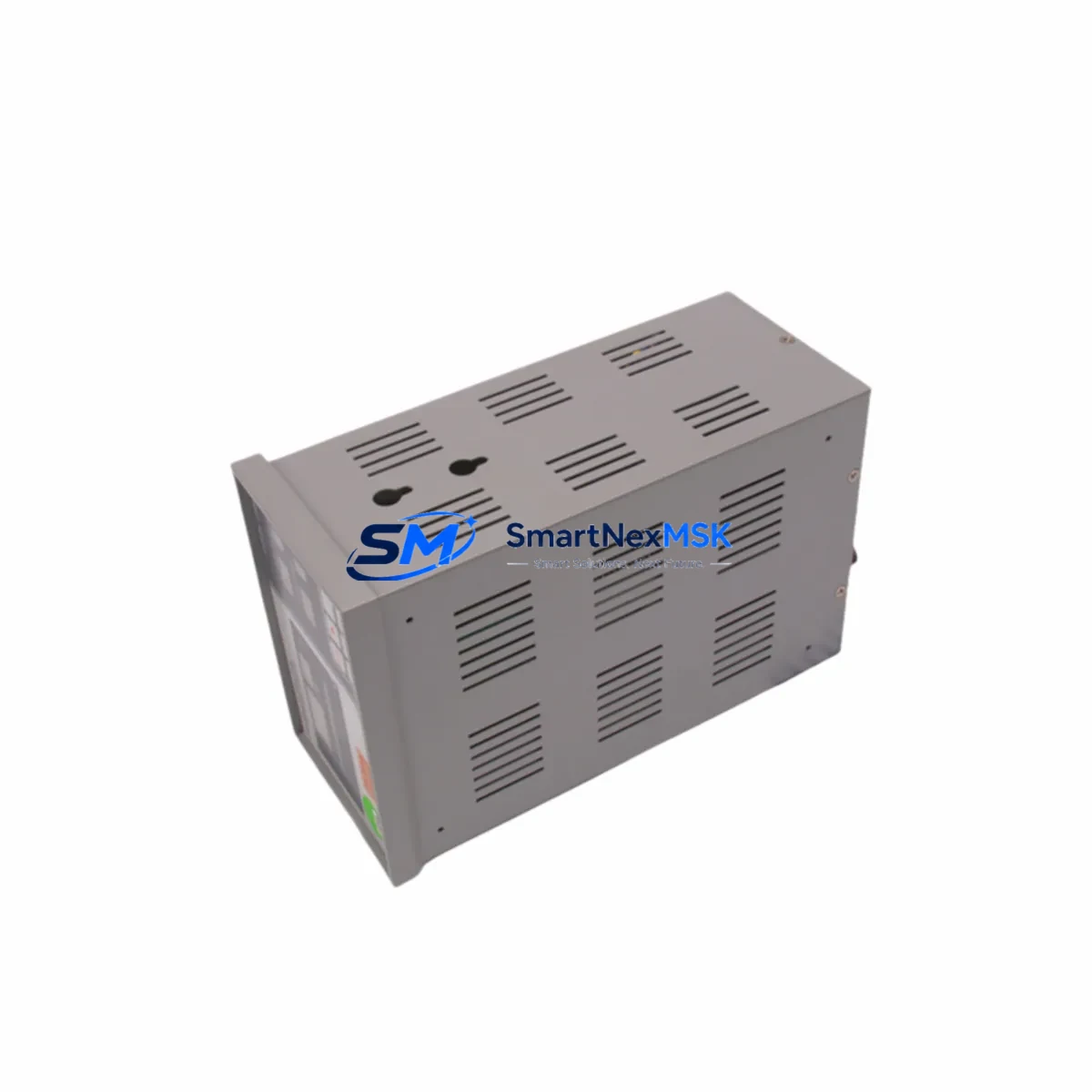
DIAVAC LIMITED PT-1DA Retrofit-Ready Vacuum Gauge Controller: Compatible Modernization and Smooth PT Series Upgrade
The DIAVAC LIMITED PT-1DA is a Pirani vacuum gauge controller engineered for direct compatibility with legacy PT Series installations. Whether you are replacing a discontinued PT-1C, PT-1B, or earlier PT Series unit, or upgrading an aging vacuum measurement system in a semiconductor fab, coating line, or research facility, the PT-1DA delivers a verified drop-in retrofit path with minimal downtime and no requirement for panel re-engineering. With in-stock availability, pre-shipment functional testing, and a 12-month warranty, the PT-1DA is the preferred choice for maintenance engineers and procurement teams managing aging vacuum control infrastructure.
Upgrade Compatibility Table
| Parameter | PT-1DA (Current) | Legacy PT Series (Typical) | Retrofit Notes |
|---|---|---|---|
| Measurement Range | 1×10⁻³ to 1×10³ Pa | 1×10⁻³ to 1×10³ Pa | Direct range match; no sensor recalibration required |
| Sensor Connector | Standard PT Series pirani sensor plug | Standard PT Series pirani sensor plug | Existing sensor cable reusable; verify pin orientation |
| Power Supply | AC 100–240 V, 50/60 Hz | AC 100–200 V (model dependent) | Confirm local supply voltage; wide-range input reduces risk |
| Communication Interface | RS-232C serial | RS-232C or analog output | RS-232 wiring reusable; analog-only legacy units require interface adapter |
| Panel Cutout / Mounting | DIN-compatible front panel | DIN-compatible front panel | Same form factor; no panel modification required in most installations |
| Relay Output | 2-channel setpoint relay | 1–2 channel relay (model dependent) | Verify relay wiring map against original terminal diagram before power-on |
| Display | Digital LED readout | Analog meter or early LED | HMI screen update may be required if pressure value is displayed on SCADA |
| Commissioning | Front-panel parameter entry | Potentiometer or DIP switch | Re-enter setpoint values via front panel after installation |
| Warranty | 12-Month Warranty — All units ship after pre-delivery functional test | ||
Retrofit Planning for Existing Automation Systems
A successful PT-1DA retrofit begins well before the unit arrives on site. Maintenance teams should pull the original wiring diagram for the existing PT Series controller and cross-reference terminal assignments for the sensor input, relay outputs, RS-232 port, and power terminals. In most PT Series installations, the sensor cable connecting the Pirani gauge head to the controller can be reused without modification, which eliminates one of the most common sources of retrofit delay.
For systems where the PT Series controller is integrated into a larger vacuum process — such as a turbomolecular pump station using a PFEIFFER TCP 350 or an EDWARDS nXDS scroll pump with an integrated gauge port — the PT-1DA can be installed in parallel with the existing pump controller before the legacy unit is removed. This parallel staging approach allows engineers to verify pressure readings against a known reference before committing to the switchover.
In control cabinets where the PT Series controller shares a DIN rail with a OMRON CJ2M CPU or a MITSUBISHI MELSEC Q Series PLC, the RS-232C communication link from the PT-1DA can be routed to a serial communication module such as the MITSUBISHI QJ71C24N or connected via a USB-RS232 adapter to a programming laptop running the original SCADA configuration. Engineers should confirm the baud rate, data bits, stop bits, and parity settings match the original controller configuration stored in the PLC program or HMI project file.
Where the legacy PT Series unit provided an analog 0–10 V or 4–20 mA output to an analog input module — such as a YOKOGAWA STARDOM FCN analog input card or a SIEMENS ET 200SP AI module — and the PT-1DA is being used as a digital RS-232 replacement, a signal converter or a dedicated vacuum gauge analog output adapter will be required to maintain the existing analog loop. This is a common planning gap that causes commissioning delays and should be resolved during the pre-retrofit engineering review.
Power supply capacity in the control cabinet should be verified before installation. The PT-1DA draws modest power, but in cabinets where a PHOENIX CONTACT QUINT 24 VDC power supply or similar unit is already loaded near capacity by existing I/O modules, relay cards, and communication modules, a load calculation should confirm available headroom. Terminal block assignments on the power rail should be documented and labeled before the old unit is removed.
If the vacuum system includes a secondary gauge — such as a cold cathode ionization gauge for high-vacuum measurement alongside the Pirani gauge — the PT-1DA setpoint relays can be configured to trigger roughing pump isolation valves or gate valves at defined pressure thresholds, preserving the original process interlock logic. Relay wiring from the original PT Series unit should be mapped and verified against the PT-1DA relay terminal diagram before energizing the system.
Downtime Control During System Migration
Minimizing production downtime during a PT Series to PT-1DA migration requires a structured pre-work package completed before the maintenance window begins. The original PT Series controller’s setpoint values, relay assignments, communication parameters, and any custom calibration offsets should be recorded and saved to a commissioning sheet. If the vacuum process is controlled by a MITSUBISHI MELSEC iQ-R Series or OMRON NX Series PLC, the ladder logic or function block program governing vacuum interlock conditions should be backed up and version-controlled before any hardware changes are made.
During the physical swap, the PT-1DA should be bench-tested with a known Pirani sensor before installation to confirm the unit powers on, displays a valid pressure reading, and responds correctly to the RS-232 command set. This pre-installation bench test, combined with the pre-shipment functional test performed before dispatch, reduces the risk of discovering a configuration issue during the live maintenance window.
Once installed, the PT-1DA should be powered on with the vacuum system at atmospheric pressure to confirm the display reads correctly before the pump-down sequence begins. Relay setpoints should be entered and verified against the original process values. If the system includes an HMI panel — such as a PROFACE GP4000 series or WEINTEK MT8000 series touch panel — the pressure display tag linked to the vacuum controller communication address should be tested to confirm the new RS-232 data format is correctly parsed by the HMI driver. Any SCADA historian tags referencing the vacuum pressure value should also be verified after the switchover.
With proper pre-work, a PT Series to PT-1DA migration can typically be completed within a planned maintenance window of two to four hours, preserving process continuity and avoiding unplanned production loss.
Retrofit Support FAQ
Q: Is the PT-1DA a direct drop-in replacement for all PT Series vacuum gauge controllers?
A: The PT-1DA is compatible with the majority of PT Series installations sharing the same sensor connector type, panel cutout dimensions, and RS-232 communication interface. Units with analog-only output or non-standard sensor connectors may require an adapter. Contact our technical team with your original model number for a confirmed compatibility assessment before ordering.
Q: What wiring changes are required when replacing a legacy PT Series unit with the PT-1DA?
A: In most cases, the existing sensor cable, power wiring, and RS-232 cable can be reused. Relay output terminal assignments should be verified against the PT-1DA wiring diagram, as pin numbering may differ from earlier PT Series models. A terminal-by-terminal comparison using the original wiring diagram is recommended before energizing the replacement unit.
Q: Does the PT-1DA support the same RS-232 command protocol as the original PT Series controllers?
A: The PT-1DA uses the standard DIAVAC RS-232C communication protocol. Compatibility with the command set used by your existing PLC or SCADA system should be verified against the PT-1DA communication manual. In most PT Series upgrade scenarios, the command structure is compatible, but baud rate and framing parameters should be confirmed and matched in the host system configuration.
Q: What does the 12-month warranty cover, and is pre-shipment testing performed?
A: Every PT-1DA unit undergoes a functional test prior to dispatch, confirming power-on operation, sensor input response, relay output function, and RS-232 communication. The 12-month warranty covers manufacturing defects and component failures under normal operating conditions. Warranty service is coordinated directly through our sales team at [email protected].
© 2026 SMARTNEXMSK. All rights reserved.
Original Source: https://smartnexmsk.com
Contact: [email protected] | +86 18259474341