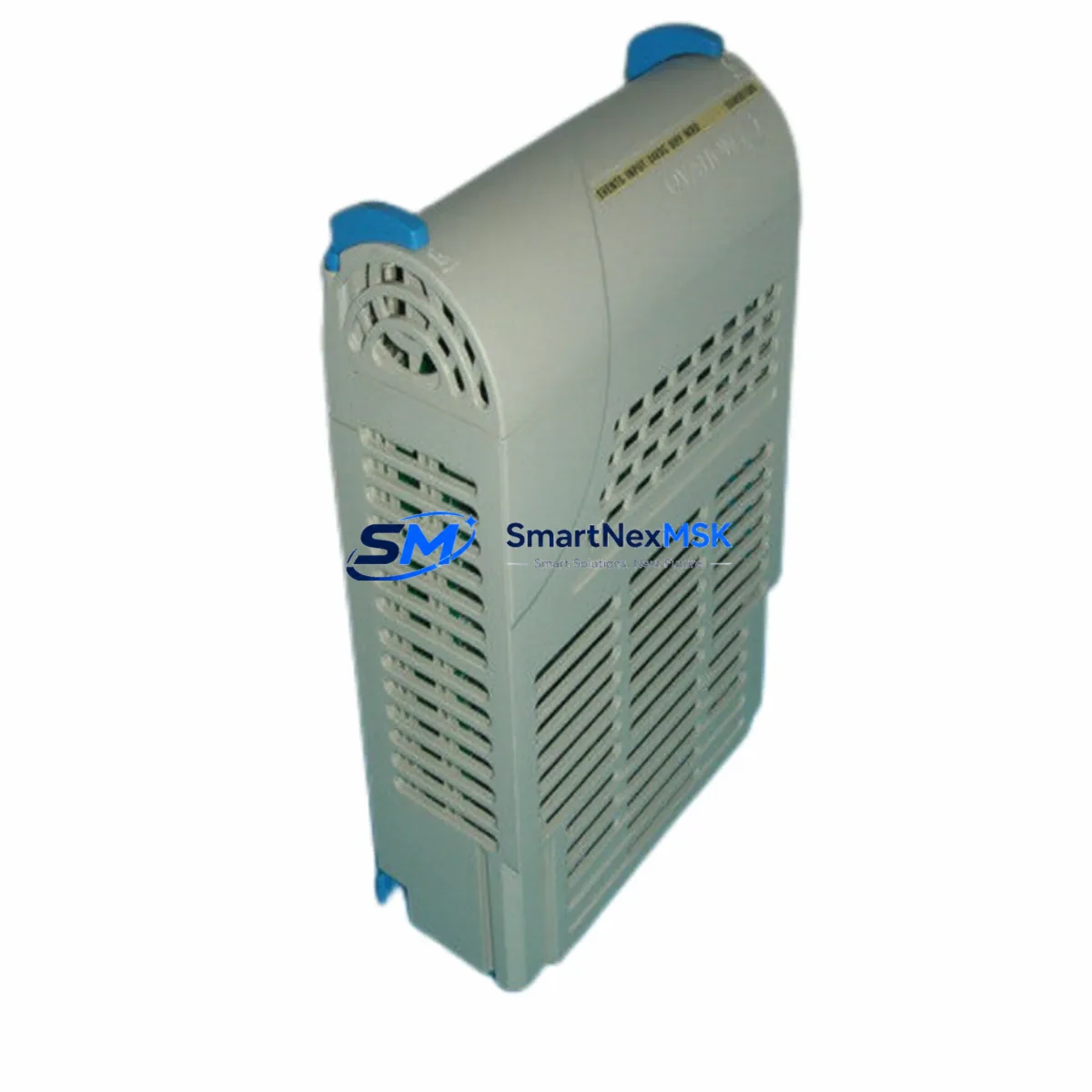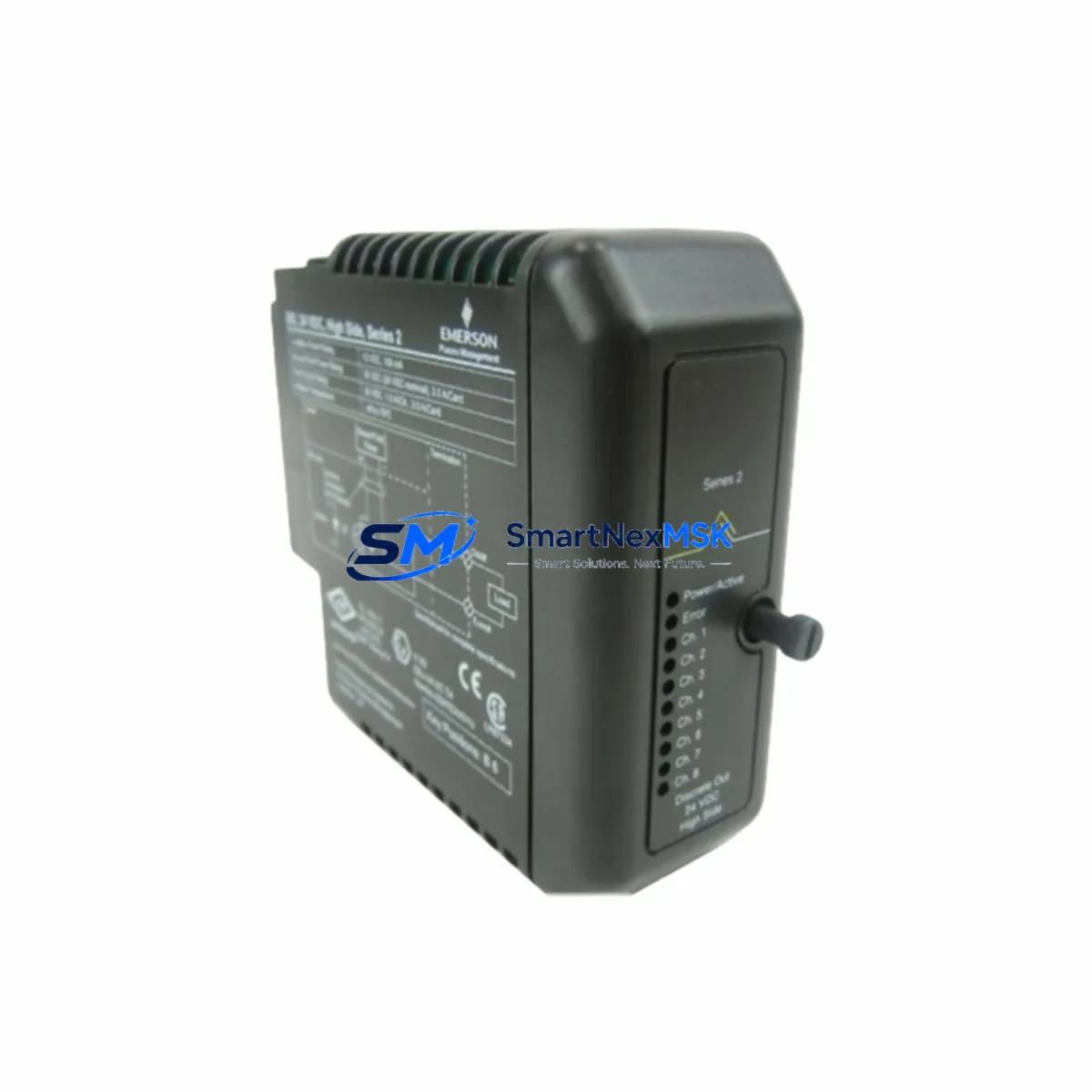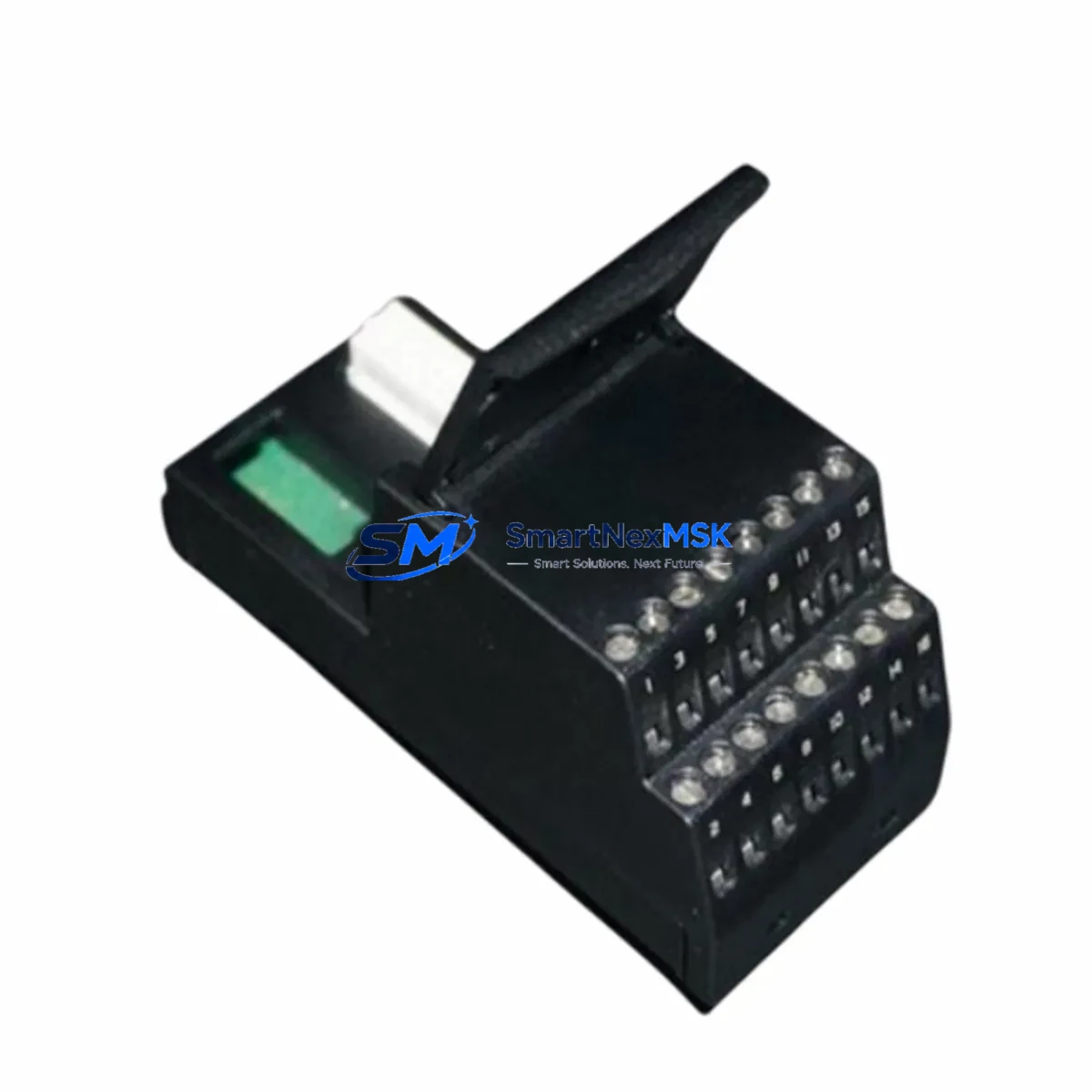
Emerson KJ4006X1-BD1 Retrofit-Ready Terminal Block for DeltaV Control Systems
The Emerson KJ4006X1-BD1 is a DeltaV Series I/O terminal block designed for seamless integration into distributed control system (DCS) architectures. As legacy DeltaV installations age and original spare parts become increasingly difficult to source, the KJ4006X1-BD1 serves as a critical retrofit component for engineers managing control cabinet upgrades, I/O subsystem expansions, and discontinued-module replacement programs. Whether you are restoring a process line after an unplanned failure or executing a planned migration from an older DeltaV generation, this terminal block provides the wiring compatibility, backplane interface alignment, and signal integrity required for reliable field operation.
Procurement teams and system integrators working on brownfield DeltaV sites frequently encounter the KJ4006X1-BD1 as a direct replacement for end-of-life terminal assemblies. Its screw-terminal layout matches the original field wiring scheme, eliminating the need to re-label or re-route cables during a swap. This is particularly valuable in environments where downtime windows are measured in hours, not days, and where preserving the existing marshalling cabinet layout is a contractual or operational requirement.
Upgrade Compatibility Table
| Parameter | Detail |
|---|---|
| Part Number | KJ4006X1-BD1 |
| Brand / OEM | Emerson (Fisher-Rosemount / DeltaV Platform) |
| Product Type | DCS I/O Terminal Block |
| Compatible Platform | Emerson DeltaV Series (S-Series, M-Series, MD-Plus Controllers) |
| Backplane Interface | DeltaV I/O Subsystem Carrier — standard 2-row connector alignment |
| Wiring Compatibility | Screw-terminal field wiring; matches legacy marshalling layout |
| Signal Type Support | Analog and discrete I/O signal termination |
| Installation Requirement | DIN rail or panel-mount; no additional hardware modification required |
| Communication Compatibility | Compatible with FOUNDATION Fieldbus and HART-enabled I/O modules on DeltaV |
| Replacement Recommendation | Direct drop-in for discontinued KJ4006 series terminal assemblies |
| Commissioning Note | Verify module address assignment in DeltaV Explorer after installation |
| Warranty | 12-Month Warranty — covers manufacturing defects and functional failure |
Retrofit Planning for Existing Automation Systems
Successful integration of the KJ4006X1-BD1 into an existing DeltaV system begins with a thorough pre-retrofit audit. Engineers should first confirm the power supply capacity of the I/O carrier rack — typically a KJ4001X1-BA1 or equivalent DeltaV I/O power supply module — to ensure the additional terminal block load does not exceed the rail’s rated output. Insufficient power headroom is one of the most common causes of intermittent faults after a retrofit, and it is often overlooked when the focus is on the terminal block itself.
Next, review the backplane slot assignment. The KJ4006X1-BD1 occupies a defined position on the DeltaV I/O carrier, and its module address must be correctly configured in DeltaV Explorer before the system goes live. If the replacement is being performed on a running system during a partial shutdown, it is advisable to export the current I/O configuration from DeltaV Operate and retain a backup of the module database prior to any physical swap.
Field wiring termination should be verified against the original loop drawings. In many aging DeltaV installations, the marshalling cabinet contains a mix of KJ3002X1-BA1 analog input modules, KJ3222X1-BA1 discrete output modules, and associated terminal blocks that share the same wiring harness. Confirming that the KJ4006X1-BD1 terminal pinout matches the existing cable schedule prevents miswiring errors that could damage field instruments or trigger spurious process trips.
For sites migrating from older PROVOX or RS3 control platforms to DeltaV, the KJ4006X1-BD1 is frequently deployed alongside a DeltaV I/O interface module and a KJ4022X1-BA1 or similar carrier to bridge legacy signal types. In these cross-platform migrations, communication protocol mapping — particularly the transition from proprietary serial protocols to HART or FOUNDATION Fieldbus — must be validated at the loop level before the new terminal block is commissioned. HMI faceplates in DeltaV Operate should also be reviewed to confirm that tag assignments and alarm limits remain consistent with the physical I/O changes.
Where the retrofit involves expanding I/O capacity rather than a straight replacement, the KJ4006X1-BD1 can be added to an existing DeltaV I/O carrier alongside a KJ4001X1-BA1 power module and a new I/O module such as the KJ3001X1-BA1 analog input card. In this configuration, the DeltaV controller — whether an MD, MD Plus, or S-Series — must have sufficient I/O channel capacity allocated in the system configuration. Checking the controller’s I/O budget in DeltaV Engineering is a mandatory step before physical installation.
Downtime Control During System Migration
Minimizing process downtime during a DeltaV terminal block replacement requires a structured approach that protects both the control program and the field instrumentation. The recommended sequence is to place the affected I/O module in manual mode within DeltaV Operate before disconnecting any field wiring. This prevents the controller from generating spurious output signals or triggering interlock logic while the terminal block is physically removed.
Before the swap, document the current signal values for all channels terminating at the KJ4006X1-BD1. This baseline allows the commissioning engineer to verify that readings return to expected values after the new terminal block is installed and the module is brought back online. For analog loops, a loop calibrator should be used to inject a known signal at the field terminal and confirm end-to-end continuity through the new block before the module is returned to automatic control.
Where the process cannot tolerate even a brief interruption, a hot-standby approach using a redundant DeltaV controller pair — such as an MD Plus redundant controller set — allows the replacement to proceed on the standby path while the primary controller maintains process control. After the terminal block swap is complete and verified, a controlled switchover transfers control to the upgraded path with zero process impact. This approach is particularly effective in continuous process industries where a single I/O failure can cascade into a full unit shutdown.
Post-installation, the DeltaV diagnostic tools should be used to confirm module health status, verify HART communication on all analog channels, and check that no alarm conditions have been introduced by the physical change. A final loop check against the P&ID and a review of the DeltaV event log complete the commissioning record and provide the documentation required for regulatory compliance in industries such as oil and gas, pharmaceuticals, and power generation.
Retrofit Support FAQ
Q1: Is the KJ4006X1-BD1 a direct replacement for the original Emerson terminal block in my DeltaV system?
Yes. The KJ4006X1-BD1 is designed as a drop-in replacement for the original DeltaV I/O terminal block assembly. The screw-terminal layout, backplane connector, and DIN rail mounting dimensions are consistent with the original specification, allowing installation without modification to the existing cabinet wiring or carrier hardware.
Q2: What wiring checks should I perform before installing the KJ4006X1-BD1?
Before installation, verify that all field cables are correctly identified and labeled against the loop drawings. Confirm terminal polarity for analog signals and check that shield grounding is consistent with the original installation. After the terminal block is seated, use a multimeter or loop calibrator to verify continuity on each channel before enabling the I/O module in DeltaV Explorer.
Q3: Does the KJ4006X1-BD1 support HART communication for connected field instruments?
The KJ4006X1-BD1 terminal block itself is a passive wiring interface; HART communication capability depends on the I/O module installed on the same carrier. When paired with a HART-enabled DeltaV analog input module such as the KJ3002X1-BA1, the terminal block passes HART signals transparently, allowing full HART device management through DeltaV Asset Management Solutions (AMS).
Q4: What does the 12-month warranty cover, and how is it handled?
The 12-month warranty covers manufacturing defects and functional failure under normal operating conditions. If the KJ4006X1-BD1 fails within the warranty period, SMARTNEXMSK will arrange a replacement unit after verification of the fault. All units are functionally tested prior to shipment to reduce the risk of DOA failures. Warranty claims should be initiated by contacting [email protected] with the order reference and a description of the fault.
© 2026 SMARTNEXMSK. All rights reserved.
Original Source: https://smartnexmsk.com
Contact: [email protected] | +86 18259474341