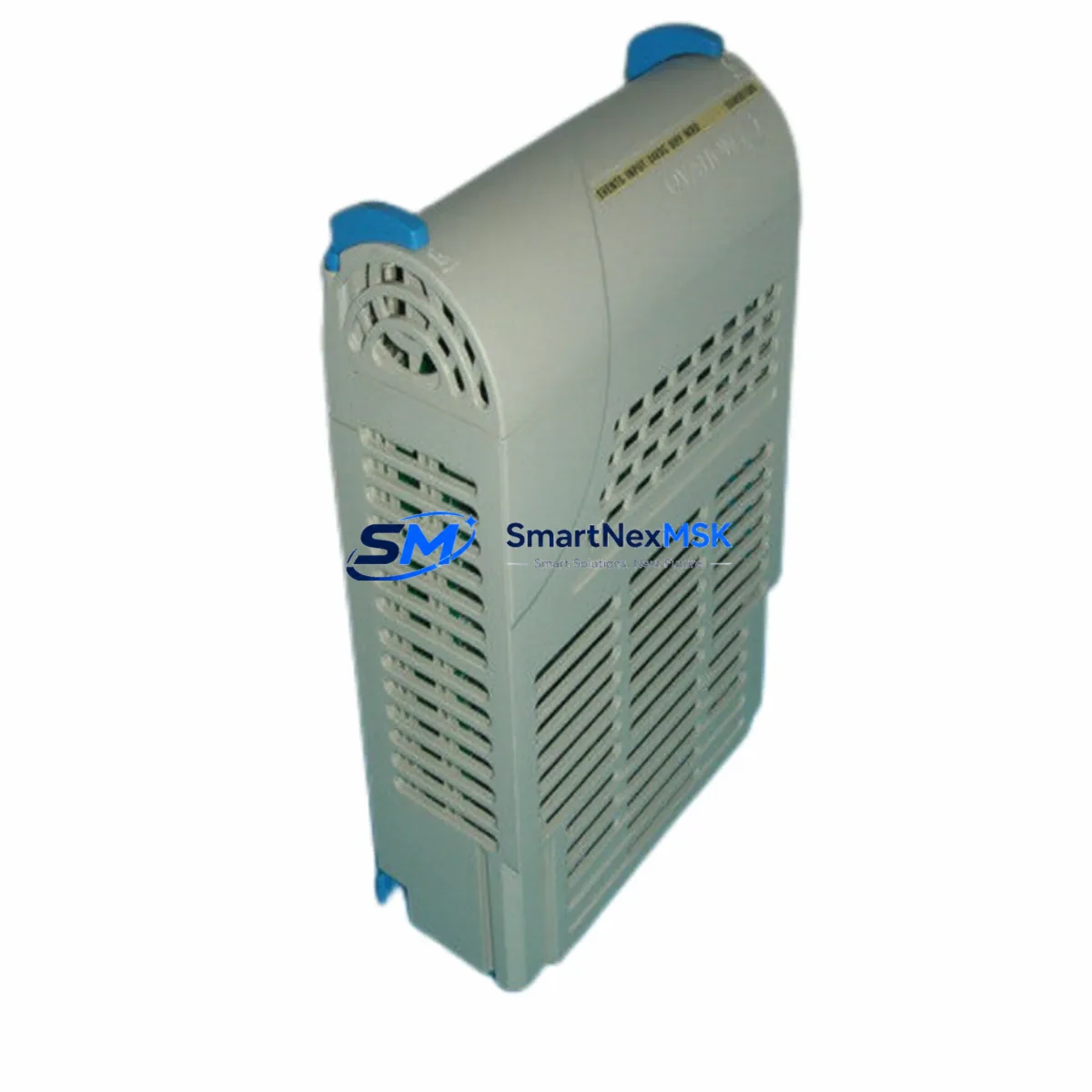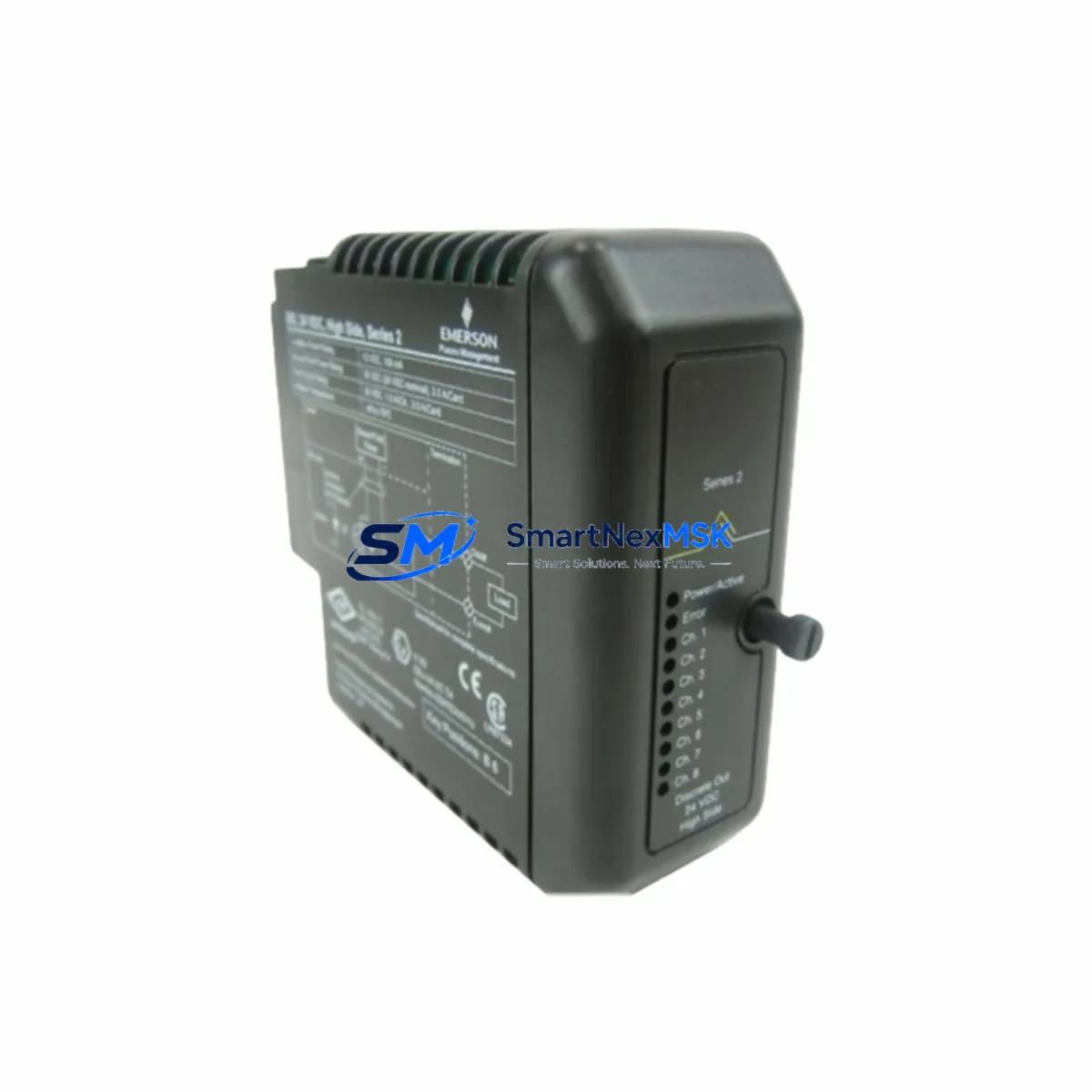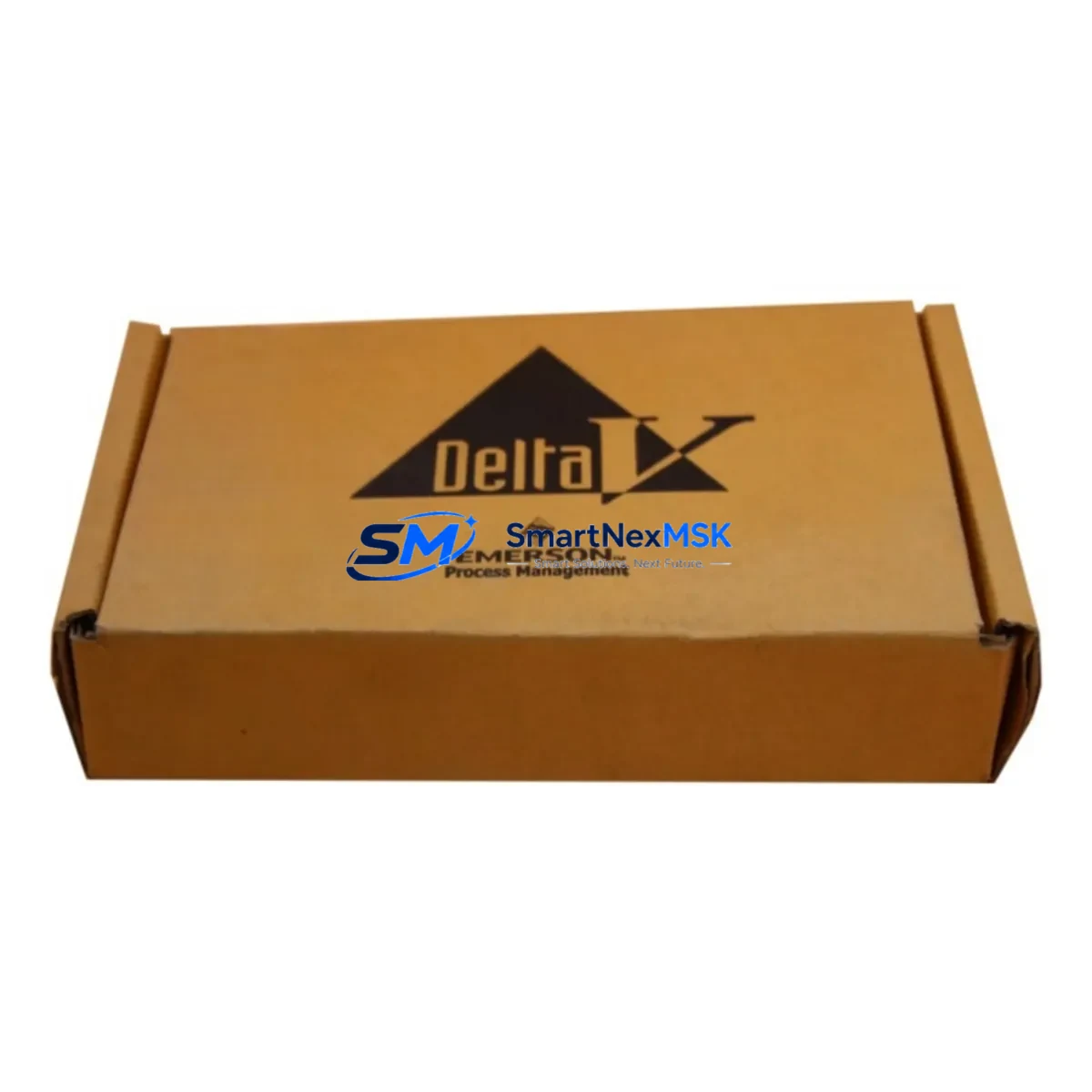
EMERSON VE4050E1C0 Retrofit-Ready Analog Output Module for DeltaV Control Systems
The EMERSON VE4050E1C0 is an 8-channel analog output module engineered for the DeltaV Series distributed control system platform. Designed to serve as a direct retrofit replacement for aging or discontinued analog output cards in legacy DeltaV cabinets, the VE4050E1C0 delivers reliable 4–20 mA signal output with integrated HART protocol support, enabling seamless communication with field instruments without requiring additional signal converters or wiring modifications.
For facilities operating older DeltaV S-series or M-series controllers where original output modules have reached end-of-life, the VE4050E1C0 provides a validated upgrade path that preserves existing I/O wiring, marshalling panel terminations, and DeltaV control strategies. Engineers undertaking a control cabinet modernization project can install this module into the existing DeltaV carrier without modifying the backplane bus or reassigning module addresses, significantly reducing commissioning time and unplanned downtime.
Upgrade Compatibility Table
| Parameter | Detail |
|---|---|
| Compatible Platform | Emerson DeltaV S-Series, M-Series, MX-Controller |
| Channel Count | 8 Channels Analog Output (4–20 mA) |
| Communication Protocol | HART (Highway Addressable Remote Transducer) |
| Backplane Interface | DeltaV Standard Carrier / I/O Subsystem Bus |
| Installation Type | Direct carrier slot insertion — no backplane modification |
| Replacement Candidates | VE4001S2T1B2, VE4002S2T1B2, legacy DeltaV AO cards |
| Wiring Compatibility | Existing field terminal wiring retained; no re-termination required |
| Commissioning Requirement | Module address assignment via DeltaV Explorer; no hardware jumpers |
| Firmware / Software | DeltaV v11.3+ recommended; backward compatible with v10.3 |
| Warranty | 12-Month Warranty — covers hardware defects and functional failure |
Retrofit Planning for Existing Automation Systems
A successful retrofit begins well before the module arrives on-site. When replacing a failed or end-of-life analog output card in a live DeltaV system, the engineering team must first audit the DeltaV power supply module — typically a VE4003S2T1B2 or equivalent redundant power conditioner — to confirm that available bus current capacity supports the additional load of the VE4050E1C0 without triggering under-voltage faults on adjacent I/O carriers.
Next, verify the DeltaV carrier assembly slot assignment. The VE4050E1C0 occupies a standard 8-wide carrier slot. If the existing carrier is a legacy 4-slot type, a carrier upgrade to an 8-slot or 16-slot DeltaV I/O carrier may be required before installation. During this phase, document all existing field terminal wiring connected to the DeltaV terminal block or marshalling cabinet, including signal polarity, shield grounding, and loop power source for each of the 8 output channels.
For sites migrating from older PROVOX or RS3 control platforms to DeltaV, the VE4050E1C0 is frequently deployed alongside a DeltaV CHARM I/O card or a CIOC (Characterization I/O Card) to bridge legacy signal types during phased migration. In these scenarios, the DeltaV MX-Controller or MD-Controller must be confirmed as the active node managing the new I/O subsystem, and the control strategy downloaded from DeltaV Operate must be validated against the new module’s channel mapping before cutover.
HART communication configuration is another critical step. Each of the 8 output channels on the VE4050E1C0 supports HART pass-through to the DeltaV system host. Field instruments such as control valves, positioners, and variable-speed drives connected to these channels should be polled using a HART communicator or AMS Device Manager to confirm device descriptor compatibility and verify that HART variables are correctly mapped in the DeltaV control module. If the site uses a DeltaV SIS (Safety Instrumented System) controller in the same cabinet, ensure that the SIS logic solver’s I/O assignments are not affected by the carrier slot change.
Finally, before live cutover, conduct a full loop check on all 8 channels using a calibrated current source and milliamp meter. Confirm that each channel’s 4–20 mA output range is correctly scaled in the DeltaV control module parameter set, and that the DeltaV Batch Executive or sequence logic referencing these outputs has been updated to reflect any address changes introduced during the retrofit.
Downtime Control During System Migration
Minimizing production downtime during a DeltaV analog output module replacement requires a structured hot-swap or planned-outage strategy. For non-redundant output loops controlling non-critical process variables, the VE4050E1C0 can often be installed during a brief planned maintenance window of 30–60 minutes, provided the replacement module has been pre-configured offline using DeltaV Explorer and the control strategy has been pre-downloaded to the controller.
For critical control loops — such as those driving final control elements on reactors, compressors, or heat exchangers — a parallel wiring strategy is recommended. Temporary manual control stations or a portable DeltaV Simulate environment can be used to hold output values at last-known-good states while the module swap is performed. Once the VE4050E1C0 is seated and recognized by the DeltaV system, the controller automatically re-establishes communication with the module and resumes executing the downloaded control strategy without requiring a full controller restart.
To protect original program logic, always export a backup of the DeltaV control database using DeltaV Diagnostics before beginning any hardware change. This backup preserves all module parameters, HART device configurations, alarm limits, and interlock logic, enabling rapid recovery if an unexpected issue arises during commissioning. Post-installation, run a 24-hour monitoring period using DeltaV Operate trend displays to confirm stable output performance across all 8 channels before returning the loop to full automatic control.
Retrofit Support FAQ
Q1: Is the VE4050E1C0 a direct drop-in replacement for older DeltaV analog output modules?
In most DeltaV S-Series and M-Series installations, the VE4050E1C0 is a functionally compatible replacement for discontinued 8-channel AO cards. The module uses the same DeltaV carrier slot form factor and communicates over the standard DeltaV I/O subsystem bus. Minor parameter re-mapping in DeltaV Explorer may be required if the original module used a different channel addressing scheme.
Q2: What wiring changes are needed during installation?
In most cases, no field wiring changes are required. Existing 4–20 mA loop wiring connected to the DeltaV terminal block or marshalling panel can be retained as-is. Verify that loop power polarity and shield grounding comply with the VE4050E1C0 installation manual before powering up the module.
Q3: How is the module commissioned after installation?
After physical installation, open DeltaV Explorer and assign the module to the correct carrier slot address. Download the updated control strategy to the DeltaV controller, then use DeltaV Diagnostics to confirm module health status. Perform a full 8-channel loop check with a calibrated milliamp source before returning loops to automatic control.
Q4: What does the 12-month warranty cover?
All VE4050E1C0 units supplied by SMARTNEXMSK are covered by a 12-month warranty against hardware defects and functional failure under normal operating conditions. Each unit undergoes pre-shipment functional testing including channel output verification and HART communication validation. Warranty claims are supported by our technical team at [email protected].
© 2026 SMARTNEXMSK. All rights reserved.
Original Source: https://smartnexmsk.com
Contact: [email protected] | +86 18259474341