
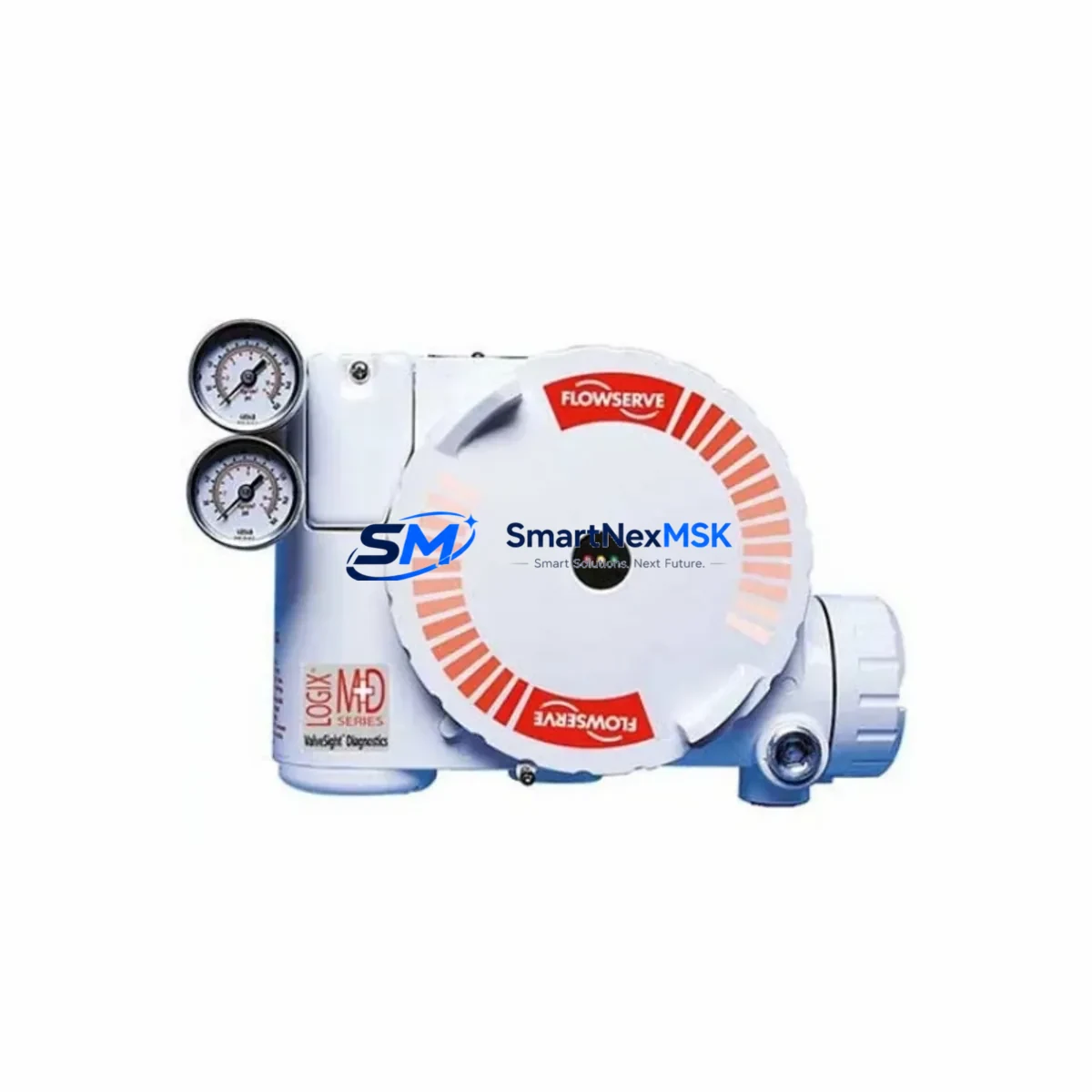
Flowserve 3200MD-28-D6-E-04-40-0G-00 Retrofit-Ready Positioner: Compatible Modernization & Smooth Legacy System Upgrade
The Flowserve 3200MD-28-D6-E-04-40-0G-00 is a digital smart valve positioner engineered for the 3200MD Series platform, widely deployed across oil & gas, chemical processing, power generation, and water treatment facilities. As original equipment reaches end-of-life or spare parts become increasingly scarce, this unit serves as a verified retrofit-ready replacement that preserves existing valve actuator interfaces, terminal wiring layouts, and HART 4–20 mA signal architecture — enabling control engineers to execute a controlled upgrade without redesigning the control loop or rewriting PLC logic.
For facilities running aging DCS or PLC-based valve control systems, sourcing a direct replacement for the 3200MD-28-D6-E-04-40-0G-00 is often the fastest path to restoring loop integrity. This positioner maintains compatibility with standard 3200MD Series mounting brackets and feedback linkages, meaning mechanical installation can typically be completed within a planned maintenance window. Before installation, engineers should verify supply air pressure range (typically 1.4–7.0 bar), confirm the actuator travel range matches the positioner’s configured stroke, and validate that the existing 4–20 mA signal source from the DCS output card or PLC analog output module is within specification.
Terminal wiring should be cross-referenced against the original loop drawing. The 3200MD-28-D6-E-04-40-0G-00 uses a standard two-wire HART connection; polarity must be observed at the field junction box and at the marshalling cabinet. If the existing installation uses a Flowserve SRD991 or SRD960 positioner in an adjacent loop, the same wiring conventions apply, simplifying multi-loop retrofit projects. Technicians should also confirm that the HART multiplexer or asset management system — such as Emerson AMS Device Manager or Honeywell Field Device Manager — is configured to recognize the 3200MD device descriptor (DD) file before commissioning.
In control cabinet upgrade scenarios where the host system is migrating from a legacy Foxboro I/A Series or Yokogawa CENTUM VP DCS to a modern platform, the 3200MD-28-D6-E-04-40-0G-00 can remain in service as a field device without modification, provided the new DCS analog output card supports HART pass-through. This eliminates the need to replace field instrumentation during a control system migration, significantly reducing project scope and capital expenditure. The positioner’s auto-calibration routine (initiated via HART handheld communicator or DD-based software) allows zero and span to be re-established in under 15 minutes per valve, supporting rapid loop-by-loop commissioning during phased cutover.
For I/O expansion projects where additional valve control points are being added to an existing rack, the 3200MD-28-D6-E-04-40-0G-00 integrates directly with standard 4–20 mA analog output modules from major PLC platforms. When the host controller is an Allen-Bradley ControlLogix or CompactLogix system, the positioner connects to the 1756-OF8 or 1769-OF4 analog output modules without additional signal conditioning. In Siemens S7-300 or S7-400 environments, the ET 200M distributed I/O with SM 332 analog output modules provides equivalent compatibility. Engineers should confirm module load capacity and loop resistance budget before finalizing the wiring design.
Backplane and rack considerations are relevant when the positioner is being integrated into a marshalling system that feeds a remote I/O panel. Ensure that the field barrier or isolator — such as a P+F KFD2-STC4-Ex1.2O or equivalent HART-transparent barrier — does not attenuate the HART signal below the minimum threshold required for reliable communication. In intrinsically safe (Ex ia) installations, the entity parameters of the positioner must be verified against the barrier’s output parameters before the installation is approved by the site safety authority.
HMI faceplate updates are often overlooked during positioner replacements. If the existing SCADA or DCS operator station displays valve position feedback derived from the positioner’s analog output, no changes are required. However, if the facility uses HART-sourced digital position data fed through an asset management layer into the HMI, the device tag and DD file must be updated in the configuration database to reflect the replacement unit. This step is typically completed during the pre-commissioning phase and should be included in the project’s management of change (MOC) documentation.
Communication link integrity should be verified after installation using a HART communicator such as the Emerson 475 Field Communicator or equivalent. Confirm that the device responds to universal HART commands, that the primary variable (valve position) reads correctly, and that the device status indicates no active faults. If the positioner is connected to a HART-enabled I/O card with built-in multiplexing — such as the Pepperl+Fuchs HiDMux2700 or a similar HART infrastructure module — verify that the polling address is set correctly and that the device appears in the asset management system’s device list.
Field commissioning for the 3200MD-28-D6-E-04-40-0G-00 follows a structured sequence: mechanical installation and linkage verification, pneumatic supply connection and leak check, electrical wiring and loop continuity test, HART communication verification, auto-calibration execution, step response test, and final loop check against the DCS or PLC setpoint. Each step should be documented in the site commissioning record. All units supplied by SMARTNEXMSK are pre-tested prior to shipment and covered by a 12-month warranty from the date of delivery, supporting your quality assurance and incoming inspection process.
Upgrade Compatibility Table
| Parameter | 3200MD-28-D6-E-04-40-0G-00 Specification | Retrofit / Replacement Notes |
|---|---|---|
| Signal Input | 4–20 mA HART (2-wire) | Direct replacement for existing HART loop wiring; no signal converter required |
| Supply Pressure | 1.4–7.0 bar (20–100 psi) | Verify existing instrument air supply; add filter-regulator if supply exceeds 7.0 bar |
| Mounting Interface | 3200MD Series standard bracket | Direct bolt-on to existing actuator; confirm feedback linkage travel range |
| Communication Protocol | HART Rev. 5/6/7 | Compatible with existing HART multiplexers and asset management systems |
| Output Signal | Pneumatic (single/double acting) | Confirm actuator action (FA/FO) before ordering; specify at time of purchase |
| Explosion Protection | ATEX / IECEx (Ex ia / Ex d options) | Verify entity parameters against installed barrier for IS installations |
| Calibration | Auto-calibration via HART | Re-calibrate after installation; takes <15 min per valve with HART communicator |
| Warranty | 12-Month Warranty | Covered from date of delivery; pre-shipment testing included |
Retrofit Planning for Existing Automation Systems
A successful retrofit begins with a thorough audit of the existing control loop. For facilities where the 3200MD-28-D6-E-04-40-0G-00 is replacing a discontinued Flowserve Logix 3200MD or an earlier Flowserve Mark One positioner, the mechanical envelope and air connection ports are typically compatible, reducing the need for custom adapter plates. The pneumatic tubing — usually 6 mm or 1/4″ OD — connects directly to the positioner’s supply and output ports.
In multi-loop control cabinets, the positioner shares the instrument air header with other field devices. Before the retrofit, confirm that the air header capacity (flow rate and pressure stability) is sufficient to support the positioner’s maximum air consumption during full-stroke operation. If the cabinet also houses a Flowserve Logix 500 or Logix 1000 positioner on adjacent valve loops, the same air supply specification applies, simplifying the capacity calculation.
Terminal blocks in the field junction box should be inspected and cleaned before reconnecting the positioner wiring. If the existing cable uses 0.5 mm² or 0.75 mm² twisted-pair shielded cable, it is suitable for HART communication without replacement. The shield should be grounded at one end only — typically at the marshalling cabinet — to avoid ground loops that can interfere with HART signal integrity.
For projects involving protocol migration from legacy pneumatic positioners (with no digital communication) to HART-enabled devices, the 3200MD-28-D6-E-04-40-0G-00 enables the facility to begin collecting digital valve diagnostics — including valve signature data, friction analysis, and partial stroke test results — without replacing the valve body or actuator. This diagnostic capability supports predictive maintenance programs and can be integrated with a Flowserve ValveSight or equivalent valve management platform.
When the retrofit scope includes replacing the DCS I/O cards alongside the positioner, consider whether the new analog output card supports HART pass-through at the hardware level. Cards such as the Emerson DeltaV CHARMs HART I/O or the ABB S800 AI810/AO810 modules provide native HART support, eliminating the need for a separate HART multiplexer. This simplifies the overall system architecture and reduces the number of components requiring maintenance.
For rack-mounted PLC systems, the positioner connects to the analog output rack via standard 4–20 mA wiring. If the rack uses a Siemens ET 200SP distributed I/O with HART-capable analog output modules, the positioner’s HART data can be accessed directly through PROFIBUS or PROFINET without additional hardware. Similarly, in Rockwell Automation systems using the 1715 Redundant I/O platform, HART pass-through is supported natively on compatible analog output modules.
Downtime Control During System Migration
Minimizing unplanned downtime during a positioner replacement requires careful pre-staging and a clearly defined cutover sequence. The recommended approach is to complete all mechanical and electrical pre-installation work — bracket preparation, cable routing, air line pre-connection — during normal operation, leaving only the final switchover for the planned maintenance window.
Before isolating the existing positioner, capture the current valve position and confirm that the process can tolerate the valve being held in its fail-safe position (fully open or fully closed, depending on actuator spring action) for the duration of the replacement. If the process requires continuous flow, coordinate with the operations team to establish a bypass line or temporary manual control arrangement.
The original PLC or DCS program logic does not require modification when replacing a 3200MD Series positioner with the 3200MD-28-D6-E-04-40-0G-00, provided the analog output scaling (4 mA = 0%, 20 mA = 100%) remains unchanged. The control loop PID parameters — gain, integral time, and derivative time — should be retained from the original configuration as a starting point, with fine-tuning performed after the new positioner’s auto-calibration is complete.
After the positioner is installed and calibrated, perform a step response test by commanding the valve to 25%, 50%, 75%, and 100% positions from the DCS or PLC, and verify that the positioner responds within the expected time and without overshoot. Document the results in the commissioning record. Once the loop is confirmed stable, return the control loop to automatic mode and monitor for at least one full process cycle before releasing the valve to normal operations.
All units from SMARTNEXMSK are pre-tested and verified before shipment, which reduces the risk of receiving a defective unit and eliminates the need for extended incoming inspection. The 12-month warranty covers manufacturing defects and provides a clear escalation path if any issue is identified during commissioning or early operation.
Retrofit Support FAQ
Q1: Is the 3200MD-28-D6-E-04-40-0G-00 a direct drop-in replacement for the original Flowserve 3200MD Series positioner?
A: Yes, for the same actuator model and mounting configuration. The mechanical interface, air connection ports, and HART 4–20 mA wiring are compatible with the original 3200MD Series installation. Confirm the actuator action (fail-open or fail-close) and stroke range before ordering to ensure the correct variant is supplied.
Q2: What commissioning steps are required after installation?
A: After mechanical and electrical installation, connect a HART communicator (e.g., Emerson 475 or equivalent) and initiate the auto-calibration routine. This sets the zero and span based on the actual valve stroke. Verify HART communication with the host system, perform a step response test, and document results. Total commissioning time is typically under 30 minutes per valve for experienced technicians.
Q3: Can this positioner be used in hazardous area (Ex) installations?
A: The 3200MD-28-D6-E-04-40-0G-00 is available with ATEX/IECEx certification for use in Zone 1/Zone 2 (Ex ia or Ex d) classified areas. For intrinsically safe installations, verify the entity parameters (Ui, Ii, Pi, Ci, Li) against the installed safety barrier’s output parameters. Consult the positioner’s certificate and the barrier manufacturer’s documentation before installation in a certified hazardous area.
Q4: What warranty and pre-shipment testing does SMARTNEXMSK provide?
A: All units are pre-tested for electrical continuity, HART communication functionality, and pneumatic integrity before shipment. A 12-month warranty is provided from the date of delivery, covering manufacturing defects. In the event of a warranty claim, contact our technical support team with the unit serial number and a description of the fault. Replacement or repair will be coordinated promptly to minimize impact on your operations.
© 2026 SMARTNEXMSK. All rights reserved.
Original Source: https://smartnexmsk.com
Contact: [email protected] | +86 18259474341